

Onychomyrmex mjobergi
- Scientific Name
- Onychomyrmex mjobergi
- Tribe
- Amblyoponini
- Subfamily
- Amblyoponinae
- Author
- Forel, 1915
- Distribution
- Found in 1 countries
Onychomyrmex mjobergi Overview
Onychomyrmex mjobergi is an ant species of the genus Onychomyrmex. It is primarily documented in 1 countries , including Australia. Detailed taxonomic data and occurrence records can be further explored via authoritative databases such as AntWeb or the Global Biodiversity Information Facility (GBIF).
Onychomyrmex mjobergi
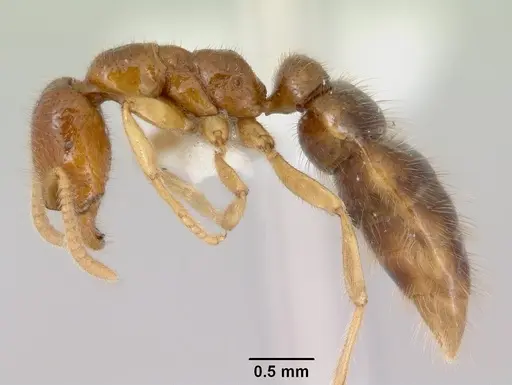
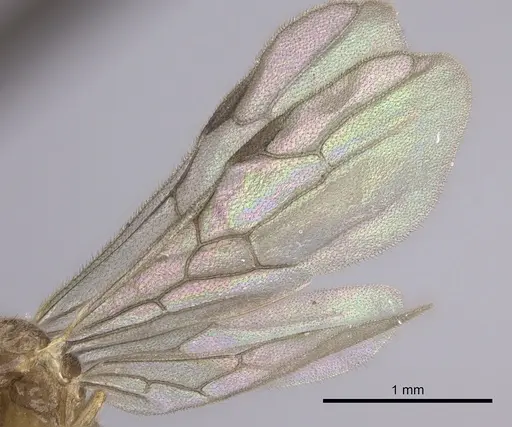
Onychomyrmex mjobergi is a small Australian ant belonging to the subfamily Amblyoponinae, known for their primitive characteristics and painful stings. Workers measure 3.5-4mm and are rich ferruginous red in color, while queens reach nearly 5.5mm and are more brownish ferruginous. This species has an unusual army ant-like lifestyle for an Amblyoponinae, they move slowly in long files, keeping in close contact with each other using their antennae, similar to army ants. They nest in rotten logs in the Australian Queensland rainforests around Herberton, Atherton, and Cedar Creek [1].
What makes this species remarkable is their specialized predatory lifestyle and nomadic colony behavior. Unlike most ants that establish permanent nests, these ants appear to maintain mobile colonies that travel through the wood in search of prey. Their sting is described as severe for such small insects, a warning that these are not handleable ants. They represent an evolutionary link between primitive ants and the highly specialized army ants [2].
Quick Summary
- Difficulty: Expert
- Origin & Habitat: Australia (Queensland: Herberton, Atherton, Cedar Creek). Found in rotten logs in rainforest environments [1].
- Colony Type: Single-queen colonies (monogyne) with documented colony sizes of at least 400 workers [1]. The species has modified wingless queens as part of their army ant-like lifestyle [2].
- Colony: Monogyne
- Size & Growth:
- Queen: Nearly 5.5mm [1]
- Worker: 3.5-4mm [1]
- Colony: At least 400 workers in observed colonies [1]. Likely larger colonies possible given their nomadic lifestyle.
- Growth: Unknown, no development timing data available
- Development: Unknown, no specific development data exists for this species. Based on related Amblyoponinae, expect 6-10 weeks at optimal temperature. (Development timeline is unconfirmed. Related Amblyoponinae species typically take 6-10 weeks from egg to worker.)
- Antkeeping:
- Temperature: Aim for 22-26°C with a gentle gradient. This is a tropical Australian species from Queensland that naturally inhabits warm, humid rainforest environments. A heating cable on one side of the nest can help maintain stable temperatures [1].
- Humidity: Keep substrate consistently moist but not waterlogged. In nature they live in rotten logs in rainforest areas, think damp forest floor conditions. Provide a water tube for drinking water and maintain humidity through substrate moisture rather than misting.
- Diapause: Unknown for this species. Queensland experiences mild winters, so any dormancy period would likely be minimal or not required. Monitor colony activity levels to determine if a cool period is beneficial.
- Nesting: Natural nesting: rotten logs. In captivity, a naturalistic setup with damp wood pieces or a well-humidified formicarium works best. They need tight, humid chambers scaled to their small size. Avoid dry conditions entirely.
- Behavior: These ants are highly defensive and possess a severe sting. They should be considered dangerous to handle, their sting is described as particularly painful for such small insects. They exhibit army ant-like behavior: moving in long files while maintaining antenna contact with each other. They are predatory and likely specialize in hunting small invertebrates. Escape prevention is important despite their small size, use fine mesh barriers. They are not suitable for handling and are best observed through the nest glass.
- Common Issues: severe sting, these ants can deliver a painful sting and should not be handled, humidity control is critical, they die quickly in dry conditions, predatory feeding requirements, need constant access to live prey, limited information, this is a poorly studied species with no captive breeding guides available, colony stress from disturbance, army ant-like species may be sensitive to nest inspections
Natural History and Distribution
Onychomyrmex mjobergi is endemic to the Queensland rainforests of northern Australia. The original specimens were collected from Herberton, Atherton, and Cedar Creek areas in 1915 by entomologist Eric Mjöberg. These ants inhabit rotten logs in humid rainforest environments, where they establish colonies that can contain at least 400 workers. The species is part of a unique evolutionary lineage within the Amblyoponinae that has developed an army ant-like lifestyle, this is rare among ants that typically establish fixed nests. Their colonies appear to be nomadic, moving through the wood in long files while maintaining contact through antennae, similar to how army ants maintain trail connections [2][1].
Identification and Morphology
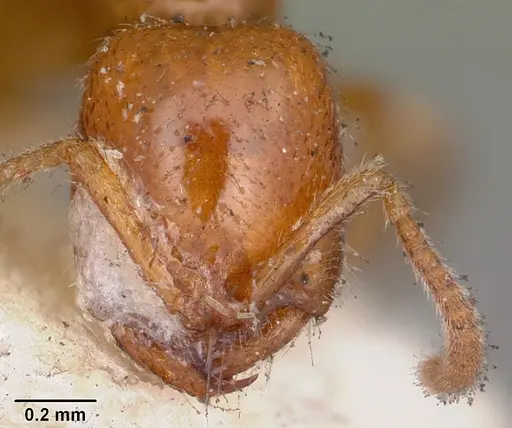
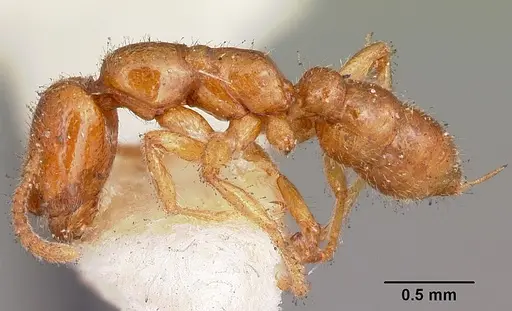
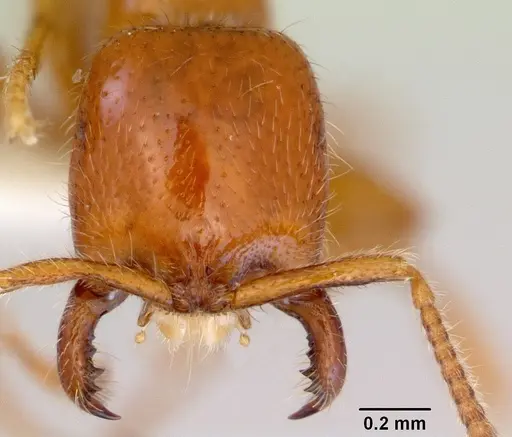
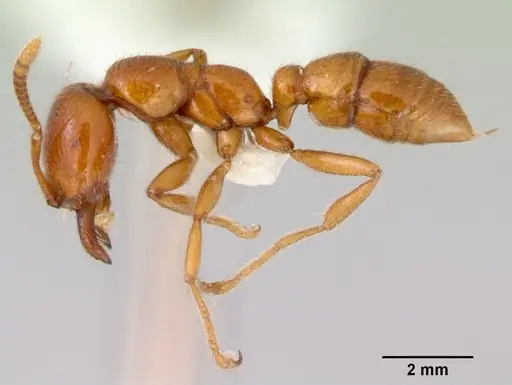
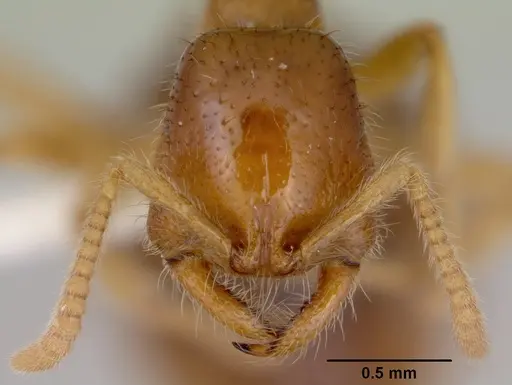
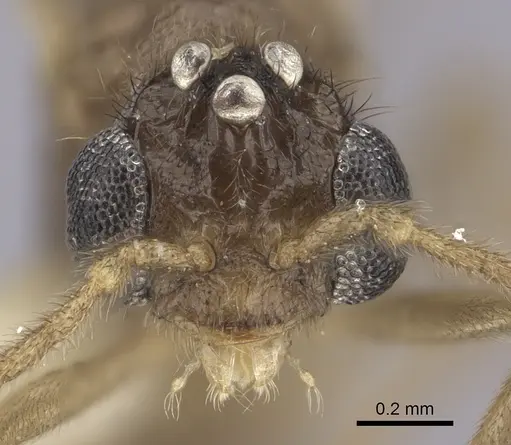
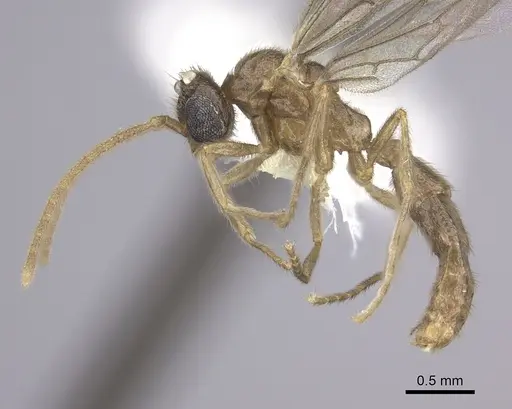
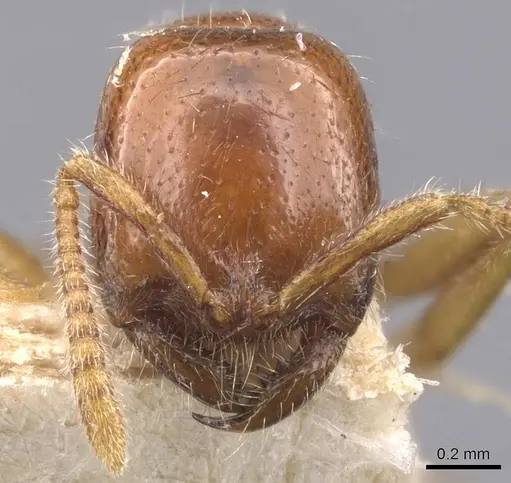
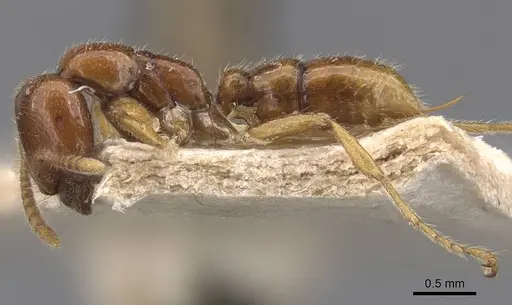
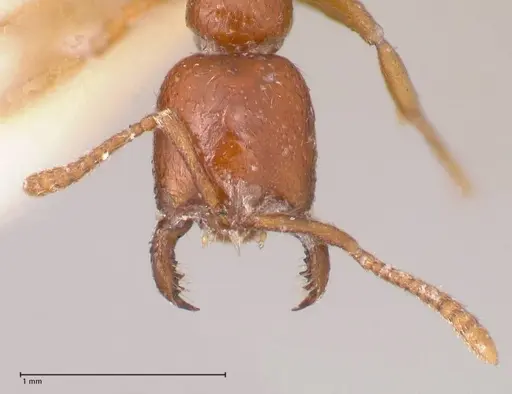
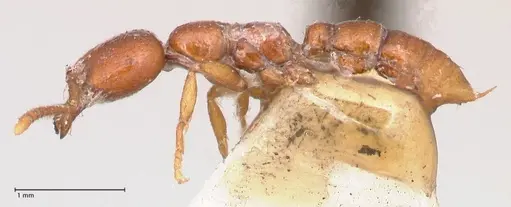
Workers of O. mjobergi measure 3.5-4mm and are distinguished by their rich ferruginous red coloration. They have a subrectangular head that is barely longer than broad, with distinctive pale yellow hairs of uneven length. The thorax has a nearly straight dorsal profile, and the petiole is broader than in related species. The mandibles are smooth and shining with sparse punctures. Queens are larger at nearly 5.5mm, with a more robust thorax and much larger gaster. The species can be distinguished from the related O. hedleyi by its paler color, shorter head and antennae, and the straight dorsal profile of the thorax. Both castes have notably severe stings for their small size [1].
Sting and Defense
This species is notable for delivering a severe sting relative to its small body size. Wheeler (1916) specifically documented that 'they stung severely for such small insects.' This is characteristic of the Amblyoponinae subfamily, which contains some of the most primitive ants still existing today. These ants should be considered dangerous and should never be handled with bare hands. When keeping this species, use appropriate escape prevention but avoid excessive disturbance that might trigger defensive responses. The sting pain is disproportionate to the ant's size, so keeper caution is essential [1].
Housing and Nesting
In the wild, O. mjobergi nests in rotten logs in humid rainforest environments. For captive care, provide a naturalistic setup with damp wood pieces or a well-humidified formicarium. The substrate (if using a soil-based setup) should remain consistently moist but never waterlogged. These ants need tight chambers scaled to their small worker size (3.5-4mm). A water tube should be provided for drinking water, as humidity through the substrate alone may not meet their needs. Avoid any form of dry housing, these ants will quickly perish in desiccated conditions. Given their army ant-like behavior, they may benefit from larger outworld space for foraging compared to typical ant species [1].
Feeding and Diet
As a predatory Amblyoponinae ant, O. mjobergi requires a diet based on live small invertebrates. They are not scavengers like many common ant species, they actively hunt and subdue prey. Offer small live prey such as fruit flies, pinhead crickets, small mealworms, and other micro-arthropods. The frequency should be based on colony size and consumption rate, maintain a constant supply of prey items and remove any uneaten prey after 24-48 hours. Sugar sources may be accepted occasionally but should not be relied upon as primary nutrition. The predatory nature means they need protein-rich foods to raise brood successfully [1].
Temperature and Seasonal Care
As a Queensland (tropical to subtropical) species, O. mjobergi requires warm conditions. Aim for temperatures in the 22-26°C range, which is typical for Australian rainforest species. A heating cable placed on one end of the nest can help maintain stable temperatures, but ensure proper humidity is maintained as heating can dry out the nest. The natural environment experiences mild winters, so a true diapause may not be necessary, but cooler temperatures during winter months may slow colony activity. Monitor your colony's behavior, if workers become sluggish, slightly increasing temperature may help. Avoid temperature extremes in either direction [1].
Frequently Asked Questions
How long does it take for Onychomyrmex mjobergi to develop from egg to worker?
The exact development timeline is unknown, this species has not been studied in captivity. Based on related Amblyoponinae species, expect approximately 6-10 weeks from egg to first worker at optimal temperature (around 24°C). Be patient with this slow-growing species.
Do Onychomyrmex mjobergi ants sting?
Yes, absolutely. They have a severe sting that is disproportionately painful for their small size (3.5-4mm workers). These ants should never be handled. Use appropriate protection when working with the colony and minimize disturbances that might trigger defensive behavior.
What do Onychomyrmex mjobergi ants eat?
They are predatory ants that require live small invertebrates. Feed them small prey items like fruit flies, pinhead crickets, small mealworms, and other micro-arthropods. Remove uneaten prey after 24-48 hours. Sugar sources may occasionally be accepted but should not be the primary food source.
Are Onychomyrmex mjobergi good for beginners?
No. This species is rated as Expert difficulty due to several factors: their severe sting makes them dangerous to handle, they require specific humidity and temperature conditions, they need a constant supply of live prey, and there is very limited captive care information available. They are not recommended for beginner antkeepers.
What is the best nest type for Onychomyrmex mjobergi?
A naturalistic setup with damp rotten wood pieces or a well-humidified formicarium works best. They need consistently moist substrate and tight chambers scaled to their small size. Avoid dry setups entirely, these ants will not survive desiccation.
How big do Onychomyrmex mjobergi colonies get?
The largest documented colony had at least 400 workers. Given their army ant-like nomadic lifestyle, colonies may potentially grow larger. Expect moderate colony sizes compared to some of the more common ant species.
Do Onychomyrmex mjobergi need hibernation?
This is unknown. As a Queensland species from a subtropical climate, they likely do not require a true hibernation. The mild Australian winters may only require a slight reduction in temperature. Monitor your colony's activity levels to determine if any cooling period is beneficial.
Can I keep multiple Onychomyrmex mjobergi queens together?
No. This species is monogyne, meaning colonies have a single queen. Documented colonies show one queen per colony. Combining unrelated queens is not recommended and has not been studied for this species.
Why do my Onychomyrmex mjobergi keep dying?
The most likely causes are: low humidity (they require consistently moist conditions), lack of live prey (they are obligate predators), or temperature issues (they need warmth around 22-26°C). This species is sensitive to dry conditions and will quickly die in desiccated setups. Ensure proper humidity and a constant supply of live prey.
When should I move Onychomyrmex mjobergi to a formicarium?
This species can be kept in test tubes with damp cotton for the founding stage, but due to their humidity requirements and predatory nature, transition to a naturalistic setup with damp substrate relatively early. Once the colony reaches 20-30 workers, consider moving to a setup that can maintain consistent humidity.
References

This caresheet is licensed under CC BY-SA 4.0 .
CASENT0104585
View on AntWeb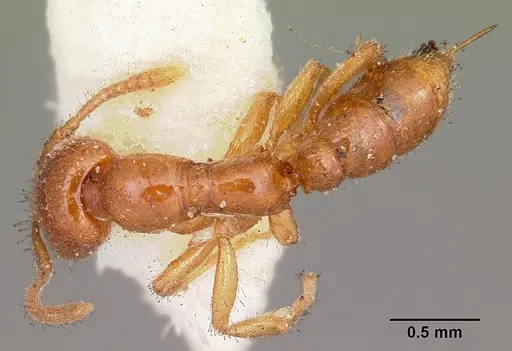
CASENT0172295
View on AntWeb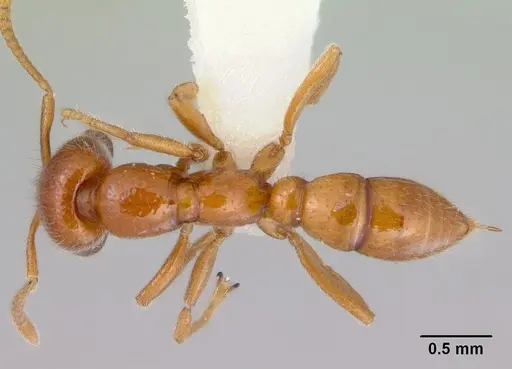
CASENT0172296
View on AntWeb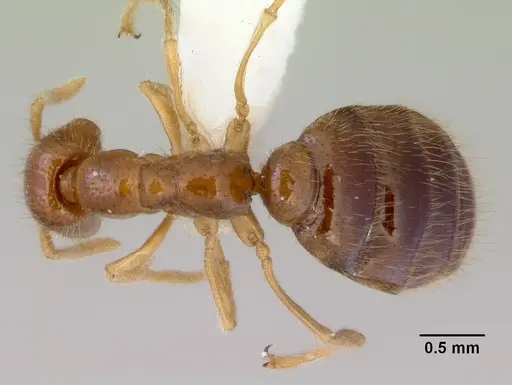
CASENT0260457
View on AntWeb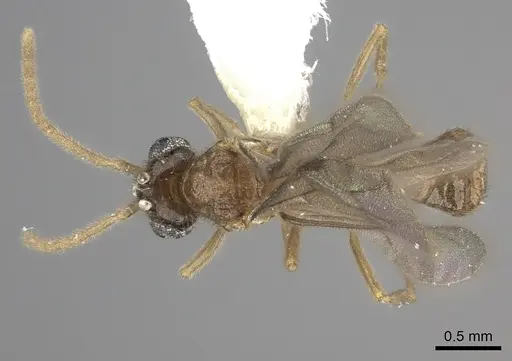
CASENT0907336
View on AntWeb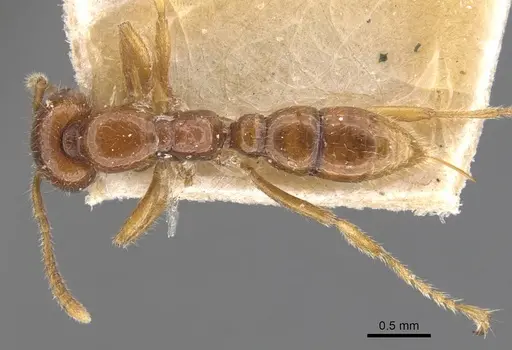
FOCOL0765
View on AntWeb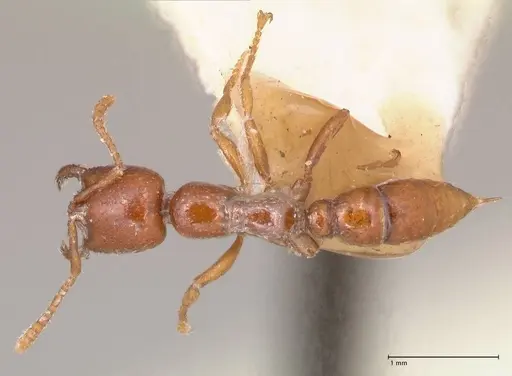
Literature
Loading...Loading products...