

Odontomachus nigriceps
- Scientific Name
- Odontomachus nigriceps
- Tribe
- Ponerini
- Subfamily
- Ponerinae
- Author
- Smith, 1860
- Distribution
- Found in 1 countries
Odontomachus nigriceps Overview
Odontomachus nigriceps is an ant species of the genus Odontomachus. It is primarily documented in 1 countries , including Papua New Guinea. Detailed taxonomic data and occurrence records can be further explored via authoritative databases such as AntWeb or the Global Biodiversity Information Facility (GBIF).
Odontomachus nigriceps
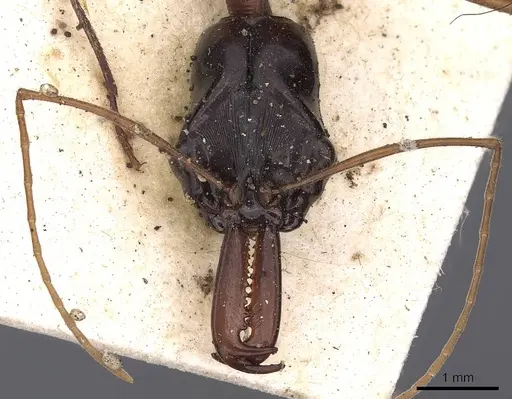
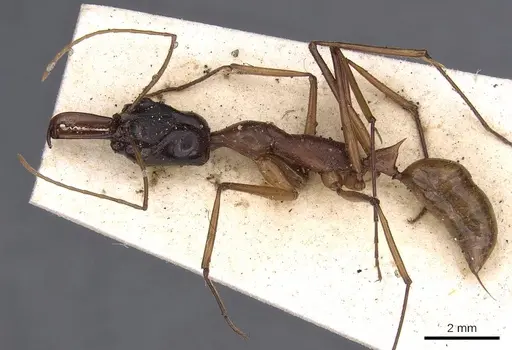
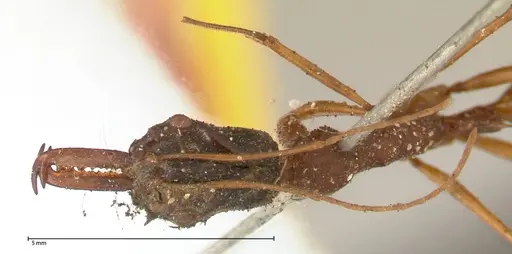
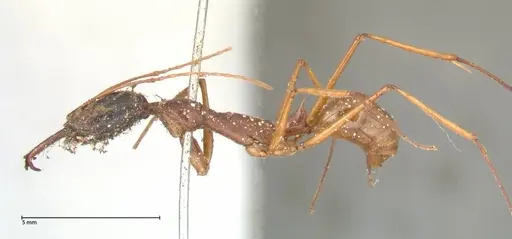
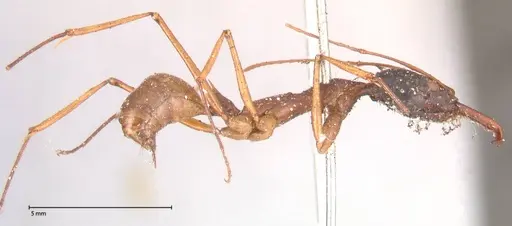
Odontomachus nigriceps is a striking trap-jaw ant species native to New Guinea and surrounding islands in the Australasian region. Workers measure approximately 12-13mm, making them a medium-sized ant. They have a distinctive appearance with a rusty reddish-brown (ferruginous) body and a smooth, glossy black head. Their most notable feature is their powerful mandibles, which can snap shut with incredible speed, a hunting adaptation common to all Odontomachus species. The head has fine longitudinal striations on the front portion, while the thorax shows transverse striations. The petiole (the narrow waist segment) ends in a single spine. This species belongs to the Odontomachus tyrannicus species group, which is distributed across the Australasian region [1][2].
Like other trap-jaw ants, O. nigriceps uses its specialized mandibles to capture prey and defend the colony. They are ground-nesting ants found in the tropical forests of New Guinea. While not as well-documented as some related species, they share the typical Ponerine ant behaviors: relatively simple colony structures, potent stings, and active hunting of small invertebrates.
Quick Summary
- Difficulty: Medium
- Origin & Habitat: New Guinea region (Papua New Guinea and Indonesian Irian Jaya). Found in tropical forest habitats, including both primary and secondary forest areas. They nest in soil or under ground cover [3][2].
- Colony Type: Likely monogyne (single queen) based on typical genus patterns. Colony size is unconfirmed but likely reaches several hundred workers based on related species.
- Size & Growth:
- Queen: Unconfirmed, estimated 14-16mm based on genus patterns for large Odontomachus species
- Worker: Approximately 12-13mm (6 lines) [2]
- Colony: Estimated several hundred workers based on related species
- Growth: Moderate, typical for tropical Ponerinae
- Development: Estimated 6-10 weeks at tropical temperatures (25-28°C) based on genus-level data for related trap-jaw ants (Development time is inferred from genus patterns since species-specific data is unavailable. Tropical species typically develop faster than temperate ones.)
- Antkeeping:
- Temperature: Keep at 24-28°C. They come from tropical New Guinea, so warmth is important. A gentle thermal gradient allows workers to regulate their temperature [3].
- Humidity: Maintain moderate to high humidity (60-80%). Their natural habitat in tropical forests is consistently moist. Keep the nest substrate damp but not waterlogged.
- Diapause: Likely minimal or no true diapause, they are tropical ants. However, a slight reduction in temperature during the dry season period may be beneficial. More research is needed on their seasonal patterns.
- Nesting: Natural nesting occurs in soil and under ground cover in forest habitats. In captivity, they do well in test tube setups for founding colonies, then transition to naturalistic or acrylic nests with moist substrate. Provide a deep, humid nest chamber.
- Behavior: Odontomachus nigriceps is an active, predatory ant that hunts small invertebrates. They are defensive of their nest and will use their potent sting if threatened. Workers are fast-moving and will readily investigate their outworld. Their trap-jaw mandibles are primarily used for capturing prey but can also be used defensively. Escape prevention is important, while not the smallest ants, they are agile and can climb smooth surfaces. They are not aggressive toward keepers but will sting if handled roughly or if their nest is disturbed. They are diurnal and actively forage during the day.
- Common Issues: tropical humidity requirements mean drying out is a common problem, monitor substrate moisture regularly, limited data means care recommendations are partly inferred from genus patterns rather than species-specific studies, potent sting can cause discomfort, handle with care and avoid disturbing the nest, escape prevention is important despite their larger size, they are agile climbers, slow founding stage is typical for Ponerine ants, patience is required during colony establishment
Housing and Setup
For founding colonies, a simple test tube setup works well. Fill a test tube one-third with water, plug the water end with cotton, and place the queen in the tube. The cotton should be tight enough to prevent the queen from escaping but loose enough to allow her to move. Cover the tube with a dark cloth for the first few weeks to reduce stress. Once workers have hatched (after 4-8 weeks), you can transfer to a small formicarium. For established colonies, use a naturalistic setup with moist soil or an acrylic nest with chambers scaled to their size. They need space for a brood chamber, foraging area, and garbage dump. A humidity reservoir or moist substrate is essential, these tropical ants dry out quickly in captive conditions. Outworld size should allow for hunting and foraging. Escape prevention is important: use fluon or other barriers on the edges of the setup. [2]
Feeding and Diet
Odontomachus nigriceps is a predatory ant that hunts small invertebrates in the wild. In captivity, offer a varied diet: live small insects like fruit flies, pinhead crickets, and small worms are ideal. They will also accept dead insects and may take sugar water or honey as an energy source, though protein-rich prey should make up the majority of their diet. Feed small prey items 2-3 times per week for established colonies. Remove uneaten prey after 24-48 hours to prevent mold. During the founding stage, the queen will not eat, she survives on stored fat reserves. Once workers arrive, they will hunt and can be fed small live prey. Make sure prey is appropriately sized, insects that are too large may be ignored.
Temperature and Heating
As a tropical species from New Guinea, Odontomachus nigriceps requires warm temperatures. Keep the nest area at 24-28°C (75-82°F). Room temperature may be sufficient in warm climates, but in cooler environments, use a heating cable or mat placed on one side of the nest to create a gentle thermal gradient. This allows the ants to move between warmer and cooler areas as needed. Avoid temperatures below 22°C or above 30°C. A thermometer helps monitor conditions. Place the heat source on top of the nest rather than underneath to avoid drying out the substrate. Temperature affects development time: warmer temperatures (within safe range) speed up brood development, while cooler temperatures slow it. [3]
Humidity and Moisture
These tropical forest ants require consistent humidity. Keep the nest substrate moist but not waterlogged, the substrate should feel damp to the touch. A humidity range of 60-80% is ideal. In test tube setups, the water reservoir provides humidity. In formicariums, mist the nest area regularly or use a water reservoir connected to the nest chambers. Monitor for drying: if the substrate pulls away from the sides of the nest or condensation disappears quickly, add more moisture. However, avoid standing water, which can drown brood. Good ventilation helps prevent mold while maintaining humidity.
Behavior and Defense
Odontomachus nigriceps is an active, predatory ant with a potent sting. Workers hunt using their trap-jaw mandibles, which can snap shut in milliseconds to capture prey. They are defensive of their nest and will attack intruders. If threatened, they may sting, the sting of Ponerine ants can be quite painful and may cause irritation or allergic reactions in sensitive individuals. Handle gently and avoid disturbing the nest. They are not aggressive toward humans when left alone but will defend if provoked. Workers are fast-moving and good climbers, so escape prevention is important despite their larger size. They are diurnal, with most activity during daylight hours. [2]
Colony Development
Colony growth in Odontomachus nigriceps follows typical Ponerine patterns. The founding queen seals herself in a chamber (likely semi-claustral based on genus patterns) and raises the first brood alone. The first workers (nanitics) are smaller than mature workers and appear after several weeks. Once workers emerge, the colony enters a growth phase. Development from egg to worker likely takes 6-10 weeks at optimal tropical temperatures, though this is estimated from related species rather than documented for this specific ant. Colony growth is moderate, expect several months before you have a substantial number of workers. Maximum colony size is estimated at several hundred workers based on related species in the genus.
Frequently Asked Questions
How long does it take for Odontomachus nigriceps to produce first workers?
First workers typically appear after 6-10 weeks at optimal temperatures (24-28°C). This is an estimate based on related trap-jaw ant species, as specific development data for O. nigriceps is not available. The exact timing depends on temperature and feeding.
Do Odontomachus nigriceps ants sting?
Yes, they can sting. Like all Ponerine ants, they have a potent sting that can cause pain and irritation. Handle gently and avoid disturbing the nest. Most keepers report a sharp, burning sensation similar to a wasp sting.
What do Odontomachus nigriceps eat?
They are predatory ants that hunt small invertebrates. Feed them small live insects like fruit flies, pinhead crickets, and small worms. They may also accept sugar water or honey as an energy source. Protein-rich prey should make up the majority of their diet.
Can I keep multiple queens together?
This is not recommended. While colony structure is not fully documented for this species, Odontomachus species are typically monogyne (single queen). Combining unrelated queens has not been studied and could result in fighting.
Are Odontomachus nigriceps good for beginners?
They are rated as medium difficulty. They require warm, humid conditions and have specific temperature needs. They also have a potent sting. They are more demanding than common beginner species like Lasius or Tetramorium, but manageable for intermediate antkeepers willing to provide proper conditions.
What temperature do they need?
Keep them at 24-28°C (75-82°F). They are tropical ants from New Guinea and need consistent warmth. A heating cable on one side of the nest can help maintain proper temperatures in cooler environments.
How big do colonies get?
Based on related species, colonies likely reach several hundred workers. Specific data for O. nigriceps is not available, but typical Odontomachus colonies range from 200-500 workers.
Do they need hibernation?
Likely no true hibernation, they are tropical ants. A slight temperature reduction during a simulated dry season may be beneficial, but they do not require the extended cold period that temperate species need.
What size escape prevention do I need?
While they are larger ants (12-13mm), they are agile climbers. Use standard escape prevention methods: fluon barriers on smooth surfaces, tight-fitting lids, and secure connections between nest and outworld.
When should I move them to a formicarium?
Move them after the colony has 20-30 workers and the test tube is becoming crowded. Make sure the formicarium has appropriately sized chambers and maintains proper humidity before transferring.
References

This caresheet is licensed under CC BY-SA 4.0 .
CASENT0900614
View on AntWeb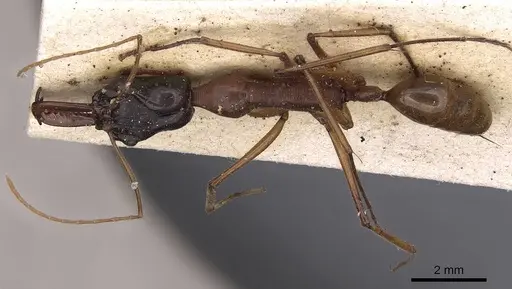
FOCOL0581
View on AntWeb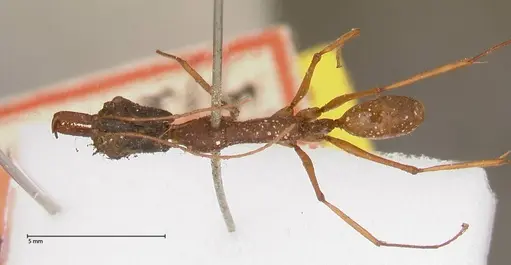
Literature
Loading...Loading products...