

Odontomachus affinis
- Scientific Name
- Odontomachus affinis
- Tribe
- Ponerini
- Subfamily
- Ponerinae
- Author
- Guérin-Méneville, 1844
- Distribution
- Found in 1 countries
Odontomachus affinis Overview
Odontomachus affinis is an ant species of the genus Odontomachus. It is primarily documented in 1 countries , including Brazil. Detailed taxonomic data and occurrence records can be further explored via authoritative databases such as AntWeb or the Global Biodiversity Information Facility (GBIF).
Odontomachus affinis
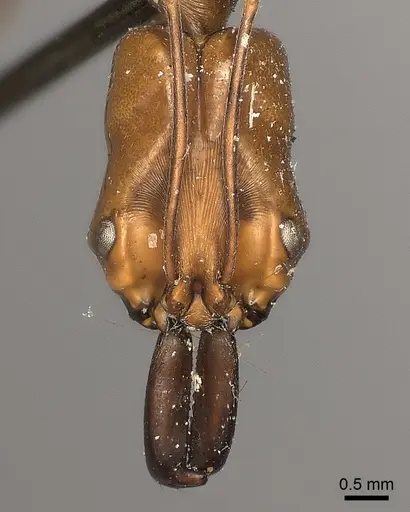
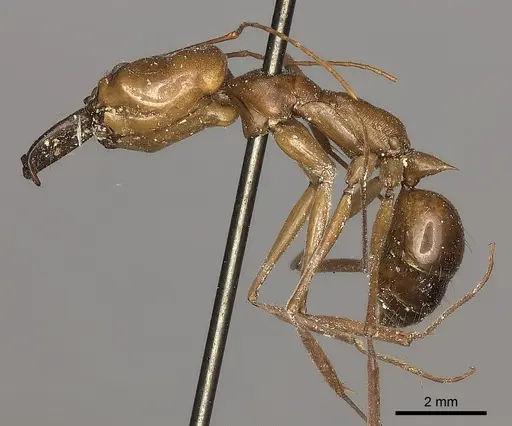
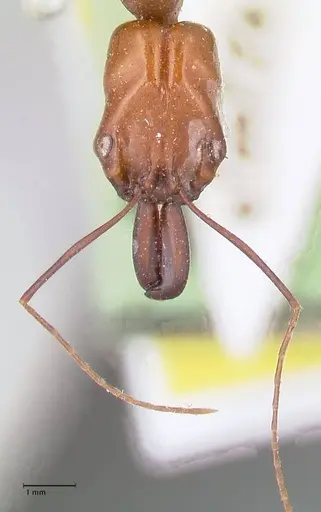
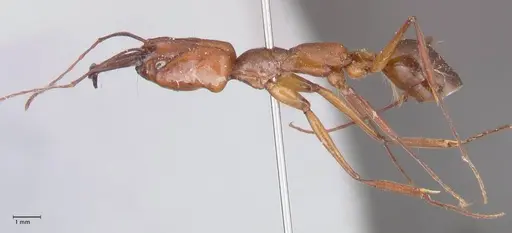
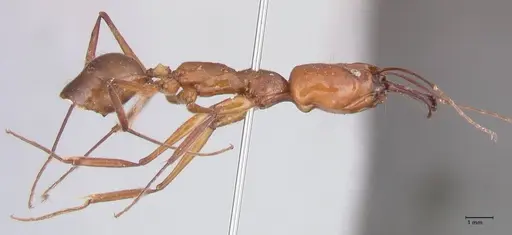
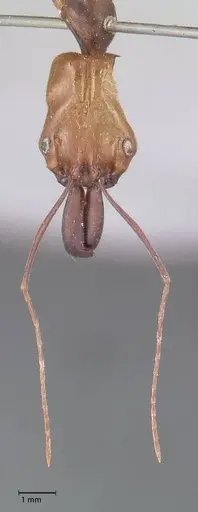
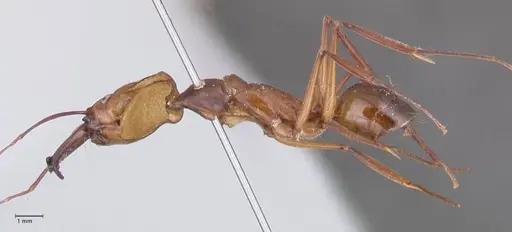
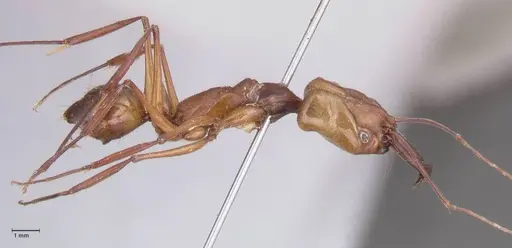
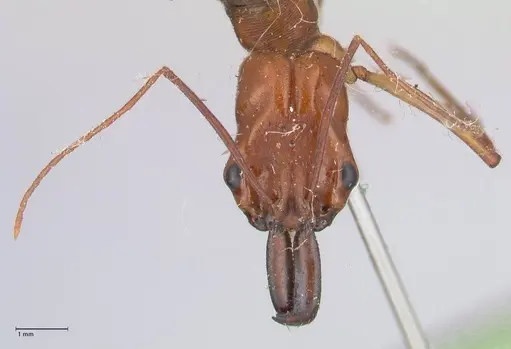
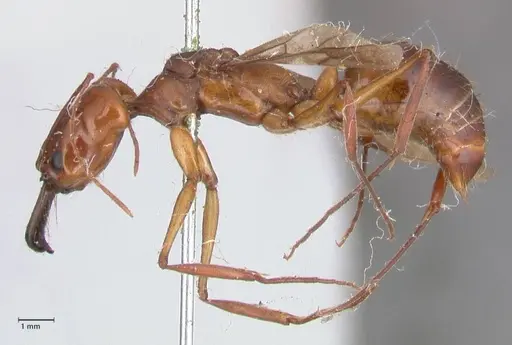
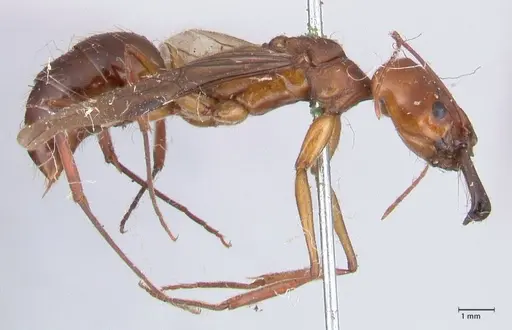
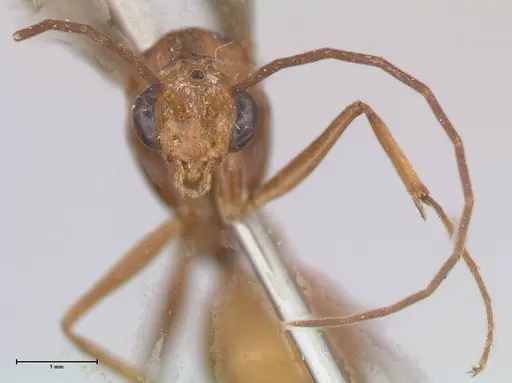
Odontomachus affinis is a medium-sized trap-jaw ant native to the Atlantic Forest of Brazil and Colombia. Workers measure 11.4-14.8mm with a distinctive smooth and shining appearance, the vertex, petiolar node, and first gastral tergum are notably smooth compared to related species like Odontomachus chelifer which has striated surfaces [1]. Queens are larger at 14.9-16.7mm and share the smooth, shiny morphology. This species belongs to the haematodus group and is the sister species to O. chelifer [2]. They are aggressive predators that nest in soil, rotten wood, or under tree bases, with underground nests extending about 50cm deep and 30cm wide [1]. The species is endemic to the Atlantic Forest and can be found from 50m to 1000m elevation [3].
What makes O. affinis particularly interesting is its complex social structure. Research shows that queens in young colonies display a much larger behavioral repertoire, but as colonies grow, their behavior becomes limited to egg production. Workers from colonies without queens or unfertilized gynes will lay eggs, suggesting queens have some control over worker sterility [3]. This species is also sensitive to environmental changes and is an indicator of undisturbed areas, making it a valuable bioindicator species [4].
Quick Summary
- Difficulty: Medium
- Origin & Habitat: Atlantic Forest of Brazil and Colombia, found in forest or urban green areas from 50m to 1000m elevation [3]. Nests in soil, rotten wood, or under tree trunk bases with galleries along root systems [1].
- Colony Type: Single-queen colonies (monogyne). Queens in young colonies show varied behavior but become focused on egg-laying as colonies mature. Workers can lay eggs if the queen dies or is unfertilized [3].
- Colony: Monogyne
- Founding: Semi-claustral
- Size & Growth:
- Queen: 14.9-16.7mm (WL 4.5-4.8mm) [1]
- Worker: 11.4-14.8mm (WL 3.3-4.4mm) [1]
- Colony: Estimated up to ~450 workers based on similar trap-jaw ants (log10 max colony size = 2.65 from related species) [5]
- Growth: Moderate, male egg development takes approximately 59 days in artificial conditions [1]
- Development: Approximately 8-10 weeks based on the 59-day male development time and typical Ponerinae development patterns [1] (Male egg development is 59 (±3) days in captivity. Development is temperature-dependent, warmer conditions may speed this up.)
- Antkeeping:
- Temperature: Keep at 24-28°C. This is a tropical Atlantic Forest species that prefers warm, stable conditions. A heating cable on one side of the nest creates a suitable gradient [3].
- Humidity: High humidity required, they affinity with shaded, humid environments [6]. Keep nest substrate consistently moist but not waterlogged. Provide a water tube at all times.
- Diapause: Not required. As a tropical species from the Atlantic Forest, they do not need hibernation. Maintain year-round warm conditions [3].
- Nesting: Naturalistic setups work best, they nest in soil, rotten wood, or under tree bases in the wild [1]. A Y-tong or plaster nest with chambers scaled to their medium size works well. Provide damp substrate and avoid drying out.
- Behavior: O. affinis is an aggressive predator that forages in leaf litter and on the ground [6]. They are large predators in the epigaeic guild and will readily take live prey. Workers have trap-jaw mandibles capable of snapping shut rapidly. They are sensitive to environmental changes and prefer shaded, humid microhabitats [6]. Escape prevention should be moderate, they are medium-sized ants but active hunters.
- Common Issues: sensitive to habitat disturbance, wild-caught colonies may struggle in captivity if collected from degraded areas, slow colony growth compared to many common ants, requires patience during founding phase, requires live prey as primary food source, won't survive on sugar alone, humidity must be maintained consistently, drying out causes colony decline, queen may stop foraging behavior once established, workers must hunt for the colony
Nest Preferences and Setup
In the wild, O. affinis nests in soil, rotten wood, or under tree trunk bases. The underground nests can extend about 50cm deep and 30cm wide, with galleries typically built along the root system of the tree above [1]. Young colonies are sometimes found under partially rotten trunks with the founding queen in a single chamber under the bark [3].
For captive care, a naturalistic setup works best. Use a mix of soil and small substrate pieces in a formicarium, or a Y-tong/plaster nest with appropriately sized chambers. The chambers should be medium-sized, large enough for the colony but not excessively spacious. Keep the nest substrate consistently moist but not waterlogged. These ants are sensitive to drying out and require humid conditions [6]. A water tube should always be available.
Feeding and Diet
O. affinis is an aggressive predator that forages in leaf litter and on the ground, preying on small invertebrates [6]. In laboratory conditions, they have been observed feeding on honey and sugar water, but they rejected termites [7]. They are specialized predators and will not thrive on sugar alone, live prey is essential.
Feed them a diet primarily consisting of live small invertebrates such as fruit flies, small crickets, mealworms, and other appropriately sized prey. Offer sugar water or honey as a supplement, but protein from live prey should be the main food source. They are large enough to take down prey significantly larger than themselves due to their powerful trap-jaw mandibles. Feed 2-3 times per week, adjusting based on colony size and consumption.
Temperature and Seasonal Care
As a tropical species from the Atlantic Forest, O. affinis requires warm conditions year-round. Keep the nest area at 24-28°C. This is warmer than many temperate ant species require. A heating cable placed on one side of the nest can create a suitable temperature gradient, allowing the ants to regulate their own temperature by moving between warmer and cooler areas.
Unlike temperate species, O. affinis does not require hibernation or diapause. Maintain consistent warm temperatures throughout the year. They are sensitive to temperature drops and should not be exposed to cool conditions for extended periods. Room temperature within the 24-28°C range is acceptable, but you may need supplemental heating in cooler climates. [3]
Behavior and Colony Dynamics
This species has fascinating social behavior. Research shows that queens in young colonies display a much larger behavioral repertoire, they are more active and engage in various behaviors beyond egg-laying. As colonies grow and become established, the queen's behavior becomes increasingly limited to egg production [3].
Interestingly, if a colony loses its queen or has unfertilized gynes (winged virgin queens), workers will begin laying eggs. This suggests that queens have some chemical or behavioral control over worker sterility. Chemical communication appears more important to queens than workers, queens do not display antennation (antenna-touching) behavior with workers, while workers use both chemical and mechanical signals through antennation to recognize colony members [3].
Workers are active hunters that patrol the leaf litter and ground surface. They are part of the large predator epigaeic guild [8]. Their trap-jaw mandibles can snap shut rapidly to capture prey.
Growth and Development
Colony growth is moderate rather than fast. The average time for male egg development in artificial conditions is 59 (±3) days [1]. This gives us a baseline, expect approximately 8-10 weeks from egg to adult worker at optimal temperature. Development will be faster at warmer temperatures within their range and slower at cooler temperatures.
Colony size appears to be moderate, similar trap-jaw ants in the genus reach several hundred workers. They are not rapid recruiters like some Myrmicinae, but their hunting efficiency as predators compensates for smaller colony sizes. Founding colonies will grow slowly at first, but once established with workers, growth should steady.
Frequently Asked Questions
How long does it take for Odontomachus affinis to produce first workers?
Expect approximately 8-10 weeks from egg to first worker at optimal temperature (24-28°C). The male egg development time of 59 days provides a good baseline for this species [1].
What do Odontomachus affinis eat?
They are aggressive predators that need live small invertebrates as their primary food. They accept fruit flies, small crickets, mealworms, and similar prey. They will also take sugar water or honey as a supplement, but live prey is essential for their survival [6][7].
Do Odontomachus affinis need hibernation?
No. As a tropical species from Brazil's Atlantic Forest, they do not require hibernation. Keep them warm year-round at 24-28°C [3].
Are Odontomachus affinis good for beginners?
They are rated as medium difficulty. They require warm temperatures, high humidity, and live prey, more specialized care than sugar-feeding ants. However, they are not as difficult as some exotic species. Expect slower colony growth than common ant species.
How big do Odontomachus affinis colonies get?
Colony size is moderate, likely several hundred workers based on similar trap-jaw ant species. They are not among the largest ants but maintain healthy, functional colonies [5].
Can I keep multiple Odontomachus affinis queens together?
No. This is a monogyne (single-queen) species. Multiple unrelated queens will fight. Only keep one queen per colony.
What temperature range does Odontomachus affinis need?
Keep them at 24-28°C. This is a warm-tropical species that needs consistently warm conditions. A heating cable on one side of the nest creates a suitable gradient.
What type of nest should I use for Odontomachus affinis?
A naturalistic setup with damp soil/substrate works well, or a Y-tong/plaster nest with medium-sized chambers. They naturally nest in soil, rotten wood, or under tree bases. Keep the substrate consistently moist [1].
Why is my Odontomachus affinis colony declining?
Common causes include: too low temperature (below 24°C), dry conditions (they need high humidity), lack of live prey, or stress from disturbance. They are sensitive to environmental changes and require consistent care [6][4].
Is Odontomachus affinis invasive anywhere?
No. This species is native to Brazil and Colombia and has not been documented as invasive in any region.
What makes Odontomachus affinis different from other trap-jaw ants?
O. affinis has distinctly smooth and shining vertex, petiolar node, and gastral terga, unlike related species like O. chelifer which have striated surfaces. They are also sensitive to environmental disturbance and serve as bioindicators of undisturbed habitats [1][4].
References

This caresheet is licensed under CC BY-SA 4.0 .
CASENT0217536
View on AntWeb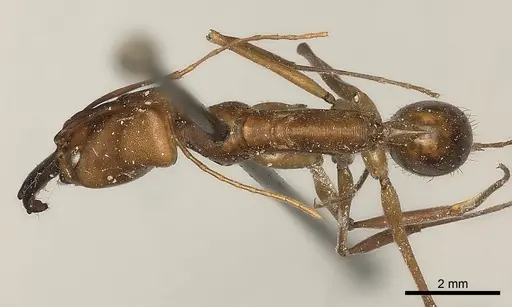
CASENT0923413
View on AntWeb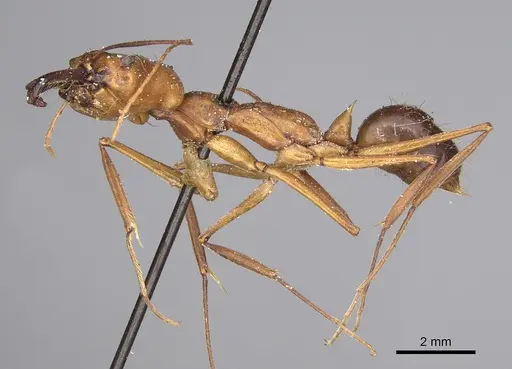
FOCOL0682
View on AntWeb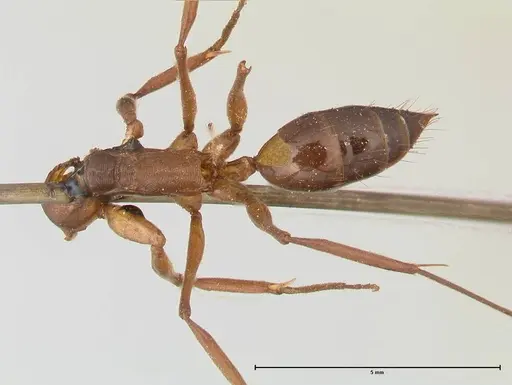
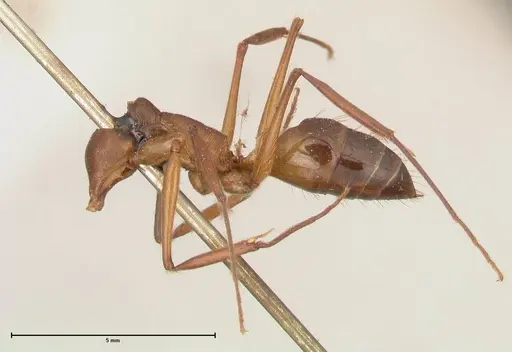
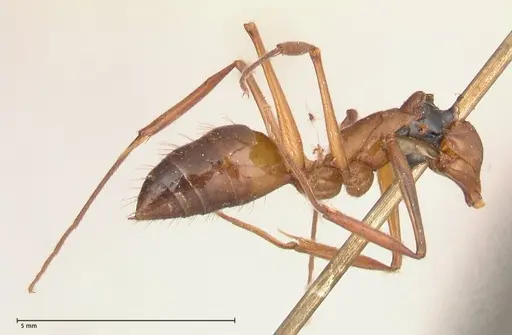
FOCOL1055
View on AntWeb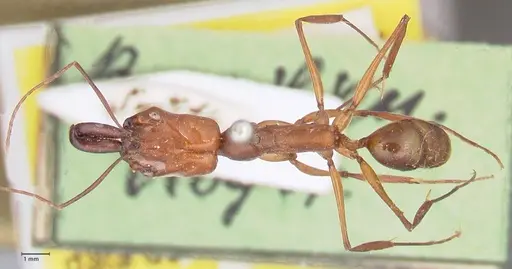
FOCOL1056
View on AntWeb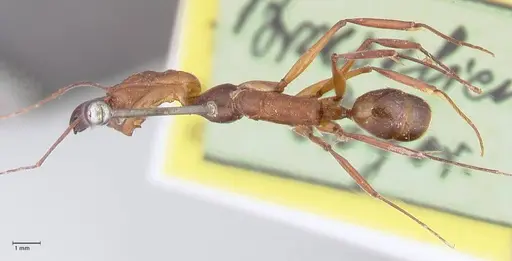
FOCOL1057
View on AntWeb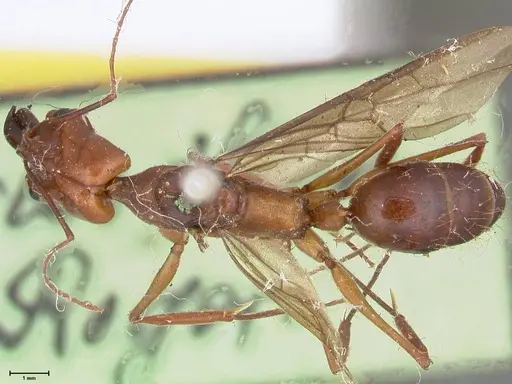
FOCOL1058
View on AntWeb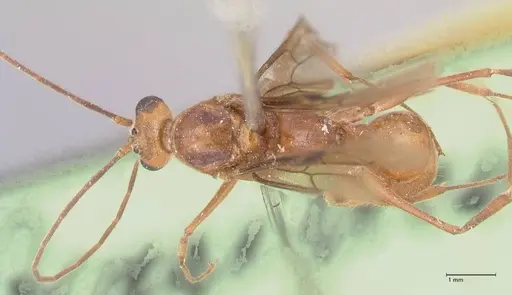
Literature
Loading...Loading products...