

Ocymyrmex robustior
- Scientific Name
- Ocymyrmex robustior
- Tribe
- Crematogastrini
- Subfamily
- Myrmicinae
- Author
- Stitz, 1923
- Distribution
- Found in 1 countries
Ocymyrmex robustior Overview
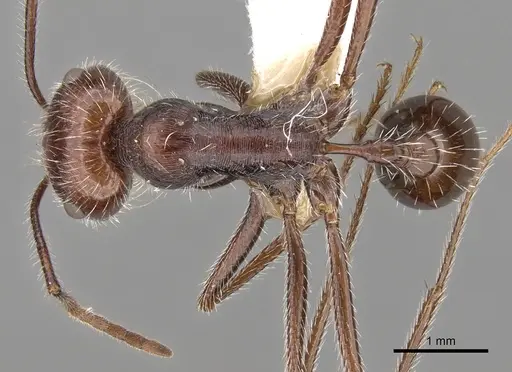
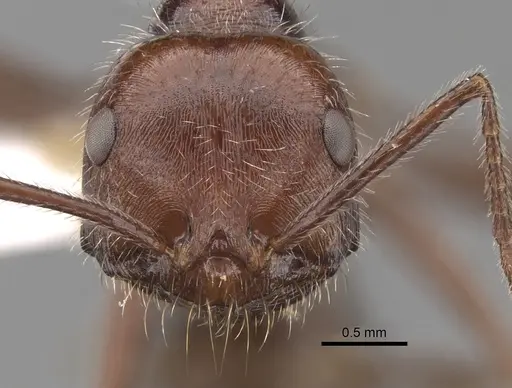
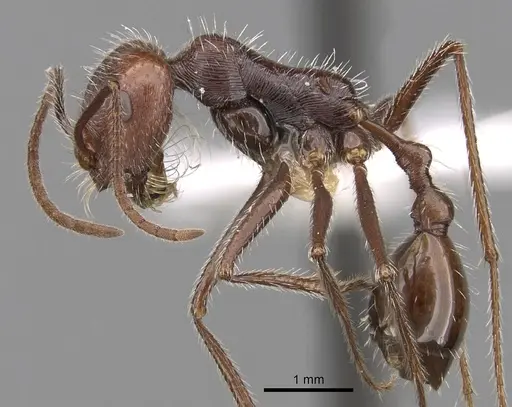
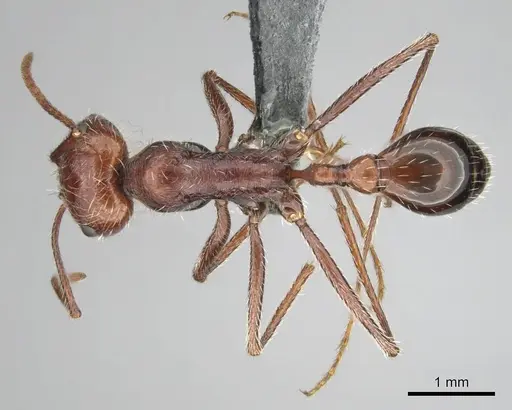
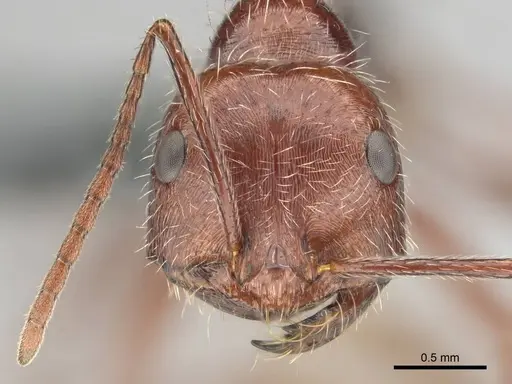
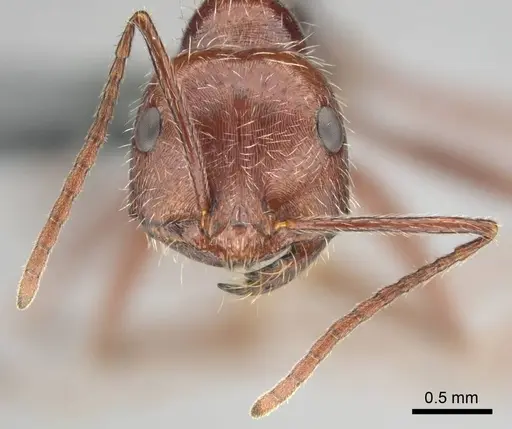
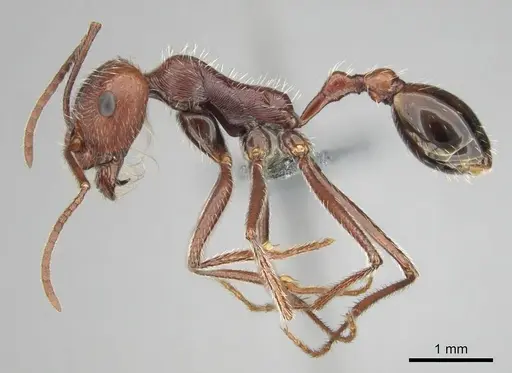
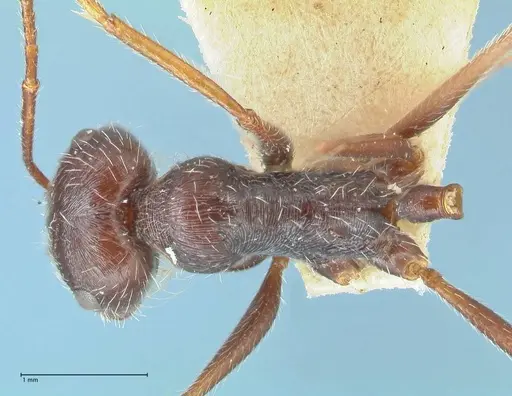
Ocymyrmex robustior is an ant species of the genus Ocymyrmex. It is primarily documented in 1 countries , including Namibia. Detailed taxonomic data and occurrence records can be further explored via authoritative databases such as AntWeb or the Global Biodiversity Information Facility (GBIF).
Ocymyrmex robustior
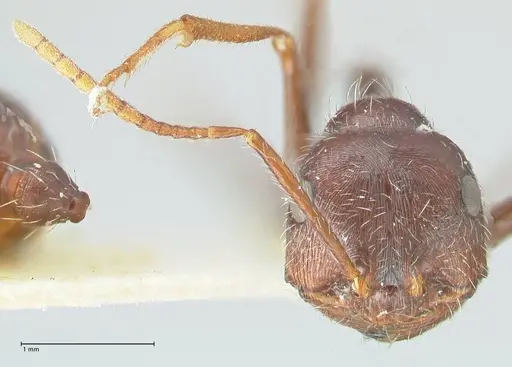
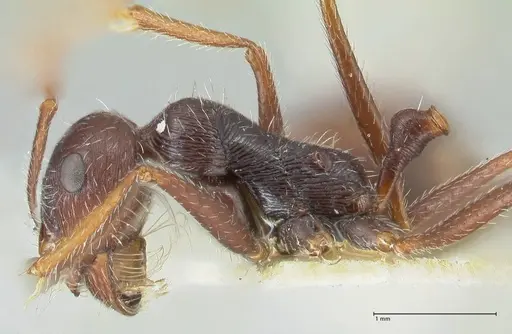
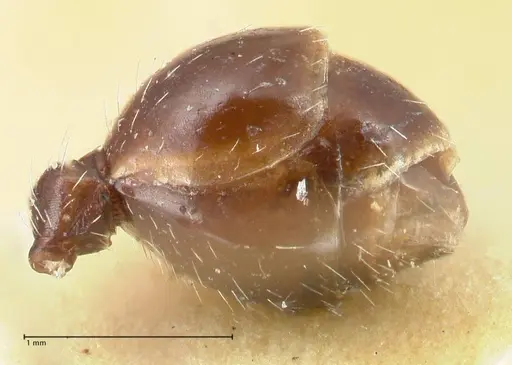
Ocymyrmex robustior is a small, thermophilic ant species native to the Namib Desert in southern Africa. Workers are slender and fast-moving, built for surviving extreme heat while scavenging for dead insects. This species is a classic desert scavenger, the ecological equivalent of Cataglyphis in the northern hemisphere. They inhabit gravel plains and sand dunes across Namibia and South Africa, where surface temperatures can exceed 45°C. What makes them fascinating is their ergatoid queen system, instead of large, winged queens, they have wingless queens that look similar to workers. These ergatoid queens can make up 0-26% of the colony population, and colonies can have either a single queen or multiple matrilines working together. They navigate using an impressive system of learning walks with pirouettes and path integration to find their invisible nest entrances in the featureless desert [1][2][3].
Quick Summary
- Difficulty: Medium
- Origin & Habitat: Namib Desert in Namibia and South Africa, gravel plains and sand dunes. This is an extremely hot, arid environment where surface temperatures regularly exceed 45°C [1][4].
- Colony Type: Facultatively single or multi-queen. Most colonies (79.6%) have one mated ergatoid queen, but about 20% contain multiple matrilines with 2-4 reproductive queens. Ergatoid queens are wingless and worker-sized, making up 0-26% of the colony [1].
- Colony: Optionally polygyne
- Size & Growth:
- Queen: Approximately 5-7mm (ergatoid queens are worker-sized and wingless) [1]
- Worker: Approximately 4-6mm (estimated from genus)
- Colony: Up to 350 workers plus ergatoid queens per colony [1]
- Growth: Moderate, colonies produce workers, ergatoid queens, and males year-round [1]
- Development: Unknown, no specific development data available. Based on similar Myrmicinae in warm climates, estimate 4-8 weeks at optimal temperature. (Colony produces brood year-round due to constant warm conditions in their native habitat)
- Antkeeping:
- Temperature: Keep at 26-32°C. This is a highly thermophilic species, they forage at extreme temperatures and have heat tolerance up to 46°C. Provide a warm area around 28-30°C with a gradient reaching up to 32°C. A heating cable on one side of the nest creates the necessary temperature gradient [4].
- Humidity: Low, these are desert ants adapted to arid conditions. Keep nesting area relatively dry, with only minimal moisture. Think desert conditions, not rainforest. Provide a small water tube but avoid damp substrate [2].
- Diapause: No, these ants are active year-round in their warm native habitat. No hibernation or winter rest needed [1].
- Nesting: Y-tong (AAC) or plaster nests work well. They prefer tight, enclosed spaces. In nature they nest in tiny holes level with the ground, invisible on the barren sand surface. Provide narrow chambers and a small outworld for foraging [5].
- Behavior: These are fast, active foragers with excellent navigation skills. Workers forage solitarily, scavenging dead insects, they are thermophilic scavengers that capitalize on heat-stressed prey. They use path integration and landmark recognition to navigate back to their invisible nest entrances. Workers perform distinctive 'learning walks' with pirouettes when exploring new areas. They are not aggressive but will defend the nest. Escape prevention is important, they are small and quick [2][6][7].
- Common Issues: heat stress from incorrect temperatures, too cool and they become sluggish, excessive humidity leading to mold in the nest, they need dry desert conditions, overfeeding causing mold in the outworld, their desert diet is simple, scavenged insects only, difficulty observing them, they nest in tiny invisible holes and forage at extreme heat when most keepers aren't watching, colony decline if not provided enough heat, they evolved for constant warmth
Temperature and Heating
Ocymyrmex robustior is one of the most heat-tolerant ant species you can keep. In the Namib Desert, they forage when surface temperatures reach 45-60°C, and their heat tolerance (LT50) is an incredible 46.8°C [4]. This means you need to keep them warm, aim for 26-32°C in the nest area. A heating cable placed on top of the nest works well to create this warmth without drying out the nest too quickly. The key is providing a temperature gradient so workers can choose their comfort zone. At lower temperatures they become sluggish and may stop foraging entirely. These ants have evolved sophisticated heat-shock responses including upregulated trehalose (a sugar that protects cells from heat stress) and specialized proteins that protect their cells [4]. Room temperature alone is likely too cold, you will need active heating.
Feeding and Diet
These are scavengers, not hunters. In the wild they feed almost exclusively on dead or heat-stressed insects that other predators cannot handle [8]. They do not hunt live prey, they rely on finding carcasses. In captivity, offer small pieces of dead insects (fruit flies, small crickets, mealworms) every few days. Remove any uneaten food within 24 hours to prevent mold. Sugar water is unlikely to be accepted, this is not a honeydew-feeding species. The key is providing a varied diet of insect protein from scavenged sources. Because they are adapted to sparse food in the desert, do not overfeed, small amounts are better than large offerings that will mold [6].
Nest Setup and Housing
Y-tong (acrylic) nests or plaster nests work best for this species. They prefer tight, enclosed chambers, in nature their nest is just a tiny hole level with the ground, nearly invisible on the barren sand [5]. The nest should be warm and dry, not humid. Provide a small outworld connected by tubing. Because they are small and fast, use fluon on tube connections and ensure all gaps are sealed. The outworld can be simple, a foraging arena where you place dead insect pieces. These ants are solitary foragers, so you will not see mass raiding behavior. They come and go individually from the nest entrance.
Colony Structure and Ergatoid Queens
This species has a fascinating social structure. Instead of large winged queens, they have ergatoid queens, wingless queens that look similar to workers. These ergatoid queens can make up 0-26% of the colony population, averaging 14.5% [1]. Most colonies (79.6%) are headed by a single mated queen, but about 20% have multiple matrilines with 2-4 reproductive queens working together [1]. All colony members are produced year-round. When a colony loses its queen, one of the virgin ergatoid queens may develop ovaries and become the new reproductive queen, this is a 'multi-purpose ergatoid queen' system similar to some other rare ant species [1]. This means your colony may naturally develop multiple potential replacement queens over time.
Navigation and Learning Walks
One of the most remarkable things about Ocymyrmex robustior is their navigation system. Like Cataglyphis in the northern hemisphere, they use path integration, they constantly track their position relative to the nest. But they also perform distinctive 'learning walks' when exploring new areas. During these walks, they perform 'pirouettes', rapid turns where they stop, face the nest direction, then turn away and repeat from different angles [7]. They only stop once or twice during these learning walks, making them more efficient than some related species [9]. When they cannot see landmarks, they perform lengthy search movements. But with even a single landmark, they can pinpoint their invisible nest entrance almost directly [5]. This makes them fascinating to observe if you create interesting landmark arrangements in their outworld.
Frequently Asked Questions
How long does it take for Ocymyrmex robustior to produce first workers?
The exact egg-to-worker timeline is not documented in scientific literature. Based on similar Myrmicinae in warm climates, estimate 4-8 weeks at optimal temperature (around 28-30°C). They produce brood year-round in their native habitat, so expect relatively constant brood development rather than seasonal bursts.
Do Ocymyrmex robustior ants sting?
This species is not known for having a painful sting. They are small desert scavengers and their primary defense is fleeing. However, as with most ants, they may bite if threatened. The sting is likely too small to penetrate human skin significantly.
Can I keep multiple Ocymyrmex robustior queens together?
Yes, this species naturally forms both single-queen and multi-queen colonies. About 20% of wild colonies have multiple matrilines with 2-4 reproductive queens [1]. However, introducing unrelated queens in captivity has not been studied, proceed with caution and monitor for aggression.
What temperature do Ocymyrmex robustior ants need?
Keep them warm at 26-32°C. This is a highly thermophilic species that evolved to handle extreme desert heat, they can tolerate temperatures up to 46°C [4]. Use a heating cable on the nest to maintain warmth. Room temperature alone is too cool for optimal activity.
Are Ocymyrmex robustior good for beginners?
This species is rated Medium difficulty. They require active heating and specific dry conditions, which adds complexity. However, they are not aggressive and don't require specialized prey. The main challenges are providing consistent heat and resisting the urge to overfeed. They are fascinating to watch but require more equipment than common temperate species.
How big do Ocymyrmex robustior colonies get?
Colonies reach around 350 workers plus ergatoid queens in the wild [1]. This is moderate compared to some species, they are not supercolony formers. Expect a few hundred workers at maturity.
Do Ocymyrmex robustior need hibernation?
No. These ants are active year-round in their native Namib Desert habitat where temperatures remain warm. They do not enter diapause or hibernation. Keep them heated continuously.
What do Ocymyrmex robustior ants eat?
They are scavengers that eat dead insects. In captivity, offer small pieces of dead insects (fruit flies, small crickets, mealworms) every few days. Remove uneaten food within 24 hours. They do not hunt live prey and are unlikely to accept sugar water. This is a simple protein-based diet.
Why does my Ocymyrmex robustior colony seem inactive?
The most likely cause is temperatures being too low. These ants need 26-32°C to be active, at room temperature they become sluggish. Check your heating setup. Also ensure humidity is low, they are desert ants that prefer dry conditions.
When will my Ocymyrmex robustior colony produce new queens?
This species produces ergatoid queens year-round in warm conditions. Ergatoid queens are worker-sized and wingless, they do not have nuptial flights. Instead, mating occurs at the nest entrance, and new colonies likely form through budding or dependent foundation where a queen leaves with workers to start a new nest nearby [1].
References

This caresheet is licensed under CC BY-SA 4.0 .
Literature
Loading...Loading products...