

Ocymyrmex foreli
- Scientific Name
- Ocymyrmex foreli
- Tribe
- Crematogastrini
- Subfamily
- Myrmicinae
- Author
- Arnold, 1916
- Distribution
- Found in 2 countries
Ocymyrmex foreli Overview
Ocymyrmex foreli is an ant species of the genus Ocymyrmex. It is primarily documented in 2 countries , including South Africa, Zimbabwe. Detailed taxonomic data and occurrence records can be further explored via authoritative databases such as AntWeb or the Global Biodiversity Information Facility (GBIF).
Ocymyrmex foreli
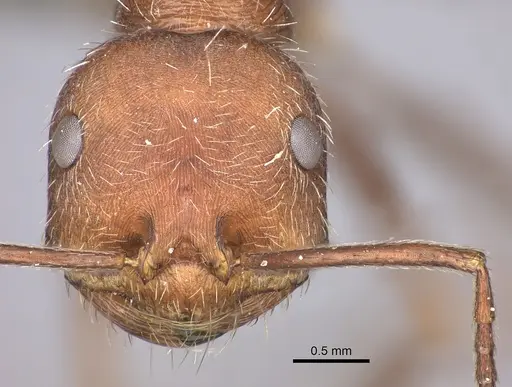
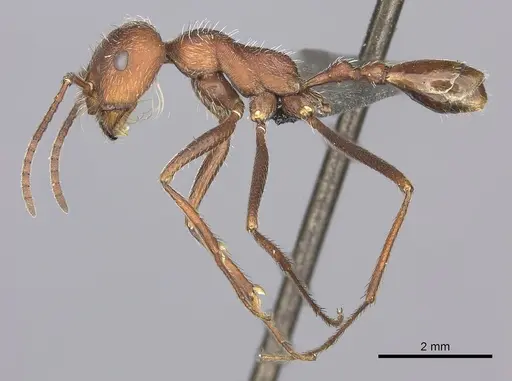
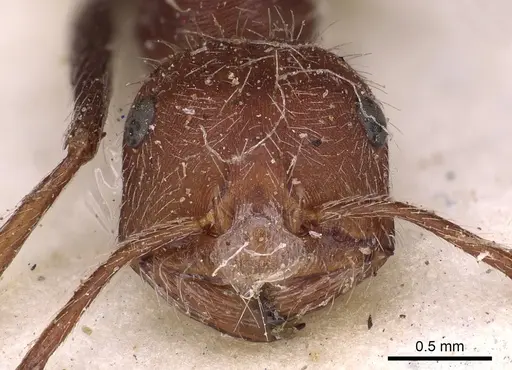
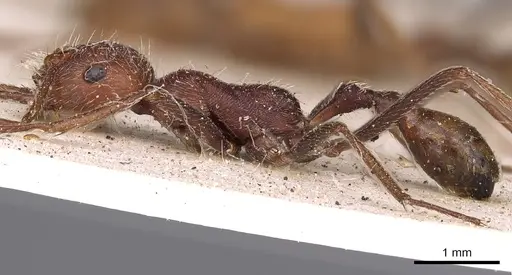
Ocymyrmex foreli is a medium-sized myrmicine ant native to southern Africa, found in South Africa and Zimbabwe. Workers measure 7.3-8.0mm and have a distinctive robust appearance with a massively developed petiole node that is coarsely sculptured. They are uniformly orange-red to red in color throughout their body, with fine longitudinal rugulose sculpture on the head and strong transverse rugae encircling the petiole node. This species is a member of the weitzeckeri group and is closely related to Ocymyrmex sobek, from which it can be separated by its more regular petiole sculpture and less contrasting color pattern. Unlike many ant species, O. foreli has ergatoid queens, wingless females that can serve as replacement reproductives. Colonies contain 160 to 1586 adults, with 4-20% being ergatoid females, though only one inseminated female is reproductively active per colony [1][2].
Quick Summary
- Difficulty: Medium
- Origin & Habitat: Desert and arid regions of South Africa and Zimbabwe in the Afrotropical region. Nests typically have one entrance opening into a vertical tunnel that terminates in a broad chamber at about 30cm depth, with brood and food chambers branching off at various intermediate levels [1].
- Colony Type: Colonies contain ergatoid (wingless) females that serve as replacement reproductives. Only one inseminated ergatoid queen is reproductively active per colony, despite multiple ergatoid females being present. Ergatoid females are produced throughout the year [1][2].
- Colony: Monogyne
- Size & Growth:
- Queen: Ergatoid (wingless) females, not directly measured but workers are 7.3-8.0mm [1]
- Worker: 7.3-8.0mm [1]
- Colony: 160 to 1586 adults per colony [1]
- Growth: Moderate, colony production is positively correlated with rainfall [1]
- Development: Unknown, no specific development data available. Based on related Myrmicinae and desert ant patterns, estimate 6-10 weeks at optimal temperature. (Development likely tied to seasonal rainfall patterns in their native desert habitat.)
- Antkeeping:
- Temperature: Keep warm, around 24-30°C. As a desert species from southern Africa, they prefer warmer conditions with a temperature gradient allowing them to regulate [1].
- Humidity: Low to moderate, desert species. Keep nest substrate relatively dry, with some moisture in deeper chambers. Avoid overly damp conditions [1].
- Diapause: Likely reduced activity during dry or cool seasons. Based on desert ant patterns, they may have reduced activity periods but true hibernation is unlikely in captive conditions. Maintain stable warm temperatures year-round [1].
- Nesting: Deep nesting species requiring vertical space. Provide a naturalistic setup with at least 20-30cm depth for tunneling, or a Y-tong/plaster nest with deep chambers. They relocate nests frequently in the wild, so provide substrate they can dig in [1].
- Behavior: Diurnal and active foragers. They are known for frequent nest relocation, entire colonies move together to new nest sites, with pre-relocation forays occurring for weeks before the actual move. Workers carry brood, callows, and intra-nidal individuals to the new location. Colony fission involves movements over greater distances when a newly inseminated ergatoid excavates a new nest with recruited nest-mates. They are active hunters and foragers in their desert habitat [1]. Escape prevention is important given their medium size, standard barriers should suffice.
- Common Issues: desert species are sensitive to excess moisture, keep conditions dry to prevent mold and fungal issues, frequent nest relocation behavior may stress colonies if disturbed too often, colonies may struggle if temperatures drop below 20°C for extended periods, ergatoid queen system means only one female reproduces, do not expect multiple egg-layers, wild-caught colonies may have parasites that affect survival in captivity
Nest Preferences and Housing
Ocymyrmex foreli is a deep-nesting desert species. In the wild, they excavate vertical tunnels reaching about 30cm deep with chambers for brood and food storage at various levels. For captive care, provide either a naturalistic setup with deep sandy soil (at least 20-30cm depth) or a Y-tong/plaster formicarium with deep chambers. They are active diggers and will excavate their own tunnels if given appropriate substrate. Avoid overly compact or wet substrates, desert ants need relatively dry conditions. Provide a temperature gradient using a heating cable on one side of the nest, allowing workers to regulate their own temperature by moving between warmer and cooler areas [1].
Feeding and Diet
As a desert ant species, Ocymyrmex foreli is likely predatory and forages actively for small invertebrates. They are diurnal hunters, actively searching for prey during daylight hours. In captivity, offer small live prey such as fruit flies, pinhead crickets, and other small insects. Sugar sources like honey water or sugar water may be accepted but should not be the primary food source. Feed protein prey 2-3 times per week and provide sugar water continuously. Remove uneaten prey after 24 hours to prevent mold. Their active foraging style means they will readily accept prey that wanders into their territory [1].
Temperature and Seasonal Care
As a species from southern Africa's desert regions, Ocymyrmex foreli prefers warm conditions. Maintain nest temperatures between 24-30°C, with a slight gradient allowing workers to move between warmer and cooler areas. A heating cable placed on part of the nest can create this gradient. They are diurnal and most active during warmer parts of the day. In captivity, maintain consistent warm temperatures year-round, they do not require true hibernation. Colony production in the wild correlates with rainfall patterns, so consider slight seasonal variations in feeding frequency, with more food during warmer months. Avoid temperatures below 20°C for extended periods [1].
Colony Structure and Reproduction
Ocymyrmex foreli has a unique colony structure among ants. Unlike typical ants with winged queens, this species produces ergatoid females, wingless queens that develop from the same caste as workers. Studies show 4-20% of females in a colony are ergatoid females, but only ONE is inseminated and reproductively active at any time. This female is distinguished by her physogastry (distended abdomen full of eggs). Ergatoid females are produced throughout the year, and colony growth is positively correlated with rainfall. When colony fission occurs, a newly inseminated ergatoid excavates a new nest with help from recruited nest-mates before moving to a new location away from the mother colony's foraging area [1][2].
Behavior and Nest Relocation
One of the most fascinating behaviors of Ocymyrmex foreli is their frequent nest relocation. Unlike many ant species that remain in one nest for years, these ants regularly move their entire colony to new locations. Pre-relocation behavior involves individual and group forays from the nest to the new site for weeks beforehand, with workers excavating the new nest. On relocation day, the entire colony moves, workers carry brood, callows (newly emerged adults), and all intra-nidal individuals to the new nest. This behavior can be stressful in captivity if the setup is disturbed, so minimize vibrations and disruptions. Provide them with adequate space and appropriate substrate to reduce relocation triggers [1].
Frequently Asked Questions
How long does it take for Ocymyrmex foreli to produce first workers?
The exact egg-to-worker development time is unknown for this species. Based on related Myrmicinae and desert ant patterns, expect approximately 6-10 weeks at optimal warm temperatures. Be patient, growth is moderate and tied to seasonal conditions in their native habitat [1].
What do Ocymyrmex foreli ants eat?
They are active predators in the wild. Feed small live prey such as fruit flies, small crickets, and other tiny insects. Offer protein 2-3 times per week and provide sugar water (honey water diluted 1:4 with water) as a constant energy source. Remove uneaten prey after 24 hours [1].
Can I keep multiple Ocymyrmex foreli queens together?
No. This species naturally has only ONE reproductively active ergatoid female per colony. While multiple ergatoid females exist in a colony, only one is inseminated and lays eggs. Combining unrelated foundresses is not recommended and has not been documented [1][2].
Do Ocymyrmex foreli ants sting?
As a Myrmicinae species, they have a stinger but their sting potency on humans is not well documented. Given their medium size (7-8mm), they could potentially sting if provoked, but they are not considered dangerously aggressive. Handle with standard antkeeping precautions [1].
What temperature do Ocymyrmex foreli need?
Keep them warm at 24-30°C. As a desert species from southern Africa, they prefer warmer conditions. Use a heating cable on part of the nest to create a temperature gradient, allowing workers to regulate their own temperature. Avoid temperatures below 20°C for extended periods [1].
How big do Ocymyrmex foreli colonies get?
Colonies reach 160 to 1586 adults in the wild. In captivity, expect colonies to potentially grow to several hundred workers with proper care. Growth is moderate and tied to feeding and temperature conditions [1].
Are Ocymyrmex foreli good for beginners?
This species is rated as Medium difficulty. They have specific temperature requirements (warm desert conditions), unique ergatoid queen biology, and frequent nest relocation behavior. They are better suited for keepers with some antkeeping experience who can maintain warm, relatively dry conditions year-round [1].
Do Ocymyrmex foreli need hibernation?
No. As a desert species, they do not require true hibernation. Maintain stable warm temperatures (24-30°C) year-round. Their activity may naturally decrease during cooler or drier periods in captivity, but they do not need a cold dormancy period [1].
Why is my Ocymyrmex foreli colony relocating?
Nest relocation is NORMAL behavior for this species. In the wild, colonies frequently move to new nest sites. In captivity, triggers may include substrate conditions, temperature preferences, disturbances, or simply their natural behavior. Minimize disruptions and ensure conditions are optimal, but understand that relocation attempts are part of their natural behavior [1].
References

This caresheet is licensed under CC BY-SA 4.0 .
CASENT0235947
View on AntWeb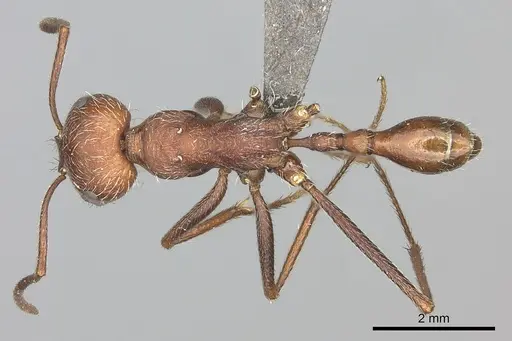
CASENT0900404
View on AntWeb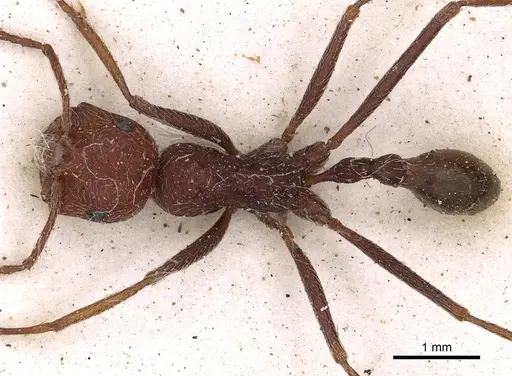
Literature
Loading...Loading products...