

Ocymyrmex cavatodorsatus
- Scientific Name
- Ocymyrmex cavatodorsatus
- Tribe
- Crematogastrini
- Subfamily
- Myrmicinae
- Author
- Prins, 1965
- Distribution
- Found in 2 countries
Ocymyrmex cavatodorsatus Overview
Ocymyrmex cavatodorsatus is an ant species of the genus Ocymyrmex. It is primarily documented in 2 countries , including Namibia, South Africa. Detailed taxonomic data and occurrence records can be further explored via authoritative databases such as AntWeb or the Global Biodiversity Information Facility (GBIF).
Ocymyrmex cavatodorsatus
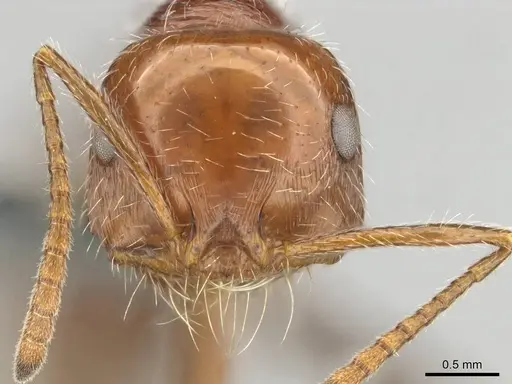
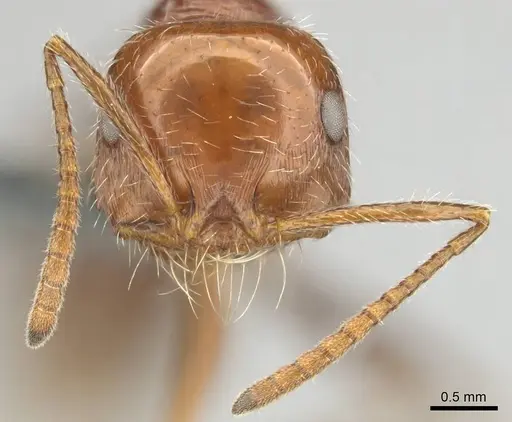
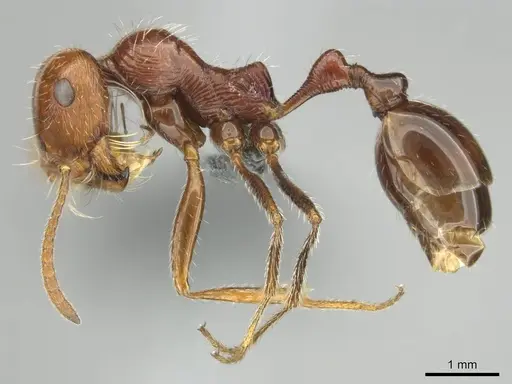
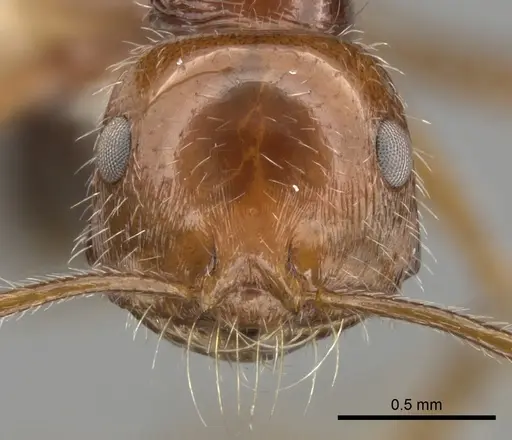
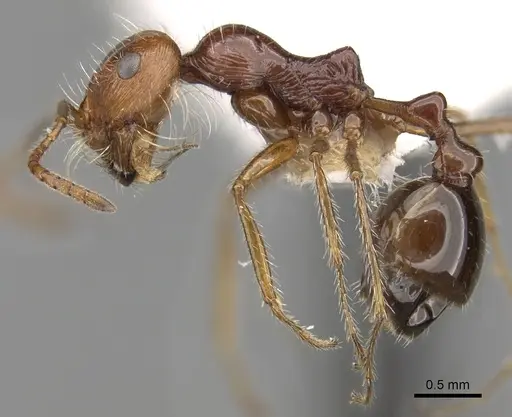
Ocymyrmex cavatodorsatus is a small Myrmicinae ant native to the arid regions of Namibia and South Africa. Workers measure approximately 4.5mm in total length, with a distinctive bright red to yellowish-red head and brick-red alitrunk, while the gaster is distinctly darker, appearing piceous (glossy black). The species is easily recognized by its uniquely saddle-shaped alitrunk profile, where the promesonotum forms a high arch and the posterior creates a deep concavity before rising again toward the propodeum. Unlike related species, this ant lacks the basal gastral constriction typically seen in the genus. This is one of the rarest and least-studied Ocymyrmex species, known only from a handful of specimens collected in desert saltpan and savannah habitats [1].
Quick Summary
- Difficulty: Unknown, likely Expert
- Origin & Habitat: Namibia and South Africa (Afrotropical Region). Found in desert saltpan habitat and savannah environments, extremely hot, dry conditions with sparse vegetation [2].
- Colony Type: Unknown. As a desert-dwelling Myrmicinae, likely forms single-queen colonies, but colony structure has not been documented.
- Size & Growth:
- Queen: Undescribed in detail, likely 6-8mm based on genus patterns [1]
- Worker: 4.5mm total length (TL) [1]
- Colony: Unknown, likely small to moderate based on low abundance scores in the wild [2]
- Growth: Unknown, likely moderate based on typical desert ant patterns
- Development: Unconfirmed. Based on similar desert Myrmicinae, estimate 6-10 weeks at optimal temperature. (No direct development data exists for this species. Estimates based on genus-level patterns.)
- Antkeeping:
- Temperature: High. Desert species, aim for 26-32°C with a warm gradient. Ocymyrmex are thermophilic ants adapted to extreme heat [1].
- Humidity: Low. Desert environment, keep nest relatively dry,30-50% humidity. Provide a small water source but avoid damp conditions.
- Diapause: Likely. Desert ants typically reduce activity during cooler winter months. Provide a cool period around 15-18°C for 2-3 months if colony shows reduced activity.
- Nesting: Ground-nesting desert ant. Use a dry, sandy substrate in a test tube or Y-tong setup. Provide a warm, dry outworld area for foraging.
- Behavior: Not behaviorally dominant in the wild, the study showed 0% behavioral dominance score and they only monopolized 0% of food baits [2]. This suggests a non-aggressive, subordinate foraging strategy. Likely forages individually for small prey and honeydew. Escape risk is moderate given their 4.5mm size, standard barrier precautions recommended.
- Common Issues: No biological data exists, this is one of the least-studied ant species in captivity, so all care is experimental, Desert species may be sensitive to humidity, overwatering easily kills colonies, Temperature needs are critical, they require sustained warmth that may be difficult to maintain, Wild-caught colonies may be stressed from collection in extreme habitats, Growth rate is unknown, beginners may struggle with patience given lack of baseline data
Species Background and Identification
Ocymyrmex cavatodorsatus is an extremely rare ant species described from South Africa in 1965. It belongs to the cavatodorsatus species group within the genus Ocymyrmex, which contains thermophilic (heat-loving) desert ants found throughout southern Africa. The species is distinguished by its uniquely shaped alitrunk that appears saddle-shaped in profile, the promesonotum forms a high arch while the posterior creates a deep concavity. Workers are small at 4.5mm, with a bright red to yellowish-red head and distinctly darker gaster. Unlike its relatives O. barbiger and O. turneri, this species lacks both a clypeal impression and basal gastral constriction. The species has only been recorded from Namibia and South Africa, specifically in desert saltpan and savannah habitats [1].
Natural History and Habitat
This species is known from some of the most extreme habitats in southern Africa, desert saltpans and arid savannah. The 2015 study on Namibian ant assemblages found O. cavatodorsatus in saltpan habitat at ground level, with a very low abundance score of 4.0 and zero behavioral dominance [2]. This means they are rarely encountered and do not compete aggressively for food resources. Their presence in saltpan environments indicates extreme heat tolerance and adaptation to very dry conditions with sparse vegetation. The saddle-shaped alitrunk morphology may be an adaptation for heat reflection or movement through sandy substrates. Nothing else is known about their biology, including nesting behavior, diet, or reproductive cycles [1].
Temperature and Heating Requirements
As a desert-dwelling Ocymyrmex species, these ants require warm to hot conditions. The genus Ocymyrmex is known for being thermophilic, adapted to some of the hottest environments in Africa. You should maintain the nest area at 26-32°C, with access to a warmer zone around 35°C if the colony chooses to use it. A heating cable or heat mat on one side of the nest creates the necessary gradient. Room temperature alone will likely be insufficient. Place the heating on top of the nest, not underneath, to prevent excessive drying. Monitor colony activity, if workers cluster persistently in the warmest area, you can fine-tune from there. The key is providing sustained warmth rather than brief heating periods. Cool room temperatures will likely cause colony decline [1].
Housing and Nest Setup
Given their desert origin, keep housing dry. A test tube setup works for founding colonies, but ensure the water reservoir is small to prevent excessive humidity. For established colonies, a Y-tong (acrylic) nest with dry, sandy substrate is appropriate. The outworld should also be kept relatively dry, avoid frequent misting. Provide a small, shallow water dish for drinking but ensure it cannot flood the nest. Because this species is so poorly known, err on the side of dry conditions rather than damp. Escape risk is moderate, these are small ants but not tiny. Standard barrier methods like Fluon on test tube rims or a moat of water/oil will suffice. Do not use naturalistic setups with live plants as the dry conditions required would kill them. [1]
Feeding and Diet
The diet of Ocymyrmex cavatodorsatus has not been studied, but related Ocymyrmex species are generalist foragers that collect small insects and honeydew. Based on their small size and the low dominance behavior observed in the wild, they likely forage for small prey items and sugary secretions. Offer sugar water or honey as a constant energy source. For protein, provide small insects like fruit flies, pinhead crickets, or mealworm pieces. Feed small amounts 2-3 times per week and remove uneaten food within 48 hours to prevent mold in the dry housing. Do not overfeed, desert ants are adapted to sparse food availability. The zero monopolization score in the field study suggests they are non-aggressive foragers that likely scavenge or collect rather than compete [2].
Frequently Asked Questions
How difficult is Ocymyrmex cavatodorsatus to keep?
Difficulty is unknown since this species has never been documented in captivity. Based on being a desert-dwelling Ocymyrmex with no available biological data, it should be considered an expert-level species. You will essentially be experimenting with care parameters. If you succeed, you may be the first to document this species in captivity.
What temperature do Ocymyrmex cavatodorsatus ants need?
They need high temperatures, aim for 26-32°C in the nest area with access to a zone around 35°C. This is a desert species adapted to extreme heat. A heating cable or heat mat is essential. Room temperature alone will likely be too cold.
How big do Ocymyrmex cavatodorsatus colonies get?
Colony size is unknown. The field study showed very low abundance (4.0 mean score), suggesting colonies are likely small, possibly under 500 workers. This is one of many unknowns about this species.
How long does it take for the first workers to emerge?
Unknown. No development data exists for this species. Based on similar desert Myrmicinae, estimate 6-10 weeks from egg to worker at optimal temperature, but this is purely speculative.
Do Ocymyrmex cavatodorsatus ants sting?
Most Myrmicinae have stingers, though the sting may be too weak to penetrate human skin effectively. Given their small size (4.5mm), any sting would be minimal. No specific data exists for this species.
Can I keep multiple queens together?
Not documented. Colony structure is unknown for this species. Do not attempt combining unrelated queens as no data exists on their behavior.
What do Ocymyrmex cavatodorsatus eat?
Likely small insects and honeydew based on related species. Offer sugar water/honey and small insects like fruit flies or pinhead crickets. Desert ants are adapted to sparse feeding, do not overfeed.
Do they need hibernation or diapause?
Likely yes. Desert ants typically reduce activity during cooler winter months. Provide a cool period around 15-18°C for 2-3 months if the colony shows reduced activity, but this is an educated guess based on genus patterns.
Where is Ocymyrmex cavatodorsatus found?
Namibia and South Africa, specifically in desert saltpan and savannah habitats. This is an extremely rare species with very few documented collections.
Why is so little known about this ant?
Ocymyrmex cavatodorsatus is one of the rarest and least-studied ant species. It is known from only a handful of specimens collected in remote desert regions. No biological studies have been published on this specific species, making captive care entirely experimental.
References

This caresheet is licensed under CC BY-SA 4.0 .
CASENT0252443
View on AntWeb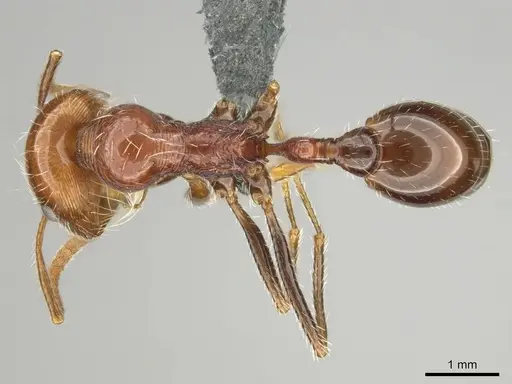
CASENT0280937
View on AntWeb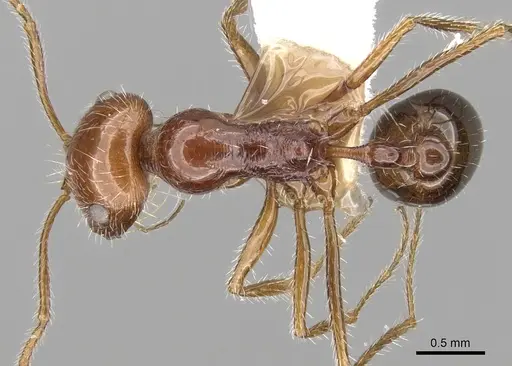
Literature
Loading...Loading products...