

Octostruma schusteri
- Scientific Name
- Octostruma schusteri
- Tribe
- Attini
- Subfamily
- Myrmicinae
- Author
- Longino, 2013
- Distribution
- Found in 1 countries
Octostruma schusteri Overview
Octostruma schusteri is an ant species of the genus Octostruma. It is primarily documented in 1 countries , including Guatemala. Detailed taxonomic data and occurrence records can be further explored via authoritative databases such as AntWeb or the Global Biodiversity Information Facility (GBIF).
Octostruma schusteri
Octostruma schusteri is a tiny myrmicine ant from the cloud forests of Guatemala. Workers measure just 0.82-0.87mm in head width, making them one of the smaller ant species you'll encounter [1]. They have a distinctive appearance with 6-8 spatulate setae on their face and lack the erect hairs commonly seen on many other ant species [1]. This species was only described in 2013,meaning there's very little known about their biology in the wild [2]. They belong to the tribe Attini, which includes leaf-cutter ants, though Octostruma species are not leaf-cutters themselves but likely feed on small prey or scavenge [1].
Quick Summary
- Difficulty: Unknown, likely Expert
- Origin & Habitat: Cloud forest on the slopes of Volcán Atitlán, Guatemala at 1070-1400m elevation. They are found in sifted leaf litter and rotten wood from the forest floor [3].
- Colony Type: Unconfirmed, only worker caste has been described. No queens or males have been documented [3].
- Size & Growth:
- Queen: Unknown, queens have not been described [3]
- Worker: 0.82-0.87mm HW,0.71-0.74mm HL [1]
- Colony: Unknown, colony size has not been documented
- Growth: Unknown
- Development: Unknown, no development data exists for this species (This species was only described in 2013 and no biological observations have been published. All development timelines are currently unconfirmed.)
- Antkeeping:
- Temperature: Based on their cloud forest origin at 1070-1400m elevation, they likely prefer cool, stable conditions around 18-22°C. Start at room temperature and monitor colony activity.
- Humidity: Cloud forest habitat indicates high humidity needs. Keep the nest substrate consistently moist but not waterlogged, think damp forest floor. Provide a gradient from damp to slightly drier areas.
- Diapause: Unknown, no seasonal data available. Guatemala's cloud forests have mild year-round temperatures, so they may not require a true diapause.
- Nesting: In the wild they are found in sifted leaf litter and rotting wood. A naturalistic setup with very small chambers or a well-humidified Y-tong/plaster nest would likely work best. Their tiny size means they need appropriately scaled nesting spaces [3].
- Behavior: Behavior is unstudied. Based on related Octostruma species, they are likely cryptic foragers that hunt or scavenge in leaf litter. Their tiny size makes them vulnerable and they will likely be shy. Escape prevention must be excellent, they can easily slip through standard barrier setups.
- Common Issues: tiny size means escapes are likely without fine mesh barriers, no biological data exists, keepers are essentially pioneering captive husbandry, high humidity requirements may lead to mold if ventilation is poor, unknown temperature tolerance means careful observation is essential, only workers have been described, founding behavior is completely unknown
Species Discovery and Taxonomy
Octostruma schusteri was described as a new species in 2013 by ant expert John T. Longino [2]. The species name honors Jack Schuster, an entomologist at the Universidad del Valle de Guatemala [3]. It belongs to the genus Octostruma, which is part of the tribe Attini (the leaf-cutter ant group) within the subfamily Myrmicinae. However, unlike true leaf-cutters in the genus Atta, Octostruma species are not fungus-growers but are thought to be predators or scavengers of small invertebrates in leaf litter [1]. The species is known only from worker caste specimens collected in cloud forest on the slopes of Volcán Atitlán in Guatemala [3].
Identification and Appearance
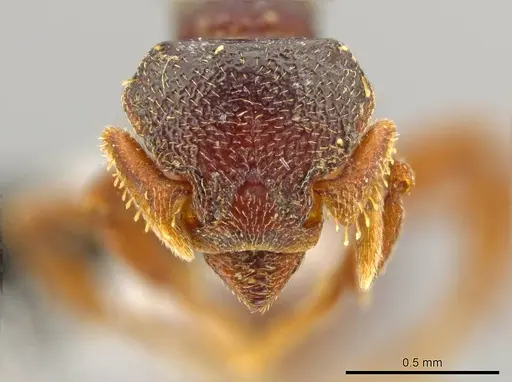
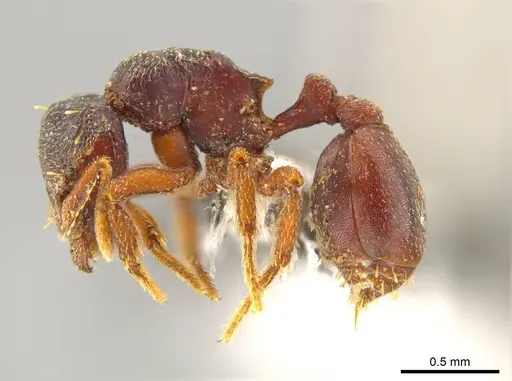
Workers of Octostruma schusteri are tiny, measuring 0.82-0.87mm in head width (HW) and 0.71-0.74mm in head length (HL) [1]. They can be identified by several key features: the face lacks a transverse arcuate carina (a curved ridge), the basal five teeth of the mandible are acute, and the apex of the labrum is bilobed [3]. Unlike many ant species, they lack erect setae on the mesosomal dorsum and first gastral tergite [3]. The face has 6-8 spatulate (spoon-shaped) setae, and the clypeus is sublucid (somewhat shiny) with shallow, widely-spaced puncta [1]. The first gastral tergite is uniformly punctate with small puncta that are roughly equal in diameter to the spaces between them, and the interspaces are smooth and shining [1].
Natural History
This species is known only from cloud forest habitats at elevations of 1070-1400 meters on the slopes of Volcán Atitlán in Guatemala [3]. All specimens have been collected using Winkler extractors from sifted leaf litter and rotten wood from the forest floor [3]. This indicates they are cryptic leaf-litter dwellers that nest in damp, dark microhabitats within the forest floor. The cloud forest environment is characterized by high humidity, cool temperatures, and dense vegetation. No queens, males, or colony fragments have been described, meaning we have essentially no information about their reproductive biology, colony structure, or seasonal activity patterns [3].
Keeping Octostruma schusteri in Captivity
Keeping Octostruma schusteri in captivity represents a significant challenge because virtually no biological data exists for this species. Everything about their care must be inferred from their habitat and related species. Based on their cloud forest origin at moderate elevation, they likely prefer cool temperatures (18-22°C) and high humidity. Their presence in leaf litter and rotting wood suggests they need a naturalistic setup with damp substrate. Their extremely small size (under 1mm) means escape prevention is absolutely critical, even standard fine mesh may not be sufficient. You would need to use very small prey items (springtails, tiny mites) if keeping them, and provide appropriately scaled nesting chambers. This species is truly at the frontier of antkeeping knowledge, successful captive husbandry would be a significant contribution to our understanding of this species.
Research Gaps and Future Directions
Octostruma schusteri represents one of the least-known ant species in captivity, if it is kept at all. The species was only described in 2013,and no biological observations have been published [2]. We do not know: the queen size and morphology, colony size and structure, founding behavior, development timeline, diet preferences, temperature and humidity tolerances, or seasonal activity patterns. Any keeper who successfully establishes and maintains this species would be making a genuine scientific contribution. The primary priorities for research would be locating and describing queens, observing founding behavior, documenting colony growth rates, and determining dietary requirements. This species highlights how much remains to be discovered even in relatively well-studied groups like ants.
Frequently Asked Questions
How long do Octostruma schusteri workers live?
This is unknown, no longevity data exists for this species. Related leaf-litter ants typically have workers that live 1-2 years.
What do Octostruma schusteri eat?
Unknown, no feeding observations have been documented. Based on related Octostruma species, they likely accept small live prey (springtails, micro-mites) or scavenge on small insects. Do not offer sugar water as their diet is likely predatory.
Are Octostruma schusteri good for beginners?
No. This species is not recommended for beginners. There is essentially no biological data available, and their tiny size makes them challenging to keep. They would be an expert-level species for experienced keepers interested in pioneering new species in captivity.
What is the best nest type for Octostruma schusteri?
A naturalistic setup with damp leaf litter and small pieces of rotting wood would most closely match their natural habitat. Alternatively, a Y-tong or plaster nest with very small chambers and high humidity would likely work. The key is matching their tiny size with appropriately scaled nesting spaces.
How big do Octostruma schusteri colonies get?
Unknown, no colony size data exists. Based on their tiny worker size and cryptic leaf-litter lifestyle, colonies are likely small, possibly under 100 workers. Related Octostruma species typically form small, scattered colonies.
Do Octostruma schusteri need hibernation?
Unknown, no seasonal data exists. Their cloud forest habitat in Guatemala has mild year-round temperatures, so they may not require a true diapause. However, a slight cooling period during winter months may be appropriate.
Can I keep multiple Octostruma schusteri queens together?
Unknown, no queen has ever been described for this species, let alone multi-queen behavior. Combining unrelated foundresses is not recommended given how little we know about this species.
How long until first workers in Octostruma schusteri?
Unknown, no development data exists for this species. Without knowing even the founding type (claustral vs semi-claustral), we cannot estimate development time. This is one of the many biological mysteries surrounding this species.
Where can I get Octostruma schusteri?
This species is extremely unlikely to be available in the antkeeping hobby. It is only known from a few specimens collected in cloud forest in Guatemala, and no colonies have been documented. Any availability would be from occasional field collection by researchers, not commercial sources.
References

This caresheet is licensed under CC BY-SA 4.0 .
CASENT0611856
View on AntWeb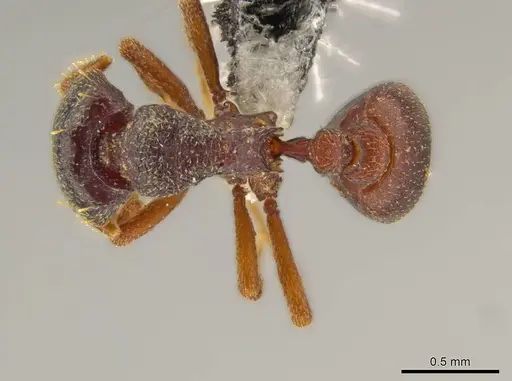
CASENT0627370
View on AntWeb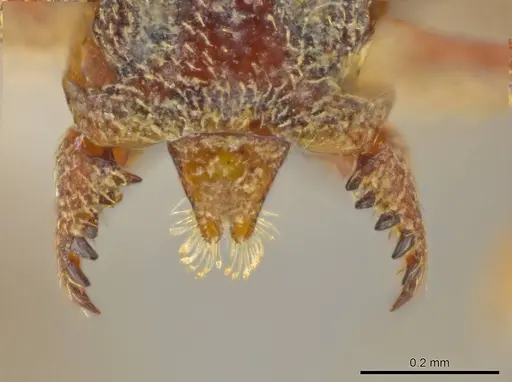
Literature
Loading...Loading products...