

Octostruma pexidorsum
- Scientific Name
- Octostruma pexidorsum
- Tribe
- Attini
- Subfamily
- Myrmicinae
- Author
- Longino, 2013
- Distribution
- Found in 1 countries
Octostruma pexidorsum Overview
Octostruma pexidorsum is an ant species of the genus Octostruma. It is primarily documented in 1 countries , including Colombia. Detailed taxonomic data and occurrence records can be further explored via authoritative databases such as AntWeb or the Global Biodiversity Information Facility (GBIF).
Octostruma pexidorsum
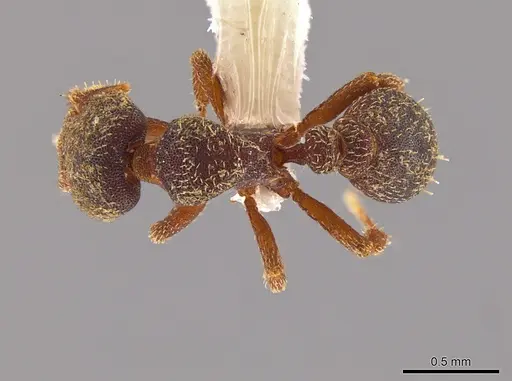
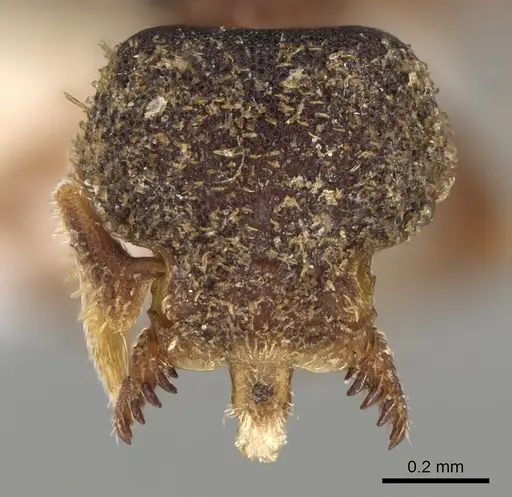
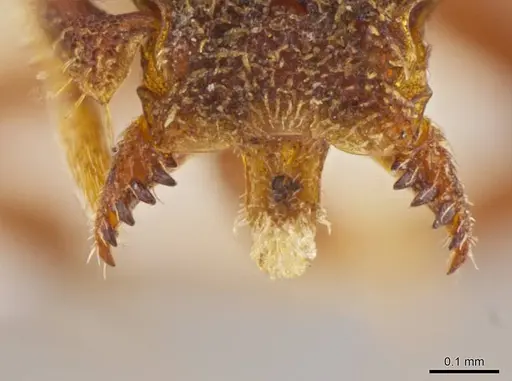
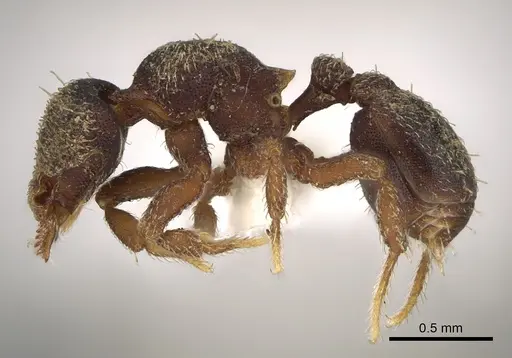
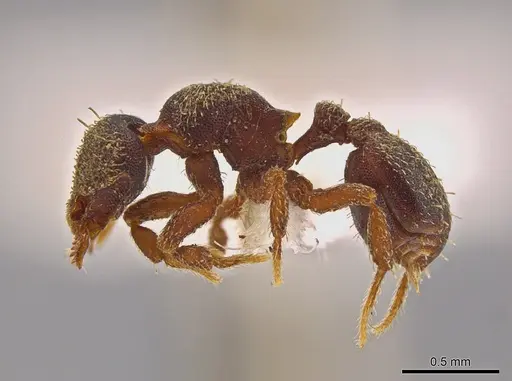
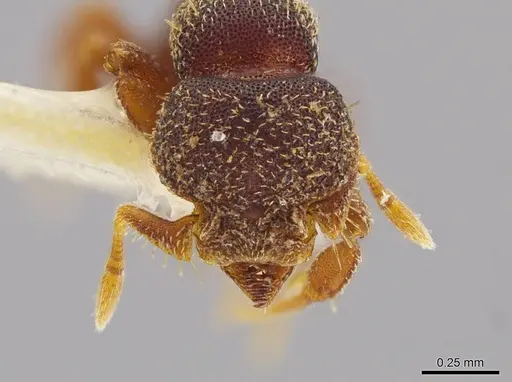
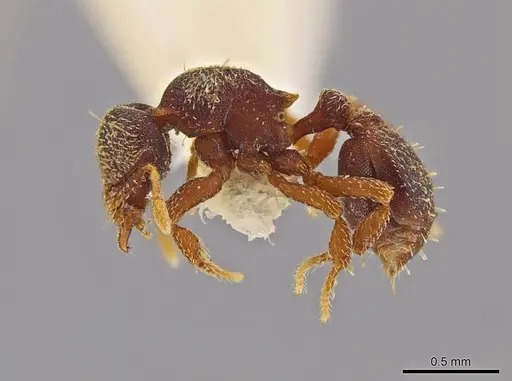
Octostruma pexidorsum is a tiny, cryptic ant species from the Amazon basin. Workers measure just 0.63-0.71mm, making them one of the smaller ant species you'll encounter. They have a distinctive wooly or scruffy appearance due to their dense ground pilosity, short, curved, yellow setae covering their dark brown body. A unique identifying feature is the pair of long filiform setae projecting from the petiolar peduncle, a trait shared with only one other Octostruma species [1].
This species was only described in 2013 and remains poorly studied. It belongs to the Attini tribe, which includes leaf-cutter ants, but Octostruma species are cryptic forest floor dwellers that nest in leaf litter rather than cultivate fungus. Known only from worker caste specimens collected via Berlese sampling of forest floor litter, this is a species for advanced antkeepers who enjoy observing rare, obscure species and contributing to our understanding of their biology [1][2].
Quick Summary
- Difficulty: Expert
- Origin & Habitat: Lowland Amazonian rainforest in Colombia and Brazil. The type series comes from the Colombian Amazon near Leticia, with additional records from Pará state, Brazil including Belém and Portel. They live in forest floor litter, typically collected using Berlese extraction from moist, decomposing leaf matter [1][2].
- Colony Type: Unconfirmed colony structure. Only worker caste is known, no queens or males have been described. Based on related Octostruma species, colonies are likely small with a single queen, but this is unconfirmed.
- Size & Growth:
- Queen: Unknown, queen caste has not been described [1]
- Worker: 0.63-0.71mm head width,0.59-0.65mm head length [1]
- Colony: Unknown, likely small colonies typical of cryptic leaf-litter ants
- Growth: Unknown
- Development: Unknown, no development data exists for this species. Based on typical patterns for small Myrmicinae in tropical conditions, estimate 4-8 weeks at optimal temperature, but this is a rough guess. (No direct observations of colony development exist. Estimate is based on genus-level patterns for small tropical ants.)
- Antkeeping:
- Temperature: Keep warm at 24-28°C. This species comes from lowland Amazon rainforest where temperatures are consistently warm year-round. A heating cable on one side of the nest creates a gradient allowing workers to self-regulate. Room temperature in heated homes (around 24°C) may be suitable without additional heating.
- Humidity: High humidity is essential. These ants live in forest floor litter where conditions are constantly moist. Keep the nest substrate consistently damp but not waterlogged. Provide a water reservoir and occasional misting. Ensure ventilation is adequate to prevent mold while maintaining humidity.
- Diapause: No diapause required. As a tropical species from the Amazon basin, they do not experience cold winters. Keep them at consistent warm temperatures year-round. Do not expose to temperatures below 20°C for extended periods.
- Nesting: Natural nesting occurs in forest floor leaf litter. In captivity, a naturalistic setup with moist substrate (coco fiber, soil mix) works well. Y-tong nests or acrylic nests with tight chambers can work if humidity is maintained. The tiny worker size means chambers should be appropriately scaled, avoid large open spaces.
- Behavior: These are extremely small, cryptic ants that are rarely seen foraging openly. They are likely slow-moving and secretive, spending most of their time within the nest or in the substrate. Workers are not aggressive and likely rely on camouflage and staying hidden rather than defending the colony. Escape prevention is critical, their tiny size means they can squeeze through standard barrier setups. Use fine mesh and ensure all connections are sealed. They are not known to sting and present no danger to keepers.
- Common Issues: escape prevention is critical due to their extremely small size, standard barriers may be inadequate, no established husbandry guidelines exist, this is a species for advanced keepers willing to experiment, colony size is unknown but likely small, do not expect large impressive colonies, humidity management is challenging, too dry causes colony loss, too wet causes mold, lack of documented captive colonies means all care is experimental
Discovery and Taxonomy
Octostruma pexidorsum was formally described by ant specialist John T. Longino in 2013 as part of a comprehensive revision of the genus Octostruma. The type series was collected from the Colombian Amazon near Leticia, with specimens collected in February 1972 from forest floor leaf litter using a Berlese funnel. Additional records from Pará state, Brazil (Belém and Portel) were documented in 2021,expanding the known range [1][2].
The species name 'pexidorsum' refers to the distinctive wooly ground pilosity on their dorsal surface, 'pex-' comes from Latin for wool or felt. This wooly appearance, combined with the unique pair of long filiform setae on the petiolar peduncle, makes this species identifiable under magnification. Only the worker caste has been collected, queens, males, and colony founding behavior remain undescribed [1].
Natural History and Ecology
In the wild, Octostruma pexidorsum lives in the decomposing leaf litter layer of lowland Amazonian rainforest. This is a humid, stable microhabitat where temperatures remain warm and moisture levels stay consistently high. The species is collected using Berlese extraction, where leaf litter is placed in funnels under heat lamps, the heat drives insects downward into collection containers. This sampling method indicates they are cryptic, surface-dwelling ants that don't venture far into the canopy or underground [1][2].
As members of the Attini tribe, they are related to leaf-cutter ants, but Octostruma species are not fungus cultivators. The tribe includes a wide variety of leaf-litter dwelling ants with diverse diets. Like most cryptic forest floor ants, they likely forage slowly through the litter layer, hunting micro-arthropods or scavenging organic matter. Their tiny size and secretive nature make direct observations of foraging behavior extremely difficult [1].
Housing and Setup
Housing Octostruma pexidorsum requires attention to scale and humidity. Given workers are only 0.63-0.71mm, standard formicarium chambers are far too large. A naturalistic setup with a shallow container filled with moist substrate (coco fiber, peat moss, or a soil mix) allows workers to move through their environment naturally. Place the setup in a humid enclosure like a critter keeper to maintain moisture.
A small test tube setup can work if you provide a water reservoir and keep it in a humid environment. However, the substrate-based naturalistic approach better matches their natural habitat. Whatever setup you choose, escape prevention must be excellent, these ants are so small they can slip through gaps invisible to the human eye. Apply fluon or similar barriers to all edges and ensure lid seals are tight. Provide low-intensity lighting and minimize vibrations, as cryptic species are sensitive to disturbance.
Feeding and Nutrition
The diet of Octostruma pexidorsum is not documented, but based on related Octostruma species and typical Attini tribe members, they likely eat small live prey (micro-arthropods like springtails, mites, and tiny insects) and scavenge organic matter. Offer small live prey items appropriate to their size, fruit flies, pinhead crickets, and small mealworms may be too large. Consider cultures of springtails or microworms as staple prey.
Sugar sources are unlikely to be accepted, these are not honeydew-feeding ants. Focus on protein: small live insects, frozen bloodworms cut into tiny pieces, or other appropriately-sized protein sources. Feed sparingly and remove uneaten food promptly to prevent mold in the humid setup. Given how little is known about this species, document any acceptance of foods carefully to build husbandry knowledge.
Challenges and Considerations
This is not a species for beginners. Octostruma pexidorsum is one of the least-studied ant species in the hobby, with no established captive husbandry protocols. Every aspect of keeping them requires experimentation and careful observation. Colony sizes are likely small, don't expect the impressive worker numbers of species like Camponotus or Formica.
The biggest challenges are: maintaining appropriate humidity without causing mold, preventing escapes given their minute size, and providing appropriately-sized food. Document your observations thoroughly. If you succeed in establishing a colony, your experience could contribute significantly to our understanding of this species. Consider connecting with myrmecologists or advanced antkeepers who work with rare South American species.
Frequently Asked Questions
How big do Octostruma pexidorsum colonies get?
Colony size is unknown, no established colonies have been documented. Based on typical Octostruma patterns and their tiny worker size, colonies are likely small, probably under 100 workers. This is not a species that produces large, impressive colonies.
What do Octostruma pexidorsum ants eat?
Their diet is unconfirmed, but based on related species, they likely eat small live prey (micro-arthropods like springtails and mites) and scavenge organic matter. Offer appropriately-sized live prey. Sugar sources are unlikely to be accepted. This is a species for advanced keepers willing to experiment with feeding.
Are Octostruma pexidorsum ants suitable for beginners?
No. This is an expert-level species due to their extremely small size, lack of documented captive care information, and specific humidity requirements. There are no established husbandry guidelines. Only experienced antkeepers should attempt this species.
Do Octostruma pexidorsum ants need hibernation?
No. As a tropical Amazonian species, they do not require hibernation or diapause. Keep them at warm, consistent temperatures (24-28°C) year-round. Do not expose them to temperatures below 20°C.
How do I house Octostruma pexidorsum?
Use a naturalistic setup with moist substrate (coco fiber or soil mix) in a shallow container within a humid enclosure. Alternatively, a small test tube setup in a humid environment can work. Escape prevention is critical, their tiny size means they can slip through standard barriers. Use fine mesh and sealed edges.
How long does it take for Octostruma pexidorsum to develop from egg to worker?
Unknown, no development data exists for this species. Based on typical patterns for small tropical Myrmicinae, estimate 4-8 weeks at optimal warm temperatures, but this is a rough guess with low confidence.
Can I keep multiple Octostruma pexidorsum queens together?
Unknown, queen caste has not been described, so colony structure is unconfirmed. Do not attempt combining unrelated queens without documented evidence that this species can found colonies pleometrotically. Given how little is known, keeping a single queen is the safest approach if you obtain a colony.
Where is Octostruma pexidorsum found?
They are found in the Amazon basin: the type locality is near Leticia in Colombia, with additional records from Pará state, Brazil (Belém and Portel). They live in lowland Amazonian rainforest floor litter.
Why is Octostruma pexidorsum so hard to find in the antkeeping hobby?
This species was only described in 2013 and remains one of the least-studied ant species. They are extremely small, cryptic, and only known from worker specimens collected via specialized sampling methods. No captive colonies exist in documented antkeeping literature, making them essentially unavailable to hobbyists.
References

This caresheet is licensed under CC BY-SA 4.0 .
MCZ-ENT00511314
View on AntWeb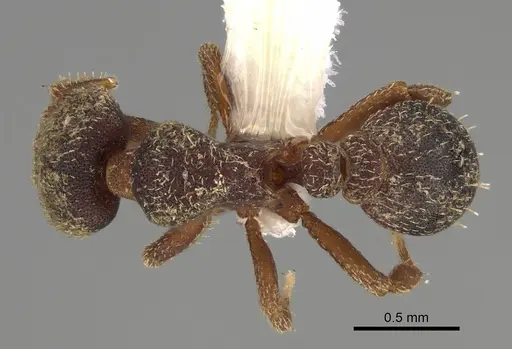
MCZ-ENT00511319
View on AntWeb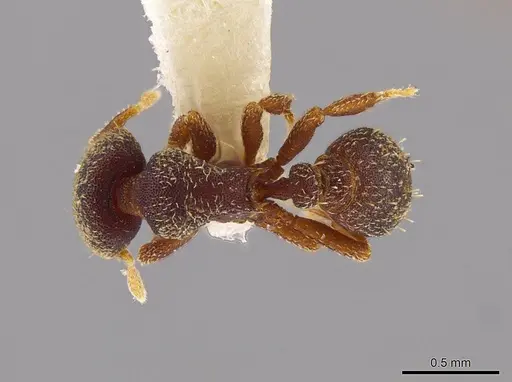
Literature
Loading...Loading products...