

Octostruma petiolata
- Scientific Name
- Octostruma petiolata
- Tribe
- Attini
- Subfamily
- Myrmicinae
- Author
- Mayr, 1887
- Distribution
- Found in 1 countries
Octostruma petiolata Overview
Octostruma petiolata is an ant species of the genus Octostruma. It is primarily documented in 1 countries , including Brazil. Detailed taxonomic data and occurrence records can be further explored via authoritative databases such as AntWeb or the Global Biodiversity Information Facility (GBIF).
Octostruma petiolata
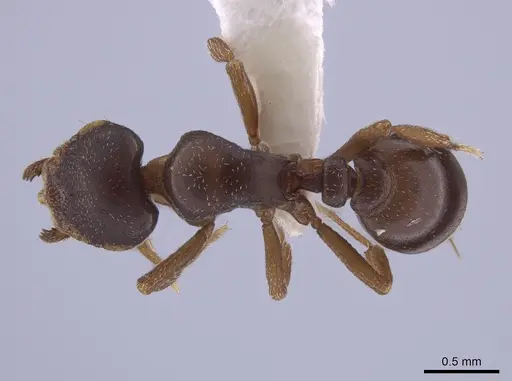
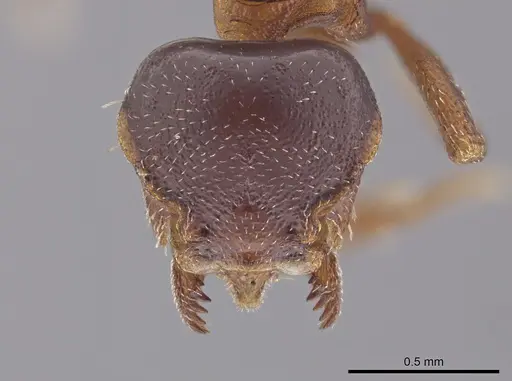
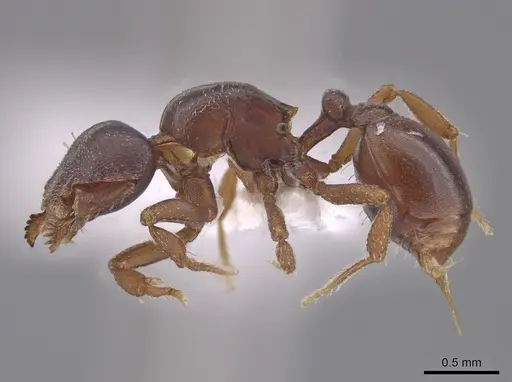
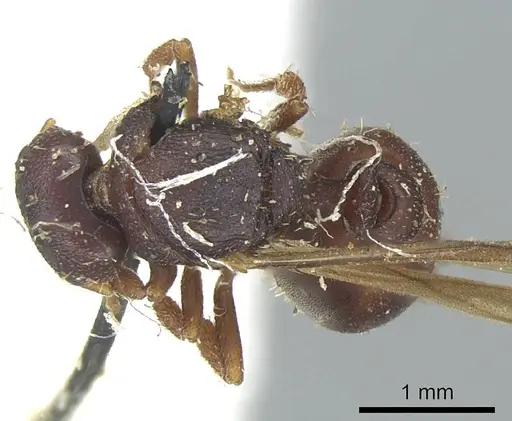
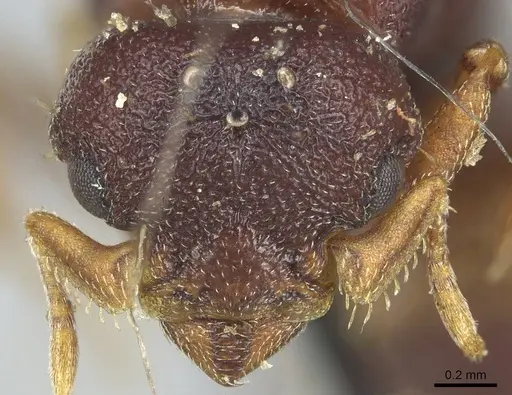
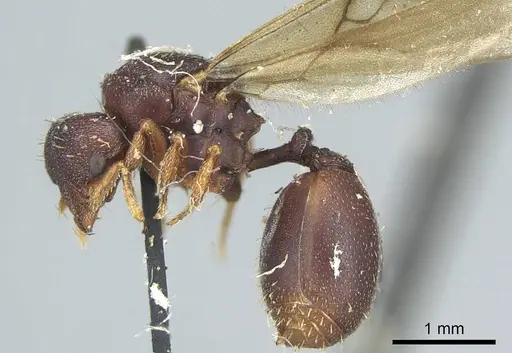
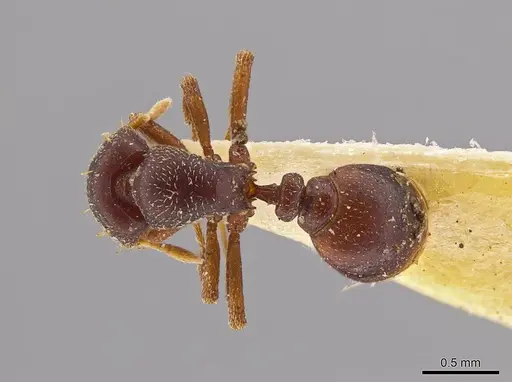
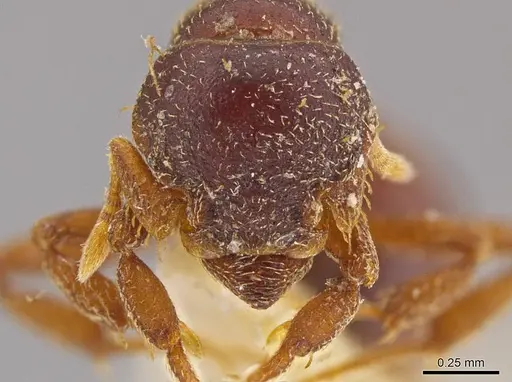
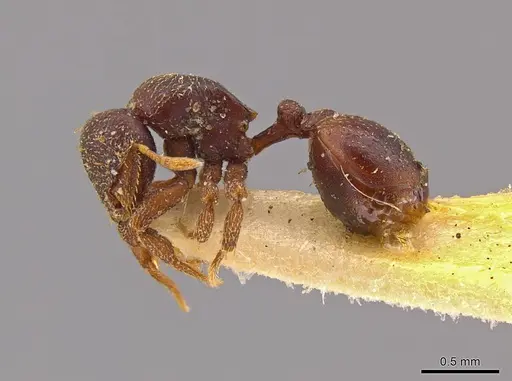
Octostruma petiolata is a small leaf-litter ant native to southern Brazil, specifically the Atlantic Forest regions of Santa Catarina state. Workers measure 3.3-3.5mm with a head width of 0.85-0.90mm, making them relatively small but among the larger Octostruma species. They can be identified by their strongly transverse petiolar node when viewed from above, smooth mesosoma lacking erect hairs, and distinctive propodeal spines with a strong laminar transverse carina connecting them. Queens are significantly larger at 5.2-5.5mm. This species remains one of the most poorly documented ants in terms of biology, essentially nothing has been published about its colony structure, founding behavior, or captive care requirements. The genus Octostruma belongs to the tribe Attini, which includes fungus-growing ants, though many Octostruma species are generalist predators rather than fungus cultivators. A 2023 biomechanical study confirmed these ants are generalized predators with specialized mandible structures [1][2].
Quick Summary
- Difficulty: Unknown, likely Moderate to Hard due to limited available information
- Origin & Habitat: Southern Brazil, specifically Santa Catarina state in the Atlantic Forest region. They are leaf-litter ants typically found in forest floor environments [1].
- Colony Type: Unknown, colony structure has not been documented in scientific literature. Based on related Octostruma species, likely forms small colonies with single queens.
- Size & Growth:
- Queen: 5.2-5.5mm [1]
- Worker: 3.3-3.5mm (HW 0.85-0.90mm) [1]
- Colony: Unknown, no colony size data available. Likely small colonies similar to other Octostruma species (under 100 workers)
- Growth: Unknown, no development data exists
- Development: Unknown, no direct measurements available. Based on typical Attini patterns, estimate 6-10 weeks at optimal temperature (Development timeline is unconfirmed. Related Octostruma species typically develop slowly over several months from egg to worker)
- Antkeeping:
- Temperature: Unknown for this species. Start around 22-26°C and observe colony activity. Related leaf-litter ants from Brazil typically prefer warm, humid conditions. Adjust based on colony behavior, if workers cluster near heat, increase slightly, if they avoid heated areas, reduce temperature.
- Humidity: Likely requires high humidity, think damp forest floor. Keep nest substrate consistently moist but not waterlogged. Provide a gradient with slightly drier areas available. Leaf-litter ants from Atlantic Forest habitats typically need 70-85% humidity in the nest area.
- Diapause: Unknown, no data on overwintering requirements. Southern Brazil experiences mild winters, so they may not require a true hibernation. Consider a brief cool period (15-18°C) during winter months if colony shows reduced activity.
- Nesting: In nature they live in leaf litter and rotting wood on the forest floor. In captivity, a naturalistic setup with moist substrate (soil/plaster mix) or a Y-tong/plaster nest works well. They prefer tight chambers and narrow passages scaled to their small size. Avoid tall, open spaces.
- Behavior: Temperament is unknown but related Octostruma species are typically non-aggressive, cryptic ants that avoid confrontation. They are likely nocturnal or crepuscular foragers. Escape risk is moderate due to their small size, use standard barrier methods. The 2023 mandible study confirms they are generalized predators, suggesting they hunt small arthropod prey. Workers likely forage individually through leaf litter.
- Common Issues: no biological data exists, this is one of the least documented ant species in captivity, growth rate is completely unknown, beginners may lose patience with slow development, humidity requirements are inferred, not confirmed, may develop mold or desiccation issues, escape prevention is important due to small worker size, no information on founding behavior, unknown if claustral or semi-claustral
Understanding the Challenge: A Data-Poor Species
Octostruma petiolata presents a unique challenge for antkeepers: virtually nothing has been published about its biology in over 130 years since its description. The original description was from a queen in 1887,workers were described in 1894,and the most recent taxonomic work in 2013 focused on identification rather than ecology. This means you're essentially pioneering captive care for this species. You'll need to be patient, observant, and willing to experiment. The guidance in this caresheet is based on genus-level patterns and related species rather than direct observations of O. petiolata. Expect to adjust care based on what works for your specific colony. This is not a species for beginners who want clear, established protocols, it's for experienced keepers who enjoy the process of discovery. [1]
Housing and Nest Setup
For this small leaf-litter ant, naturalistic setups typically work best. Use a mixture of soil and rotting wood or leaf litter as substrate, this mimics their natural forest floor habitat. A Y-tong (acrylic) nest with narrow chambers also works well if you provide plenty of moisture. The key is creating a humid environment with minimal airflow to prevent drying. Place the nest in a shaded area away from direct sunlight, as these are cryptic forest-dwelling ants. Because workers are only 3-4mm, ensure your outworld has good escape prevention, these ants can slip through surprisingly small gaps. A hydration setup that maintains consistent moisture over time is preferable to manual misting.
Feeding and Diet
The 2023 biomechanical study confirmed Octostruma petiolata has generalized predator mandibles, built for catching and crushing small prey rather than specialized tasks like seed-eating or honey consumption. In captivity, offer small live prey such as springtails, fruit flies, and other micro-arthropods. You can also offer small pieces of insects like fruit flies or minute mealworms. Sugar sources like honey or sugar water may be accepted occasionally, but don't rely on them as a primary food source. Feed protein prey 2-3 times per week, and remove any uneaten prey after 24 hours to prevent mold. The key is variety and small, appropriately-sized prey items. [2]
Temperature and Seasonal Care
Since this species comes from southern Brazil (Santa Catarina), they experience a subtropical climate with mild winters. Start with temperatures in the 22-26°C range, this aligns with typical Brazilian Atlantic Forest conditions. Use a heating cable on one side of the nest to create a temperature gradient, allowing ants to self-regulate. Place the heating on top of the nest, not underneath, to avoid evaporating moisture too quickly. During winter months, you may reduce temperature to 18-22°C, but a true hibernation is likely not required. Watch for natural activity cycles, if your colony becomes less active in winter, that's a sign they benefit from a cooler period. Always maintain humidity alongside any heating.
Colony Founding and Early Development
Founding behavior has not been documented for this species. Based on typical Attini patterns, the queen likely seals herself in a small chamber and raises the first brood alone using stored fat reserves (claustral founding). However, this is an inference, not a confirmed fact. If you obtain a founding queen, keep her in a small test tube setup with a water reservoir. Maintain high humidity (80%+) and stable temperature (around 24°C). Do not disturb her during the founding period, queens of many cryptic species are sensitive to vibrations and may abandon or eat their brood. Expect a long wait: first workers (nanitics) may take 2-4 months or more, given the lack of data and likely slow development typical of the genus.
Observation and Record-Keeping
Because so little is known about this species, your observations are potentially valuable to the antkeeping community. Keep detailed records of: when eggs appear, how long until larvae and pupae, when workers eclose, what foods are accepted, temperature preferences (where workers cluster), humidity behavior (condensation, substrate moisture), and any unusual behaviors. Take photos at each development stage. If you successfully raise a colony, consider sharing your findings with antkeeping forums or contributing to citizen science databases. This species represents an opportunity to contribute genuinely new knowledge to ant biology.
Frequently Asked Questions
How long does it take for Octostruma petiolata to produce first workers?
The egg-to-worker timeline is completely unconfirmed for this species. Based on typical Attini leaf-litter ant development patterns, estimate 6-10 weeks at optimal temperature (around 24-26°C), but this could be longer. The lack of any published development data means your colony may take several months before seeing nanitic workers. Patience is essential.
What do Octostruma petiolata ants eat?
They are generalized predators with specialized mandibles for catching small prey. Feed small live prey like springtails, fruit flies, and micro-arthropods. Small pieces of insects (fruit flies, pinhead crickets) may be accepted. Sugar sources like honey water can be offered occasionally but are likely not a primary food source. Variety is important, experiment with different small prey items.
Are Octostruma petiolata ants good for beginners?
No, this species is not recommended for beginners. There is essentially no published biological or husbandry data for this ant, meaning you are pioneering its captive care. You'll need to make informed guesses based on genus patterns and be prepared for slow growth, uncertain humidity needs, and potential colony failures. This species is better suited for experienced keepers who enjoy experimentation and discovery.
Do Octostruma petiolata ants need hibernation?
Diapause requirements are unknown. Southern Brazil has mild winters, so a true hibernation is likely not necessary. However, you may provide a cooler period (15-18°C) during winter months if your colony shows reduced activity. Watch for natural seasonal cycles, if workers become less active in winter, that's a sign they benefit from a brief cool period.
What size colony does Octostruma petiolata reach?
Colony size is unknown, no scientific data exists on maximum colony sizes. Based on typical Octostruma species, expect small colonies of likely under 100 workers. They are not a rapidly expanding species and tend to maintain small, cryptic colonies.
Can I keep multiple Octostruma petiolata queens together?
Colony structure is unconfirmed, we don't know if they are monogyne (single queen) or polygyne (multiple queens). Combining unrelated foundresses has not been documented and is not recommended. If you obtain multiple founding queens, keep them separate until you understand their social structure. Queens may fight if they are not from the same colony.
What temperature should I keep Octostruma petiolata at?
Temperature requirements are not confirmed. Start around 22-26°C and observe colony behavior. Use a heating cable on one side of the nest to create a gradient. If workers cluster near the heated area, increase slightly. If they avoid it, reduce temperature. Related Brazilian leaf-litter ants typically prefer warm, stable conditions.
When should I move Octostruma petiolata to a formicarium?
Wait until you have an established colony with at least 10-20 workers before moving to a formicarium. For founding queens, keep them in a simple test tube setup. Once workers are actively foraging in an outworld, you can provide a proper nest. They prefer naturalistic setups with moist substrate or Y-tong nests with tight chambers.
References

This caresheet is licensed under CC BY-SA 4.0 .
Literature
Loading...Loading products...