

Octostruma limbifrons
- Scientific Name
- Octostruma limbifrons
- Tribe
- Attini
- Subfamily
- Myrmicinae
- Author
- Longino, 2013
- Distribution
- Found in 1 countries
Octostruma limbifrons Overview
Octostruma limbifrons is an ant species of the genus Octostruma. It is primarily documented in 1 countries , including Panama. Detailed taxonomic data and occurrence records can be further explored via authoritative databases such as AntWeb or the Global Biodiversity Information Facility (GBIF).
Octostruma limbifrons
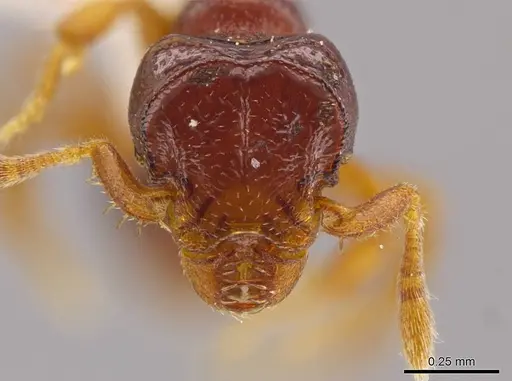
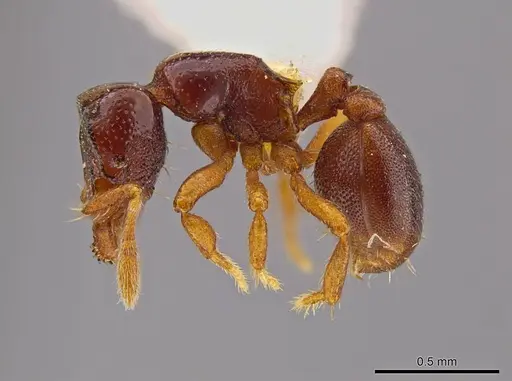
Octostruma limbifrons is a tiny, reddish-brown ant species described in 2013 from cloud forest samples in western Panama. Workers measure just 0.63mm in head width, making them among the smaller ant species you might encounter. The genus Octostruma belongs to the tribe Attini, which includes leaf-cutter ants, though this particular species is not a fungus farmer. Instead, these are predators that hunt small invertebrates in the leaf litter layer of tropical cloud forests. They can be identified by their strongly elevated facial arc (a curved ridge on their face) and their promesonotum with distinct anterior and dorsal faces. The species is known only from worker specimens collected in Berlese samples of forest floor leaf litter, meaning we know almost nothing about their colony structure or behavior in the wild.
Quick Summary
- Difficulty: Unknown, too little data to assess
- Origin & Habitat: Cloud forest in western Panama (Chiriquí province) at approximately 1160m elevation [1]. Collected from forest floor leaf litter.
- Colony Type: Unconfirmed. Colony structure has not been documented for this species.
- Size & Growth:
- Queen: Unknown, queen caste has not been described
- Worker: 0.63mm head width,0.59mm head length,0.65mm Weber's length [1]
- Colony: Unknown, no colony data exists
- Growth: Unknown
- Development: Unconfirmed, no development data exists (Based on related litter-dwelling Myrmicinae, expect development of several months at tropical temperatures)
- Antkeeping:
- Temperature: Unconfirmed. Based on cloud forest origin, aim for warm, stable conditions around 22-26°C. Avoid temperature extremes.
- Humidity: Unconfirmed. Cloud forest species typically require high humidity (70-90%). Keep the nest substrate consistently moist but not waterlogged.
- Diapause: Unlikely, being a tropical species from Panama, they probably do not require a diapause period. However, slight seasonal slowing during cooler months may occur.
- Nesting: Based on collection from leaf litter, they likely prefer humid, naturalistic setups with fine substrate. A Y-tong or plaster nest with small chambers would work, or a naturalistic setup with damp soil and leaf litter. They are tiny, so chambers must be appropriately scaled.
- Behavior: Behavior is unconfirmed. As litter-dwelling predators in the tribe Attini, they likely forage slowly through substrate rather than maintaining obvious trails. Their small size (under 1mm) means escape prevention must be excellent, they can squeeze through remarkably small gaps. Handle with care as they are fragile.
- Common Issues: almost no biological data exists, keepers will be pioneering captive husbandry, tiny size makes escape prevention critical and can lead to colonies being lost, humidity requirements are uncertain, too dry may be fatal, too wet may cause mold, queen and colony structure unknown means founding will be challenging if wild queens cannot be located
Discovery and Taxonomy
Octostruma limbifrons was described as a new species in 2013 by ant specialist John T. Longino. The holotype worker was collected in 1976 from a cloud forest site in Chiriquí province, western Panama, at an elevation of approximately 1160 meters. The species name 'limbifrons' refers to the strongly developed facial arc, a curved ridge on the face that distinguishes it from related species. The specimen was collected using a Berlese funnel, which sifts through leaf litter to extract tiny invertebrates. This collecting method tells us that O. limbifrons lives primarily in the forest floor leaf litter layer, similar to many other Octostruma species. [1]
Identification and Morphology
This is a tiny ant species, workers measure only about 0.63mm in head width. They are reddish-brown in color. The most distinctive identification features are the strongly elevated facial arc that curves forward to join the antennal sockets, and the promesonotum (the middle body section) which has clearly differentiated anterior and dorsal faces rather than being evenly convex. The antennal scrobe (the groove where the antenna folds) is very shallow and not distinctly margined. These are subtle morphological features that require examination under a microscope to confirm species identification. For antkeepers, the small size and reddish-brown coloration are the most practical field characteristics. [1]
Natural History and Habitat
We know remarkably little about the natural history of Octostruma limbifrons. The species has only been collected from cloud forest in western Panama, specifically from sifted leaf litter samples. This indicates they are litter-dwelling ants that live in the humid, decomposing organic layer on the forest floor. The genus Octostruma is part of the tribe Attini, which includes the famous leaf-cutter ants, but Octostruma species are not fungus farmers. They are likely predators or scavengers that hunt small soil micro-arthropods. Cloud forests are characterized by high humidity, frequent mist, and moderate temperatures year-round. This habitat suggests the species prefers consistently moist conditions with minimal temperature variation. [1]
Keeping Octostruma limbifrons in Captivity
Because this species has never been kept in captivity and almost nothing is known about its biology, keeping O. limbifrons would be entirely pioneering work. There are no established care protocols. Based on what we can infer from its cloud forest origin and litter-dwelling habits, you would need to provide high humidity (70-90%), stable warm temperatures (roughly 22-26°C), and appropriately sized small chambers or naturalistic substrate. Feeding would likely require small live prey such as springtails, as the species is probably a predator like other Octostruma. The biggest challenge is that this species was only described in 2013 and has rarely been collected, finding wild queens would be extremely difficult. If you do obtain a colony, meticulous record-keeping would be valuable for advancing our knowledge of this species.
Related Species and Genus Context
The genus Octostruma contains about 20 described species, all native to the Neotropics (Central and South America). They are small, cryptic ants that live in leaf litter and rotting wood. Most species are poorly studied, with biology known only from occasional collection records. The genus is part of the tribe Attini, which is best known for the fungus-cultivating ants (Atta, Acromyrmex), but Octostruma is not in the fungus-cultivating lineage. Instead, they represent an earlier branch of the Attini that retained more traditional foraging habits. Understanding the genus context helps set expectations, these are not aggressive or conspicuous ants, but rather subtle, slow-moving predators that spend their lives in the hidden world of forest floor microhabitats.
Frequently Asked Questions
Can I keep Octostruma limbifrons as a pet ant?
This species has never been documented in the antkeeping hobby and almost nothing is known about its biology. Finding a colony would be extremely difficult since the species was only described in 2013 and has rarely been collected. Unless you can locate wild queens in Panama, keeping this species is not currently practical.
What do Octostruma limbifrons eat?
Feeding is unconfirmed for this specific species. Based on related Octostruma species and their position in the tribe Attini, they are likely predators or scavengers that hunt small soil micro-arthropods. If you keep them, offer small live prey like springtails, micro- mites, or fruit fly larvae. Sugar sources are unlikely to be accepted.
How big do Octostruma limbifrons colonies get?
Colony size is unknown. Based on their tiny worker size (0.63mm) and litter-dwelling habits, colonies are likely small, probably under a few hundred workers at most. Many litter-dwelling ant species maintain relatively small, compact colonies.
What temperature do Octostruma limbifrons need?
Temperature requirements are unconfirmed. Based on their cloud forest origin in Panama, aim for warm, stable conditions around 22-26°C. Avoid temperatures below 18°C or above 30°C until more is learned about their tolerances.
Do Octostruma limbifrons need hibernation?
Unlikely. Being a tropical species from Panama, they probably do not require a diapause or hibernation period. However, slight seasonal slowing may occur during cooler months in their natural habitat.
Is Octostruma limbifrons a good species for beginners?
No. This species is entirely unsuitable for beginners, there is no captive care information, wild colonies are virtually never collected, and even the basic biology (queen type, colony size, founding behavior) is completely unknown. This would be an expert-level research project, not a pet ant.
Where does Octostruma limbifrons live?
Only known from cloud forest in Chiriquí province, western Panama, at approximately 1160m elevation. The holotype was collected from forest floor leaf litter in 1976.
How do I identify Octostruma limbifrons?
Identification requires microscopic examination of morphological features. Key identifying features include: strongly elevated facial arc, promesonotum with differentiated anterior and dorsal faces, very shallow antennal scrobe, and worker size of about 0.63mm head width. Coloration is reddish-brown. For accurate identification, compare against Longino's 2013 revision of the genus.
Can I find Octostruma limbifrons in the United States?
No. This is a Panamanian endemic species found only in cloud forests in western Panama. It has never been documented as introduced anywhere else. Do not release non-native ants in North America or anywhere else.
References

This caresheet is licensed under CC BY-SA 4.0 .
MCZ-ENT00511414
View on AntWeb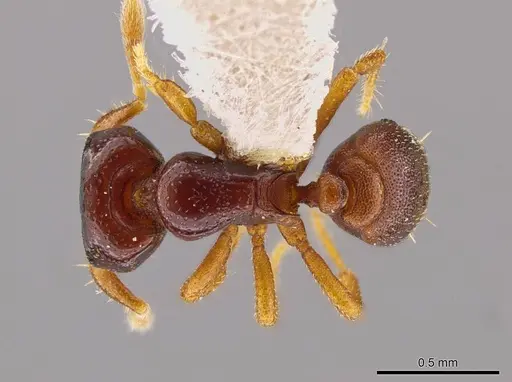
Literature
Loading...Loading products...