

Octostruma leptoceps
- Scientific Name
- Octostruma leptoceps
- Tribe
- Attini
- Subfamily
- Myrmicinae
- Author
- Longino, 2013
- Distribution
- Found in 1 countries
Octostruma leptoceps Overview
Octostruma leptoceps is an ant species of the genus Octostruma. It is primarily documented in 1 countries , including Honduras. Detailed taxonomic data and occurrence records can be further explored via authoritative databases such as AntWeb or the Global Biodiversity Information Facility (GBIF).
Octostruma leptoceps
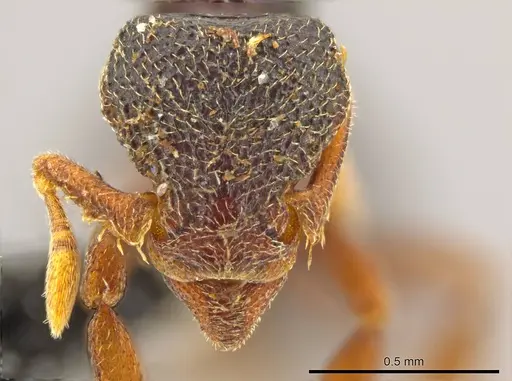
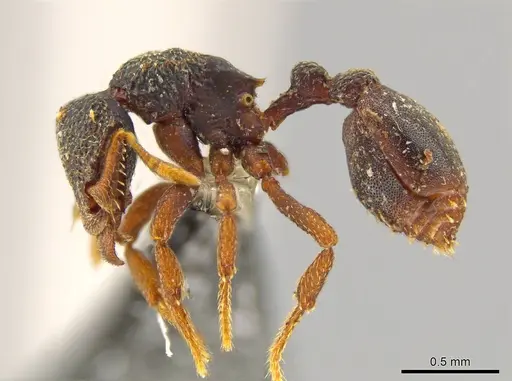
Octostruma leptoceps is an extremely rare tiny ant species described from a single worker collected in Honduras' Cusuco National Park. Workers measure just 0.68mm head width, making them among the smaller Attini tribe members. The species gets its name from 'leptoceps' meaning narrow head, a distinguishing feature with a cephalic index of 94. They are dark brown in color and were collected by sifting leaf litter from the forest floor at 1290m elevation in mesophyll cloud forest. This is one of the least-studied ant species in existence, known from a single specimen, so almost all care information must be inferred from related Octostruma species and general leaf-litter ant biology [1][2].
Quick Summary
- Difficulty: Unknown, likely Moderate to Hard
- Origin & Habitat: Honduras, Cortés Province, Cusuco National Park at 1290m elevation in mesophyll cloud forest. Collected from sifted leaf litter on the forest floor [1].
- Colony Type: Unknown, only a single worker has ever been documented. Based on related Octostruma species, likely single-queen colonies but this is unconfirmed.
- Size & Growth:
- Queen: Unknown, no queens have been collected or described. Estimated 4-5mm based on genus patterns for similar-sized species.
- Worker: 0.68mm head width,0.73mm head length,0.87mm Weber's length [1].
- Colony: Unknown, only one worker known. Related Octostruma species typically form small colonies of 50-200 workers.
- Growth: Unknown, estimated Moderate based on small worker size.
- Development: Unknown, estimated 6-10 weeks based on related small Myrmicinae species at optimal temperature. (No direct development data exists. Estimate based on genus-level inference for small leaf-litter ants.)
- Antkeeping:
- Temperature: Keep around 20-24°C. This species comes from cloud forest at 1290m elevation, suggesting they prefer moderate temperatures with high humidity. Start in the lower-mid range and observe colony behavior [1].
- Humidity: High humidity required, think damp forest floor. Keep nest substrate consistently moist but not waterlogged. Cloud forest environments are consistently humid, so aim for 70-85% relative humidity in the nest area.
- Diapause: Unknown, no data on overwintering requirements. Cloud forests at 1290m in Honduras experience mild seasonal variation. Observe colony activity patterns and provide a cool period if workers become less active.
- Nesting: Natural nesting occurs in leaf litter and rotting wood on the forest floor. In captivity, a naturalistic setup with moist substrate (coco fiber, soil mix) or a small Y-tong/plaster nest with tight chambers scaled to their tiny size works well. They are very small and require excellent escape prevention.
- Behavior: Behavior is unstudied. Based on related Octostruma species, they are likely cryptic leaf-litter ants that forage slowly through the substrate. They are not aggressive and pose no threat to keepers. Escape prevention is critical due to their tiny size, they can squeeze through standard mesh. Use fine mesh or fluon barriers.
- Common Issues: only one specimen ever collected, biological data is essentially nonexistent, tiny size makes escape prevention critical, standard barriers may not work, no information on founding behavior or colony development, no confirmed diet, must infer from related species, humidity requirements are estimated, not confirmed
Discovery and Rarity
Octostruma leptoceps is one of the rarest ant species in the world to keep, it was only described in 2013 from a single worker collected in Honduras' Cusuco National Park. The species name 'leptoceps' means 'narrow head' in Greek, referring to this species' most distinctive feature: an exceptionally narrow head with a cephalic index of 94. The holotype specimen was collected in May 2010 by sifting leaf litter from the floor of a mesophyll cloud forest at 1290 meters elevation. No additional specimens have been found since, meaning we know absolutely nothing about their queen, colony structure, diet, or behavior in the wild. Everything in this caresheet is inferred from related Octostruma species and general leaf-litter ant biology [1][2].
Housing and Nest Setup
Given their tiny size and cloud forest origin, these ants need a setup that maintains high humidity while preventing escape. A naturalistic setup with a moist substrate layer (coconut fiber or a soil/coco fiber mix) works well, this mimics the damp leaf litter where they naturally live. Alternatively, a small acrylic or Y-tong nest with tight chambers scaled to their minute size can work, but ensure the chambers are appropriately sized for workers that are less than 1mm. Escape prevention is absolutely critical, these ants are so small they can slip through standard test tube cotton and most mesh barriers. Use fluon on all edges, fine mesh (0.5mm or smaller), and ensure all connections are sealed. A small outworld connected to the nest allows for feeding without disturbing the colony [1].
Feeding and Diet
The diet for Octostruma leptoceps is entirely unstudied, but related Octostruma species are generalist foragers that likely consume small arthropods, honeydew, and possibly nectar. Based on their tribe (Attini), they may have some relationship with fungi, though most Octostruma are not true fungus-cultivators like Atta or Sericomyrmex. Offer small protein sources like fruit flies, pinhead crickets, or small mealworm pieces. Sugar water or honey can be offered occasionally, though acceptance is uncertain. Given their tiny size, any prey items must be appropriately sized, essentially micro-prey. Start with live springtails or fruit flies and observe what they accept [1].
Temperature and Humidity
This species comes from cloud forest at 1290m elevation in Honduras, a habitat characterized by moderate temperatures and consistently high humidity. Aim for temperatures in the 20-24°C range, avoid overheating, as cloud forest species are not adapted to high heat. Humidity should be high, around 70-85% in the nest area. The substrate should remain consistently moist but never waterlogged, these are leaf-litter ants that live in damp forest floor environments. A water reservoir connected to the nest can help maintain humidity. Monitor for condensation, some condensation is good, but excessive pooling can drown colonies. Ventilation must be balanced against drying out the nest [1].
Understanding the Challenges
Keeping Octostruma leptoceps presents unique challenges because we know almost nothing about this species. The most significant challenge is the complete lack of biological data, we don't know their founding behavior, development timeline, queen size, colony structure, or exact dietary needs. Everything in this caresheet is estimated based on related species. This makes them a species for experienced antkeepers who are comfortable experimenting and adapting care based on colony behavior. Be prepared for slow progress and potential failures. If this species becomes available, expect a steep learning curve. Consider starting with more common Octostruma species to gain experience with the genus before attempting O. leptoceps. The rarity also means captive colonies may not exist, most keepers will not encounter this species for sale [1][2].
Frequently Asked Questions
How long do Octostruma leptoceps take to develop from egg to worker?
This is completely unconfirmed, no eggs, larvae, or pupae have ever been documented for this species. Based on related small Myrmicinae and typical leaf-litter ant development, estimate 6-10 weeks at optimal temperature (around 22°C). Expect significant uncertainty with this estimate.
What do Octostruma leptoceps eat?
Diet is unconfirmed for this species. Based on related Octostruma species, they likely accept small live prey (fruit flies, springtails), and may consume honeydew and nectar. Offer small protein sources and sugar water, then observe what they accept. Be prepared to experiment.
Are Octostruma leptoceps good for beginners?
No, this species is not recommended for beginners. It is one of the least-studied ant species in existence with essentially no biological data. Keeping them requires significant experience with leaf-litter ants and comfort with uncertainty. Even experienced keepers will face challenges due to the complete lack of documented care information.
How big do Octostruma leptoceps colonies get?
Colony size is unknown, only a single worker has ever been collected. Based on related Octostruma species, colonies likely reach 50-200 workers. Do not expect large colonies.
What temperature should I keep Octostruma leptoceps at?
Keep them at moderate temperatures around 20-24°C. They come from cloud forest at 1290m elevation in Honduras, so avoid high heat. Start in the lower-mid range and adjust based on colony activity.
Do Octostruma leptoceps need hibernation?
Diapause requirements are completely unknown. Cloud forests at 1290m in Honduras experience mild seasonal variation. Observe your colony, if workers become less active during cooler months, provide a slight cool period (15-18°C) for a few months. Do not force hibernation if the colony remains active.
Can I keep multiple Octostruma leptoceps queens together?
This is unknown, colony structure has never been documented. Based on related Octostruma species, they are likely single-queen colonies. Do not attempt combining unrelated queens without evidence they accept this.
Why is Octostruma leptoceps so rare in the antkeeping hobby?
Only a single worker has ever been collected in the wild, and no colonies have been documented. The species was only described in 2013 and remains one of the least-known ants globally. They are essentially never available for sale, and even if found, would present extreme keeping challenges due to complete lack of biological data.
What makes Octostruma leptoceps different from other Octostruma?
The species name 'leptoceps' means narrow head, this is their key distinguishing feature with a cephalic index of 94,making them exceptionally narrow-headed compared to other Octostruma species. They are also one of the smallest species in the genus [1].
References

This caresheet is licensed under CC BY-SA 4.0 .
CASENT0617645
View on AntWeb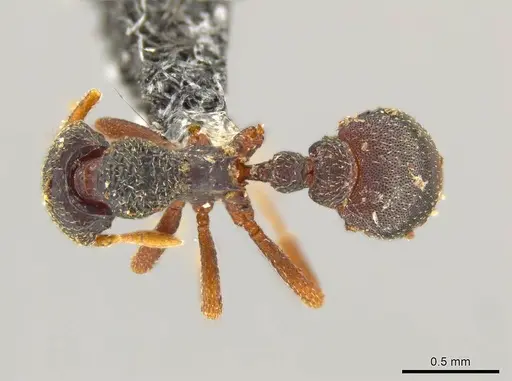
Literature
Loading...Loading products...