

Nylanderia silvula
- Scientific Name
- Nylanderia silvula
- Tribe
- Lasiini
- Subfamily
- Formicinae
- Author
- LaPolla & Fisher, 2011
- Distribution
- Found in 1 countries
Nylanderia silvula Overview
Nylanderia silvula is an ant species of the genus Nylanderia. It is primarily documented in 1 countries , including Kenya. Detailed taxonomic data and occurrence records can be further explored via authoritative databases such as AntWeb or the Global Biodiversity Information Facility (GBIF).
Nylanderia silvula
Nylanderia silvula is one of the largest Nylanderia species found in the Afrotropical region, with workers reaching 2.8-3.3mm [1]. These ants have a distinctive shining reddish-brown cuticle that sets them apart from other African Nylanderia species [1]. The species was described in 2011 from specimens collected in Kenya's Kakamega Forest, one of the last remnants of indigenous forest in East Africa [1]. The name 'silvula' comes from the Latin word for forest, reflecting their forest-dwelling nature [1].
Quick Summary
- Difficulty: Unknown, limited captive care data available
- Origin & Habitat: Kenya, specifically Kakamega Forest at Isecheno (0.02°N,34.97°E) at 1800m elevation. This is equatorial rainforest habitat where specimens have been collected from dead wood and litter sifting [1][2].
- Colony Type: Colony structure is unconfirmed. Based on typical Nylanderia patterns, likely single-queen (monogyne) colonies, but this has not been directly documented for this species.
- Size & Growth:
- Queen: 5.1mm [1], based on single specimen
- Worker: 2.8-3.3mm [1]
- Colony: Unknown, no colony size data available
- Growth: Unknown, no development data available
- Development: Unknown, no direct measurements. Based on typical Nylanderia patterns (small Formicinae), estimate 6-10 weeks at optimal temperature, but this is a rough guess. (Development timeline has not been studied for this species. Estimates based on genus-level patterns only.)
- Antkeeping:
- Temperature: Unknown, no thermal studies exist. As a rainforest species from 1800m elevation in Kenya, they likely prefer warm, humid conditions. Start around 24-28°C and observe colony activity. Related Nylanderia species typically thrive in the low-to-mid 20s°C range.
- Humidity: High humidity is expected based on their rainforest origin. Keep nest substrate consistently moist but not waterlogged. The natural habitat (dead wood and litter in forest) suggests they need damp conditions.
- Diapause: Unknown, no seasonal studies exist. As a tropical/subtropical species from high elevation Kenya, they may have reduced activity during drier periods rather than true hibernation. Further observation needed.
- Nesting: In the wild, they nest in dead wood and leaf litter in rainforest [1]. For captivity, a naturalistic setup with moist substrate (soil/peat mix) and decaying wood pieces works well. Y-tong or plaster nests with good moisture retention are suitable alternatives.
- Behavior: Behavior is unstudied in captivity. Based on genus patterns, Nylanderia are typically active foragers with erratic movement patterns (often called 'crazy ants'). Workers are likely to be quick-moving and may be skittish. Escape prevention should be moderate, workers are small (under 4mm) but not extremely tiny. They likely forage for honeydew and small insects.
- Common Issues: No captive husbandry data exists, this is a newly described species with almost no information available, Temperature and humidity requirements are unknown, keepers must experiment and observe, Growth rate is unconfirmed, colonies may grow slowly or quickly, unknown, Diapause requirements are unclear, tropical origin suggests minimal winter rest, but high elevation may change this, Limited availability, this species is rarely kept and may be difficult to acquire
Appearance and Identification
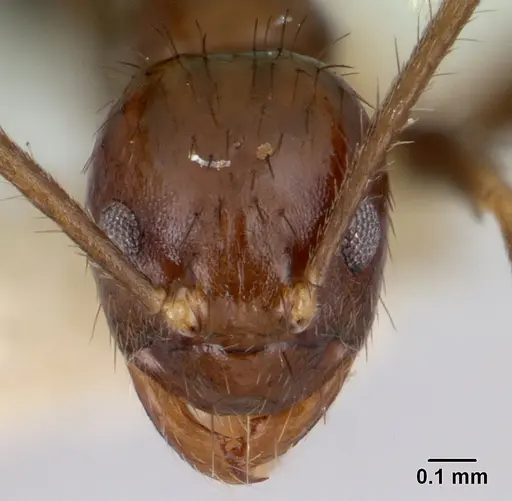
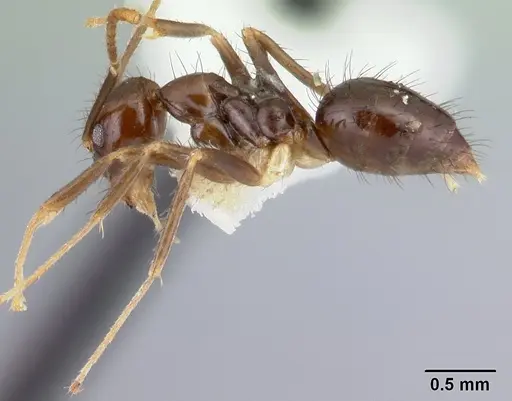
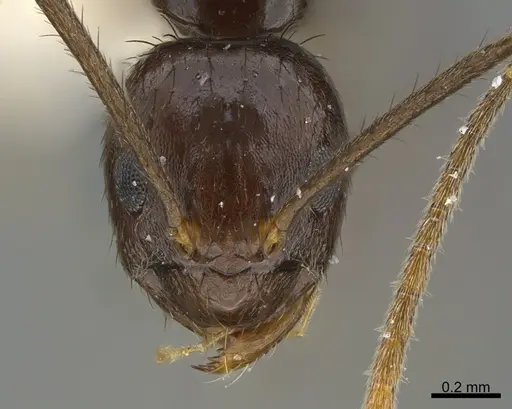
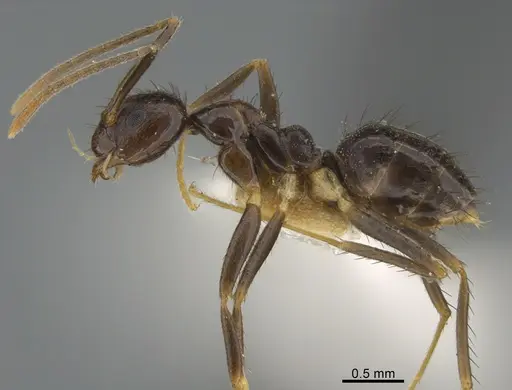
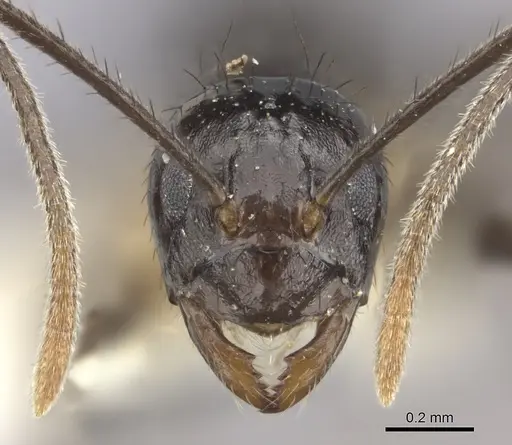
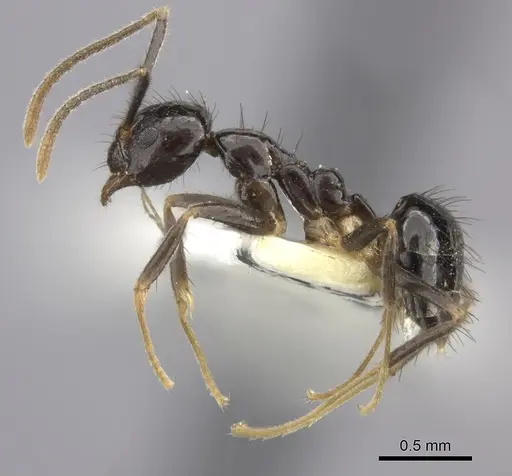
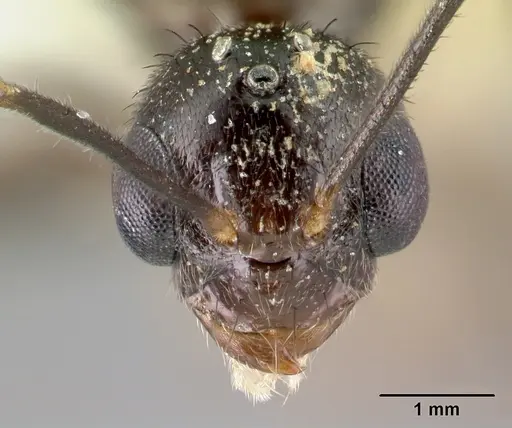
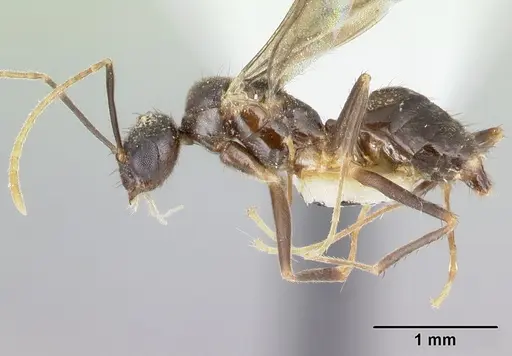
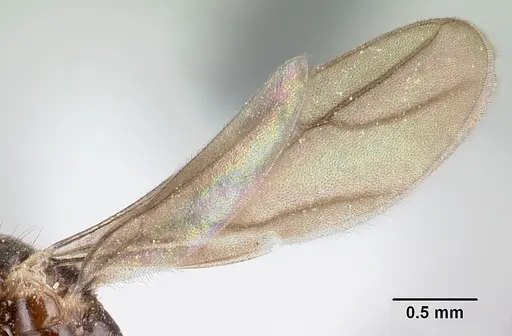
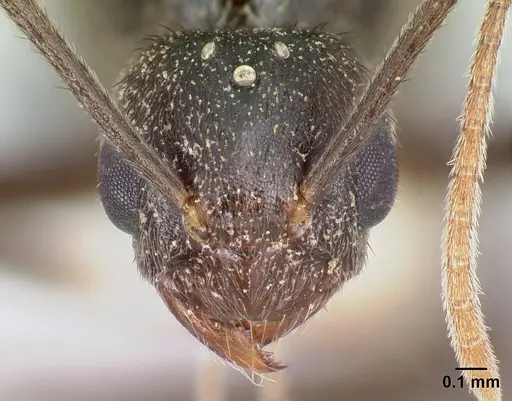
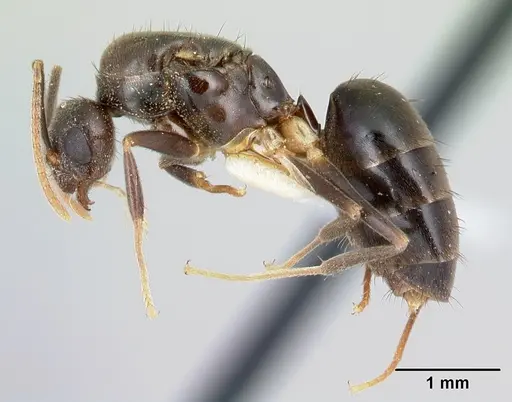
Nylanderia silvula workers measure 2.8-3.3mm, making them one of the largest Nylanderia species in the Afrotropical region [1]. They have a distinctive shining reddish-brown cuticle that is unique among African Nylanderia species [1]. Their body is dark reddish-brown with slightly lighter mandibles and antennae, while the trochanters and middle/back legs are yellowish to whitish [1]. The head, mesonotum, metanotal area, and propodeum have a rough, textured appearance (rugulose), while the gaster is smooth and shining [1]. Queens are significantly larger at 5.1mm with large eyes that take up more than half of the lateral margin [1]. Males measure 2.9-3.0mm and have very large eyes and distinctive genitalia [1].
Natural Habitat and Distribution
This species is known only from Kenya, specifically from Kakamega Forest at Isecheno, which sits at approximately 1800m elevation near the equator (0.02°N,34.97°E) [1]. Kakamega Forest is one of the last remnants of indigenous rainforest in East Africa. Specimens have been collected by sifting through dead wood and leaf litter [1]. The name 'silvula' (Latin for forest) directly references this forest habitat [1]. The combination of high elevation and equatorial location suggests they are adapted to warm, humid conditions with year-round rainfall.
Nest Preferences
In the wild, Nylanderia silvula has been collected from dead wood and leaf litter in the rainforest floor [1]. For captive colonies, provide a naturalistic setup that mimics this microhabitat. A soil/peat mixture with pieces of decaying wood or bark works well. The substrate should remain consistently moist but never waterlogged. Y-tong nests or plaster nests with good moisture retention are practical alternatives that allow you to maintain appropriate humidity. Ensure there are both moist areas and slightly drier areas so the ants can self-regulate.
Feeding and Diet
Diet has not been specifically studied for this species, but Nylanderia genus members are typically omnivorous. They likely feed on honeydew from aphids and scale insects, as well as small insects and other protein sources. In captivity, offer sugar water or honey as an energy source, along with small protein items like fruit flies, small crickets, or mealworms. Based on genus patterns, they probably accept a wide variety of foods. Feed protein 2-3 times per week and provide sugar water constantly.
Temperature and Care
No specific temperature data exists for this species. As a rainforest species from 1800m elevation in Kenya, they likely prefer warm, humid conditions. Start around 24-28°C and observe colony behavior, if workers cluster near heat sources, increase temperature slightly, if they avoid heated areas, reduce temperature. Related Nylanderia species typically do well in the low-to-mid 20s°C range. Use a heating cable or mat on one side of the nest to create a temperature gradient, allowing ants to move between warmer and cooler areas. Avoid temperature extremes.
Behavior and Temperament
Specific behavior has not been documented for this species in captivity. Based on typical Nylanderia patterns, workers are likely quick-moving and active foragers with somewhat erratic movement (the genus is commonly called 'crazy ants' for this reason). They are probably not particularly aggressive but may be skittish. Workers are small enough (under 4mm) that escape prevention matters, use standard barriers like Fluon on test tube rims or ensure formicarium connections are secure. Their rainforest origin suggests they prefer darker, more enclosed spaces and may be more active in lower light conditions.
Frequently Asked Questions
How long does it take for Nylanderia silvula to develop from egg to worker?
The development timeline has not been studied for this species. Based on typical Nylanderia genus patterns (small Formicinae ants), expect approximately 6-10 weeks from egg to first worker at optimal temperature, but this is a rough estimate.
What do Nylanderia silvula ants eat?
Diet is unconfirmed for this species, but based on genus patterns, they are omnivorous. Offer sugar water or honey for energy, along with small protein sources like fruit flies, small crickets, or mealworms. They likely also collect honeydew in the wild.
What temperature do Nylanderia silvula ants need?
No specific temperature requirements have been documented. As a rainforest species from Kenya's Kakamega Forest, they likely prefer warm conditions. Start around 24-28°C and adjust based on colony activity.
Are Nylanderia silvula ants good for beginners?
This species cannot be recommended for beginners due to the complete lack of captive husbandry data. This is a newly described species (2011) with almost no information available about their care requirements. Keepers should have experience with less specialized species before attempting this one.
How big do Nylanderia silvula colonies get?
Colony size is unknown, no colony size data exists for this species. Based on their being one of the larger Nylanderia species, colonies may reach several hundred workers, but this is purely speculative.
What humidity do Nylanderia silvula ants need?
High humidity is expected based on their rainforest origin. Keep nest substrate consistently moist but not waterlogged. The natural habitat (dead wood and litter in rainforest) indicates they need damp conditions.
Do Nylanderia silvula ants need hibernation?
Diapause requirements are unknown. As a tropical/subtropical species from high elevation Kenya, they may have reduced activity during drier periods rather than true hibernation. More observation is needed.
Can I keep multiple Nylanderia silvula queens together?
Colony structure is unconfirmed for this species. Based on typical Nylanderia patterns, they likely form single-queen colonies. Combining unrelated queens is not recommended without documented evidence that they can found colonies pleometrotically.
Where does Nylanderia silvula live in the wild?
Nylanderia silvula is known only from Kakamega Forest in Kenya, at approximately 1800m elevation. They live in dead wood and leaf litter in this equatorial rainforest [1].
References

This caresheet is licensed under CC BY-SA 4.0 .
CASENT0179585
View on AntWeb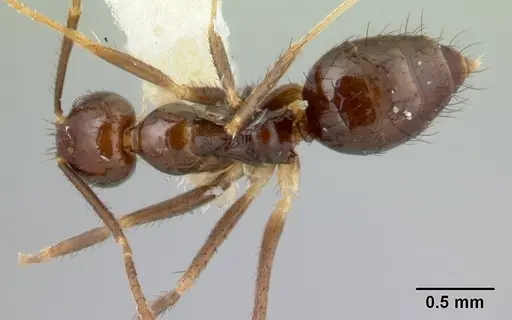
CASENT0217203
View on AntWeb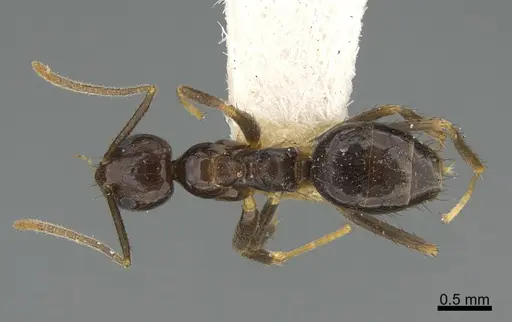
LACMENT272717
View on AntWeb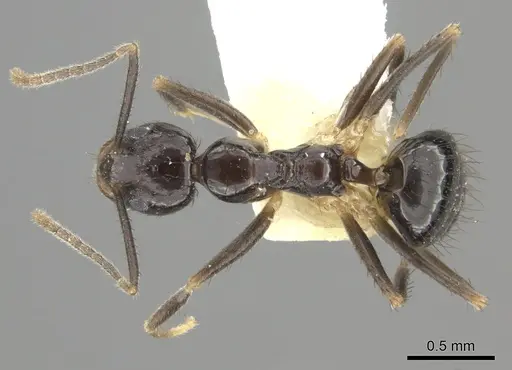
LACMENT272719
View on AntWeb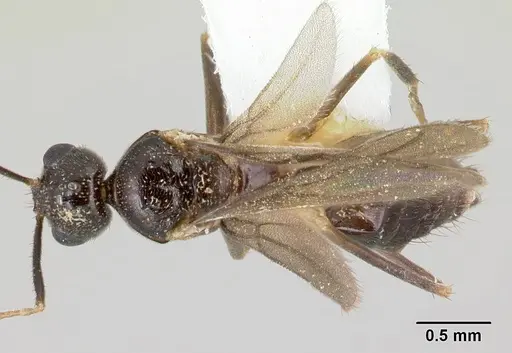
LACMENT272721
View on AntWeb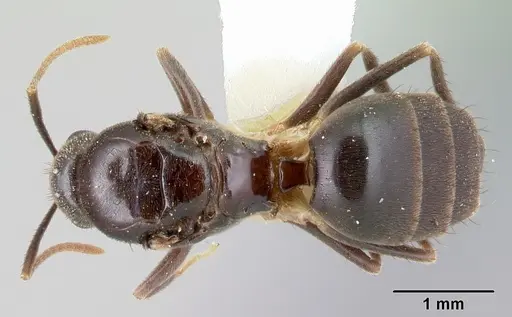
Literature
Loading...Loading products...