

Nylanderia indica
- Scientific Name
- Nylanderia indica
- Tribe
- Lasiini
- Subfamily
- Formicinae
- Author
- Forel, 1894
- Distribution
- Found in 3 countries
Nylanderia indica Overview
Nylanderia indica is an ant species of the genus Nylanderia. It is primarily documented in 3 countries , including Hong Kong, India, Sri Lanka. Detailed taxonomic data and occurrence records can be further explored via authoritative databases such as AntWeb or the Global Biodiversity Information Facility (GBIF).
Nylanderia indica
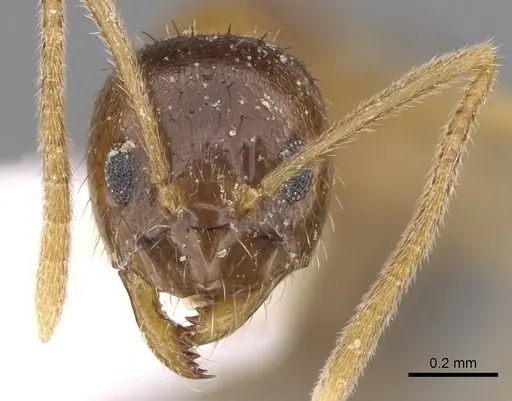
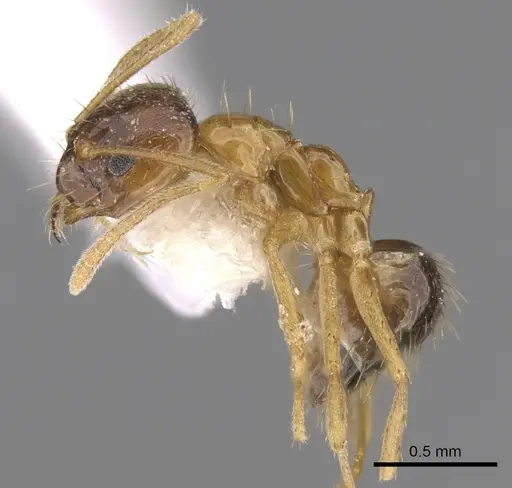
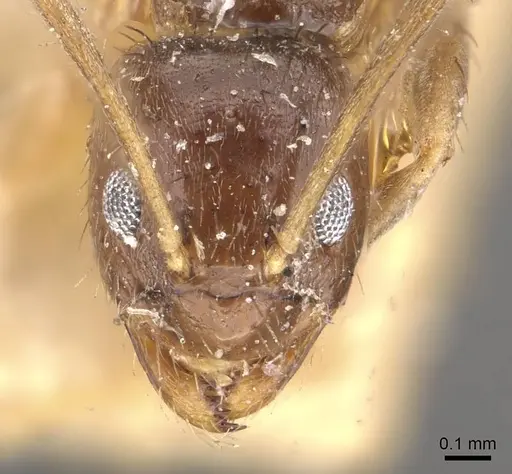
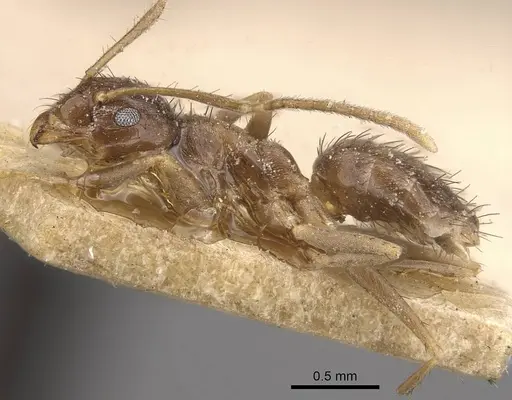
Nylanderia indica is a small, yellowish-brown to reddish-brown ant native to the Indian subcontinent and surrounding regions. Workers measure just 0.52-0.72 mm in head length, making them one of the smaller ant species you'll encounter [1]. The species has distinctive small eyes that cover only about one-fourth of the lateral cephalic margin, and long antennae that extend well past the back of the head [1]. These ants are found across most of India, Sri Lanka, Bangladesh, Nepal, and into southern China, where they occupy primary forest habitats [1][2]. In the wild, they nest in leaf litter, rotting wood, and under stones, typical ground-nesting behavior [1]. A notable trait: they occasionally serve as alternative hosts for the ant guest species Coluocera maderae [3].
Quick Summary
- Difficulty: Easy
- Origin & Habitat: Native to the Indomalaya region, India, Sri Lanka, Bangladesh, Nepal, and southern China. Found in leaf litter, rotting wood, and under stones in primary forest habitats [1][2]. Also recorded from high elevations in Nepal (1690-3500m) [4].
- Colony Type: Colony structure is unconfirmed. Based on typical Nylanderia patterns, likely single-queen colonies but this needs verification for this specific species.
- Size & Growth:
- Queen: 0.82-0.83 mm head length [1]
- Worker: 0.52-0.72 mm head length [1]
- Colony: Unknown, not documented in available research
- Growth: Unknown, no development data available for this species
- Development: Unconfirmed, no direct development data exists. Based on related Nylanderia species, estimate 4-8 weeks at optimal tropical temperatures. (Development timeline is not directly studied. Related species in the genus typically develop within 4-8 weeks in warm conditions.)
- Antkeeping:
- Temperature: Keep at room temperature, roughly 22-28°C. This species comes from tropical to subtropical regions, so warmth supports activity. No specific optimal temperature has been documented [5].
- Humidity: Moderate to high humidity. In the wild they inhabit leaf litter and rotting wood, environments that stay damp. Keep the nest substrate moist but not waterlogged, with some drier areas available.
- Diapause: Unknown, no data on winter dormancy. Given its tropical/subtropical origin, it may not require a true diapause but could show reduced activity in cooler months.
- Nesting: Use a naturalistic setup with leaf litter material, rotting wood pieces, or a test tube with moist substrate. They do well in setups that mimic forest floor conditions, damp soil with some decaying organic material.
- Behavior: These are small, relatively docile ants that nest in ground-level microhabitats. They are not aggressive and rarely sting, their small size means any sting would be negligible to humans. Workers forage individually in leaf litter and debris. Because of their tiny size, escape prevention is important, they can slip through small gaps. They are commonly found in less-urbanized to moderately-urbanized areas [6].
- Common Issues: tiny size makes escape likely without fine mesh barriers, no documented development timeline makes timing uncertain, colony size unknown so growth expectations are unclear, wild-caught colonies may have parasites given they host guest species, humidity control is important, too dry causes desiccation
Housing and Nest Setup
Nylanderia indica is a small ant that does well in simple setups. Test tubes work well for founding colonies, use a standard test tube setup with a water reservoir (cotton ball) at one end. The tube should be kept horizontal or at a slight angle so the queen can find the humid end. Because workers are tiny (around 0.5mm), use a test tube with a tight-fitting cotton to prevent escapes. Once the colony grows to 20-30 workers, you can move them to a small formicarium. A Y-tong (AAC) nest or a small acrylic setup with narrow chambers works well. Add some leaf litter material or small pieces of rotting wood to the outworld to give foragers something to explore. These ants do not need elaborate nests, they are simple to house. [1]
Feeding and Diet
Like most Nylanderia species, these ants likely have an omnivorous diet. Offer sugar water or honey as a constant energy source, they will readily accept sweet liquids. For protein, offer small insects like fruit flies, pinhead crickets, or small mealworm pieces. Because of their tiny size, prey items should be appropriately sized, very small arthropods or pre-killed insect pieces work best. In the wild they forage in leaf litter where they likely scavenge and hunt small invertebrates. Feed protein every 2-3 days and keep sugar water available at all times. Remove uneaten prey after 24 hours to prevent mold. [5]
Temperature and Humidity
Keep your colony at room temperature, ideally between 22-28°C. This species originates from tropical and subtropical regions (India, Sri Lanka, southern China), so they do well in warm conditions. Room temperature is usually sufficient, no additional heating is typically needed unless your home is particularly cool. For humidity, aim for moderate to high levels. Their natural habitat (leaf litter, rotting wood, under stones) suggests they prefer damp conditions. Keep the nest substrate moist but not saturated, you should see condensation occasionally but not standing water. A humidity range of 60-80% is a good target. [1][2]
Behavior and Colony Life
Nylanderia indica workers are small, active foragers that search individually through leaf litter and debris. They are not aggressive and pose no threat to keepers. The colony will likely grow gradually, expect the first workers (nanitics) to emerge 4-8 weeks after founding, though this is estimated from related species since no specific data exists for N. indica. Colonies appear to remain relatively small compared to some other ant species. In the wild, they are often found in primary forest habitats and are considered habitat specialists in some regions like China [2]. They are common in less-urbanized to moderately-urbanized areas, suggesting they can adapt to some human disturbance [6]. Workers are yellowish-brown to reddish-brown in color, which helps them blend into forest floor environments.
Seasonal Care
Because this species comes from tropical and subtropical regions, it may not require a true hibernation period. However, if you keep them in a temperate climate, they may show reduced activity during winter months when temperatures drop. There is no documented diapause requirement for this species. Simply maintain normal room temperature and care year-round. If you notice workers becoming less active in winter, you can lower temperatures slightly (but not below 18°C) to match natural seasonal cues. Do not feed less, continue offering food, just in smaller amounts if activity decreases. Resume normal feeding when spring brings increased activity. [5]
Frequently Asked Questions
How long does it take for Nylanderia indica to raise first workers?
The exact timeline is unconfirmed for this species. Based on related Nylanderia species, expect 4-8 weeks from egg to first worker at warm temperatures (around 25°C). The queen will seal herself in a chamber and tend to the brood until nanitics emerge.
What do Nylanderia indica ants eat?
They are omnivorous. Offer sugar water or honey constantly for energy, and protein sources like small fruit flies, pinhead crickets, or small mealworm pieces every 2-3 days. Prey should be appropriately sized for their tiny workers.
Are Nylanderia indica good for beginners?
Yes, they are considered an easy species to keep. They are small, docile, and have simple housing requirements. The main challenges are their tiny size (requiring good escape prevention) and the lack of documented development data.
What temperature do Nylanderia indica need?
Room temperature between 22-28°C is ideal. They come from tropical/subtropical regions so they do well in warm conditions without additional heating in most homes.
How big do Nylanderia indica colonies get?
The maximum colony size is not documented in available research. Based on their small worker size and typical Nylanderia patterns, colonies likely remain relatively small, probably under a few hundred workers at most.
Can I keep multiple Nylanderia indica queens together?
The colony structure is unconfirmed for this species. Combining unrelated queens is not recommended since it has not been documented and could result in aggression.
References

This caresheet is licensed under CC BY-SA 4.0 .
CASENT0281126
View on AntWeb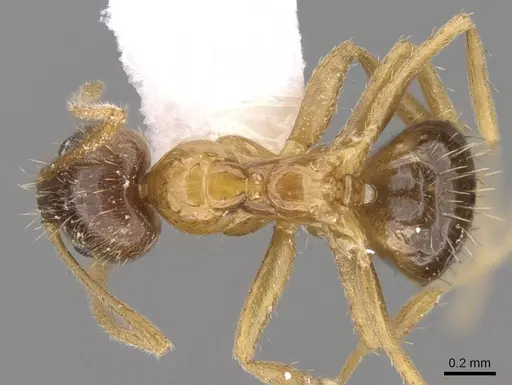
CASENT0911008
View on AntWeb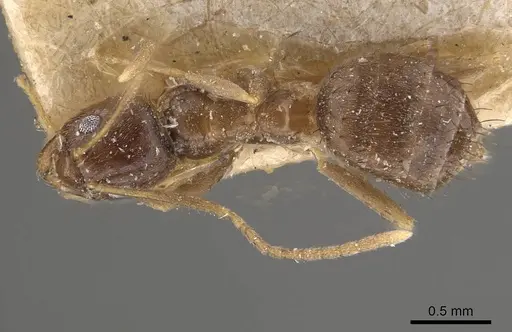
Literature
Loading...Loading products...