

Nylanderia impolita
- Scientific Name
- Nylanderia impolita
- Tribe
- Lasiini
- Subfamily
- Formicinae
- Author
- LaPolla & Fisher, 2011
- Distribution
- Found in 1 countries
Nylanderia impolita Overview
Nylanderia impolita is an ant species of the genus Nylanderia. It is primarily documented in 1 countries , including Gabon. Detailed taxonomic data and occurrence records can be further explored via authoritative databases such as AntWeb or the Global Biodiversity Information Facility (GBIF).
Nylanderia impolita
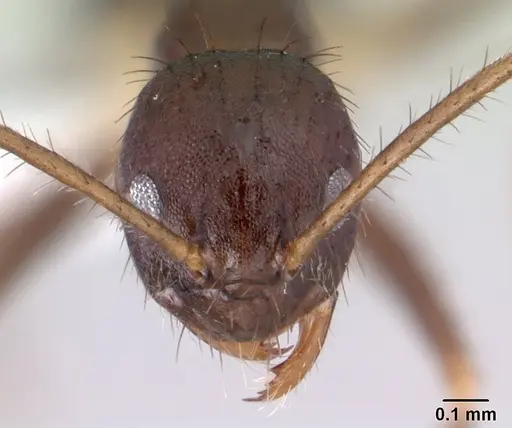
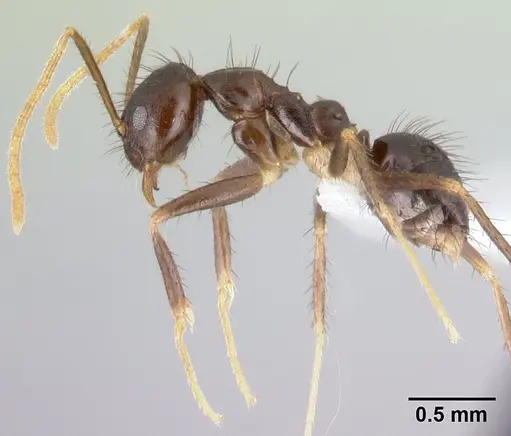
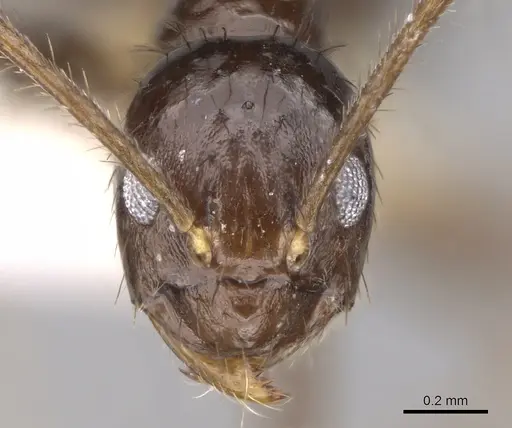
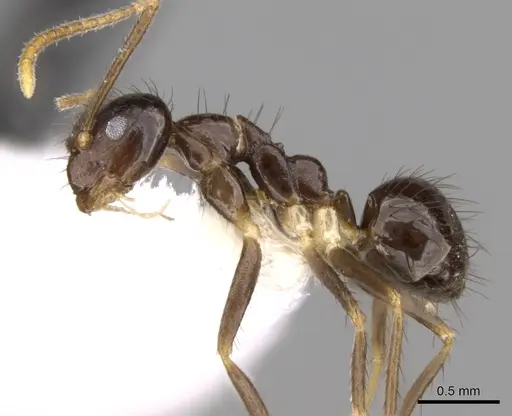
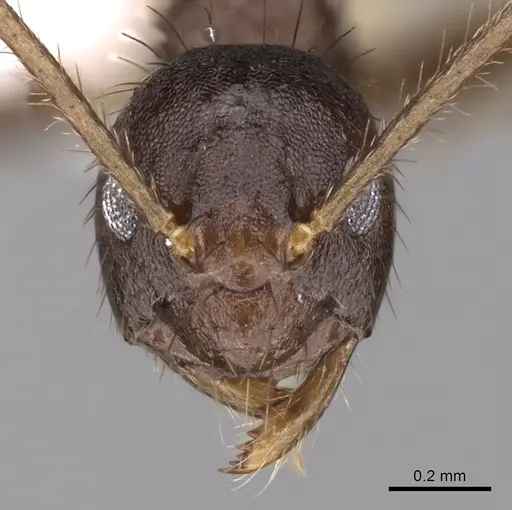
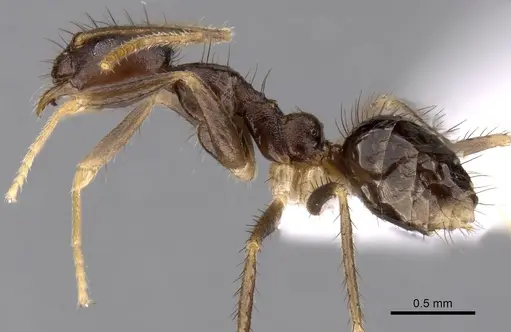
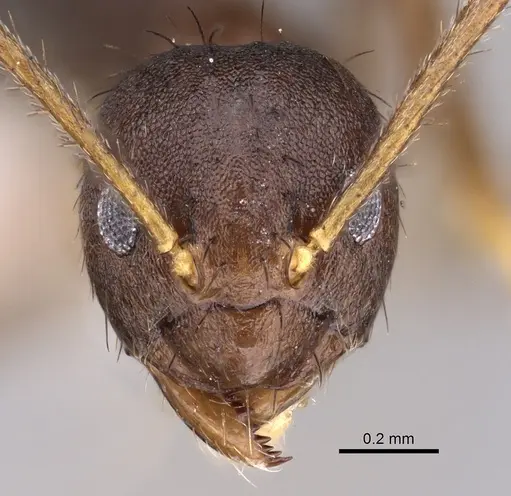
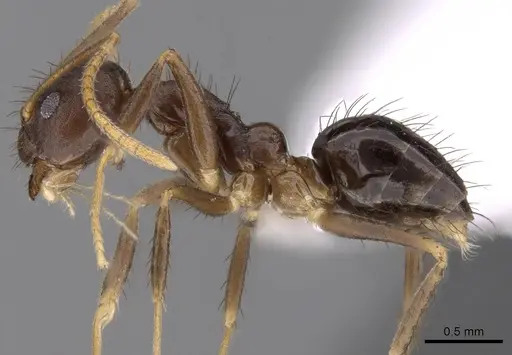
Nylanderia impolita is a small, dark brown ant species native to West Africa. Workers measure 2.6-3.1mm and have one of the longest scapes (antennae) of any African Nylanderia species, with measurements of 0.91-0.98mm [1]. The most distinctive feature is their rough, textured cuticle (called rugulose) on the head and mesosoma, which gives them an 'unpolished' appearance, this is actually how they got their name 'impolita' meaning unpolished in Latin [1]. They were first described in 2011 and are widespread across West Africa including Gabon, Ghana, Angola, and the Central African Republic [1]. The queen and male castes remain unknown to science, making this a rarely kept and poorly studied species in the antkeeping hobby.
Quick Summary
- Difficulty: Unknown
- Origin & Habitat: West Africa, coastal lowland rainforest in Gabon, Ghana, Angola, and Central African Republic. Specimens have been collected from forest margins along rivers [1].
- Colony Type: Unknown, the queen caste has not been described, so colony structure (single-queen or multi-queen) is unconfirmed.
- Size & Growth:
- Queen: Unknown, queen caste has not been described [1]
- Worker: 2.6-3.1mm [1]
- Colony: Unknown, no colony size data available
- Growth: Unknown
- Development: Unknown, development has not been studied (Closely related Nylanderia species typically develop from egg to worker in 4-8 weeks at tropical temperatures, but this is an estimate only)
- Antkeeping:
- Temperature: Likely 22-28°C based on West African rainforest origin. Start in the mid-70s°F (around 24-26°C) and observe colony activity.
- Humidity: Moderate to high, they come from coastal rainforest areas. Keep nest substrate moist but not waterlogged, with some drier areas available.
- Diapause: Unknown, West African species may not require true hibernation, but may have reduced activity during cooler/drier seasons.
- Nesting: In the wild they have been found in rotting wood and forest margin habitats. A Y-tong (AAC) nest or plaster nest with some moisture works well. Avoid completely dry setups.
- Behavior: Behavior is not well documented. Based on related species, they are likely generalist foragers that scavenge and tend honeydew. Their very long scapes suggest good sensory capabilities. Escape risk is moderate due to their small size, use standard barrier methods. Aggression level is unknown but related species are typically non-aggressive.
- Common Issues: queen and male castes are unknown, making captive breeding extremely difficult, no established care protocols exist, keepers are essentially pioneering husbandry, slow growth is likely since related Nylanderia species are not fast growers, escape prevention needed due to small worker size (2.6-3.1mm), wild-caught colonies may have parasites or diseases since the species has never been kept in captivity
Discovery and Identification
Nylanderia impolita was first described in 2011 by LaPolla, Hawkes, and Fisher as part of a comprehensive monograph on African Nylanderia species [1]. The type specimens were collected in Gabon using a malaise trap placed in coastal lowland rainforest at the forest margin along a river [1]. The species name 'impolita' comes from Latin meaning 'unpolished', a direct reference to their distinctive rough, textured cuticle on the head and mesosoma [1]. This rugulose (wrinkled) texture is their key identifying feature and separates them from the similar-looking N. lepida, which has smooth, shiny cuticle [1]. Workers are overall dark brown with lighter mandibles, antennae, and legs [1]. They have one of the longest scapes (antennae segments) of any African Nylanderia species, measuring 0.91-0.98mm [1].
Distribution and Habitat
This species is widespread throughout West Africa, with confirmed records from Angola, Central African Republic, Gabon, and Ghana [1]. In Gabon, specimens have been collected from multiple locations in Ogooue-Maritime and Woleu-Ntem provinces, as well as the Monts Doudou area [1]. In Ghana, they have been found in several locations including Enchi, Bunso near Tafo, and the Atewa forest area [1]. Their natural habitat is coastal lowland rainforest, typically at forest margins along rivers [1]. This suggests they prefer humid, shaded environments with access to decaying wood and leaf litter, typical of rainforest ant communities.
Current Knowledge Gaps
Nylanderia impolita remains one of the most poorly known ant species in the hobby. The queen caste has never been described, meaning we do not know her size, color, or morphology [1]. Similarly, the male caste is completely unknown [1]. This also means we have no information about their colony structure (whether they have single queens or multiple queens), founding behavior, nuptial flight timing, or development timeline. No captive colonies have ever been established, so there are no proven care protocols. What we know about keeping related Nylanderia species may or may not apply to this specific species. This makes N. impolita an experimental species for antkeepers, you will be learning alongside the scientific community.
Similar Species: Nylanderia lepida
N. impolita is most likely to be confused with Nylanderia lepida, a related species found in the same region [1]. The main differences are: N. lepida is generally smaller (TL 1.2-2.6mm vs 2.6-3.1mm for N. impolita), and most importantly N. lepida has a very smooth and shining cuticle while N. impolita has the distinctive rough, rugulose texture [1]. N. impolita also has a more elongated mesosoma (middle body section) with a lower pronotum, and generally more erect macrosetae (stiff hairs) on the scapes, often exceeding 30 hairs compared to fewer in N. lepida [1]. If you are trying to identify wild-caught Nylanderia from West Africa, look for the rough texture on the head and mesosoma as the key identifying feature of N. impolita.
Tentative Care Recommendations
Since no established care protocols exist for this species, any recommendations are educated guesses based on related Nylanderia species and their West African rainforest origin. Keep temperatures in the range of 22-28°C (roughly 72-82°F), which is typical for tropical ant species. Humidity should be moderate to high, think damp forest floor conditions. Nest options that work well for small rainforest ants include Y-tong (AAC) nests, plaster nests, or naturalistic setups with moist substrate. Foraging behavior is likely similar to other Nylanderia, they are generalists that will scavenge for sugars and protein. Offer sugar water or honey as a carbohydrate source, and small protein sources like fruit flies, springtails, or other tiny arthropods. Start with small portions and observe what they accept. Given how little is known about this species, document your observations carefully, you may be contributing to the first real knowledge about captive care of this species.
Frequently Asked Questions
How do I keep Nylanderia impolita ants?
There are no established care protocols for this species since it has never been kept in captivity. Based on its West African rainforest origin, try keeping it in a Y-tong or plaster nest at 22-28°C with moderate humidity. Offer sugar water and small protein sources. You will essentially be pioneering the husbandry of this species.
What does Nylanderia impolita look like?
Workers are small at 2.6-3.1mm, dark brown overall with lighter mandibles, antennae, and legs. The most distinctive feature is the rough, wrinkled (rugulose) texture on their head and mesosoma. They have one of the longest scapes of any African Nylanderia, measuring 0.91-0.98mm.
Where is Nylanderia impolita found?
This species is widespread across West Africa, confirmed in Angola, Central African Republic, Gabon, and Ghana. They live in coastal lowland rainforest, typically at forest margins along rivers.
How big do Nylanderia impolita colonies get?
Unknown, no colony size data has been documented. The queen caste has never been described, so we have no information about typical colony sizes.
How long does it take for Nylanderia impolita eggs to become workers?
Unknown, the development timeline has never been studied. Based on related Nylanderia species, it likely takes 4-8 weeks at tropical temperatures, but this is just an estimate.
Can I keep multiple Nylanderia impolita queens together?
Unknown, the colony structure (single-queen vs multi-queen) has not been documented. The queen caste itself has never been described, so we have no information about their social structure.
Is Nylanderia impolita good for beginners?
No, this species is not recommended for beginners or even experienced keepers. It has never been kept in captivity, the queen is unknown to science, and no established care protocols exist. Keeping this species is essentially contributing to scientific discovery.
What do Nylanderia impolita ants eat?
Unknown, no feeding observations have been documented. Based on related species, they are likely generalist foragers that accept sugars (honeydew, nectar) and protein (small insects). Offer sugar water or honey and small live or dead arthropods.
Does Nylanderia impolita need hibernation?
Unknown, as a West African species from tropical rainforest, they likely do not require true hibernation. They may have reduced activity during cooler or drier seasons, but this has not been studied.
Where can I get a Nylanderia impolita queen?
This species is extremely rare in the antkeeping hobby. Queens have never been described, so they are not available from commercial suppliers. Any colony would need to be wild-caught in West Africa, which presents significant practical and legal challenges.
Why is Nylanderia impolita so rare in antkeeping?
This species was only described in 2011 and the queen caste remains unknown to science. They have never been kept in captivity, so no husbandry protocols exist. Their West African distribution also makes them difficult to obtain. They represent a frontier species for antkeeping, almost nothing is known about them.
References

This caresheet is licensed under CC BY-SA 4.0 .
CASENT0179589
View on AntWeb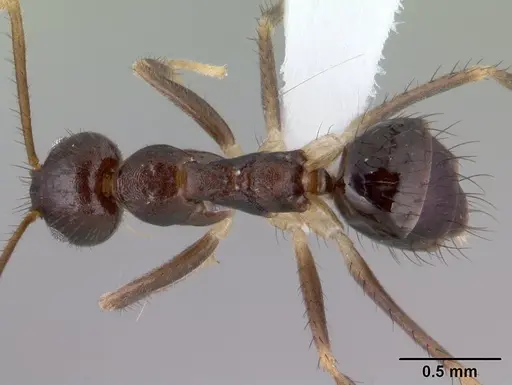
CASENT0281155
View on AntWeb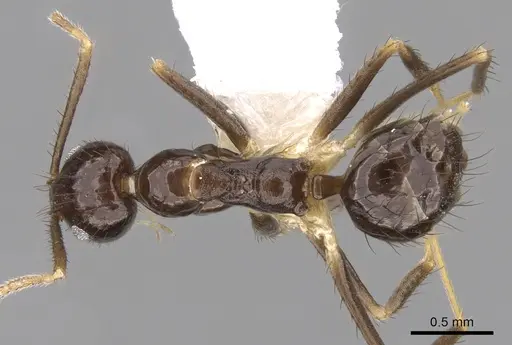
CASENT0317039
View on AntWeb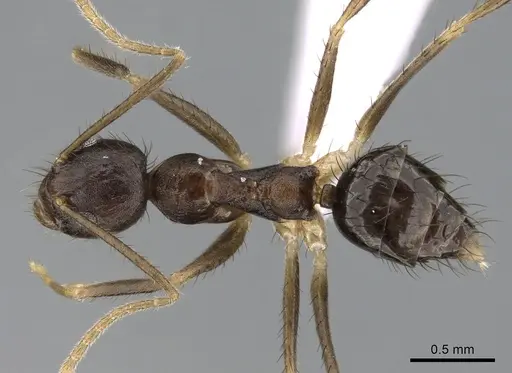
CASENT0405304
View on AntWeb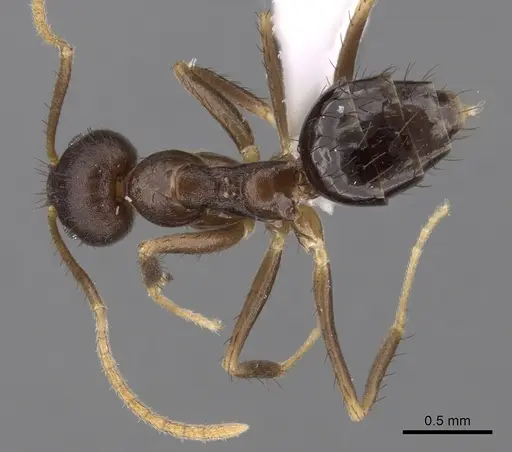
Literature
Loading...Loading products...