

Nylanderia flaviabdominis
- Scientific Name
- Nylanderia flaviabdominis
- Tribe
- Lasiini
- Subfamily
- Formicinae
- Author
- Wang, 1997
- Distribution
- Found in 2 countries
Nylanderia flaviabdominis Overview
Nylanderia flaviabdominis is an ant species of the genus Nylanderia. It is primarily documented in 2 countries , including China, Lao People's Democratic Republic. Detailed taxonomic data and occurrence records can be further explored via authoritative databases such as AntWeb or the Global Biodiversity Information Facility (GBIF).
Nylanderia flaviabdominis
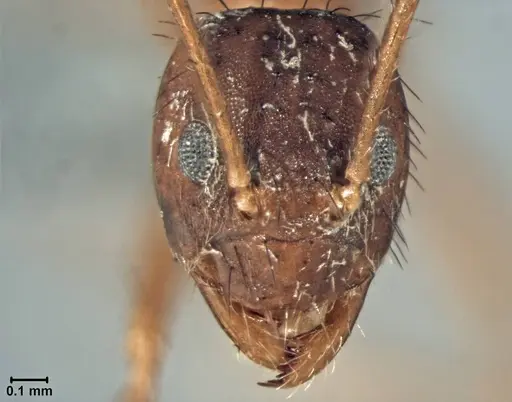
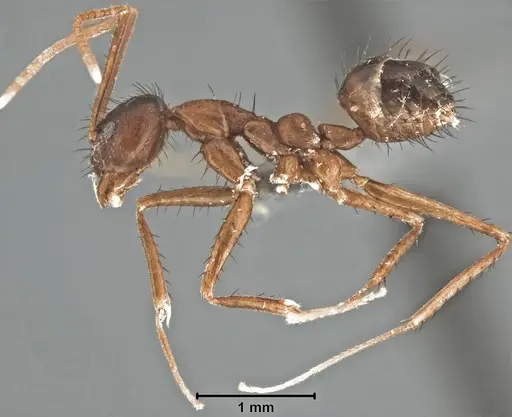
Nylanderia flaviabdominis is a small to medium-sized ant native to China, measuring 3.26-3.77mm in total length [1]. Workers have a distinctive medium to dark orange-brown coloration with a rectangular head featuring rounded posterolateral corners. The mesosoma appears elongated and constricted, which historically led to confusion with the genus Prenolepis. This species is characterized by deep mesonotal and metanotal sutures, anteriorly-placed eyes, and long erect macrosetae with thick setal bases. The propodeum shows distinctive rugoreticulation (a net-like pattern of ridges) rather than the longitudinal striations seen in similar species like Nylanderia emmae.
This species plays a fascinating ecological role as a seed disperser for Corydalis plants (Papaveraceae) in subtropical evergreen forests of Hubei Province, China. Unlike ants that use mass recruitment, N. flaviabdominis employs simple cooperative recruitment, sending 5-30 workers to retrieve seeds once a forager discovers them. They particularly favor Corydalis wilfordii seeds, carrying them directly to their nests with an average dispersal distance of 0.45 meters.
Quick Summary
- Difficulty: Medium
- Origin & Habitat: Native to China, specifically found in Hubei Province and Fujian Province in subtropical evergreen forests [1][2]. This is a primary forest specialist, research shows it occupies primary forest habitats but is not found in secondary forest or rubber plantations [3]. The species was documented collecting seeds in a subtropical evergreen forest at Jiugongshan mountain.
- Colony Type: Colony structure is not well documented in scientific literature. Nylanderia species are typically polygynous (multi-queen), but specific colony structure for N. flaviabdominis remains unconfirmed.
- Size & Growth:
- Queen: Not documented in available literature, likely similar to other Nylanderia species at 4-6mm
- Worker: 3.26-3.77mm total length
- Colony: Not documented, likely moderate sized based on worker dimensions
- Growth: Unknown, no development studies available
- Development: Unknown, no direct development data available. Based on related Formicinae species, estimate 6-10 weeks at optimal temperature. (Development timeline has not been directly studied. Related Nylanderia species typically develop within 2-3 months from egg to worker.)
- Antkeeping:
- Temperature: Keep at room temperature around 20-25°C. This species comes from subtropical regions of central and southern China where temperatures are moderate year-round. A gentle gradient allowing workers to choose their preferred temperature is ideal.
- Humidity: Requires moderate to high humidity, reflecting its primary forest origin. Keep the nest substrate consistently moist but not waterlogged. The nesting material should feel damp to the touch with some slightly drier areas available.
- Diapause: Diapause requirements are not documented for this species. Given its subtropical Chinese distribution, a mild winter cool-down period (around 10-15°C for 2-3 months) may benefit established colonies, but this is not well studied.
- Nesting: In nature, this species nests in forest floor litter and soil. A naturalistic setup with moist substrate works well, or a Y-tong/plaster nest that maintains humidity. The small worker size (3.26-3.77mm) means chambers and passages should be appropriately scaled.
- Behavior: Workers are active foragers with a particular interest in seeds and protein sources. The species uses simple cooperative recruitment, when a forager finds food, it returns to recruit 5-30 nestmates rather than forming large raiding parties. They are not particularly aggressive but will defend their colony. Escape prevention is important due to their small size, they can squeeze through tiny gaps. Workers are fast-moving and alert.
- Common Issues: small size means escapes are likely without fine mesh barriers and tight-fitting lids, primary forest specialist may be sensitive to habitat changes, avoid dry conditions, slow colony growth can frustrate beginners who overfeed or disturb the nest too often, wild-caught colonies may carry parasites that can devastate captive populations, humidity control is critical, too dry and brood dies, too wet and mold becomes a problem
Housing and Nest Setup
For founding colonies, a standard test tube setup works well. Fill a test tube one-third with water, plug with cotton, and place the queen in the tube. Cover with a dark cloth to reduce stress. The queen will likely seal herself in and begin laying eggs, this is claustral founding behavior typical of Formicinae, though not directly documented for this species.
Once the colony reaches 20-30 workers, you can move them to a more permanent setup. A naturalistic terrarium with moist soil substrate mimics their natural forest floor habitat. Alternatively, a Y-tong or plaster nest maintains humidity well. The key is providing a moisture gradient so ants can regulate their own humidity preferences. Because workers are only 3.26-3.77mm, ensure all connections and barriers are escape-proof, these ants can slip through remarkably small gaps. [1]
Feeding and Diet
In the wild, N. flaviabdominis disperses seeds of Corydalis plants and likely tends aphids for honeydew like other Nylanderia species. In captivity, offer a varied diet: sugar water or honey as an energy source, and protein sources like small insects (fruit flies, pinhead crickets, mealworms). The seed-dispersing behavior suggests they may show interest in small seeds, though this would be enrichment rather than nutrition.
Feed sugar sources constantly, a cotton ball soaked in sugar water or a small dish of honey works well. Offer protein prey 2-3 times per week, removing any uneaten prey after 24 hours to prevent mold. The simple cooperative recruitment observed in the wild means you may see several workers arrive together at food sources rather than massive swarms.
Temperature and Seasonal Care
This species comes from subtropical China (Hubei and Fujian provinces), so moderate temperatures suit them well. Aim for 20-25°C as a baseline. Room temperature in most homes falls within this range, making this species relatively easy to keep warm. If your space runs cooler, a heating cable on one side of the nest creates a temperature gradient.
Winter care is not well documented. The subtropical climate means temperatures rarely drop below freezing, but a mild cool-down period may be natural. Consider reducing temperatures to around 15-18°C for 2-3 months during winter, reducing feeding frequency accordingly. Do not feed during any dormancy period. [1]
Behavior and Foraging
Workers of this species are active foragers that use simple cooperative recruitment. When a forager discovers a food source, it returns to the nest and recruits 5-30 workers rather than the hundreds that mass-recruiting species would summon. This makes feeding observations more intimate, you will see small groups rather than massive swarms.
The species is not particularly aggressive toward keepers, but workers are fast-moving and will defend the nest if threatened. Their small size makes them difficult to contain, excellent escape prevention is essential. Use fluon on container rims and ensure any ventilation holes are covered with fine mesh.
Frequently Asked Questions
How long does it take for Nylanderia flaviabdominis to produce first workers?
The exact egg-to-worker timeline is not documented for this species. Based on related Formicinae ants, expect 6-10 weeks from egg to first worker at optimal temperature (around 22-25°C). Patience is key, colony growth is typically slow initially.
Can I keep Nylanderia flaviabdominis in a test tube?
Yes, test tubes work well for founding colonies. Use the standard setup with a water reservoir and cotton plug. Once the colony reaches 20-30 workers, consider moving to a naturalistic setup or Y-tong nest that can maintain humidity better long-term.
What do Nylanderia flaviabdominis ants eat?
They accept sugar sources (honey water, sugar water) and protein (small insects like fruit flies, pinhead crickets, mealworms). In the wild, they also collect seeds from Corydalis plants, so they may show interest in small seeds as enrichment.
Are Nylanderia flaviabdominis good for beginners?
This species is rated as medium difficulty. They are small and require good escape prevention, and their exact care requirements are not well documented in antkeeping literature. Beginners may find the lack of detailed care guides challenging. Starting with a more common species like Lasius or Tetramorium may be easier.
How big do Nylanderia flaviabdominis colonies get?
Colony size is not well documented in scientific literature. Based on worker size (3.26-3.77mm), colonies are likely moderate, probably reaching a few hundred workers at maximum, not the large supercolonies some ant species form.
Do Nylanderia flaviabdominis need hibernation?
Diapause requirements are not documented for this species. Given their subtropical Chinese distribution, a mild winter cool-down (15-18°C for 2-3 months) may be beneficial but is not strictly required. Observe your colony's behavior, if they become less active in winter, reduce feeding and temperatures accordingly.
Why are my Nylanderia flaviabdominis dying?
Common causes include: too dry conditions (they need consistent moisture), poor escape prevention (they are tiny and can escape easily), overfeeding leading to mold, or stress from excessive disturbance. Wild-caught colonies may also carry parasites. Ensure humidity is adequate, use fine mesh barriers, and avoid disturbing the nest unnecessarily.
When should I move my colony to a formicarium?
Move to a larger setup once the colony reaches 20-30 workers and the test tube is becoming cramped. A naturalistic terrarium with moist soil works well for this species, or a Y-tong/plaster nest that holds humidity. Ensure the transition is gradual and the new setup maintains appropriate moisture levels.
Can I keep multiple Nylanderia flaviabdominis queens together?
Colony structure is not well documented for this species. Nylanderia species are typically polygynous (multi-queen), but combining unrelated foundress queens has not been studied. It is not recommended to combine unrelated queens as aggression may occur. If you obtain a wild colony, observe queen number and replicate those conditions.
References

This caresheet is licensed under CC BY-SA 4.0 .
USNMENT00755070
View on AntWeb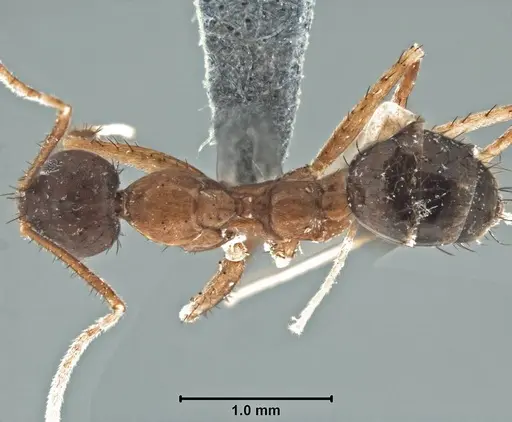
Literature
Loading...Loading products...