

Nylanderia concinna
- Scientific Name
- Nylanderia concinna
- Tribe
- Lasiini
- Subfamily
- Formicinae
- Author
- Trager, 1984
- Common Name
- Marsh Crazy Ant
- Distribution
- Found in 1 countries
Nylanderia concinna Overview
Nylanderia concinna (commonly known as the Marsh Crazy Ant) is an ant species of the genus Nylanderia. It is primarily documented in 1 countries , including United States of America. Detailed taxonomic data and occurrence records can be further explored via authoritative databases such as AntWeb or the Global Biodiversity Information Facility (GBIF).
Nylanderia concinna - "Marsh Crazy Ant"
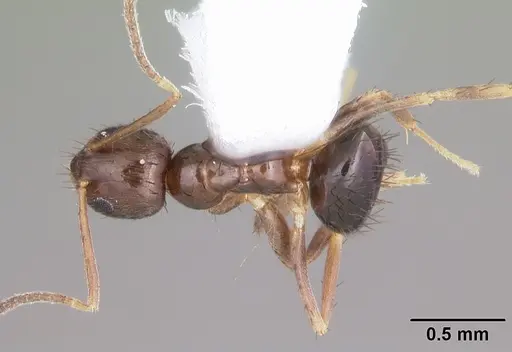
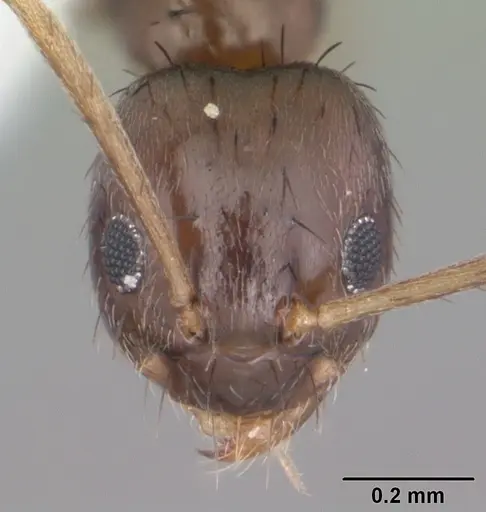
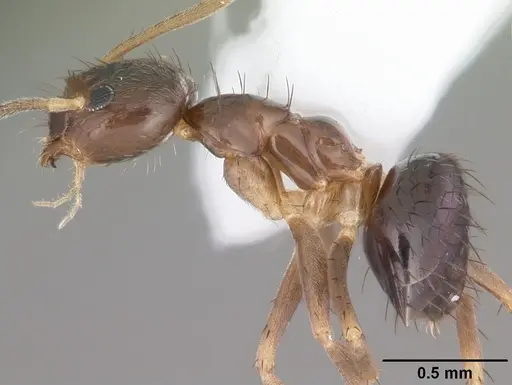
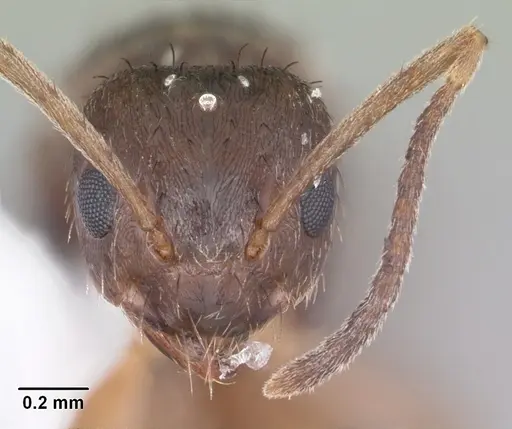
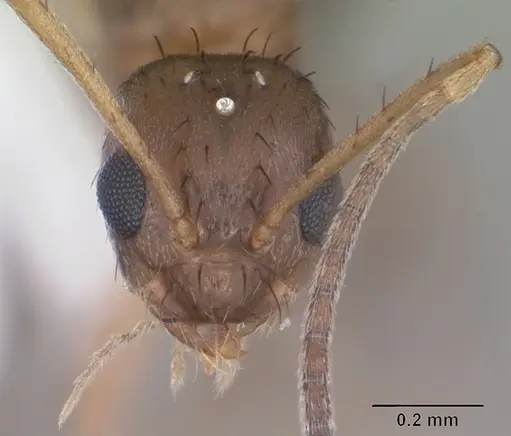
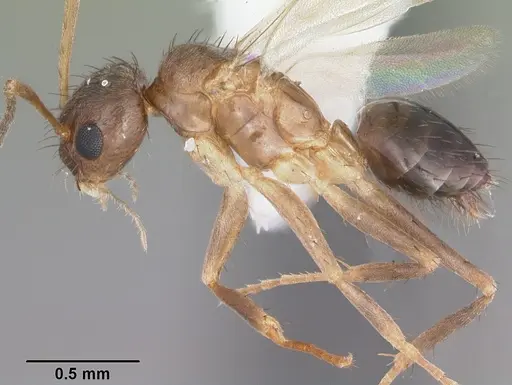
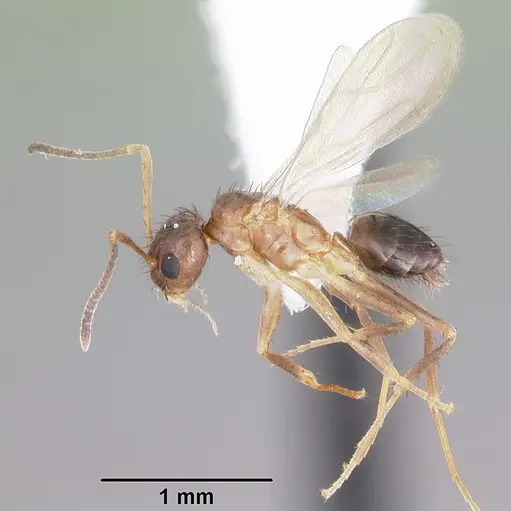
Nylanderia concinna is a small, slender ant native to the eastern United States. Workers measure 1.87-2.77mm and are uniformly dark brown with lighter medium-brown mandibles, scapes, and leg joints giving them a subtle two-toned appearance [1]. They have a distinctive band of golden pubescence across the front of their rear body section (propodeum) and long antennae that extend well past the back of their head. These ants are found throughout the southeastern US, from Florida up through the Carolinas and into parts of Alabama and Georgia, typically in damp habitats like marshes, swamps, and rotting wood [1][2]. They are considered an invasive and pest species in some areas, likely expanding their range through human commerce [2][3].
Quick Summary
- Difficulty: Easy
- Origin & Habitat: Eastern United States, found in marshy areas, rotten wood, grass tussocks, swamps, and moist soil of potted plants [1]
- Colony Type: Single-queen colonies (inferred from typical Nylanderia genus patterns)
- Colony: Monogyne
- Founding: Claustral
- Size & Growth:
- Queen: 4.14-4.48mm [1]
- Worker: 1.87-2.77mm [1]
- Colony: Unknown, likely moderate, similar to other Nylanderia species
- Growth: Moderate, inferred from genus patterns
- Development: 6-10 weeks (estimated based on typical Nylanderia development at warm temperatures) (Development time inferred from related Nylanderia species, actual timing may vary)
- Antkeeping:
- Temperature: Keep at 22-26°C. They tolerate a range and can handle room temperature in most homes.
- Humidity: High humidity required, these are marsh/swamp ants. Keep nest substrate consistently moist but not waterlogged.
- Diapause: Partial dormancy in winter months recommended, reduce temperature to 15-18°C for 2-3 months
- Nesting: Y-tong (AAC) or plaster nests work well. They prefer tight chambers and appreciate moisture. Test tubes can work for founding colonies.
- Behavior: Active foragers that readily explore their surroundings. Workers are small but fast-moving. They are not particularly aggressive but will defend if threatened. Escape prevention is critical due to their tiny size, they can squeeze through standard gaps easily. Use fine mesh and tight-fitting lids.
- Common Issues: escape prevention is critical, tiny workers squeeze through the smallest gaps, high humidity needs can lead to mold if ventilation is poor, colonies may slow significantly during winter months, small colony size makes them vulnerable to disturbance, test tube setups can dry out quickly, monitor moisture levels
Housing and Nest Setup
Nylanderia concinna is a small ant that needs tight, properly scaled accommodations. A Y-tong (AAC) nest or plaster formicarium works well, these materials hold moisture consistently while providing the dark, secure chambers these ants prefer. Because they come from damp habitats like marshes and swamps, they need their nest area to stay moist. You can achieve this by adding a water reservoir to the nest or lightly moistening the substrate. Test tubes work fine for founding colonies, just make sure the cotton is packed snugly and the water chamber isn't too large, as these tiny ants can drown in standing water. Whatever setup you choose, escape prevention must be excellent. Their small size means they can slip through gaps that would hold back larger ants. Use fine mesh on any ventilation holes and check that lids fit tightly. [1]
Feeding and Diet
Like most Nylanderia species, these ants are opportunistic feeders that accept both sugar and protein. Offer sugar water, honey, or diluted maple syrup as a constant carbohydrate source. For protein, small insects work best, fruit flies, small mealworms, or tiny crickets are appropriate sizes for their worker force. In the wild, they forage in moist environments and likely scavenge or tend aphids for honeydew. Feed them small prey items 2-3 times per week, adjusting based on colony size. Remove any uneaten prey after 24 hours to prevent mold. A constant sugar source should always be available. [1]
Temperature and Seasonal Care
Keep your colony at room temperature or slightly above, aim for 22-26°C. They can tolerate temperatures down to around 18°C without issues, but growth will slow. In their native southeastern US range, they experience warm summers and mild winters, though they do become less active during colder months. During winter, you can simulate natural conditions by moving the colony to a cooler area (15-18°C) for 2-3 months. This winter rest period is optional but helps maintain natural cycles. Don't let temperatures drop below 10°C or rise above 30°C. A simple heating cable on one side of the nest creates a temperature gradient they can choose from. [1]
Humidity Requirements
These ants naturally live in damp habitats, marshes, swamps, and rotting wood. They need consistently moist nest conditions. The substrate or nest material should feel damp to the touch, with some variation so ants can choose their preferred spot. However, avoid standing water or waterlogged conditions, as this can drown the colony and promote mold. A good approach is to provide a water reservoir connected to the nest or mist the area when it starts drying out. Monitor condensation levels, if the nest is constantly dripping wet, add ventilation. If it's completely dry, add moisture. The goal is damp, not wet. [1]
Behavior and Colony Dynamics
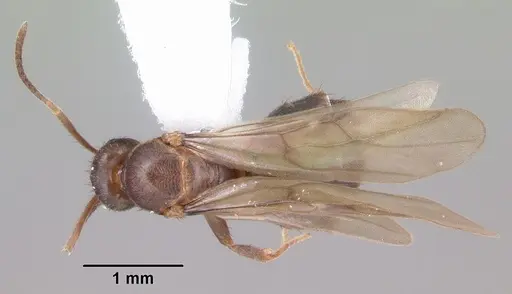
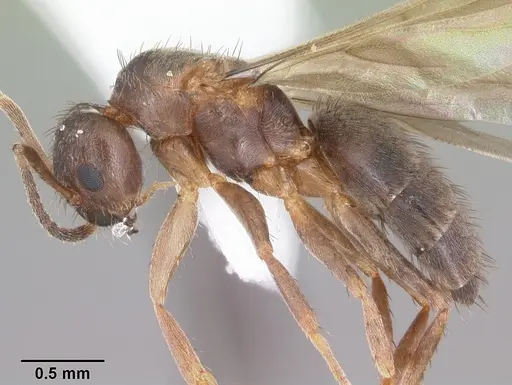
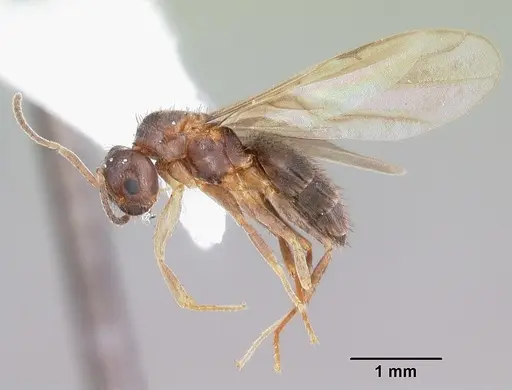
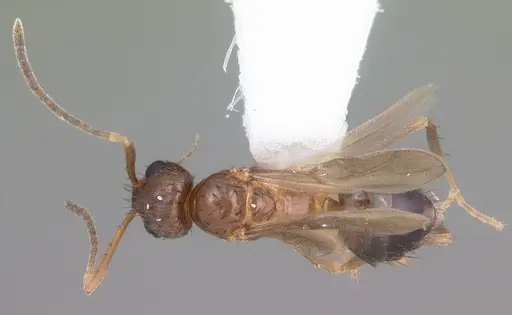
Nylanderia concinna workers are active foragers that quickly discover and exploit food sources. They are not particularly aggressive toward humans or each other, but will defend their nest if disturbed. Colonies produce alates (reproductives) any time of year according to research, meaning your colony could develop winged queens or males seasonally [1]. The workers are small and fast-moving, which makes them entertaining to watch but also makes escape a constant concern. They do not have a painful sting, their small size means they can barely penetrate human skin. The main behavioral concern for keepers is their tendency to explore and their small size making them adept escape artists.
Growth and Development
A newly mated queen will seal herself in a small chamber and lay eggs after her claustral founding period. The first workers (nanitics) will be smaller than mature workers but should appear within 6-10 weeks under warm conditions. After that, colony growth depends on temperature, feeding, and queen health. Like other Nylanderia species, this should be a moderately fast grower once established. The queen can live for several years, and colonies likely reach several hundred workers over time. Be patient during the founding phase, these small colonies are vulnerable and growth appears slow, but once you have 20-30 workers, things typically accelerate. [1]
Frequently Asked Questions
Can I keep Nylanderia concinna in a test tube?
Yes, test tubes work well for founding colonies. Make sure the cotton is packed tightly, use a small water reservoir to prevent drowning, and keep the tube in a humid setup like a plastic bin. Transfer to a proper nest once the colony reaches 30-50 workers.
How long until first workers appear?
Expect 6-10 weeks from egg to first worker at optimal temperature (around 24°C). This is typical for Nylanderia species. The queen will remain sealed in her chamber until the first workers emerge.
What temperature do they need?
Keep them at 22-26°C. Room temperature is usually fine. They can tolerate 18-30°C but grow best in the middle of that range. A slight temperature gradient lets them choose their comfort zone.
Are Nylanderia concinna good for beginners?
Yes, they are considered easy to keep. They are forgiving of temperature variations, accept a wide diet, and are not aggressive. The main challenge is escape prevention due to their tiny size.
Do they need hibernation?
A partial winter rest is recommended but not required. Reduce temperatures to 15-18°C for 2-3 months during winter. This mimics their natural cycle and may help with long-term colony health.
Why are my ants escaping?
Their tiny size lets them squeeze through gaps too small for larger ants. Use fine mesh on all openings, check lid seals regularly, and consider using fluon on container rims. Inspect your setup daily until you identify all potential escape routes.
How big do colonies get?
Exact maximum is unknown, but based on related species, expect several hundred workers over time. They are not among the largest ants but can build substantial colonies with patience.
Can I keep multiple queens together?
Not recommended. Nylanderia concinna is likely single-queen (monogyne) by nature. Combining unrelated queens has not been documented and would likely result in fighting.
What do they eat?
Offer sugar water, honey, or maple syrup as a constant carbohydrate source. For protein, provide small insects like fruit flies, tiny mealworms, or small crickets. Feed protein 2-3 times per week and remove uneaten prey after 24 hours.
References

This caresheet is licensed under CC BY-SA 4.0 .
Literature
Loading...Loading products...