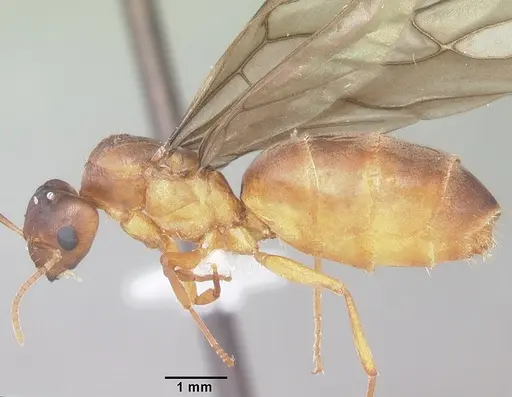
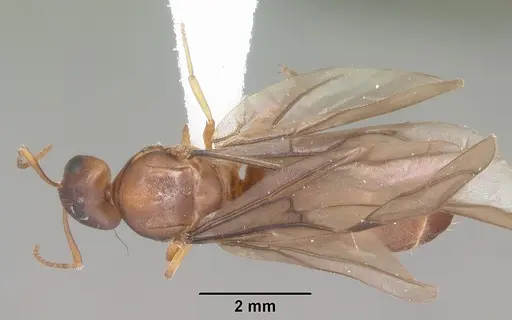
Paraparatrechina weissi - "Weiss's Paraparatrechina Ant"
Paraparatrechina weissi are small ants belonging to the Formicinae subfamily. They are notable for their often metallic iridescence, displaying hues of blue, purple, or pink under proper lighting. This species exhibits worker polymorphism, meaning colonies include both minor and major workers, a unique trait within the Paraparatrechina genus. A key identifying feature is their specific mesosomal setal pattern: two pairs of erect setae on the pronotum, one pair on the mesonotum, and one pair on the propodeum. They typically inhabit leaf litter and rotten wood, suggesting a preference for subterranean or within-substrate nesting.
- Difficulty: Medium
- Origin & Habitat: Afrotropical Region (e.g., Ivory Coast, Congo, Uganda, Sudan) in Tropical rainforests, forest clearings, nesting in leaf litter, rotten logs, and around roots. Often found in hypogaeic (underground) environments, but can also be found in vegetation/canopy..
- Colony Type: Monogyne, claustral founding.
- Size & Growth:
- Queen: Not specified
- Worker: 1.0-2.0mm
- Colony: Medium (hundreds, typically around 500 workers). Medium growth.
- Antkeeping:
- Temperature: Warm, ideally between 22-26°C, but they can tolerate 18-28°C..
- Humidity: Maintain high humidity, around 70-90%, especially within the nest..
- Diapause: Not required. Not specified at Not specified.
- Nesting: Naturalistic setups replicating their leaf litter, rotten wood, or subterranean habitats are ideal. Formicaria with plenty of substrate like mixed soil and decaying wood fragments are suitable. Test tubes with a larger substrate area or small acrylic nests designed for tiny ants can work for founding..
- Behavior: Low aggressiveness.
- Common Issues: Escape artists due to small size, Mold in nest due to high humidity, Difficulty establishing initial colony, Providing adequate food for small workers.
Paraparatrechina weissi workers are quite small, typically ranging from 1 to 2 mm in length, and are noted for their metallic sheen which can appear as beautiful blue, purple, or pinkish hues under proper lighting. What's particularly fascinating about this species is its worker polymorphism, meaning colonies contain both smaller minor workers and larger major workers, which is a rare trait within the Paraparatrechina genus. This size variation might influence their foraging strategies and tasks within the colony, making them visually engaging to observe.
These ants naturally inhabit tropical rainforests and forest clearings, where they make their homes in leaf litter, decaying wood, and even around plant roots, indicating a preference for humid, substrate-rich environments. This hypogaeic (underground or within substrate) lifestyle means that when setting up a formicarium, providing ample substrate for tunneling and nesting is crucial. Consider a setup that mimics a forest floor, perhaps with a deep layer of coco fiber or specialized antkeeping soil mixes.
Distinguishing Paraparatrechina weissi from other similar small ant species, especially Nylanderia, can be tricky due to their minute size. However, a key identification feature lies in their unique mesosomal setal pattern: they possess two distinct pairs of erect setae on their pronotum, one pair on the mesonotum, and another pair on the propodeum. This specific bristle arrangement is a reliable way to differentiate them, as Nylanderia typically lacks the erect setae on the propodeum. Keep this in mind if you're trying to identify field-collected specimens.
Due to their small size, these ants can be escape artists. Ensuring your formicarium is completely escape-proof is paramount. Very fine mesh or secure lids with talcum powder or fluon barriers on the walls of the outworld are highly recommended to prevent losing your entire colony. Their tiny stature also means they can exploit even the smallest gaps, so double-checking all seals and connections is a must for successful long-term antkeeping.