

Nesomyrmex inhaca
- Scientific Name
- Nesomyrmex inhaca
- Tribe
- Crematogastrini
- Subfamily
- Myrmicinae
- Author
- Hita Garcia <i>et al.</i>, 2017
- Distribution
- Found in 1 countries
Nesomyrmex inhaca Overview
Nesomyrmex inhaca is an ant species of the genus Nesomyrmex. It is primarily documented in 1 countries , including Mozambique. Detailed taxonomic data and occurrence records can be further explored via authoritative databases such as AntWeb or the Global Biodiversity Information Facility (GBIF).
Nesomyrmex inhaca
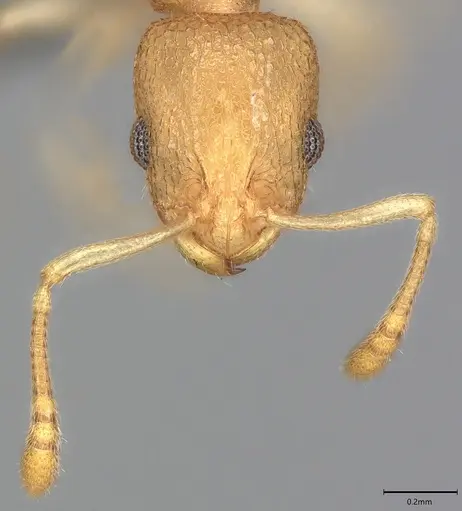
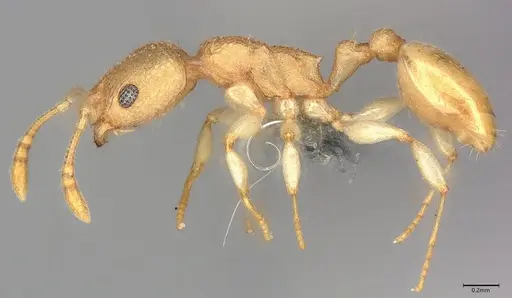
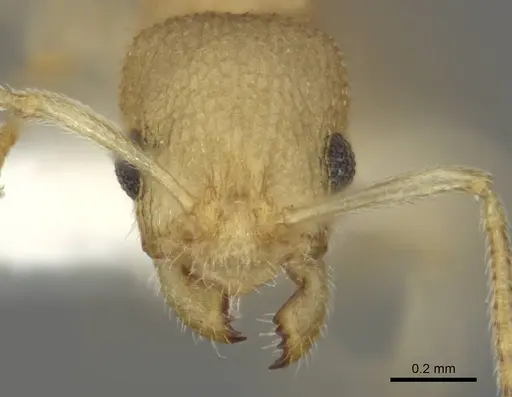
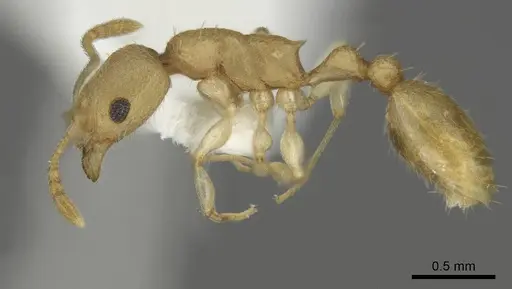
Nesomyrmex inhaca is a tiny ant species recently described in 2017 from a single collection on Inhaca Island in southeastern Mozambique. Workers are among the smallest ants you'll encounter, measuring just 0.69-0.73mm in head length, that's roughly 3mm total body length. They have a distinctive appearance with a narrow, elongated head, relatively large eyes, and short propodeal spines. Their body is uniformly yellowish to light brown, and they can be identified by the combination of a deeply impressed metanotal groove (the groove between the mesonotum and propodeum), a low globular petiolar node without lateral teeth, and short standing hairs evenly distributed on the first gastral segment. This species belongs to the Nesomyrmex angulatus species group and is currently known from only one collection event in secondary forest low vegetation at just 1 meter elevation [1].
Quick Summary
- Difficulty: Unknown, Insufficient Data
- Origin & Habitat: Inhaca Island, Mozambique (southeast African coast). The single known collection came from low vegetation in secondary forest at 1 meter elevation [1].
- Colony Type: Unconfirmed, colony structure has not been documented. Most Nesomyrmex species are single-queen (monogyne) colonies, but this has not been confirmed for N. inhaca.
- Size & Growth:
- Queen: Undescribed, queens have not been documented [1]
- Worker: 0.69-0.73mm head length, approximately 3mm total body length [1]
- Colony: Unknown, no colony size data available
- Growth: Unknown, no development data exists
- Development: Unconfirmed, no development timeline has been documented. Based on typical Nesomyrmex and related Myrmicinae patterns, expect 6-10 weeks at optimal temperature, but this is an estimate. (Development timeline is unconfirmed for this species. Estimates based on genus-level patterns for small Myrmicinae.)
- Antkeeping:
- Temperature: Likely 22-28°C, inferred from tropical forest habitat in Mozambique. Start in the mid-range and observe colony activity. Provide a gentle temperature gradient if possible.
- Humidity: Likely 60-80%, inferred from secondary forest floor habitat. Keep substrate consistently moist but not waterlogged. Provide some drier areas for ants to self-regulate.
- Diapause: Unknown, no seasonal data exists for this species. Inhaca Island has a subtropical climate with mild winters, so true hibernation may not be required. Monitor colony behavior for signs of seasonal slowdowns.
- Nesting: Likely small chambers in decaying wood, under bark, or in leaf litter, consistent with typical Nesomyrmex ecology and the secondary forest collection location. Small test tubes or Y-tong nests with fine chambers would likely work well.
- Behavior: Not documented, no behavioral observations exist in scientific literature. Based on related species, they are likely docile, non-aggressive ants that forage individually or in small groups. Their large eyes suggest they may be visually oriented foragers. Escape prevention is critical due to their very small size, they can squeeze through standard test tube barriers. Use fine mesh and tight-fitting lids.
- Common Issues: escape prevention is critical due to their tiny size, standard barriers may not contain them, no biological data exists, keepers will be pioneers in establishing captive husbandry, colony founding may be difficult since queens have never been documented, slow growth is likely given their tiny size, do not overfeed or disturb frequently, wild-caught colonies may have parasites or diseases with no documented treatment protocols
Species Discovery and Taxonomy
Nesomyrmex inhaca was formally described in 2017 by Hita Garcia, Mbanyana, Audisco, and Alpert, making it a relatively newly described ant species. It was named after its type locality, Inhaca Island off the coast of southeastern Mozambique. The species is part of the Nesomyrmex angulatus species group, which contains several similar-looking species distributed across the Afrotropical and Malagasy regions. What makes N. inhaca distinctive within this group is the combination of a conspicuously impressed metanotal groove, a petiolar node without lateral denticles, no standing hairs on the propodeal dorsum, and standing hairs evenly distributed on the first gastral segment. The species was collected from low vegetation in secondary forest at just 1 meter above sea level, suggesting it may be a ground-dwelling or low-vegetation species rather than a canopy dweller [1].
Identification and Morphology
This is a tiny ant, workers measure only 0.69-0.73mm in head length, making them one of the smaller ant species you'll encounter in antkeeping. They have a relatively narrow, elongated head (CI 71-73) with large eyes that contain 8-9 ommatidia in the longest row. Their antennae have 12 segments with notably long scapes (SI 95-98). The mesosoma is low and flat with a deeply impressed metanotal groove, this is a key identifying feature. Propodeal spines are short to moderately long. The petiolar node is low and globular, and the postpetiole is similarly globular. The body is uniformly yellowish to light brown, sometimes with slightly lighter legs. These morphological features can help you identify them if you examine them under magnification, but given their extremely limited known range, you're unlikely to encounter them unless you're specifically collecting in the Inhaca Island area [1].
Distribution and Habitat
Currently, Nesomyrmex inhaca is known only from a single collection event on Inhaca Island, Mozambique. This island lies in the Indian Ocean off the southeast coast of Africa. The type specimens were collected from low vegetation in secondary forest at an elevation of just 1 meter. Despite this apparently restricted distribution, researchers are hesitant to declare it endemic to Inhaca Island because most of Mozambique remains severely under-sampled for ants. It's possible the species also exists on the mainland. Inhaca Island has a subtropical climate with warm temperatures year-round and moderate rainfall. The secondary forest habitat suggests they live in shaded, humid microenvironments typical of forest floors or understory vegetation [1].
Keeping Nesomyrmex inhaca - What We Don't Know
This is where antkeeping becomes truly pioneering. Nesomyrmex inhaca has never been kept in captivity, there's no documented husbandry history, no care guides, and no established protocols. Everything about their care must be inferred from related species and their natural habitat. This makes them an expert-level species suitable only for experienced antkeepers who enjoy experimentation. You'll need to deduce appropriate temperature, humidity, nesting materials, and diet through careful observation and trial-and-error. Start with conditions typical of small tropical forest ants: warm (22-28°C), humid (60-80%), and provide small, tight-fitting chambers that match their tiny size. Document your observations carefully, your findings could become the foundation for future care guides of this species.
Housing and Nesting
Given their tiny size and likely forest floor habitat, provide nests with very small chambers and narrow passages. Test tubes with small water reservoirs or Y-tong nests with fine chambers would be appropriate. The nesting material should retain moisture well but allow for some drying to prevent flooding. Based on typical Nesomyrmex ecology and the collection from low vegetation, they may prefer nests that mimic decaying wood or compact soil. Escape prevention is absolutely critical, these ants are so small they can squeeze through gaps that would hold back larger species. Use fine mesh barriers, tight-fitting lids, and consider applying Fluon to the edges of any enclosure. A small outworld with minimal space will make feeding easier and reduce escape opportunities.
Feeding and Diet
Diet is entirely unconfirmed for this species. Based on typical Nesomyrmex and small Myrmicinae ecology, they likely forage for small arthropods, honeydew, and may accept sugar sources. Start with a varied diet offering small live prey (fruit flies, springtails, tiny crickets), sugar water or honey, and protein sources like crushed insects. Observe carefully which items they accept and remove uneaten food promptly to prevent mold. Given their tiny size, prey items must be appropriately scaled, even a fruit fly may be large relative to these ants. Document what they accept and reject, as this information will be valuable for future keepers.
Frequently Asked Questions
How long do Nesomyrmex inhaca workers live?
Worker lifespan is unconfirmed for this species. For small Myrmicinae, workers typically live several months to a year under captive conditions.
Can I keep Nesomyrmex inhaca in a test tube?
Yes, test tubes likely work well for founding colonies given their tiny size. Use small-diameter test tubes with appropriate water reservoir size to prevent flooding. Cover any openings with fine mesh, these ants are extremely small and can escape through standard barriers.
What do Nesomyrmex inhaca eat?
Diet is unconfirmed. Based on related species, offer small live prey (fruit flies, springtails), sugar water or honey, and small protein sources. Start with variety and observe preferences.
Do Nesomyrmex inhaca ants sting?
Stinging ability is unconfirmed. Most small Myrmicinae have stingers but are too small to penetrate human skin. Handle with care regardless.
Are Nesomyrmex inhaca good for beginners?
No. This species has never been kept in captivity and has no established care protocols. It's suitable only for expert antkeepers who enjoy pioneering new species husbandry.
What temperature do Nesomyrmex inhaca need?
Optimal temperature is unconfirmed. Inferred from tropical habitat: aim for 22-28°C with a gentle gradient. Monitor colony activity to find their preferred range.
Do Nesomyrmex inhaca need hibernation?
Diapause requirements are unknown. Inhaca Island has mild subtropical winters, so true hibernation may not be necessary. Monitor for seasonal slowdowns and adjust accordingly.
How big do Nesomyrmex inhaca colonies get?
Maximum colony size is unknown. Based on related Nesomyrmex species, colonies likely reach dozens to a few hundred workers.
Where is Nesomyrmex inhaca found?
Currently known only from Inhaca Island, Mozambique. The single collection came from secondary forest low vegetation at 1 meter elevation.
When was Nesomyrmex inhaca discovered?
This species was formally described in 2017,making it a recently described ant species. It was named after its type locality on Inhaca Island.
How do I identify Nesomyrmex inhaca?
Key identifying features include: tiny size (0.69-0.73mm head length), narrow elongated head, large eyes, deeply impressed metanotal groove, short propodeal spines, low globular petiolar node without lateral teeth, and standing hairs evenly distributed on the first gastral segment. Body color is uniformly yellowish to light brown.
Can I keep multiple Nesomyrmex inhaca queens together?
Colony structure is unconfirmed. Most Nesomyrmex are single-queen colonies, but this hasn't been documented for N. inhaca. Combining unrelated queens is not recommended without evidence they tolerate each other.
References

This caresheet is licensed under CC BY-SA 4.0 .
CASENT0780341
View on AntWeb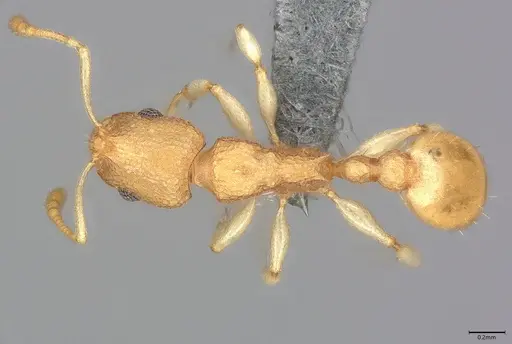
MCZ-ENT00593557
View on AntWeb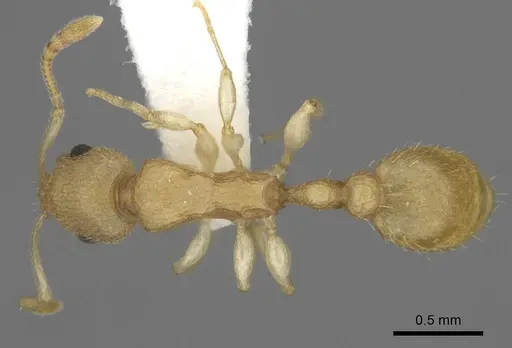
Literature
Loading...Loading products...