

Nesomyrmex gracilis
- Scientific Name
- Nesomyrmex gracilis
- Tribe
- Crematogastrini
- Subfamily
- Myrmicinae
- Author
- Csősz & Fisher, 2016
- Distribution
- Found in 1 countries
Nesomyrmex gracilis Overview
Nesomyrmex gracilis is an ant species of the genus Nesomyrmex. It is primarily documented in 1 countries , including Madagascar. Detailed taxonomic data and occurrence records can be further explored via authoritative databases such as AntWeb or the Global Biodiversity Information Facility (GBIF).
Nesomyrmex gracilis
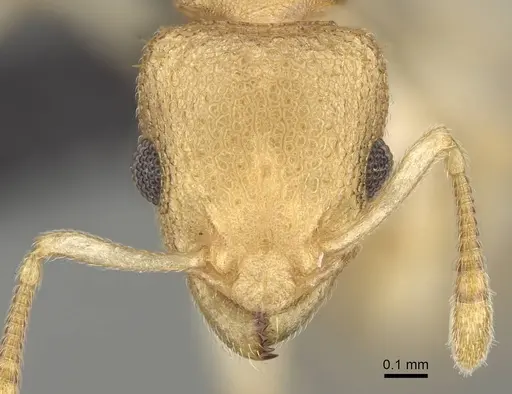
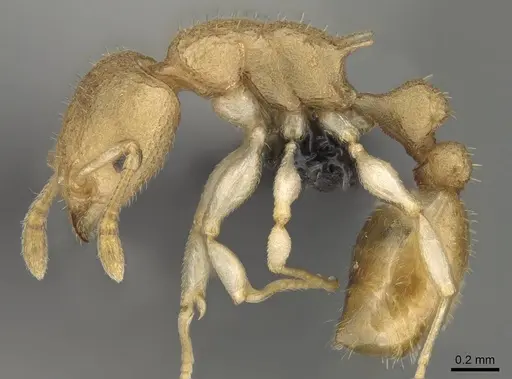
Nesomyrmex gracilis is an exceptionally tiny ant species endemic to northern Madagascar. Workers measure only about 0.5-0.7mm in head size, making them one of the smallest ants in the hobby. The species name 'gracilis' means slender or slim, perfectly describing their delicate appearance. They come in yellow or brown coloration with a uniform body pattern. These ants live in the northern dry regions of Madagascar, including rainforests, rainforest edges, littoral forests, and tropical dry forests. This is a relatively newly described species (2016), and like many Nesomyrmex species, their captive biology remains poorly documented.
Quick Summary
- Difficulty: Unknown, likely Expert due to tiny size and limited data
- Origin & Habitat: Northern Madagascar, specifically the dry areas in the Antsiranana province. Found in rainforests, rainforest edges, littoral forests, and tropical dry forests [1].
- Colony Type: Colony structure is unconfirmed. No data on whether they are single-queen (monogyne) or multi-queen (polygyne) colonies.
- Size & Growth:
- Queen: Unconfirmed, no queen measurements available in primary literature
- Worker: Extremely small: head size 0.508-0.699mm (estimated total length ~2-3mm) [1]
- Colony: Unknown, likely small colonies based on tiny worker size
- Growth: Unknown
- Development: Unconfirmed, no development data available. Based on typical Myrmicinae patterns in tropical species, estimate 4-8 weeks at warm temperatures, but this is speculative. (Development timeline has not been studied. Estimates based on genus-level patterns only.)
- Antkeeping:
- Temperature: Based on Madagascar tropical habitat: aim for 24-28°C. Provide a gentle temperature gradient so ants can self-regulate. Room temperature in warm homes may suffice if kept in the low-to-mid 20s°C.
- Humidity: Based on rainforest and dry forest habitats: moderate humidity around 60-80%. Keep substrate consistently moist but not waterlogged. Provide some drier areas for escape if needed.
- Diapause: Unconfirmed, Madagascar species typically do not undergo true hibernation, but may have reduced activity during cooler months.
- Nesting: Based on their tiny size and natural habitat: they likely prefer small chambers in moist substrate. Test tubes with cotton-plugged water reservoirs work well, or small acrylic nests with tight chambers scaled to their size. They may nest in rotting wood or leaf litter in nature.
- Behavior: Behavior is unstudied in captivity. Based on genus patterns, they are likely generalist foragers that scavenge and collect small prey. Their tiny size means escape prevention is critical, they can squeeze through the finest gaps. Handle with caution as they are extremely small and easily lost or crushed.
- Common Issues: tiny size makes them extremely difficult to house and observe properly, escape prevention is critical, standard formicarium gaps will allow escapes, no captive husbandry information exists, experimental care required, very small colony sizes likely mean slow growth and high vulnerability to stress, wild-caught colonies may not survive transfer to captive conditions
Appearance and Identification
Nesomyrmex gracilis is one of the smallest ant species you could keep. Workers measure only about 0.5-0.7mm in head size, making them barely visible to the naked eye. They come in yellow or brown colors with a uniform body pattern, no distinctive markings. The species was formally described in 2016 by Csösz and Fisher, so it's a relatively new addition to the antkeeping hobby. Key identification features include the lack of a median clypeal notch and the absence of an anterolateral pronotal corner. They can be distinguished from similar species like N. exiguus using specific measurement ratios. [1]
Natural Distribution
This species is endemic to northern Madagascar, meaning it's found nowhere else on Earth. Their distribution is restricted to the dry areas of the Antsiranana province. They occur in multiple habitat types including rainforests, rainforest edges, littoral forests, and tropical dry forests. They have been found syntopically (in the same areas) with Nesomyrmex exiguus in northern Madagascar. The type locality is in the Forêt Ambato region near Ambanja, at an elevation of 150 meters. [1]
Housing and Escape Prevention
Housing Nesomyrmex gracilis presents a unique challenge due to their extremely small size. Standard formicarium gaps will allow these ants to escape easily. You must use excellent escape prevention including tight-fitting lids, fine mesh barriers, and properly sealed connections. Test tubes with cotton plugs work well for founding colonies. For established colonies, small acrylic nests with chambers scaled to their tiny size are essential. Avoid tall, open spaces, they prefer tight, confined areas. Because they are so small, they are also easily crushed when handling or cleaning, so exercise extreme caution.
Feeding and Diet
Feeding requirements are unconfirmed for this species. Based on typical Myrmicinae behavior and their tiny size, they likely scavenge for small particles and may tend aphids for honeydew. They probably accept sugar water, honey, and tiny prey items like springtails or fruit flies. Given their small size, any prey offered must be appropriately sized, much smaller than what you'd feed typical ant species. Start with sugar water and very small live prey, observing what they accept. Remove uneaten food promptly to prevent mold in their small enclosures.
Temperature and Humidity
As a Madagascar species, Nesomyrmex gracilis likely prefers warm, stable conditions. Aim for temperatures around 24-28°C, which is typical for tropical species. A gentle temperature gradient allows ants to self-regulate. For humidity, their natural habitat includes both rainforest and dry forest areas, suggesting they can tolerate a range. Target around 60-80% humidity with consistently moist (but not waterlogged) substrate. Because of their tiny size and likely small colony sizes, stable conditions are more important than exact numbers, avoid sudden changes. [1]
Challenges and Considerations
This species presents significant challenges for antkeepers. First, their extreme tiny size makes them difficult to house, observe, and handle. Standard antkeeping equipment is designed for much larger species. Second, almost no captive husbandry information exists, you'll be experimenting with care methods. Third, colony sizes are likely small and growth slow, requiring patience. Fourth, they are probably fragile and sensitive to stress. This species is best suited for experienced antkeepers who enjoy experimental husbandry and have the equipment to house micro-ant species. Consider whether your setup can accommodate ants this small before attempting to keep this species.
Frequently Asked Questions
How big do Nesomyrmex gracilis ants get?
Workers are extremely small, about 0.5-0.7mm in head size, making them one of the smallest ant species. Total body length is approximately 2-3mm. Queen size is unconfirmed.
Can beginners keep Nesomyrmex gracilis?
This species is not recommended for beginners. Their extreme tiny size makes housing, feeding, and observation extremely difficult. Almost no captive husbandry information exists, so you'll be experimenting with care. They require specialized micro-housing and excellent escape prevention.
Where is Nesomyrmex gracilis found in the wild?
This species is endemic to northern Madagascar, specifically the dry areas of the Antsiranana province. They live in rainforests, rainforest edges, littoral forests, and tropical dry forests.
What do Nesomyrmex gracilis eat?
Diet is unconfirmed, but based on typical Myrmicinae behavior, they likely accept sugar sources (honey, sugar water) and small live prey (springtails, fruit flies). Their tiny size means any prey must be appropriately scaled.
Do Nesomyrmex gracilis ants sting?
Stinging ability is unknown, but given their extreme tiny size, any sting would likely be imperceptible to humans. They are not considered dangerous.
How long does it take for Nesomyrmex gracilis to develop from egg to worker?
Development timeline is unconfirmed. Based on typical tropical Myrmicinae patterns, estimate 4-8 weeks at warm temperatures (around 26°C), but this is speculative as no specific data exists.
What temperature do Nesomyrmex gracilis need?
Based on their Madagascar tropical habitat, aim for 24-28°C. Provide a gentle temperature gradient. Room temperature in warm homes (low-to-mid 20s°C) may suffice.
Do Nesomyrmex gracilis need hibernation?
Diapause requirements are unconfirmed. As a Madagascar species, they likely do not require true hibernation, but may have reduced activity during cooler months.
How many queens does Nesomyrmex gracilis have?
Colony structure is unconfirmed. No data exists on whether they are single-queen (monogyne) or multi-queen (polygyne) colonies.
Why are my Nesomyrmex gracilis escaping?
Their extreme tiny size means they can escape through the smallest gaps. Standard formicarium gaps are too large. You must use fine mesh, tight-fitting lids, and properly sealed connections. Check all seams and connections carefully.
References

This caresheet is licensed under CC BY-SA 4.0 .
CASENT0107191
View on AntWeb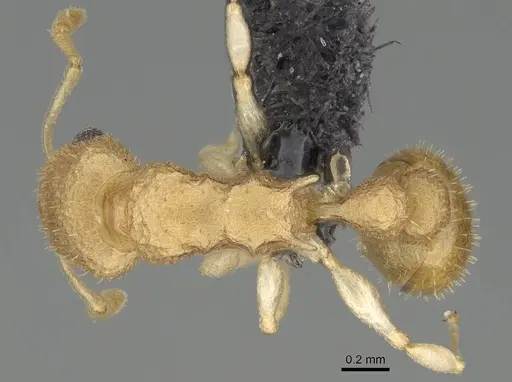
Literature
Loading...Loading products...