Oxyopomyrmex saulcyi - "N/A"
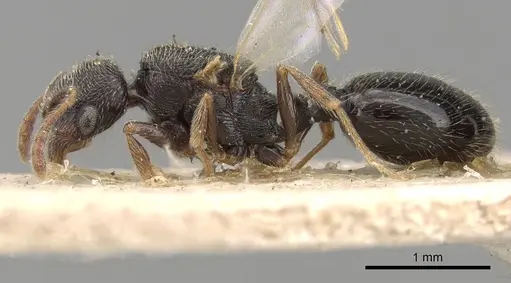
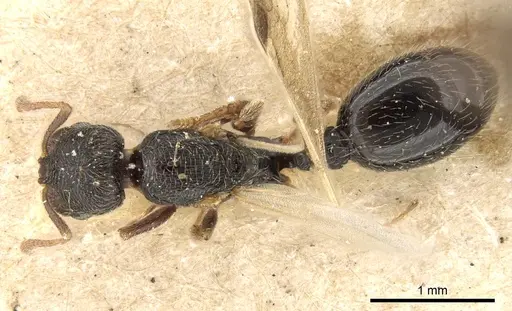
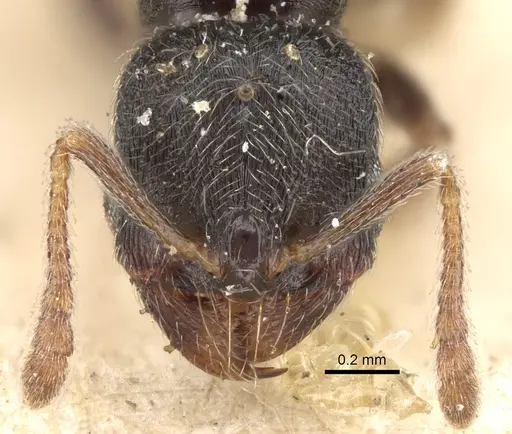
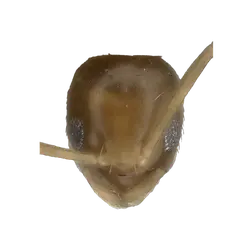
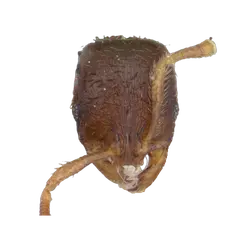
Oxyopomyrmex saulcyi is a small, drought-tolerant ant species with a distinctive appearance. Both the queen and workers are black, sometimes uniformly brown, and possess a unique head shape that is quadrate to rectangular, longer than wide, with large, elongated compound eyes. They are characterized by longitudinal striae covering their entire face. This species is known for its peaceful behavior and non-aggressive nature. Their nests in the wild are typically found in sandy soil, often with a single, narrow entrance surrounded by a small crater.
- Difficulty: Medium
- Origin & Habitat: Mediterranean region, including Spain, Portugal, France, Italy, Greece, and North Africa (Morocco, Tunisia, Sicily). in Dry and arid environments such as Mediterranean forests, scrublands, and sandy areas. Nests are usually in sandy soil..
- Colony Type: Monogyne (single queen), claustral (queen seals herself in) founding.
- Size & Growth:
- Queen: 3.5-6mm
- Worker: 2-4mm
- Colony: Small (hundreds) to Medium (few thousands). Medium (develop dynamically in warm conditions) growth.
- Antkeeping:
- Temperature: Preferred temperature range is 25-30°C (77-86°F). Room temperature is generally sufficient, but heating can speed up brood development..
- Humidity: Lower humidity levels are preferred, typically between 20-50%. They are a drought-tolerant species..
- Diapause: Required. 4-5 months at 10-15°C.
- Nesting: Prefer sandy soil nests in the wild. For captivity, a formicarium with good escape prevention is crucial due to their small size. Test tube setups or acrylic nests are recommended..
- Behavior: Low (peaceful behavior, not aggressive) aggressiveness.
- Common Issues: Humidity fluctuations, Escape due to small worker size, Workers getting stuck in liquid foods, Lack of proper diapause, Mites from unsterilized food.
Keeping Oxyopomyrmex saulcyi can be a rewarding experience for ant keepers, but it does come with its own set of considerations. Given their moderate difficulty rating, these ants require a bit more attention to detail than some beginner species. It’s essential to maintain stable temperature and humidity levels within their preferred range to ensure the colony thrives, as fluctuations can be detrimental to their development and overall well-being.
One of the key aspects of successful Oxyopomyrmex saulcyi care is managing their small worker size. Their tiny stature means that escape prevention in your formicarium is paramount. Any small gap or crack could become an escape route, leading to lost foragers. Furthermore, special care must be taken with liquid food sources like honey or sugar water to ensure workers don't get trapped. Providing a small, shallow dish or using cotton balls soaked in liquid can help prevent accidental drownings.
Their omnivorous diet requires a varied feeding regimen. These ants enjoy a mix of small insects, various seeds, and sugar sources like honey or nectar. Offering a diverse diet ensures they receive all the necessary nutrients for healthy colony growth. When sourcing insects from the wild, it’s a good practice to freeze or boil them first to prevent introducing unwanted mites or pathogens to your precious colony. This simple step can save you a lot of trouble down the line.
While Oxyopomyrmex saulcyi are known for their peaceful demeanor, observing their natural foraging behaviors can be quite fascinating. In the wild, they typically forage at ground level. Replicating this in an outworld with a sandy substrate can encourage more natural behavior and provide enrichment for the colony. Providing a clean and secure foraging area allows them to explore and collect food in a way that mimics their natural habitat.
Diapause is a crucial period for Oxyopomyrmex saulcyi and should not be skipped. A cooling period from November to March at around 10-15°C is necessary to stimulate brood production and ensure the colony remains healthy in the long term. This period of inactivity allows the queen and workers to rest and re-energize for the next active season. Failing to provide a proper diapause can lead to colony stalling or even collapse.
Frequently Asked Questions
What is the ideal habitat for Oxyopomyrmex saulcyi?
Oxyopomyrmex saulcyi thrives in dry, arid environments, much like their native Mediterranean scrublands and sandy areas. Replicating these conditions in your formicarium with a sandy substrate is key for their well-being.
Are Oxyopomyrmex saulcyi aggressive?
Not at all! These ants are known for their incredibly peaceful nature. They're generally not aggressive towards handlers or other ants, making them a calm addition to any antkeeping setup.
What should I feed my Oxyopomyrmex saulcyi colony?
These ants are omnivorous! They'll happily munch on small insects, a variety of seeds (like sunflower or sesame seeds), and sugary solutions such as honey or sugar water. Offering a diverse diet helps ensure they get all the nutrients they need to grow.
Do Oxyopomyrmex saulcyi need to hibernate?
Yes, they require a period of diapause, which is similar to hibernation. From November to March, keep them at a cooler temperature of 10-15°C. This resting phase is vital for their long-term health and encourages healthy brood production after the cooler period.
What kind of nest is best for Oxyopomyrmex saulcyi?
Given their preference for sandy habitats and their small worker size, a formicarium designed for small species with excellent escape prevention is ideal. Many keepers find success with specialized acrylic nests or even well-ventilated test tube setups.
How big do Oxyopomyrmex saulcyi colonies get?
Oxyopomyrmex saulcyi colonies are on the smaller side, typically growing to a few hundred workers, but can sometimes reach a few thousand.
What is the queen size of Oxyopomyrmex saulcyi?
The queen of an Oxyopomyrmex saulcyi colony usually measures around 5-6 mm in length.
What is the worker size of Oxyopomyrmex saulcyi?
Workers of this species are quite small, typically averaging about 2-4 mm in length.
How can I prevent workers from drowning in liquid food?
To prevent tiny workers from getting stuck, always offer liquid foods in very shallow dishes or on a piece of cotton ball. This provides a safe way for them to access the liquid without risk of drowning.
What are the common issues faced when keeping Oxyopomyrmex saulcyi?
Keepers often face challenges with maintaining consistent humidity, preventing escapes due to their small size, and ensuring workers don't get stuck in liquids. Proper diapause and sterilizing wild-caught insects to avoid mites are also crucial for success.
Do Oxyopomyrmex saulcyi have different worker castes?
No, Oxyopomyrmex saulcyi primarily has a single worker caste, meaning all workers are generally the same size and shape.
Is heating necessary for Oxyopomyrmex saulcyi?
While not strictly necessary as they can do well at room temperature, providing supplemental heating to reach their preferred range of 25-30°C can significantly boost their brood development and overall colony growth.
How often should I hydrate the nest for Oxyopomyrmex saulcyi?
These ants don't require a very damp nest. Hydrating their nest once or twice a week should be sufficient to maintain appropriate humidity levels. Always ensure they have a separate external water source available.