

Neoponera bucki
- Scientific Name
- Neoponera bucki
- Tribe
- Ponerini
- Subfamily
- Ponerinae
- Author
- Borgmeier, 1927
- Distribution
- Found in 1 countries
Neoponera bucki Overview
Neoponera bucki is an ant species of the genus Neoponera. It is primarily documented in 1 countries , including Brazil. Detailed taxonomic data and occurrence records can be further explored via authoritative databases such as AntWeb or the Global Biodiversity Information Facility (GBIF).
Neoponera bucki
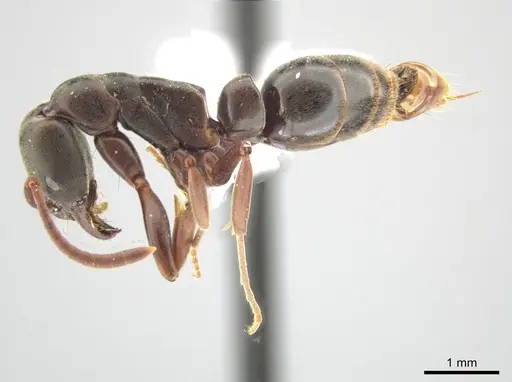
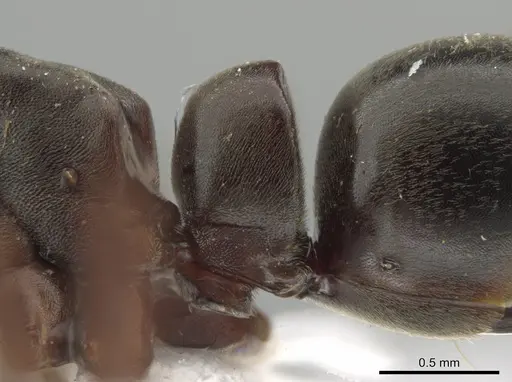
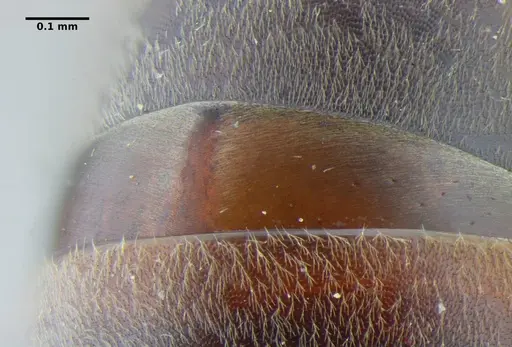
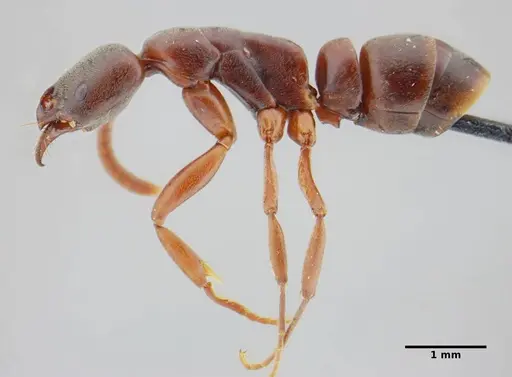
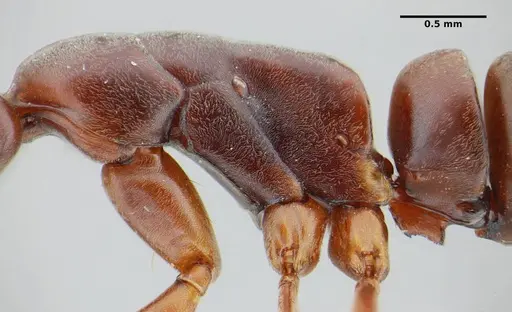
Neoponera bucki is a small Ponerine ant native to the Neotropical region of South America, found primarily in Brazil and Venezuela. Workers measure approximately 6mm in total length and are dark brown with reddish-brown appendages. This species is remarkably distinctive within its genus, the complete absence of hairs on the dorsum of the mesosoma, petiole, and first two abdominal segments sets it apart from nearly all other Neoponera species. The petiole has an unusual shape with a broadly convex and rounded anterior face and a distinctly concave posterior face. Queens have never been collected for this species, making captive breeding particularly challenging. The species was named after the collector Father P. Pio Buck who collected the original specimens in Rio Grande do Sul, Brazil in 1926.
Quick Summary
- Difficulty: Expert
- Origin & Habitat: Brazil (Rio Grande do Sul, Santa Catarina, Pará) and Venezuela. This is a primary forest specialist, research shows it occupies 13 regions in primary forest but is completely absent from secondary forest and rubber plantations [1]. It nests in the subsoil and is typically collected using pitfall traps in subtropical regions [2].
- Colony Type: Unknown, no queens or males have ever been collected, so colony structure is unconfirmed. Based on related Neoponera species, likely single-queen colonies.
- Size & Growth:
- Queen: Unknown, no queens have been described [3]
- Worker: 6mm total length [3]
- Colony: Unknown, no colony size data exists
- Growth: Unknown, no development data exists
- Development: Unknown, no direct observations exist. Based on typical Ponerine development patterns, estimate 2-4 months at warm tropical temperatures, but this is a rough guess. (No developmental data exists for this species. Related Neoponera species suggest 6-12 weeks for egg-to-worker at optimal temperatures, but this is highly uncertain.)
- Antkeeping:
- Temperature: Likely prefers warm conditions similar to other Neotropical Ponerines. Based on habitat (southern Brazil, Santa Catarina), room temperature (20-25°C) is likely suitable. Provide a gentle heat gradient and monitor colony activity.
- Humidity: Requires high humidity, being a subsoil nester in primary forest habitats, they need consistently moist substrate. Keep the nest substrate damp but not waterlogged, with some drier areas available.
- Diapause: Likely minimal or no diapause required given the tropical/subtropical distribution. However, southern Brazilian populations may experience reduced activity during cooler months.
- Nesting: Subsoil nester in nature, they prefer deep, humid nest chambers. In captivity, a naturalistic setup with deep substrate (at least 5-10cm) or a well-humidified acrylic/plaster nest works best. Avoid dry, shallow setups.
- Behavior: Behavior is poorly documented due to the rarity of this species. Based on genus typical behavior, they are likely predatory Ponerines with moderate aggression. Workers are ground-dwelling and likely forage on the forest floor. Their small size and lack of documented queens make them a challenging species to keep. Escape risk is moderate given the 6mm worker size, standard barrier methods should suffice.
- Common Issues: no queens available, this species has never been described in queen form, making captive colonies essentially impossible to obtain, lack of basic biological data, no information exists on founding, development, or colony structure, primary forest specialist, extremely sensitive to habitat disturbance, unlikely to survive in suboptimal captive conditions, subsoil nesting requirements, need deep, humid nests that can be difficult to maintain, no established captive breeding, no documented captive colonies exist, making this species unsuitable for most keepers
Why This Species is Rare in Captivity
Neoponera bucki represents one of the most challenging ants to keep because fundamental biological information is completely absent. No queens have ever been described in the scientific literature, no males have been collected, and colony size estimates do not exist. This is not a species you can purchase or find, it exists only in museum collections as workers collected from the wild nearly a century ago. For these reasons, this species is essentially unavailable to antkeepers and is best appreciated as a curiosity in scientific literature rather than a captive project. [3]
Natural History and Distribution
This species is known from Brazil (particularly Rio Grande do Sul, Santa Catarina, and Pará) and Venezuela. It is a true primary forest specialist, research in Brazil and Southeast Asia found N. bucki present in 13 primary forest regions but completely absent from secondary forest and human-modified habitats like rubber plantations [1]. The original type specimens were collected from subsoil nesting in Porto Alegre, Rio Grande do Sul by collector P. Pio Buck in 1926 [3]. More recent surveys confirm its presence in the Santa Catarina Plateau region, collected via pitfall traps [2]. The species has also been recorded in southern Brazilian grasslands in the Pampa region [4].
Identification and Unique Features
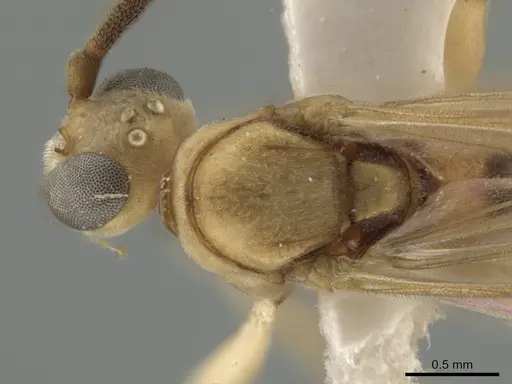
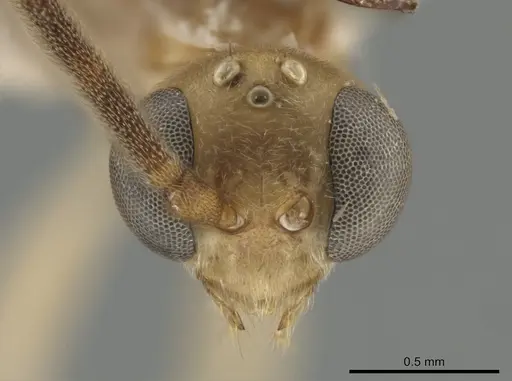
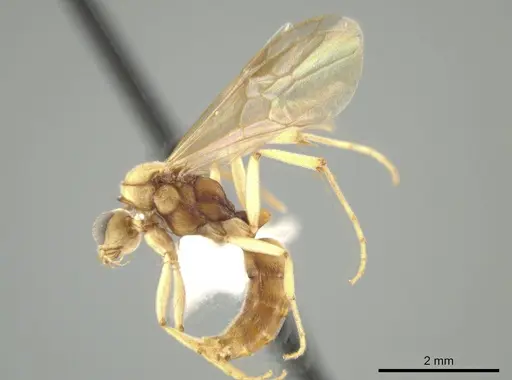
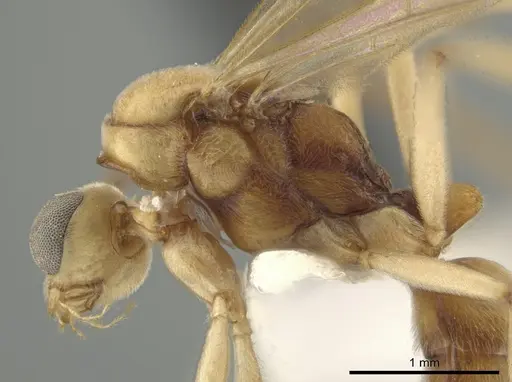
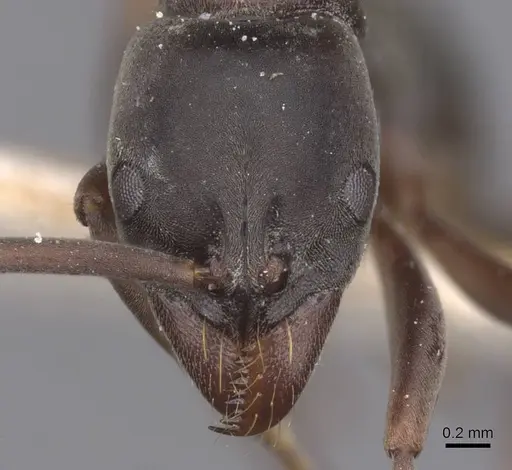
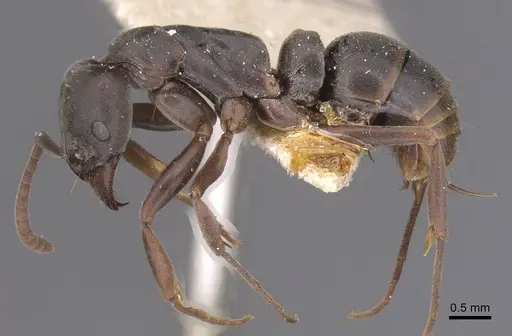
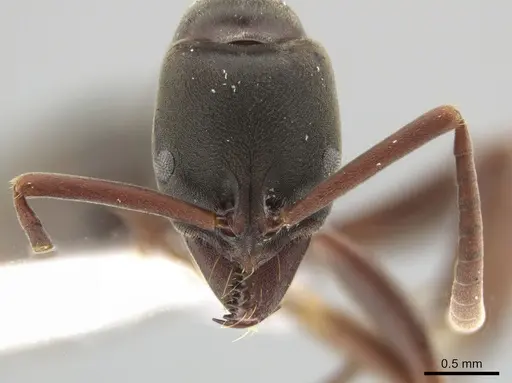
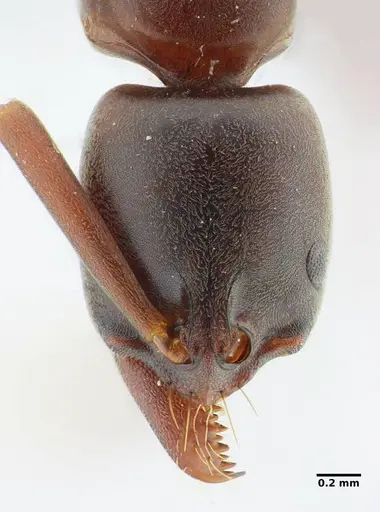
Neoponera bucki can be identified by several distinctive characteristics. The most notable is the complete absence of hairs on the dorsal surface of the mesosoma (middle body section), petiole, and first two abdominal segments, this separates it from nearly all other Neoponera species. The petiole has an unusual shape with a broadly convex and rounded anterior face and a distinctly concave posterior face surrounded by a carina. Workers are small at approximately 6mm total length, dark brown in color with reddish-brown legs and antennae. The mandibles have approximately 12 alternating teeth, and the eyes are relatively large. The propodeum (the segment behind the mesosoma) is angulate, and the propodeal spiracle is slit-shaped. [3]
Related Species and Taxonomy
Neoponera bucki was originally described as Neoponera bucki by Borgmeier in 1927,then moved through several genera (Euponera, Mesoponera, Pachycondyla) before being placed in Neoponera in 2014 when the genus was revised [3]. The species is part of the Ponerini tribe within the Ponerinae subfamily [5]. While once classified under Pachycondyla, molecular and morphological studies have restored Neoponera as a valid genus. Neoponera cavinodis has a somewhat similar petiole shape but can be distinguished by the presence of a malar carina, which N. bucki lacks.
Frequently Asked Questions
Can I keep Neoponera bucki ants?
No, this species is essentially unavailable to antkeepers. No queens have ever been collected or described, meaning there is no source for captive colonies. The species exists only in museum collections as workers collected in the 1920s.
Where does Neoponera bucki live?
This species is found in Brazil (Rio Grande do Sul, Santa Catarina, Pará) and Venezuela. It is a primary forest specialist that has never been found in secondary forest or human-modified landscapes.
What does Neoponera bucki look like?
Workers are approximately 6mm, dark brown with reddish-brown legs and antennae. The most distinctive feature is the near-complete absence of hairs on the back of the body. The petiole has an unusual shape, rounded and convex in front but concave in back.
How big do Neoponera bucki colonies get?
Unknown, colony size has never been documented. No one has ever found a queen or observed a colony of this species.
What do Neoponera bucki ants eat?
Unknown, no feeding observations exist. Based on related Ponerine ants, they are likely predatory and would accept small live prey like insects, but this is unconfirmed.
Do Neoponera bucki queens exist?
No, queens have never been collected or described for this species. This is one of the most poorly known Neoponera species in existence.
Is Neoponera bucki a good beginner species?
No, this species is completely unsuitable for beginners and likely impossible to keep. No queens have ever been found, meaning the species cannot be captive-bred. Even if colonies existed, they would require specific primary forest conditions that are nearly impossible to replicate.
What temperature do Neoponera bucki ants need?
Unknown, no temperature data exists for this species. Based on the southern Brazilian distribution, room temperature (20-25°C) is likely appropriate, but this is an estimate rather than a requirement.
Does Neoponera bucki need hibernation?
Likely not, being from tropical/subtropical Brazil, they probably do not require a true diapause. Southern populations may experience cooler winters and reduced activity.
References

This caresheet is licensed under CC BY-SA 4.0 .
CASENT0649902
View on AntWeb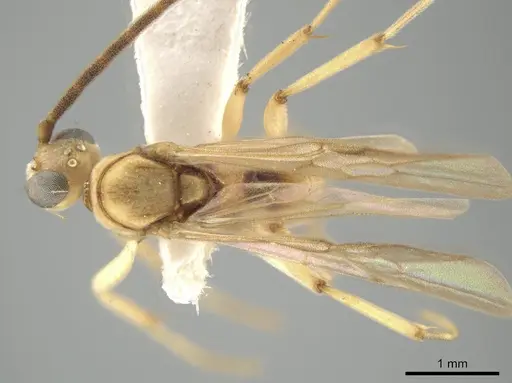
CASENT0915250
View on AntWeb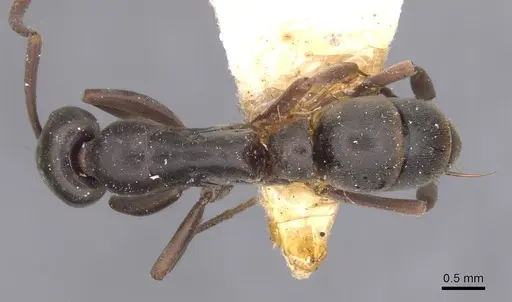
DZUP549431
View on AntWeb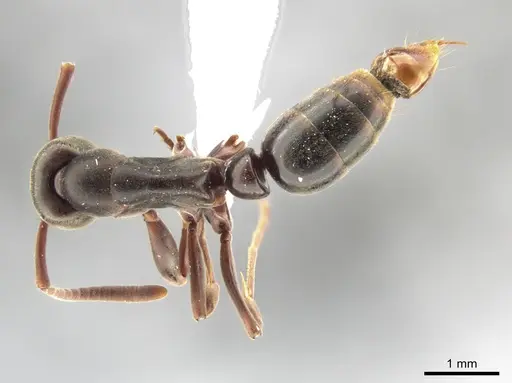
UFV-LABECOL-007493
View on AntWeb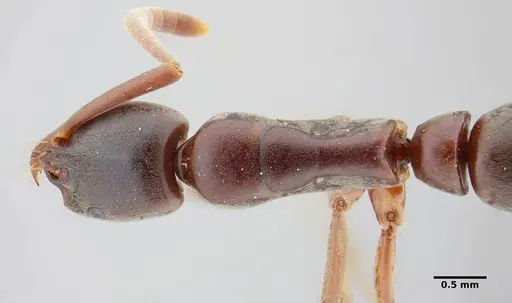
Literature
Loading...Loading products...