

Neivamyrmex wilsoni
- Scientific Name
- Neivamyrmex wilsoni
- Subfamily
- Dorylinae
- Author
- Snelling & Snelling, 2007
- Distribution
- Found in 1 countries
Neivamyrmex wilsoni Overview
Neivamyrmex wilsoni is an ant species of the genus Neivamyrmex. It is primarily documented in 1 countries , including United States of America. Detailed taxonomic data and occurrence records can be further explored via authoritative databases such as AntWeb or the Global Biodiversity Information Facility (GBIF).
Neivamyrmex wilsoni
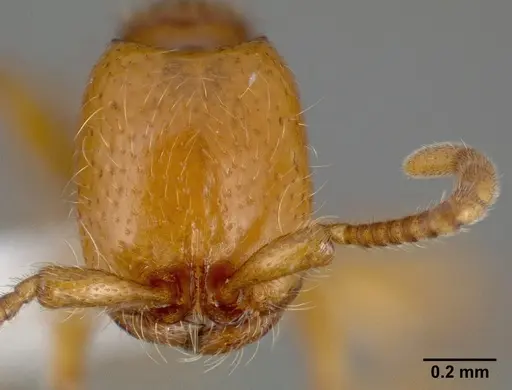
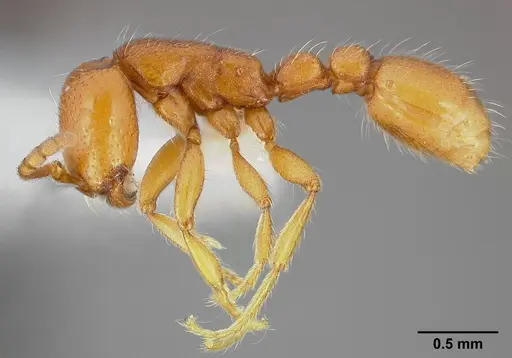
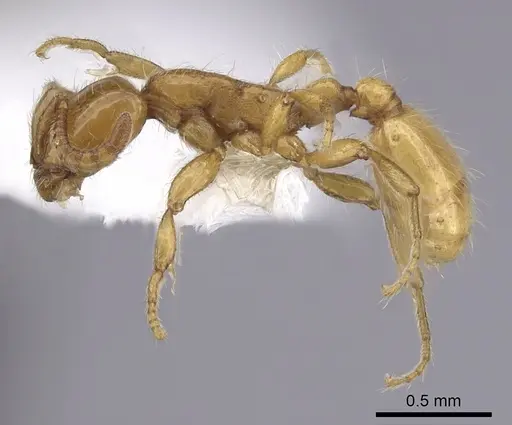
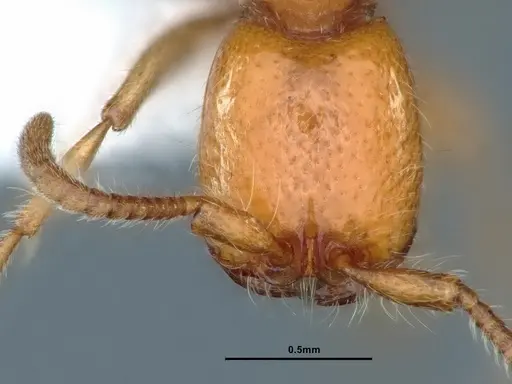
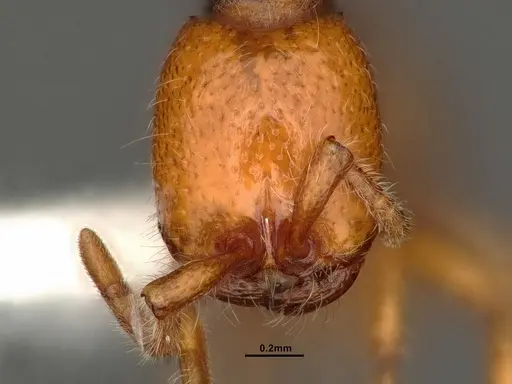
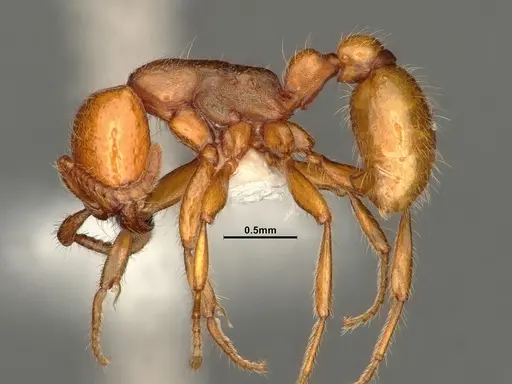
Neivamyrmex wilsoni is a tiny army ant species native to southern California and Mexico. Workers measure just 0.36-0.70mm in head width, making them one of the smaller army ant species in the United States [1]. The species was formally described in 2007 and named in honor of renowned myrmecologist E. O. Wilson [1]. These ants are cryptic and spend most of their lives underground, rarely emerging onto the surface. They have a distinctive appearance with a smooth, shiny head bearing coarse punctures, and they are notably hairier than similar regional species [1]. As predatory army ants, they likely raid the nests of other ants, particularly Pheidole species [2].
This species represents a recently described and poorly studied member of the Dorylinae subfamily. Their secretive underground lifestyle means they are rarely encountered by casual observers, and much of their biology remains undocumented. For antkeepers, they represent an unusual challenge, a tiny, subterranean predator that requires different care than typical kept ant species.
Quick Summary
- Difficulty: Expert
- Origin & Habitat: Southern California and Mexico, specifically San Diego, Orange, Riverside, and San Bernardino counties. They inhabit oak-pine-juniper woodland, chamise chaparral, and coastal sage scrub [1][2]. Nests are found in soil under rocks [1].
- Colony Type: Unknown colony structure. Only the worker caste has been described. As a Neivamyrmex species, they likely form colonies with a single queen, but this is unconfirmed.
- Size & Growth:
- Queen: Unknown, queen caste has not been described [1]
- Worker: 0.36-0.70mm head width,0.48-0.77mm head length [1]
- Colony: Unknown, likely smaller colonies than many army ant species given their tiny worker size
- Growth: Unknown
- Development: Unknown, no development data exists for this species. Based on typical army ant patterns, expect several months but this is purely estimated. (No direct development data exists. Army ants typically have rapid growth once established, but founding phase duration is unknown.)
- Antkeeping:
- Temperature: Inferred from habitat: oak-pine-juniper woodland and chaparral environments in southern California suggest moderate temperatures. Room temperature (20-24°C) is likely appropriate. Avoid extremes.
- Humidity: Inferred from chaparral and woodland habitat: moderate humidity preferred. Keep substrate consistently moist but not waterlogged. These ants live underground so they need damp soil conditions.
- Diapause: Likely, most temperate army ants require a winter rest period. However, this is unconfirmed for this specific species.
- Nesting: Soil-nesting species. In captivity, they would need a deep soil setup or naturalistic terrarium. They are subterranean and likely prefer darkness and minimal disturbance. A naturalistic setup with several inches of soil and hiding structures would be most appropriate.
- Behavior: Extremely secretive and subterranean. As army ants, they are predatory and likely raid other ant colonies for brood. Workers are tiny and likely nocturnal or subterranean foragers. No aggression toward humans documented, army ants of this size pose no sting threat. Escape risk is low given their small size and preference for staying hidden, but they may be difficult to observe. They are cryptic and will avoid light and disturbance.
- Common Issues: lack of documented care information makes proper husbandry difficult, prey requirements, being predatory, they need constant access to live prey items scaled to their tiny size, colonies may fail due to stress from disturbance, they prefer dark, undisturbed environments, founding colony may be difficult, queen biology is completely unknown, they may be difficult to establish as they are adapted to subterranean life and may not adapt well to typical formicarium setups
Discovery and Naming
Neivamyrmex wilsoni was formally described in 2007 by Gordon C. Snelling and Roy R. Snelling in their comprehensive revision of United States Neivamyrmex species [1]. The species was named in honor of E. O. Wilson, the legendary myrmecologist and sociobiologist, as a small recognition of his many achievements in ant systematics, sociobiology, and ecology [1]. The type locality is the Elliot Reserve at Mira Mar in San Diego County, California, where the holotype was collected on March 28,1996 [1]. This is a relatively recently described species, which explains why so much of its biology remains undocumented.
Identification and Distinction
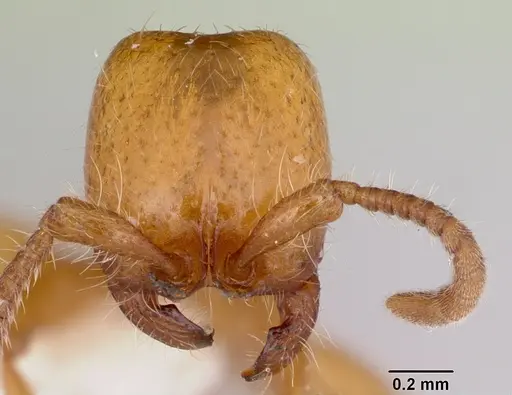
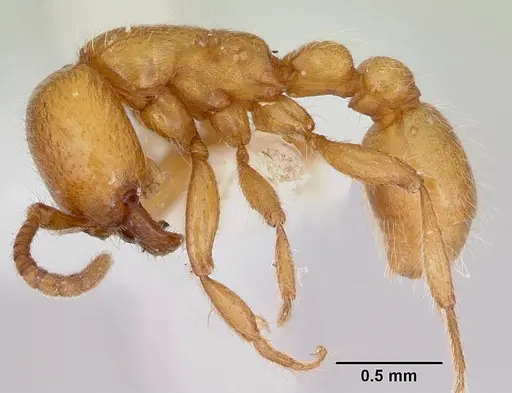
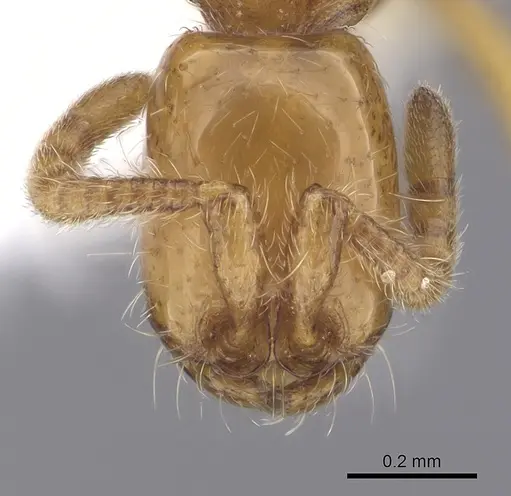
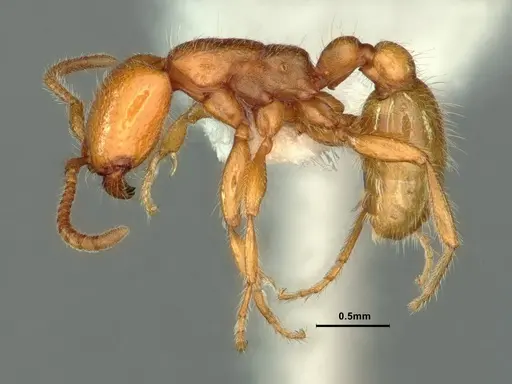
Workers of Neivamyrmex wilsoni are tiny, measuring 0.36-0.70mm in head width [1]. They can be distinguished from other regional Neivamyrmex species by several features. Most notably, they lack an eye spot entirely [1]. The front of the head is smooth and shiny with scattered coarse punctures, and the subantennal lamella is well developed [1]. The petiole is longer than broad when viewed from above, and the postpetiole is distinctly wider than long [1]. One distinctive trait is that N. wilsoni is hairier than other similar species in the region [1]. Large workers also have the lower two-thirds to three-fourths of the head weakly longitudinally strigulose (having fine lengthwise ridges) [1]. It is most similar to N. nyensis and N. leonardi but can be separated by scape length and mesosomal characteristics [1].
Natural Habitat and Distribution
This species is currently known only from southern California, with records from San Diego, Orange, Riverside, and San Bernardino counties [1]. They inhabit three main habitat types: oak-pine-juniper woodland, chamise chaparral, and coastal sage scrub [1]. These habitats represent the characteristic vegetation of the southern California coastal plains and foothills. Specimens have been collected from under rocks, indicating they nest in soil [1]. An additional record from the Mojave National Preserve at 5600-5700 feet in pinyon/oak/juniper woodland suggests they may occupy higher elevation habitats as well [2]. The species is considered cryptic, meaning it is rarely encountered and easily overlooked despite its presence in the environment [2].
Predatory Lifestyle
As a member of the Dorylinae subfamily (army ants), Neivamyrmex wilsoni is predatory [2]. While specific prey preferences are undocumented, they are believed to raid the nests of other ants, particularly Pheidole species [2]. This is consistent with the known behavior of other Neivamyrmex species, which are specialized predators that conduct raids on other ant colonies to capture brood as food. Army ants are known for their nomadic lifestyle and coordinated raiding behavior, though the extent to which N. wilsoni exhibits these behaviors is unknown. Their subterranean lifestyle suggests they may conduct raids underground rather than on the surface [2]. This predatory nature means captive colonies would require constant access to live prey items.
Challenges for Antkeepers
Neivamyrmex wilsoni represents a significant challenge for antkeepers due to the complete lack of documented captive care information. The species was only described in 2007,and no biological studies beyond basic morphology have been published. The queen caste has never been described, meaning we do not know her size or appearance [1]. Colony structure, founding behavior, development timeline, and dietary requirements are all undocumented. This species would be suitable only for very experienced antkeepers who can adapt to unpredictable circumstances and are willing to document their observations carefully. There is no established husbandry protocol for this species, and keepers should be prepared for a steep learning curve and potential failures.
Frequently Asked Questions
How long does it take for Neivamyrmex wilsoni to develop from egg to worker?
This is completely unknown. No development data exists for this species. Based on typical army ant patterns, development likely takes several months, but this is a rough estimate with no scientific basis.
Can I keep Neivamyrmex wilsoni in a test tube setup?
This is not recommended. As a subterranean, soil-nesting species that likely conducts raids, they would be better suited to a naturalistic terrarium setup with deep soil. Test tubes would not provide adequate space or appropriate conditions.
What do Neivamyrmex wilsoni ants eat?
They are predatory army ants. In captivity, they would need regular access to live prey, likely small insects or, based on related species, the brood of other ants like Pheidole. Sugar sources are unlikely to be accepted.
Are Neivamyrmex wilsoni ants dangerous?
No. Workers are extremely tiny (0.36-0.70mm) and pose no threat to humans. There is no documented sting risk from this species.
Do Neivamyrmex wilsoni ants need hibernation?
Likely yes, given their southern California distribution and the oak-pine-juniper woodland habitat. However, this is unconfirmed, no specific diapause data exists for this species.
Is Neivamyrmex wilsoni suitable for beginners?
Absolutely not. This is an expert-level species with zero documented captive care information. Only experienced antkeepers who can work with unknowns and adapt to unpredictable situations should attempt this species.
How big do Neivamyrmex wilsoni colonies get?
Unknown. No colony size data exists for this species. Given their tiny worker size, colonies are likely smaller than many other army ant species.
Where can I find Neivamyrmex wilsoni queens?
This species is rarely encountered and the queen caste has never been described. Wild queens are essentially unavailable to collectors. This species is not recommended for keepers hoping to start from a wild-caught queen.
What makes Neivamyrmex wilsoni different from other army ants?
They are one of the smallest army ant species in North America and are extremely cryptic and subterranean. They were only described in 2007,making them one of the most recently described ant species in the United States. They are also notably hairier than similar species.
Can I keep multiple queens of Neivamyrmex wilsoni together?
This is unknown. Colony structure has not been documented for this species. Given the complete lack of information, combining unrelated queens is not recommended.
References

This caresheet is licensed under CC BY-SA 4.0 .
CASENT0005337
View on AntWeb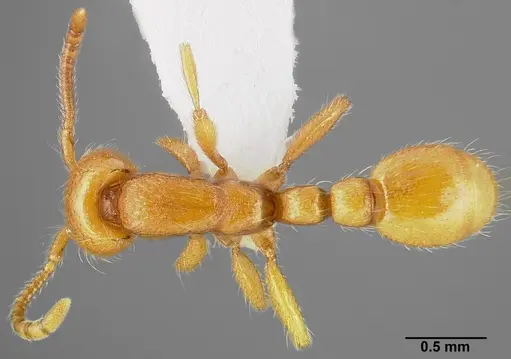
CASENT0103465
View on AntWeb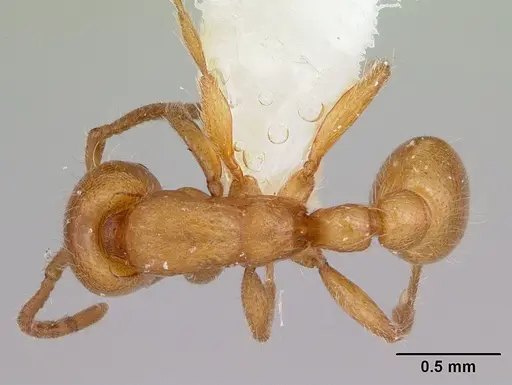
CASENT0249490
View on AntWeb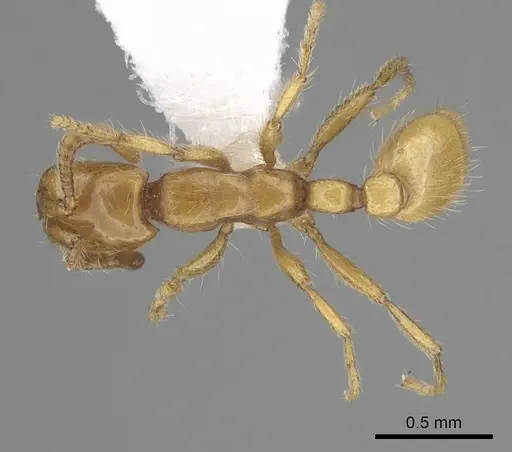
CASENT0883403
View on AntWeb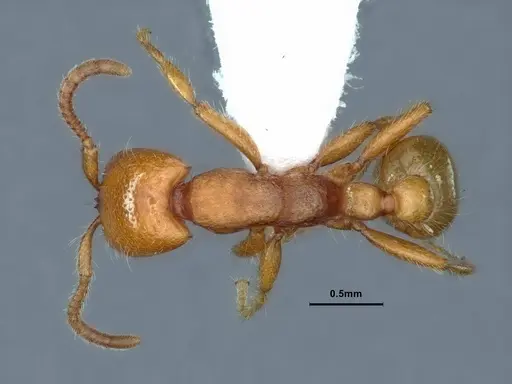
CASENT0884319
View on AntWeb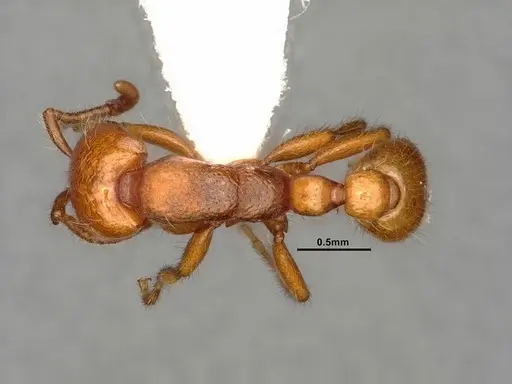
Literature
Loading...Loading products...