

Neivamyrmex spatulatus
- Scientific Name
- Neivamyrmex spatulatus
- Subfamily
- Dorylinae
- Author
- Borgmeier, 1939
- Distribution
- Found in 1 countries
Neivamyrmex spatulatus Overview
Neivamyrmex spatulatus is an ant species of the genus Neivamyrmex. It is primarily documented in 1 countries , including Costa Rica. Detailed taxonomic data and occurrence records can be further explored via authoritative databases such as AntWeb or the Global Biodiversity Information Facility (GBIF).
Neivamyrmex spatulatus
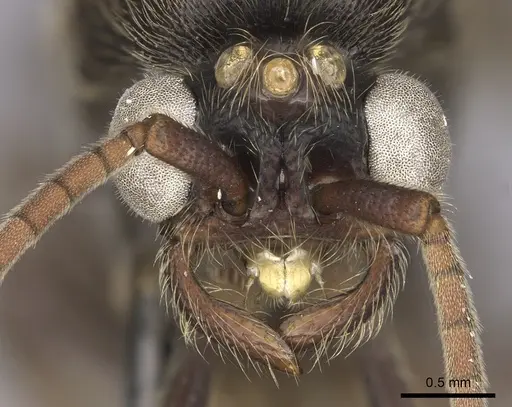
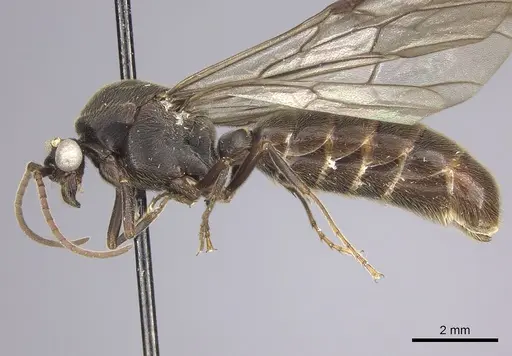
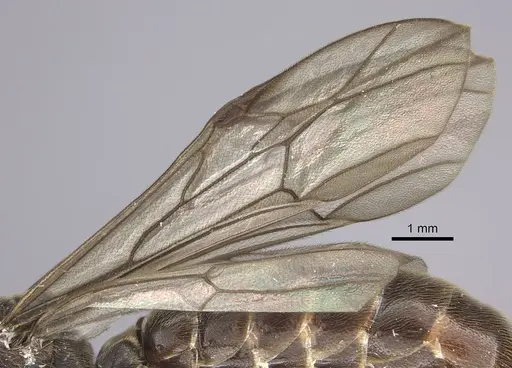
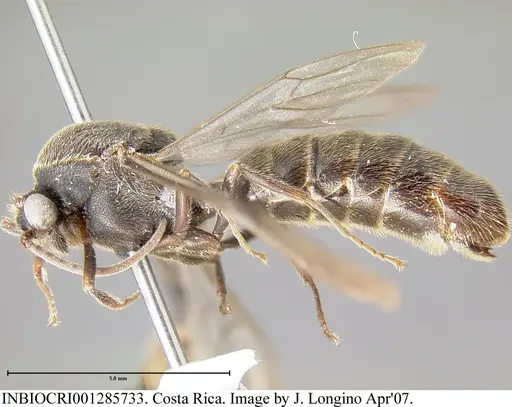
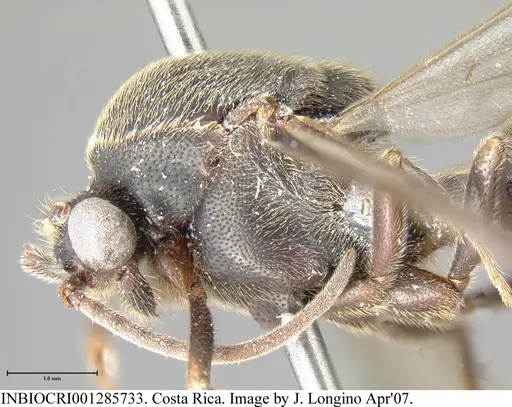
Neivamyrmex spatulatus is a Neotropical army ant known only from male specimens. The species was originally described by Borgmeier in 1939 as Eciton (Acamatus) spatulatum from specimens collected in Costa Rica, and later transferred to the genus Neivamyrmex in 1953 [1]. Males have been collected in Costa Rica and Panama using blacklight traps during December and January, with most records coming from the La Selva biological station at elevations around 500-1100m [2]. This species remains one of the most poorly known army ants, as no queens or workers have ever been associated with the males, making it impossible to identify or culture in captivity.
Quick Summary
- Difficulty: Not Keepable
- Origin & Habitat: Neotropical rainforests of Costa Rica and Panama, primarily documented from lowland to premontane elevations (500-1100m) at sites like La Selva and Hamburg Farm [2].
- Colony Type: Unknown, only males have been collected, colony structure, queen number, and social organization are completely undescribed.
- Size & Growth:
- Queen: Unknown, no queens have ever been described or collected [2].
- Worker: Unknown, workers have never been collected or associated with this species [2].
- Colony: Unknown, no colony collections exist [2].
- Growth: Unknown
- Development: Unknown, no brood or colony development has ever been observed [2]. (This species is only known from adult male specimens. No eggs, larvae, pupae, workers, or queens have ever been collected or described.)
- Antkeeping:
- Temperature: Unknown, no captive observations exist.
- Humidity: Unknown, no captive observations exist.
- Diapause: Unknown, males were collected December-January, suggesting possible seasonal flight timing, but this is unconfirmed [2].
- Nesting: Unknown, no natural nesting observations exist.
- Behavior: Completely unknown. As an army ant (Dorylinae), it would theoretically share behavioral traits with other Neivamyrmex species (raiding behavior, nomadic colonies), but no observations of workers exist to confirm this.
- Common Issues: This species cannot be kept, no workers have ever been collected or described, making identification and captive maintenance impossible., No one has ever identified what the workers of this species look like, so there is no way to collect or culture them., The entire life cycle (founding, colony development, diet, behavior) is completely unknown from any scientific observation., Males alone cannot establish a colony, you would need queens and workers, none of which have ever been found.
Why This Species Cannot Be Kept
Neivamyrmex spatulatus represents one of the most significant gaps in ant taxonomy within the Dorylinae subfamily. The species is known only from adult male specimens collected in Costa Rica and Panama between 1935 and the early 2000s [1][2]. No queens, workers, or any other caste has ever been collected or associated with these males. This means there is no way to identify workers if you were to find them, no information on their biology or behavior, and no possibility of establishing a captive colony. Even if you obtained a male, army ant colonies require a functional queen and worker force to survive, males are simply the reproductive caste that emerges only during certain times of year for mating flights. Without workers to care for brood, maintain the nest, and forage for food, a colony cannot exist.
What We Know About This Species
The scientific knowledge of Neivamyrmex spatulatus is limited to seven syntype males originally collected by F. Nevermann at Hamburg Farm in Costa Rica on November 25,1935 [1]. Additional males have been collected using blacklight traps at the La Selva biological station in Costa Rica, with specimens captured in December and January across multiple years of sampling [2]. The known distribution covers the Neotropical region of Costa Rica and Panama at elevations between 500-1100m. Males occur during the dry season months (December-January), which may indicate the timing of nuptial flights, though this is not confirmed. The species was originally described in the genus Eciton (subgenus Acamatus) and later moved to Neivamyrmex by Borgmeier in 1953 [2].
Related Species That Can Be Kept
If you are interested in keeping army ants, several other Neivamyrmex species are well-documented and can be kept by experienced antkeepers. Neivamyrmex is a genus of New World army ants with over 150 species, many of which have workers that have been described and can be collected from the wild or obtained from other keepers. Other army ant genera in the Dorylinae include Eciton (the classic army ants), which are better studied and have documented colony structures. Army ants are challenging to keep, they require large spaces, frequent feeding on live prey, and careful humidity control. They are not suitable for beginners. If you specifically want to keep army ants, consider starting with better-documented species where workers and queens can be positively identified and where captive husbandry information exists. [2]
Frequently Asked Questions
Can I keep Neivamyrmex spatulatus in captivity?
No. This species cannot be kept because no one has ever collected or described workers. Without workers, it is impossible to identify the species, establish a colony, or provide appropriate care. The entire biology of this species is unknown.
Have workers ever been found for Neivamyrmex spatulatus?
No. Workers have never been collected or associated with this species. Only adult males have ever been documented, collected primarily via blacklight traps in Costa Rica and Panama.
What do Neivamyrmex spatulatus queens look like?
We don't know. No queens have ever been collected or described for this species. The queen caste remains completely unknown.
Where does Neivamyrmex spatulatus live?
The species is known from Costa Rica and Panama in the Neotropical region. Specimens have been collected at elevations between 500-1100m in rainforest environments, primarily at the La Selva biological station.
When do Neivamyrmex spatulatus males fly?
Based on collection data, males have been captured in December and January, suggesting nuptial flights occur during the dry season in these regions. However, this is inferred from trap data, not direct observation of natural mating flights.
Are there similar army ant species that can be kept?
Yes, other Neivamyrmex species and Eciton species have well-documented workers and can be kept by experienced antkeepers. However, army ants are generally difficult to keep, they require large colonies, frequent feedings of live prey, and specific humidity conditions. They are not recommended for beginners.
Why is Neivamyrmex spatulatus so poorly known?
Army ant males are often collected at lights while the worker colonies remain hidden in the forest. Many Neivamyrmex species are known only from males because the nomadic colonies are difficult to locate and the workers are hard to identify. For N. spatulatus specifically, the workers may be extremely rare or localized, or they may never have been systematically collected.
What should I do if I think I found Neivamyrmex spatulatus workers?
It would be impossible to confirm such an identification because workers have never been described for this species. There is no morphological description, identification key, or reference material to compare against. If you find army ant workers in Costa Rica or Panama that you cannot identify, you would need to consult with a myrmecologist specializing in Dorylinae to determine if they might represent an undescribed species.
References

This caresheet is licensed under CC BY-SA 4.0 .
INB0003692993
View on AntWeb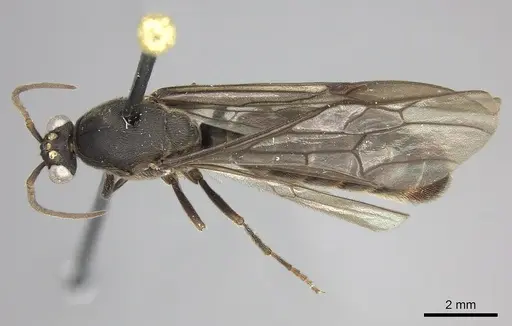
INBIOCRI001285733
View on AntWeb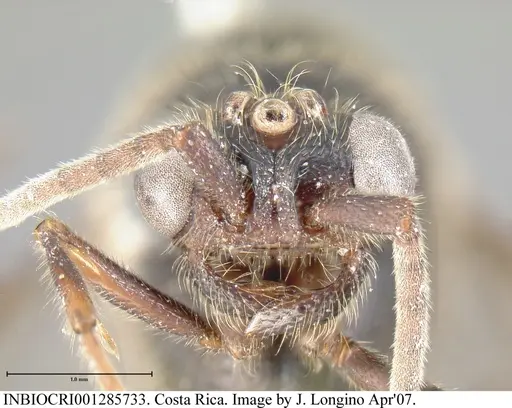
Literature
Loading...Loading products...