

Neivamyrmex impudens
- Scientific Name
- Neivamyrmex impudens
- Subfamily
- Dorylinae
- Author
- Mann, 1922
- Distribution
- Found in 4 countries
Neivamyrmex impudens Overview
Neivamyrmex impudens is an ant species of the genus Neivamyrmex. It is primarily documented in 4 countries , including Costa Rica, Guatemala, Mexico. Detailed taxonomic data and occurrence records can be further explored via authoritative databases such as AntWeb or the Global Biodiversity Information Facility (GBIF).
Neivamyrmex impudens
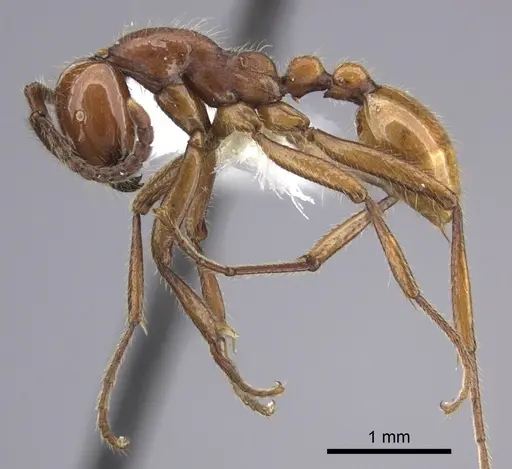
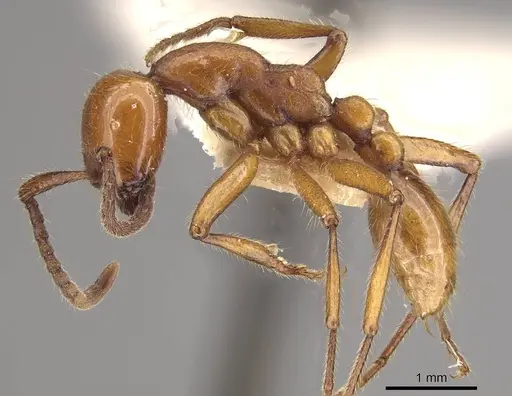
Neivamyrmex impudens is a nocturnal army ant found across Central America, from southern Mexico through Guatemala and Honduras to Costa Rica. Workers are light reddish-brown in color, with some individuals showing bright yellow abdomens that contrast sharply with their otherwise uniform reddish coloring. They are relatively small army ants with distinctive morphological features including eyes with a convex cornea and a sharp recurved tooth on the anteroventral margin of the petiole [1]. This species is known for its spectacular nocturnal raiding columns that can stretch 10-20 meters in length, with workers rapidly transporting brood between nest sites [2]. Unlike many army ant species, males have never been collected or described, the species is only known from workers and queens, with DNA barcode evidence confirming that a male-only species (N. longiscapus) is actually the unknown male of this species [2].
Quick Summary
- Difficulty: Expert
- Origin & Habitat: Central America, found in Mexico (Chiapas, Morelos, San Luis Potosí, Yucatán), Guatemala, Honduras, and Costa Rica. Inhabits tropical deciduous forest at elevations around 1500m, nesting in simple holes under leaf litter on the forest floor [1][3].
- Colony Type: Colony structure is unconfirmed. As a Dorylinae army ant, they likely form colonies with a single queen (monogyne), but this has not been directly documented for this specific species.
- Size & Growth:
- Queen: Unconfirmed, no queen measurements available in the literature [2]
- Worker: Unconfirmed, workers described but specific measurements not provided in available sources
- Colony: Unknown, no colony size data available
- Growth: Unknown, development timeline has not been studied
- Development: Unconfirmed, no development data exists for this species. Based on typical Dorylinae patterns, expect 3-6 weeks at warm temperatures, but this is an estimate. (Development timeline is unconfirmed. Related army ant species typically develop from egg to worker in 3-8 weeks depending on temperature and food availability.)
- Antkeeping:
- Temperature: Likely requires warm conditions similar to other Neotropical army ants. Based on their Central American distribution, aim for 24-28°C with a gradient. This is an estimate based on habitat rather than direct study.
- Humidity: High humidity is expected given their tropical forest floor habitat. Keep nest substrate consistently moist but not waterlogged. This is inferred from typical Dorylinae requirements.
- Diapause: Unlikely, as a tropical species, they probably do not require a diapause period. However, they may show reduced activity during cooler or drier seasons.
- Nesting: In nature, they nest in simple holes in the ground under leaf litter. In captivity, they need a naturalistic setup with deep, humid substrate or a large outworld setup where they can form raiding columns. Standard test tubes are unsuitable for this nomadic species.
- Behavior: This is a highly active, nocturnal army ant species. Workers form fast, tight raiding columns that emerge at night to hunt for prey. Columns can stretch 10-20 meters as workers search for invertebrate prey across the forest floor. They are predators, hunting other insects and arthropods. Workers are aggressive when defending their colony. Escape prevention is critical, these are active, fast-moving ants that will readily escape if given the opportunity. They are not suitable for beginners due to their specialized nomadic lifestyle and high activity levels.
- Common Issues: army ants are extremely difficult to keep in captivity due to their nomadic nature and need for constant hunting space, no documented captive breeding success exists for this species, they are rarely kept, they require very large enclosures to exhibit natural raiding behavior, predatory diet means you must provide constant live prey, they cannot survive on sugar water alone, fast-moving nocturnal behavior makes them challenging to observe and manage
Natural History and Behavior
Neivamyrmex impudens is a nocturnal army ant that forms spectacular raiding columns at night. Field observations at La Selva Biological Station in Costa Rica documented columns 10-20 meters long, with workers emerging from simple holes in the ground under leaf litter. Workers rapidly transport brood between locations, moving them up to 20 meters from the original nest site to new bivouac locations between tree buttresses. The columns are described as very fast and dense, with a steady stream of workers that never diminishes during observation periods. Some workers were observed carrying tiny white objects, likely eggs or very small larvae. Color variation exists in this species, some workers are uniformly reddish while others have contrasting bright yellow abdomens. Males have never been collected for this species, which is unusual among army ants. DNA barcode analysis later confirmed that a male-only species (N. longiscapus) from Guatemala is actually the unknown male of this species [2][1].
Distribution and Habitat
This species ranges across the Neotropical region, from southern Mexico through Guatemala and Honduras to Costa Rica. In Mexico, it has been recorded in the states of Chiapas, Morelos, San Luis Potosí, and Yucatán. The type locality is Progresso, Honduras. In Mexico, specimens have been collected in tropical deciduous forest at approximately 1500 meters elevation. They are ground-dwelling ants collected in interception traps, indicating they forage primarily on the forest floor. Their habitat preference for forest floor environments with leaf litter provides the humid, protected conditions they need for nesting [1][3][4].
Identification and Morphology
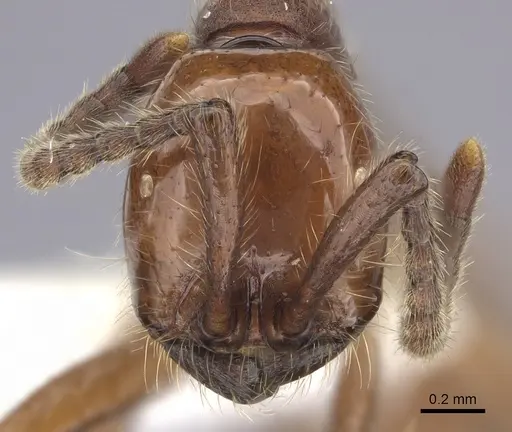
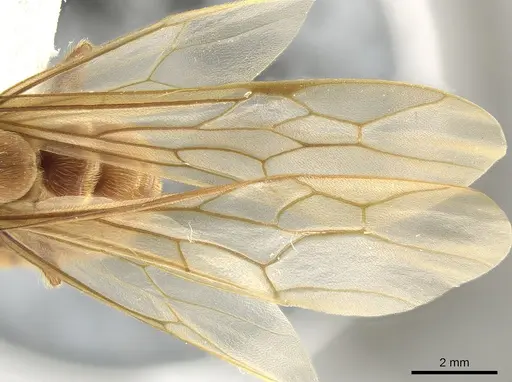
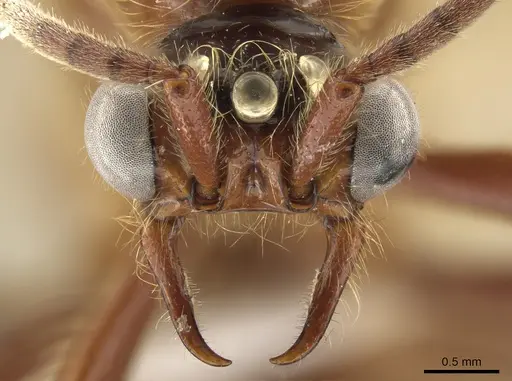
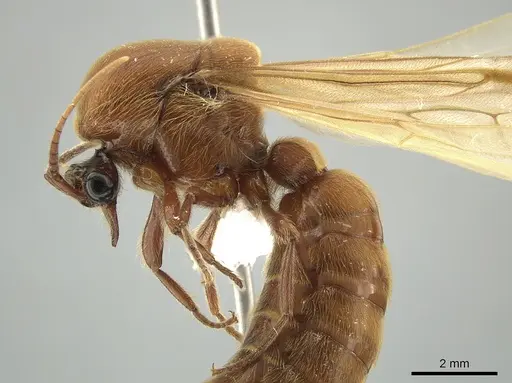
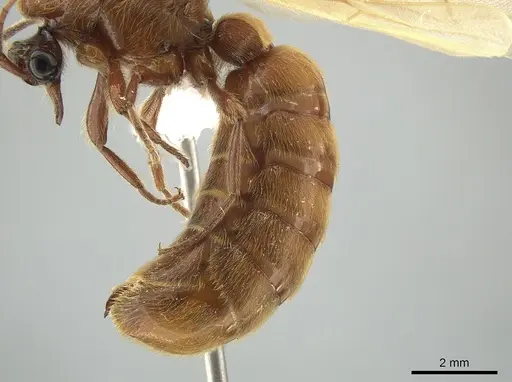
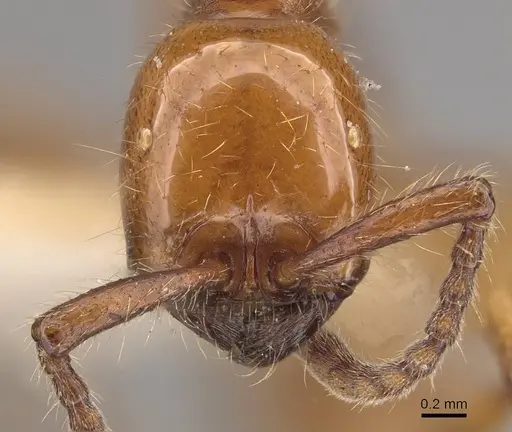
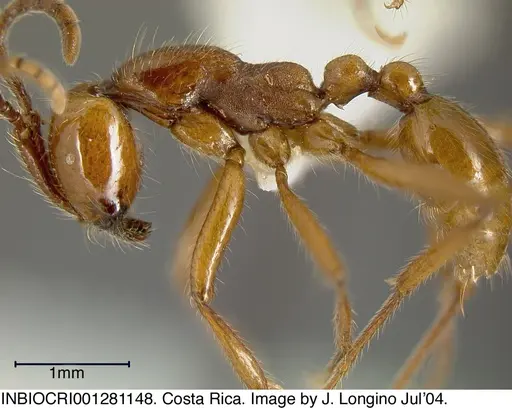
Workers of Neivamyrmex impudens can be identified by several distinctive features. The posterior face of the propodeum is straight and shorter than the dorsal face. They have eyes with a distinct convex cornea, which is unusual among army ants and may be related to their nocturnal lifestyle. The color is light reddish-brown, with some individuals having contrasting bright yellow abdomens. The promesosomal dorsum is relatively arched and not in the same plane as the dorsal face of the propodeum. The anteroventral margin of the petiole has a sharp recurved tooth. The head is smooth and shiny with scattered punctures, and the inner edge of the tarsal claws lacks a tooth. The antennal scape reaches or clearly exceeds the level of the eye. Males were long unknown but have now been confirmed through genetic analysis to be what was previously described as N. longiscapus [1][2].
Keeping Army Ants in Captivity
Keeping Neivamyrmex impudens in captivity represents one of the most challenging endeavors in ant keeping. Army ants are nomadic by nature, requiring large spaces to form raiding columns and hunt prey. Unlike most ant species that can be housed in compact nests, army ants need extensive outworld setups where they can exhibit natural foraging behavior. They are strict predators that hunt other insects, they cannot survive on sugar water or honey alone and require constant access to live prey such as crickets, mealworms, and other small invertebrates. There is no documented captive breeding success for this species in the antkeeping hobby. Most attempts to keep army ants fail because of their need for constant movement, large prey requirements, and humidity control. This species should only be attempted by expert antkeepers with extensive experience with predatory species and the ability to provide large, complex enclosures. Standard test tube setups and formicaria are completely unsuitable for this nomadic species [2].
Frequently Asked Questions
Is Neivamyrmex impudens a good species for beginners?
No. This is an expert-level species that is not recommended for beginners. Army ants have extremely specialized care requirements including large enclosures, constant live prey, and high humidity. There is no documented captive breeding success for this species, and they are considered one of the most difficult ant species to keep.
Can I keep Neivamyrmex impudens in a test tube or formicarium?
No. Standard test tubes and formicaria are completely unsuitable for this species. Army ants are nomadic and need to move their colony regularly. They require large naturalistic setups with deep, humid substrate where they can form raiding columns. A simple test tube setup will cause the colony to fail quickly.
What do Neivamyrmex impudens eat?
As army ants, they are strict predators that hunt other insects. They do not eat sugar water or honey, their diet consists entirely of live invertebrate prey. You would need to provide a constant supply of small insects like crickets, mealworms, fruit flies, and other arthropods. This is one of the most demanding aspects of keeping this species.
How long does it take for eggs to develop into workers?
The development timeline for this species is unconfirmed. No scientific studies have documented their development time. Based on typical Dorylinae patterns, related species take 3-8 weeks from egg to worker, but this is an estimate rather than confirmed data.
Do Neivamyrmex impudens need hibernation?
Unlikely. As a tropical species from Central America, they probably do not require a diapause or hibernation period. However, they may show reduced activity during cooler or drier seasons in their natural habitat.
How big do Neivamyrmex impudens colonies get?
Colony size is unknown. No published data exists on maximum colony size for this species. However, army ant colonies can reach thousands of workers in related species. This would require extremely large enclosures to maintain successfully.
Do Neivamyrmex impudens ants sting?
Army ants have the ability to sting, though their stingers are small. Workers are aggressive when defending the colony and will readily use their stingers if threatened. However, due to their small size, the sting is unlikely to be significant to humans.
Can I keep multiple queens together?
Not documented. The colony structure (monogyne vs polygyne) has not been studied for this species. Based on typical Dorylinae behavior, they likely have single-queen colonies, but this is an inference rather than confirmed observation.
Why are there no males described for this species?
Males were long unknown because they are not attracted to light like many other army ant males. However, DNA barcode analysis confirmed that a separate species described only from males (Neivamyrmex longiscapus) is actually the male of this species. So males do exist, they simply were not originally associated with the worker caste.
What makes this species different from other army ants?
This species is unusual among army ants for several reasons: it is strictly nocturnal with documented observations at 11pm, it forms extremely long columns (10-20 meters), it has distinctive eye morphology with a convex cornea, and it shows color variation with some workers having bright yellow abdomens. Additionally, the association between males and workers was only recently confirmed through genetic analysis.
References

This caresheet is licensed under CC BY-SA 4.0 .
CASENT0609744
View on AntWeb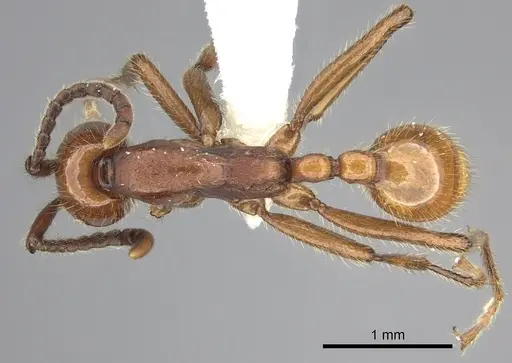
CASENT0650183
View on AntWeb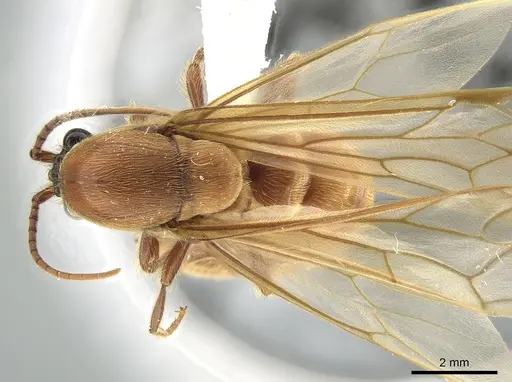
CASENT0911153
View on AntWeb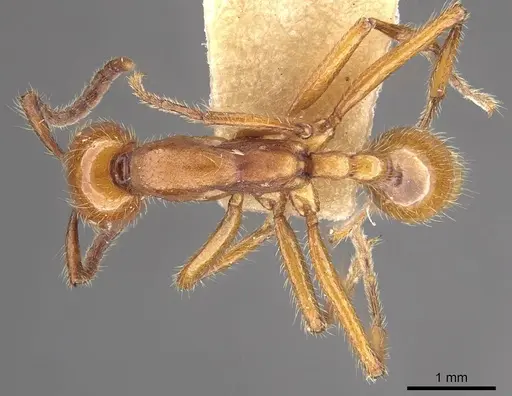
INBIOCRI001281148
View on AntWeb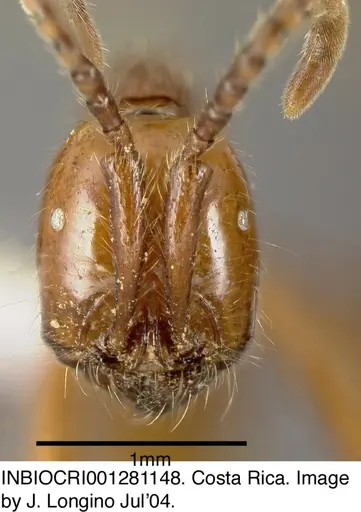
Literature
Loading...Loading products...