

Mystrium silvestrii
- Scientific Name
- Mystrium silvestrii
- Tribe
- Amblyoponini
- Subfamily
- Amblyoponinae
- Author
- Santschi, 1914
- Distribution
- Found in 3 countries
Mystrium silvestrii Overview
Mystrium silvestrii is an ant species of the genus Mystrium. It is primarily documented in 3 countries , including Congo, Côte d'Ivoire, Ghana. Detailed taxonomic data and occurrence records can be further explored via authoritative databases such as AntWeb or the Global Biodiversity Information Facility (GBIF).
Mystrium silvestrii
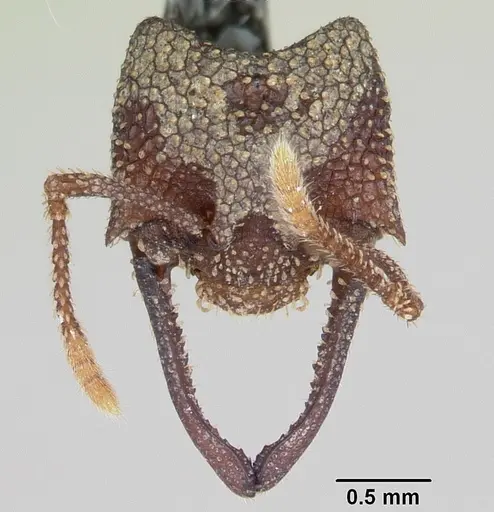
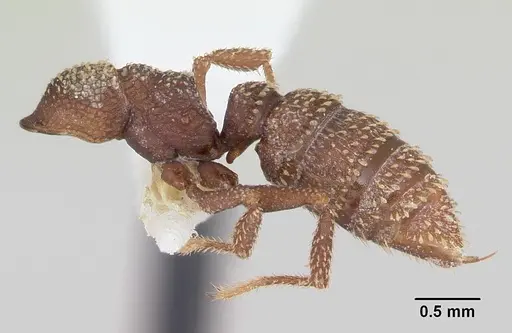
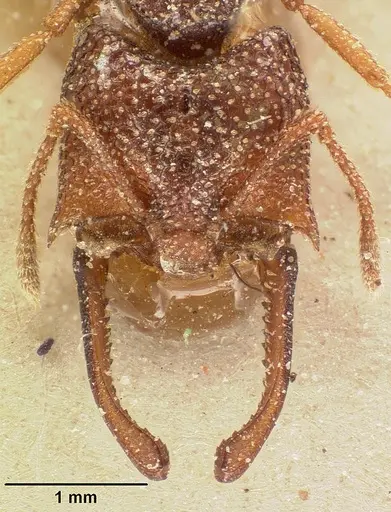
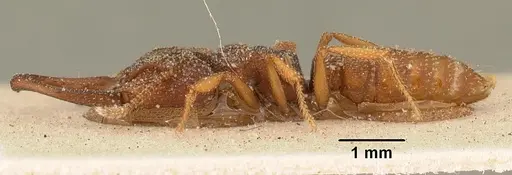
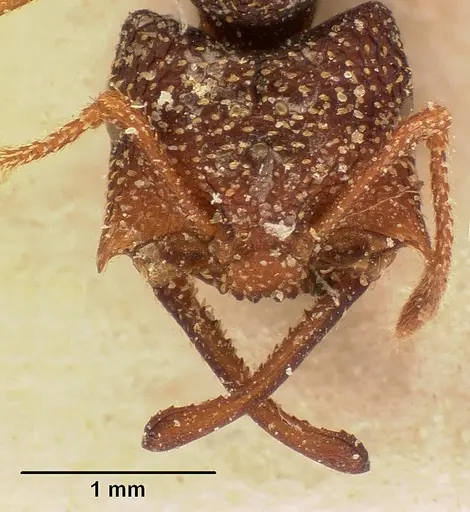
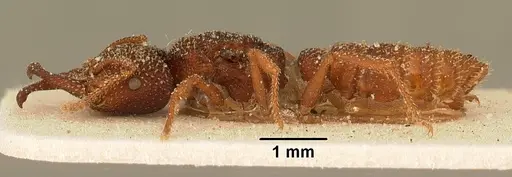
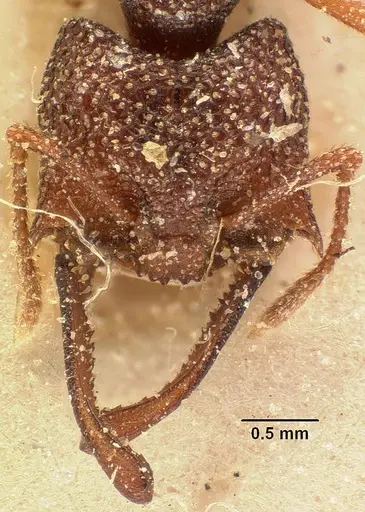
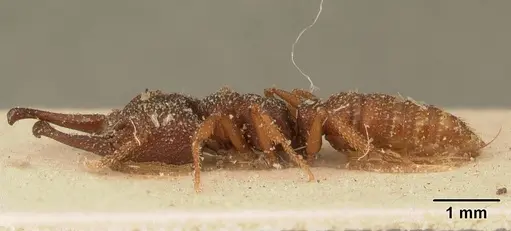
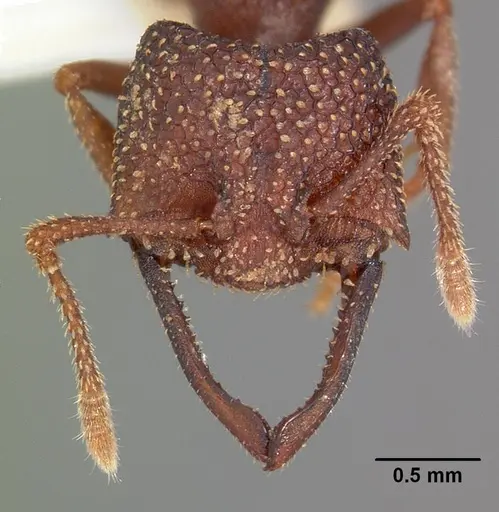
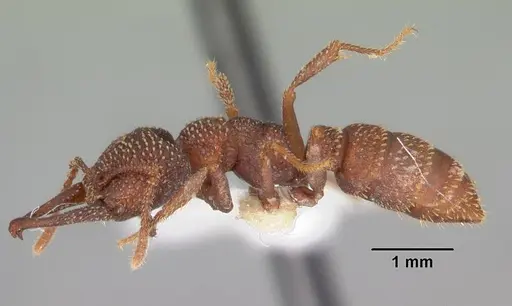
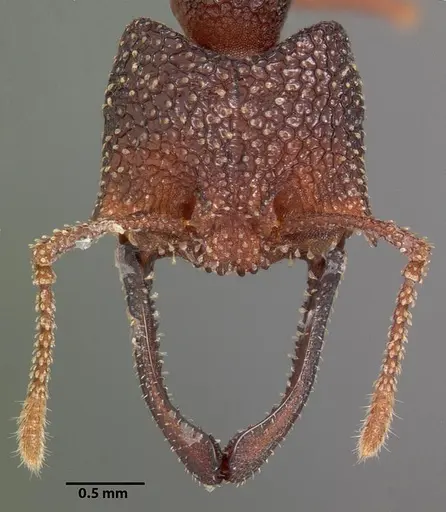
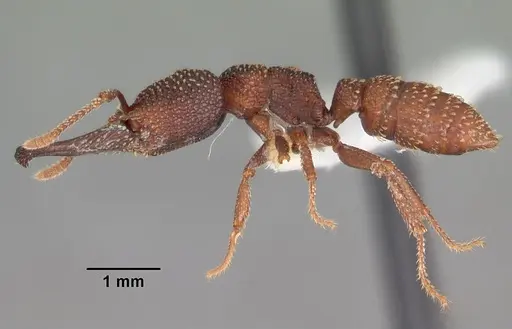
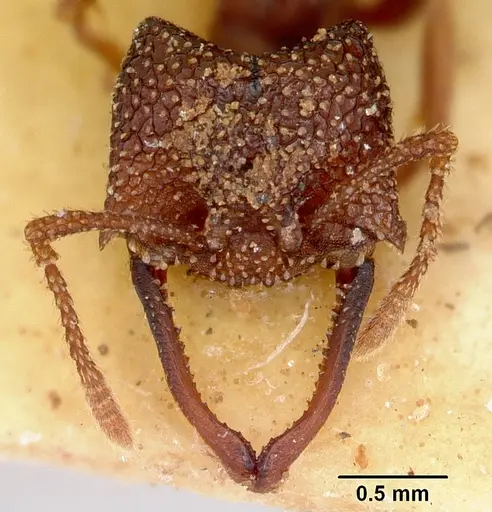
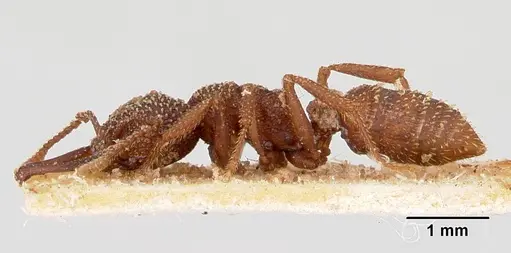
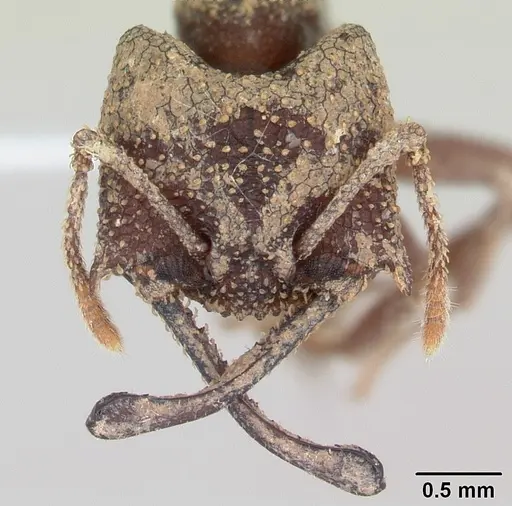
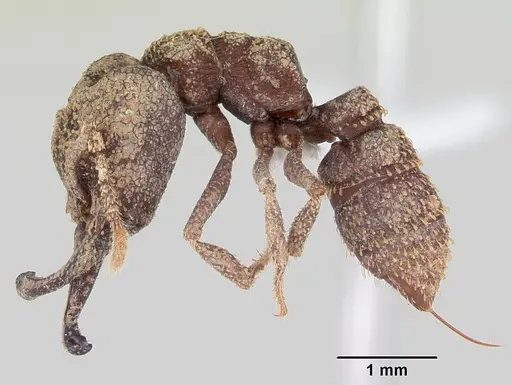
Mystrium silvestrii is a rare and fascinating Dracula ant species and the only member of the genus Mystrium found on the African continent. Workers measure around 5.8mm with a distinctive dark reddish-brown coloration, coarse ridged texture on the head and thorax, and uniquely spatulate mandibles with small teeth [1]. Queens are slightly larger at 6mm and differ mainly in thorax structure [1]. This species is known from West and Central Africa, specifically Cameroon, Ghana, Ivory Coast, and the Central African Republic [1]. What makes this species extraordinary is its queens practice non-destructive cannibalism, they cut small holes in larval integument and feed on the hemolymph (blood) without killing the larvae, a remarkable adaptation for nutrition during colony founding [2].
Quick Summary
- Difficulty: Expert
- Origin & Habitat: West and Central Africa, found in Cameroon, Ghana, Ivory Coast, and the Central African Republic. Likely inhabits tropical forest environments similar to other Mystrium species [3][1].
- Colony Type: Single-queen colonies (monogyne). Like other Mystrium species, winged queens are produced, and reproductives smaller than workers may replace them [4].
- Colony: Monogyne
- Size & Growth:
- Queen: 6mm [1]
- Worker: 5.8mm [1]
- Colony: Unknown, this is a rarely collected species with no documented colony sizes
- Growth: Unknown, no development data available
- Development: Unknown, no direct development studies exist for this species (Development timeline has not been documented. Related Mystrium species from Madagascar may provide rough estimates, but data is too limited to infer reliably.)
- Antkeeping:
- Temperature: Keep warm, likely in the 24-28°C range typical of tropical African ants. Use a heating cable on one side of the nest to create a gentle gradient if room temperature is lower.
- Humidity: Maintain moderate to high humidity, think tropical forest floor conditions. Keep the nest substrate consistently moist but not waterlogged, with some drier areas available.
- Diapause: Unknown, West African species may have reduced activity during dry seasons but true hibernation is unlikely. Maintain stable temperatures year-round.
- Nesting: In nature likely nests in soil or rotting wood. A naturalistic setup with moist substrate or a Y-tong/plaster nest with good humidity retention works well. Avoid drying out.
- Behavior: This is a shy, cryptic species that likely forages underground or in leaf litter. Workers are not aggressive and will avoid confrontation. Escape risk is moderate, standard barrier methods are sufficient. As a Dracula ant, they have unusual feeding behaviors involving larval hemolymph consumption [2].
- Common Issues: this species has never been kept in captivity, all care recommendations are speculative, extreme rarity means finding a colony is nearly impossible, no captive breeding records exist, so founding success rates are unknown, the unusual hemolymph-feeding behavior may require specific conditions to observe, wild-caught colonies may have high stress mortality due to collection rarity
Species Overview and Rarity
Mystrium silvestrii holds a unique position in the ant world as the sole Mystrium species found on the African continent, while most other Mystrium species are native to Madagascar [4][3]. This makes it particularly significant for ant enthusiasts, though its extreme rarity cannot be overstated, it is known from only a handful of specimens collected in Cameroon, Ghana, Ivory Coast, and the Central African Republic [1]. The species was first described by Santschi in 1914 from specimens collected in Victoria, Cameroon [1]. Unlike many Dracula ants that have wingless ergatoid queens, M. silvestrii produces winged queens [4]. The workers have distinctive spatulate mandibles with around 11 small teeth, and their body surface is coarsely ridged reticulate with a somewhat iridescent appearance [1].
The Dracula Ant Feeding Behavior
Perhaps the most fascinating aspect of Mystrium silvestrii and its relatives is their unique feeding biology. Queens of this species practice non-destructive cannibalism, a behavior where they make small cuts in the integument of their own larvae and feed on the hemolymph (the insect equivalent of blood) without killing the larvae [2]. This remarkable adaptation provides essential nutrition during the energetically demanding colony founding period when the queen cannot leave to forage. The larvae survive and can heal from these wounds, continuing their development. This behavior explains why they are called 'Dracula ants', they literally draw blood from their own young. In captivity, this behavior would be fascinating to observe, though it requires a established colony with larvae present.
Housing and Nesting
Since this species has never been documented in the antkeeping hobby, all housing recommendations are based on inference from related species and natural history. In the wild, Mystrium likely nests in soil or rotting wood in tropical forest environments. For captivity, a naturalistic setup with moist substrate (like a dirt-filled container or plaster nest) would best approximate their natural conditions. The nest should retain humidity well while allowing for some drying to prevent mold. A small outworld for foraging can be connected to the nest chamber. Because they are cryptic and likely forage underground, provide deep substrate layers for them to explore and nest in.
Temperature and Humidity
As a species from West and Central Africa, Mystrium silvestrii requires warm, tropical conditions. Aim for temperatures in the 24-28°C range, which can be achieved with a heating cable placed on one side of the nest to create a gentle temperature gradient. This allows the ants to regulate their own temperature by moving between warmer and cooler areas. Humidity should be moderate to high, think damp forest floor rather than soggy swamp. The substrate should feel consistently moist but never waterlogged. Good ventilation is essential to prevent mold while maintaining humidity. Monitor condensation levels in the nest and adjust misting frequency based on substrate moisture rather than a fixed schedule.
Feeding and Diet
The feeding biology of Dracula ants is unusual and differs from typical ants. While standard protein sources like small insects (fruit flies, pinhead crickets, mealworms) should be offered, the unique aspect of their diet involves the larval hemolymph feeding behavior documented in queens [2]. This means maintaining a healthy larval population is important for the colony's nutritional dynamics. Sugar sources like honey or sugar water may be accepted, though this is unconfirmed for this specific species. Offer a variety of foods and observe what the colony accepts. Fresh prey should be provided regularly, and any uneaten prey should be removed to prevent mold.
Behavior and Temperament
Mystrium silvestrii is likely a shy, non-aggressive species that avoids confrontation rather than engaging in defensive behavior. As cryptic ants that probably forage in leaf litter and underground, they are not likely to be active on the surface or bold in their foraging. Workers are not known to sting, though their mandibles can deliver a nip if handled roughly. Escape risk is moderate, standard barrier methods like fluon on test tube rims or barrier tape on formicaria should prevent escapes. This is not a species that will create dramatic foraging trails or show interesting territorial behaviors visible to keepers. Their appeal lies in their rarity, unique taxonomy, and fascinating feeding biology rather than observable colony activity.
Frequently Asked Questions
Is Mystrium silvestrii available in the antkeeping hobby?
No. This is one of the rarest ant species in the world, known from only a handful of specimens collected over more than a century. There are no documented captive colonies, and it is extremely unlikely to be available from any ant breeder or dealer.
What makes Mystrium silvestrii special compared to other ants?
It is the only Mystrium species found on the entire African continent, all other Mystrium ants live on Madagascar. Additionally, like other Dracula ants, their queens practice unique non-destructive cannibalism, feeding on larval hemolymph without killing the larvae.
How big do Mystrium silvestrii colonies get?
Unknown. There are no documented colony sizes in scientific literature. As a rarely collected species, no one has documented how large wild colonies grow or how fast they develop.
Do Mystrium silvestrii ants sting?
Amblyoponinae ants have stingers but are not known for painful stings. This species is shy and non-aggressive, so stinging is unlikely even if handled. The main defense would be escaping or hiding rather than using their stinger.
What do I feed Mystrium silvestrii?
While not confirmed for this specific species, offer small live insects (fruit flies, springtails, small mealworms) as protein, and sugar sources like honey or sugar water. The unique aspect is their larval hemolymph feeding behavior, maintaining healthy larvae is important for the colony's natural nutrition dynamics.
What temperature do they need?
As a West African tropical species, keep them warm around 24-28°C. Use a heating cable on one side of the nest to create a gradient if your room temperature is lower. Avoid temperature drops below 22°C.
Is this species good for beginners?
No. This is an expert-level species that has never been kept in captivity. All care recommendations are speculative, and finding a colony is essentially impossible due to the species' extreme rarity.
Do they need hibernation?
Probably not. As a West African species from tropical regions, they likely do not enter true hibernation. Maintain stable warm temperatures year-round rather than attempting a winter cooldown.
How long does it take for eggs to become workers?
Unknown. No development studies exist for this species. Even related Mystrium species lack detailed development timelines in scientific literature.
Can I keep multiple queens together?
Not recommended and likely unnecessary to attempt. This species appears to be monogyne (single queen) in the wild, and combining unrelated queens has not been studied. Given the species' extreme rarity, attempting to found a colony with multiple queens is not advisable.
References

This caresheet is licensed under CC BY-SA 4.0 .
CASENT0006824
View on AntWeb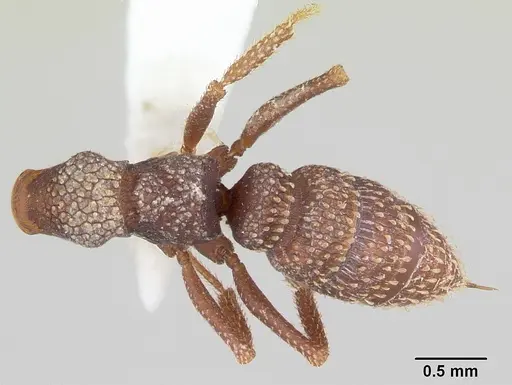
CASENT0101135
View on AntWeb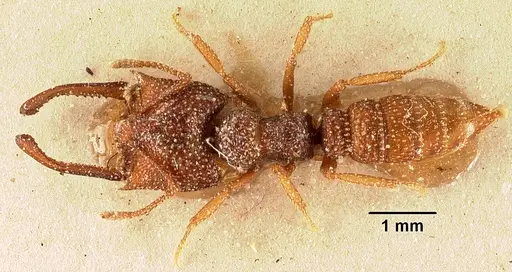
CASENT0101136
View on AntWeb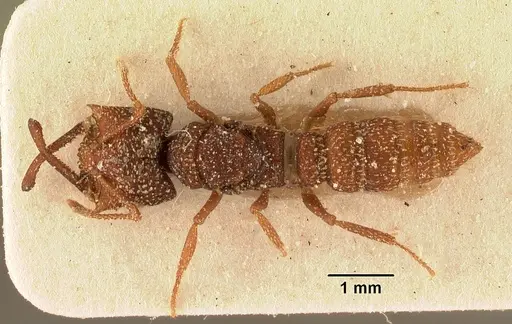
CASENT0101977
View on AntWeb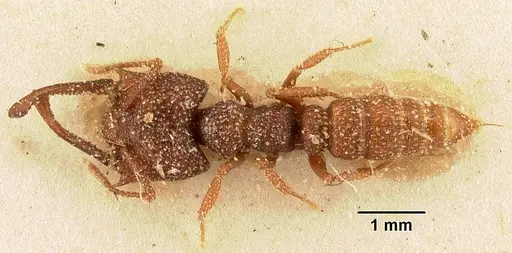
CASENT0102167
View on AntWeb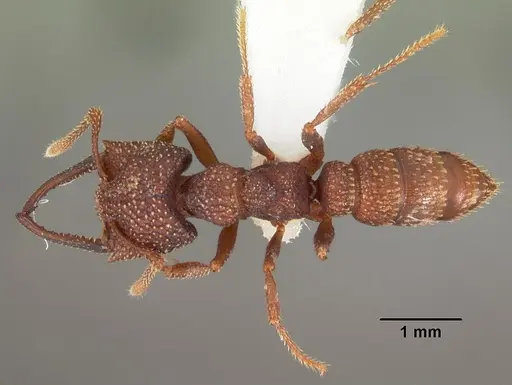
CASENT0102168
View on AntWeb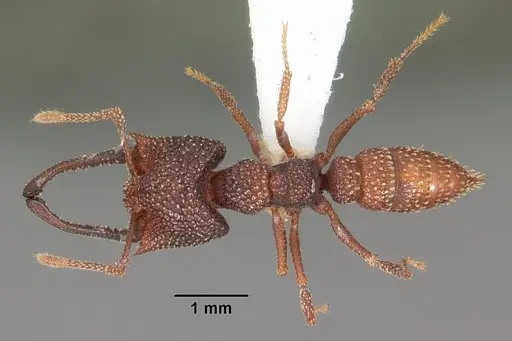
CASENT0172832
View on AntWeb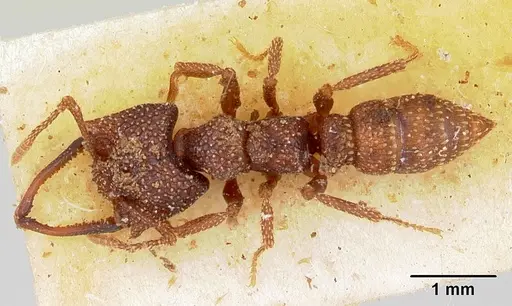
CASENT0408192
View on AntWeb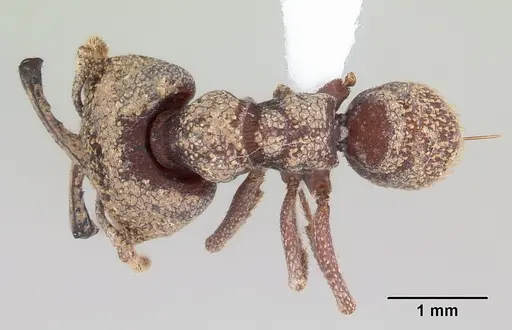
Literature
Loading...Loading products...