

Mystrium shadow
- Scientific Name
- Mystrium shadow
- Tribe
- Amblyoponini
- Subfamily
- Amblyoponinae
- Author
- Yoshimura & Fisher, 2014
- Distribution
- Found in 1 countries
Mystrium shadow Overview
Mystrium shadow is an ant species of the genus Mystrium. It is primarily documented in 1 countries , including Madagascar. Detailed taxonomic data and occurrence records can be further explored via authoritative databases such as AntWeb or the Global Biodiversity Information Facility (GBIF).
Mystrium shadow
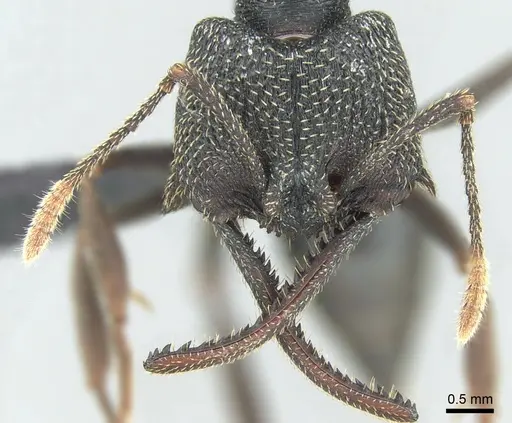
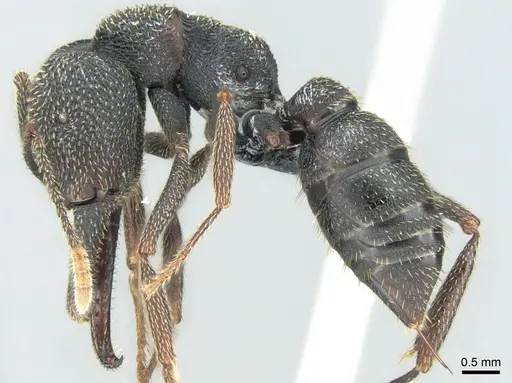
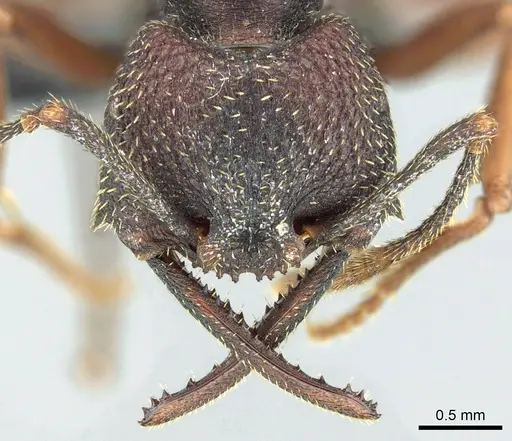
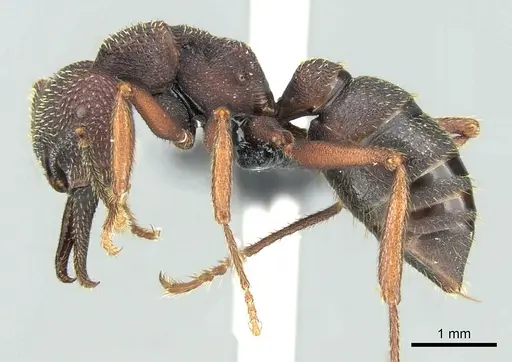
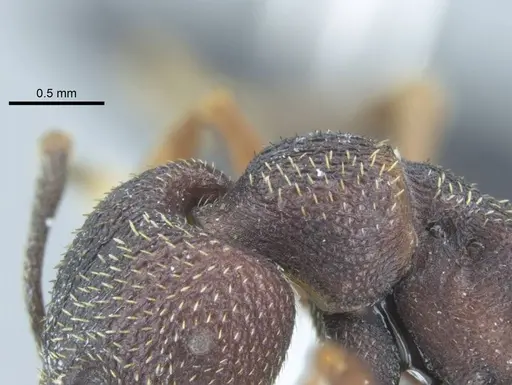
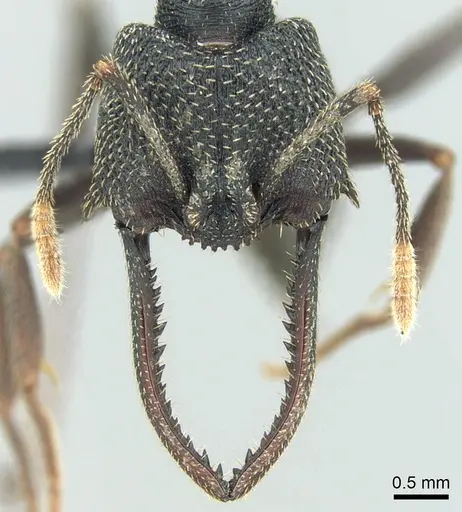
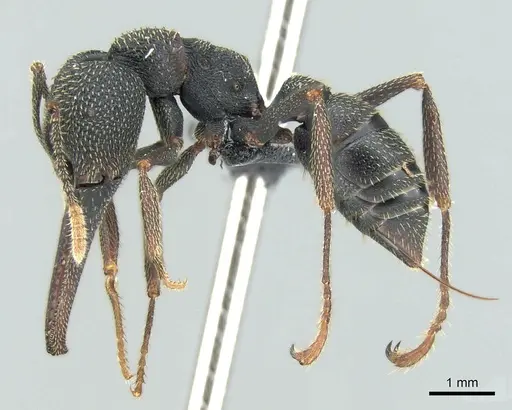
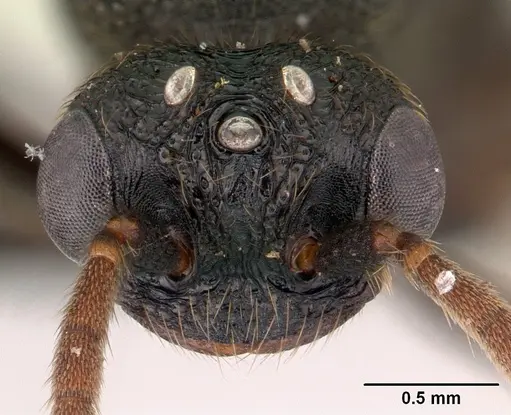
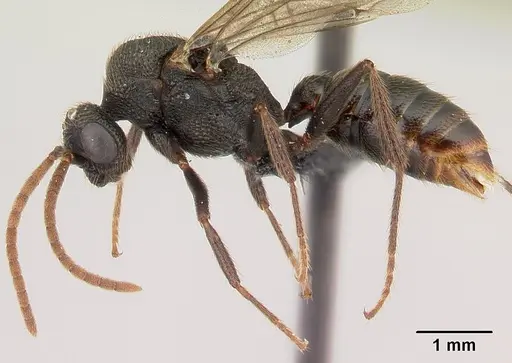
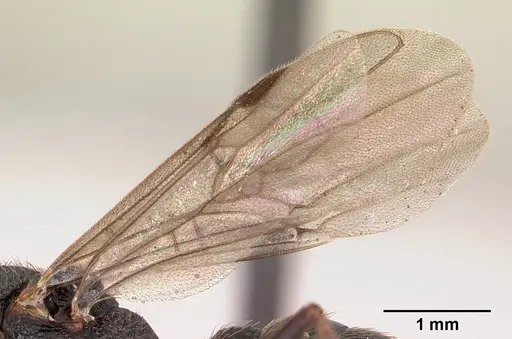
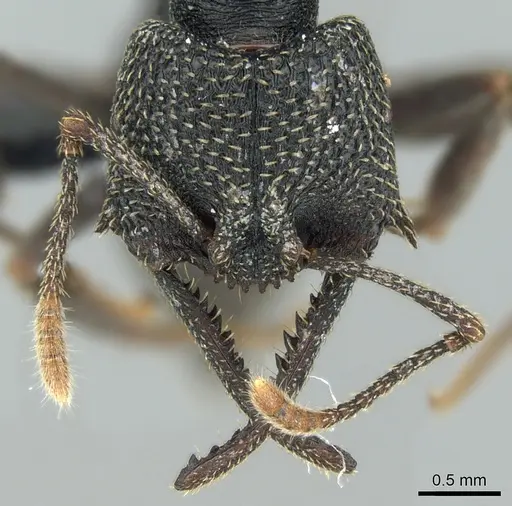
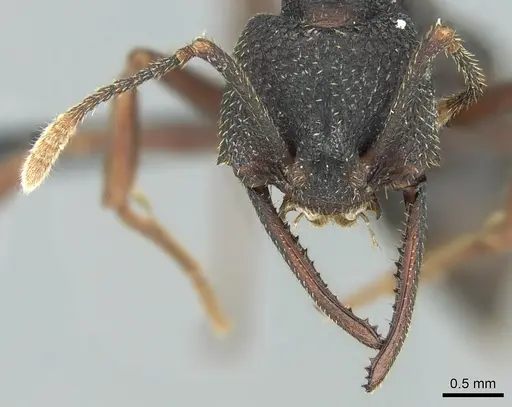
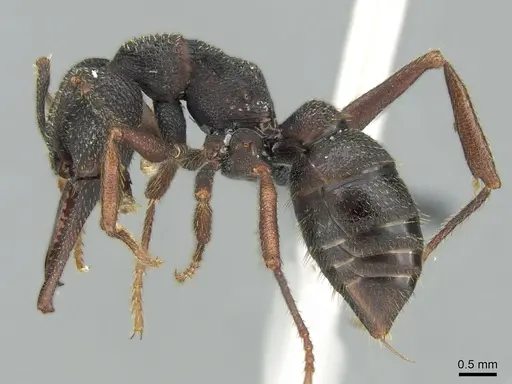
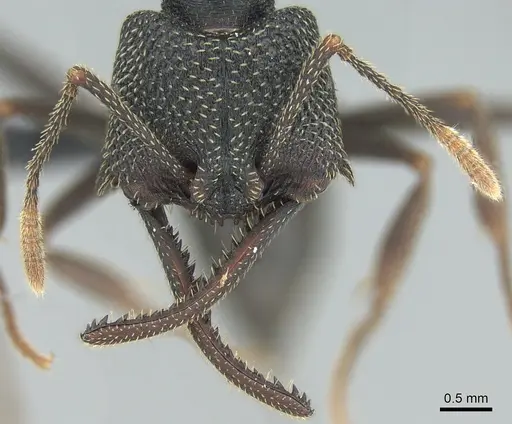
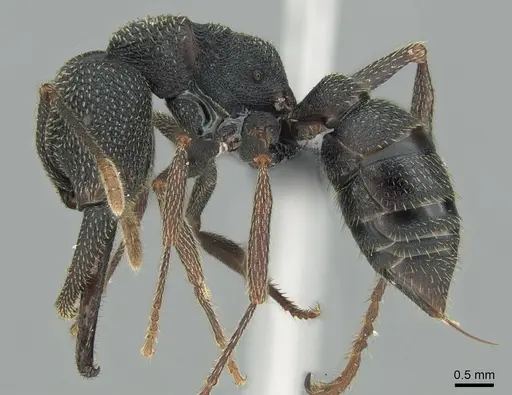
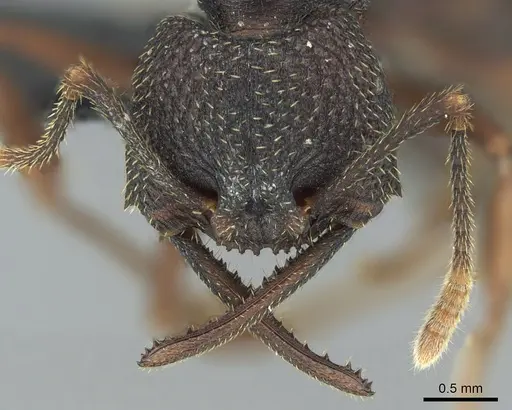
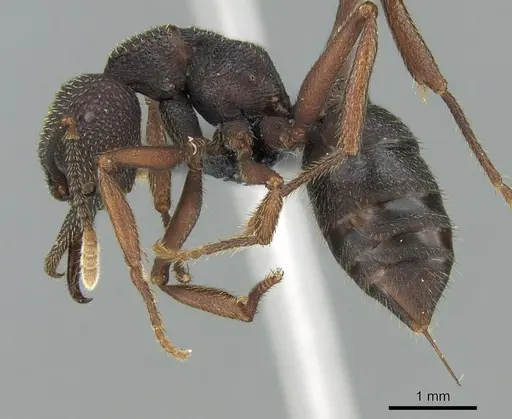
Mystrium shadow is a rare and recently described Dracula ant species from Madagascar. Workers are small ants measuring 1.36-2.25mm in head length, with a distinctive reddish-brown to black body and brighter antennal tips. They are distinguished by a blunt angle between the dorsal and posterior faces of the head, strong longitudinal striations on the pronotum, and a moderately developed genal tooth. This species was only described in 2014 and is named 'shadow' because it was hidden like a shadow alongside Mystrium voeltzkowi. The most unusual feature is their ergatoid queens, wingless queens that are actually smaller than the workers, with vestigial wing stubs instead of full wings. This makes them part of the bizarre 'Dracula ants' group known for their unique habit of feeding on hemolymph (the blood-like fluid) from the brood of other ant species.
Quick Summary
- Difficulty: Expert
- Origin & Habitat: Mystrium shadow is found only in Madagascar, specifically in the northern regions including Antsiranana province, Montagne d'Ambre, Ankarana, Daraina, and surrounding areas at elevations of 650-800 meters [1][2]. They live in moist forest habitats typical of Amblyoponinae ants.
- Colony Type: This species has ergatoid queens, wingless replacement queens that are smaller than workers. The colony structure appears to be single-queen based on the ergatoid system, where a primary queen establishes the colony and ergatoid individuals serve as replacement reproductives if she dies [1].
- Colony: Monogyne
- Size & Growth:
- Queen: Ergatoid queens are 1.30-1.67mm in head length, making them smaller than workers, a rare and unusual trait [1].
- Worker: Workers are 1.36-2.25mm in head length, making them small but robust ants [1].
- Colony: Unknown for this species. Based on related Amblyoponinae and the small ergatoid queens, colonies are likely small, probably under 100 workers [3].
- Growth: Unknown, no captive breeding data exists. Based on related species, growth is likely slow.
- Development: Unknown, no direct data exists for this species. Based on typical Amblyoponinae patterns, expect 8-12 weeks at optimal temperature. (No captive breeding studies exist. Development time is estimated from related genus behavior.)
- Antkeeping:
- Temperature: Keep around 22-26°C. This species comes from tropical Madagascar so warmth is important. Use a heating cable on one side of the nest to create a gentle gradient.
- Humidity: High humidity is essential, these are forest floor ants from moist Madagascar habitats. Keep the nest substrate consistently damp but not waterlogged. Mist occasionally and provide a water tube.
- Diapause: Unknown, no data on overwintering requirements. Madagascar has mild winters, so they may not need a true diapause. Keep at reduced temperatures (around 18-20°C) for 2-3 months in winter rather than a cold hibernation.
- Nesting: In nature they likely nest in rotting wood or soil under stones in forest habitats. In captivity, a Y-tong or plaster nest with small chambers works well. Keep the nest material moist. Their small size means chambers should be appropriately scaled.
- Behavior: These are shy, reclusive ants that prefer to stay hidden. They are not aggressive and pose no real threat to keepers, their stingers are too small to penetrate human skin. Workers are likely nocturnal or crepuscular, foraging quietly for prey. They are not escape artists due to their small size, but standard escape prevention (tight-fitting lids, barriers) is still recommended. The most notable behavior is their unique feeding biology, like other Dracula ants, they obtain nutrition by puncturing the brood of other ant species and feeding on hemolymph. This is extremely unusual and makes them fascinating but challenging to keep.
- Common Issues: no captive care data exists, this is one of the least-studied ant species in the hobby, diet is extremely specialized, they may refuse standard ant foods and require hemolymph sources, colony growth is likely very slow, which can frustrate beginners, ergatoid queens are tiny and fragile compared to typical claustral queens, wild-caught colonies may have parasites that are difficult to treat
The Mystery of Ergatoid Queens
Mystrium shadow has one of the most unusual queen systems in the ant world. Instead of the large, winged queens typical of most ants, this species has ergatoid queens, wingless queens that are actually SMALLER than the workers. The queens measure 1.30-1.67mm in head length while workers reach 1.36-2.25mm [1]. This is extremely rare in ants and earned them a place in the 'Dracula ant' group. The ergatoid queens have vestigial wings, small, reduced appendages that serve no function for flight [1]. In the colony, these ergatoid individuals likely serve as replacement reproductives if the primary queen dies, similar to how some other Amblyoponinae species maintain backup egg-layers. For keepers, this means founding colonies may be challenging, the tiny ergatoid queens are far more fragile than typical claustral queens and may have different founding requirements.
Feeding and Diet - The Dracula Ant Mystery
The Amblyoponinae subfamily is famous for their 'Dracula ant' feeding behavior, they puncture the brood of other ant species and feed on hemolymph (the insect equivalent of blood). This is their primary nutrition source in the wild. However, in captivity, this presents a major challenge. No one has successfully kept Mystrium shadow long-term, so we don't know what they will accept. Based on related species, they likely need access to live prey (small insects) or the hemolymph from other ant brood. Standard sugar water and honey may be rejected. This is an expert-level species precisely because of the dietary uncertainty, you may need to maintain a separate colony of prey ants to harvest hemolymph, or experiment with various protein sources. Start with small live prey like fruit flies and springtails, and observe carefully for acceptance. [3]
Natural History and Distribution
Mystrium shadow was only described in 2014 by Yoshimura and Fisher, making it one of the newest known ant species. It is endemic to Madagascar, found only in that island nation. The distribution covers northern Madagascar including Antsiranana province, Montagne d'Ambre, Ankarana, Daraina, Galoko, Ambondrobe, Ampasindava, Manongarivo, and Ambanitaza at elevations of 650-800 meters [1][2]. The species name 'shadow' refers to how it was hidden like a shadow alongside the similar Mystrium voeltzkowi, the two species look very similar and were easily confused. In their natural habitat, these ants live in moist forest environments, typically nesting under stones or in rotting wood on the forest floor. Almost nothing is known about their biology in the wild, no one has documented their colony size, foraging behavior, or reproductive biology in detail.
Housing and Nest Setup
Given their small size and moisture requirements, a Y-tong or plaster nest works best for Mystrium shadow. The chambers should be appropriately scaled to their tiny size, avoid large, open spaces. Keep the nest material consistently moist but not flooded. A water tube attached to the nest helps maintain humidity. Because they are from Madagascar forests, they need good humidity and should be kept away from direct sunlight and air conditioning. Standard test tubes can work for founding colonies but may be too large for the tiny ergatoid queens. If using test tubes, use small-diameter tubes and ensure the water reservoir is appropriately sized. Escape prevention is important, while not strong climbers, their small size means they can slip through gaps that larger ants cannot.
Temperature and Seasonal Care
As a tropical species from Madagascar, Mystrium shadow needs warm conditions. Aim for 22-26°C in the nest area. A heating cable placed on one side of the nest creates a gentle temperature gradient that allows the ants to choose their preferred temperature. Avoid temperatures above 30°C or below 18°C. For winter care, since Madagascar has mild winters, a true cold hibernation is likely not required. Instead, reduce temperatures to around 18-20°C for 2-3 months during the 'winter' period and reduce feeding. This cool period may help trigger reproductive behavior when temperatures rise again. Monitor colony activity, if they remain active throughout winter, they may not need a cool period at all.
Frequently Asked Questions
Can I keep Mystrium shadow in a test tube?
Small test tubes can work for founding colonies, but standard test tubes may be too large for the tiny ergatoid queens. Use small-diameter tubes and ensure the water reservoir is appropriately sized. A Y-tong or plaster nest with small chambers is often better for established colonies.
How long until first workers in Mystrium shadow?
The egg-to-worker timeline is unknown, no captive breeding data exists for this species. Based on related Amblyoponinae, expect 8-12 weeks at optimal temperature (around 24°C). Growth is likely slow.
What do Mystrium shadow ants eat?
This is the biggest challenge, they are Dracula ants that likely need hemolymph (blood fluid) from other ant brood. Standard foods may be rejected. Try small live prey (fruit flies, springtails) and observe carefully. This is an expert-level species precisely because of the dietary uncertainty.
Are Mystrium shadow good for beginners?
No, this is an expert-level species. Almost no captive care information exists, their dietary needs are extremely specialized (Dracula ant feeding), and colony growth is likely very slow. They are only suitable for experienced antkeepers willing to experiment.
Do Mystrium shadow ants sting?
They likely have a stinger but it is too small to penetrate human skin. They are not dangerous to keepers and are generally shy, reclusive ants that prefer to stay hidden.
How big do Mystrium shadow colonies get?
Colony size is unknown but likely small, probably under 100 workers based on related species and their tiny ergatoid queens. The ergatoid queen system suggests smaller colony sizes than typical ants.
Can I keep multiple queens together?
Not recommended. This species has ergatoid replacement reproductives but the colony structure is single-queen. Combining unrelated foundresses has not been studied and is not recommended.
Do Mystrium shadow need hibernation?
A true cold hibernation is likely not required, Madagascar has mild winters. A cool period at 18-20°C for 2-3 months may be sufficient. Monitor colony activity and adjust based on their behavior.
Why are my Mystrium shadow dying?
Without captive data, this is hard to answer. Likely causes include: wrong diet (they may refuse standard foods), incorrect humidity (too dry), temperature issues (too cold or too hot), or stress from wild-caught origin. This species has very specific requirements that we don't fully understand yet.
When to move to a formicarium?
Wait until the colony has at least 20-30 workers and the test tube is becoming crowded. For this species, a small Y-tong or plaster nest with appropriately scaled chambers works best.
What makes Mystrium shadow special?
They have ergatoid queens, wingless queens that are SMALLER than workers, which is extremely rare in ants. They are also 'Dracula ants' with unique feeding biology. The species was only described in 2014 and almost nothing is known about their captive care.
References

This caresheet is licensed under CC BY-SA 4.0 .
CASENT0077646
View on AntWeb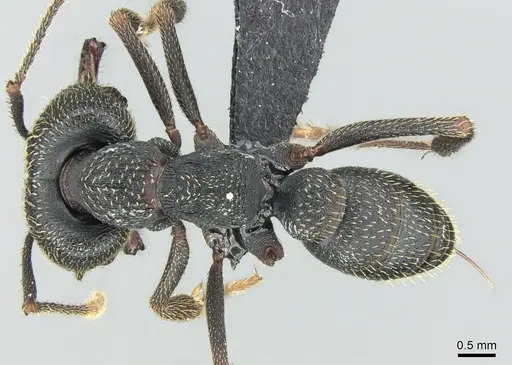
CASENT0077647
View on AntWeb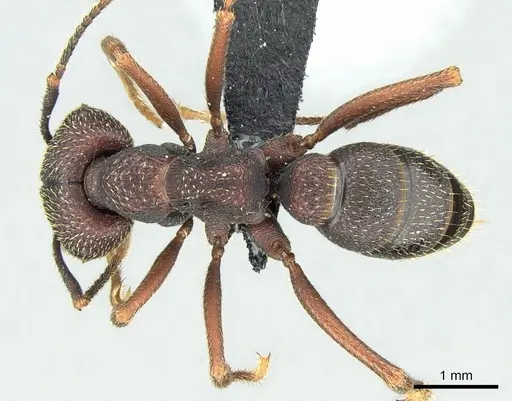
CASENT0077648
View on AntWeb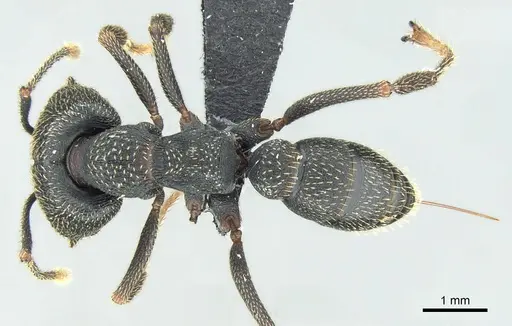
CASENT0107647
View on AntWeb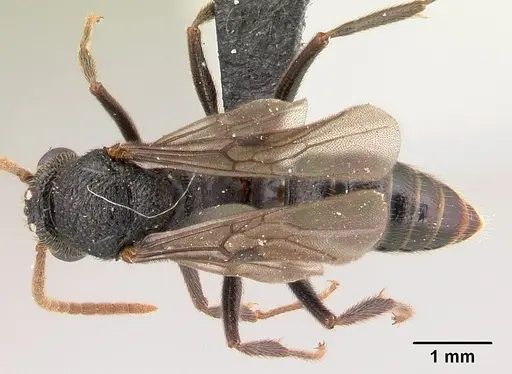
CASENT0318920
View on AntWeb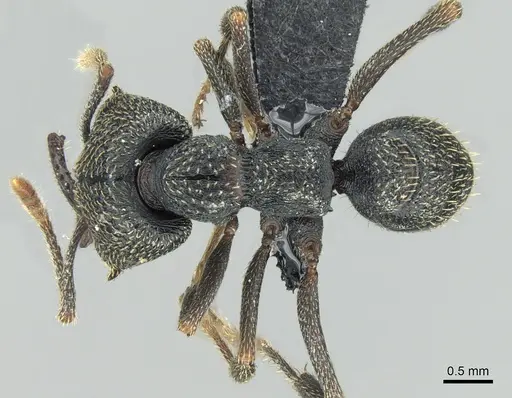
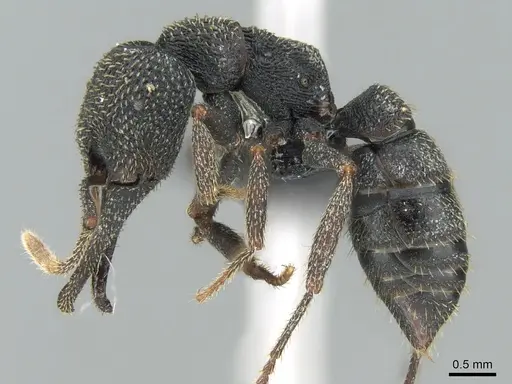
CASENT0318931
View on AntWeb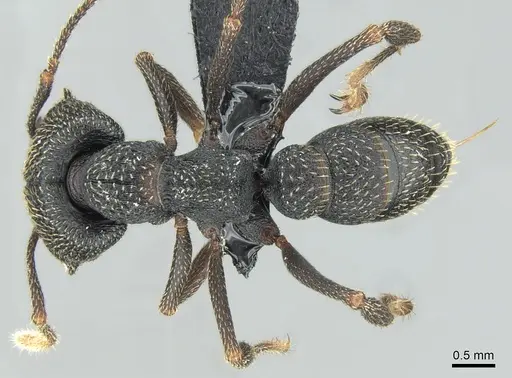
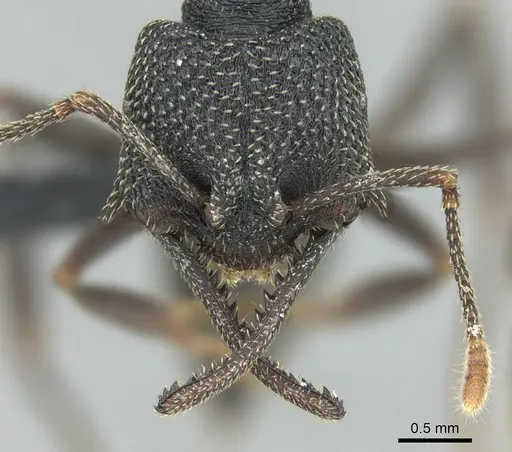
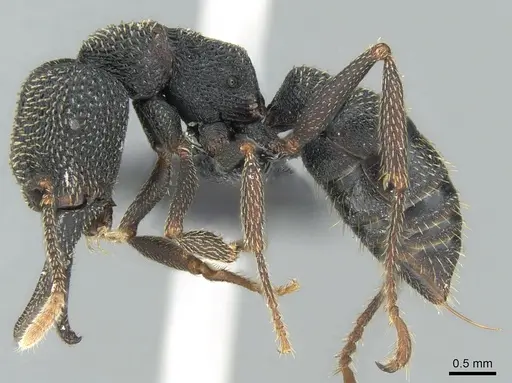
CASENT0318932
View on AntWeb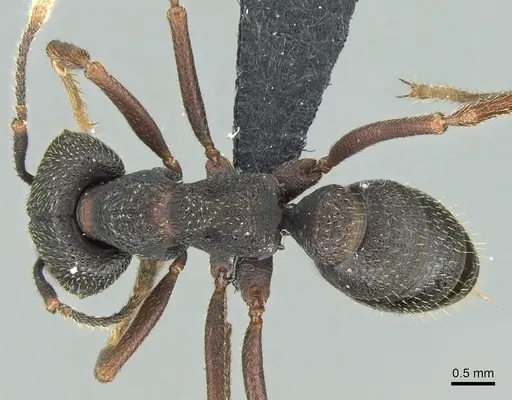
CASENT0318933
View on AntWeb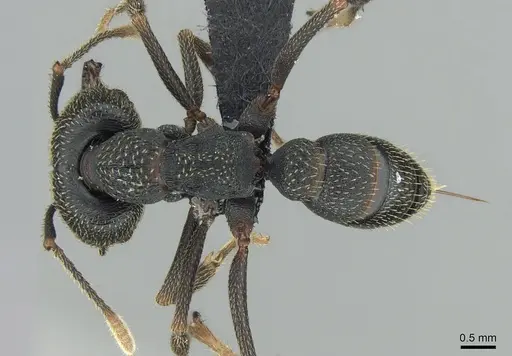
CASENT0318934
View on AntWeb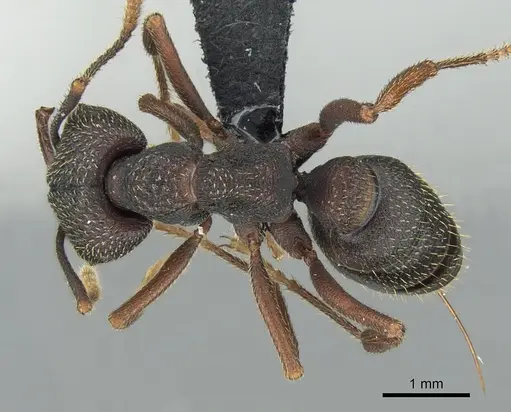
Literature
Loading...Loading products...