

Mystrium oberthueri
- Scientific Name
- Mystrium oberthueri
- Tribe
- Amblyoponini
- Subfamily
- Amblyoponinae
- Author
- Forel, 1897
- Distribution
- Found in 1 countries
Mystrium oberthueri Overview
Mystrium oberthueri is an ant species of the genus Mystrium. It is primarily documented in 1 countries , including Madagascar. Detailed taxonomic data and occurrence records can be further explored via authoritative databases such as AntWeb or the Global Biodiversity Information Facility (GBIF).
Mystrium oberthueri
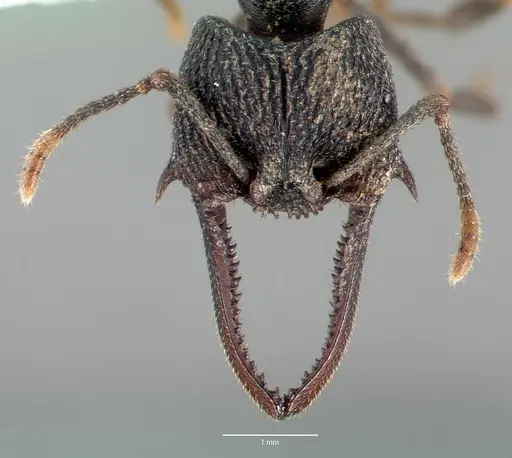
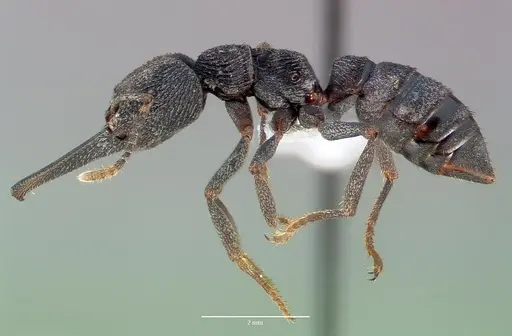
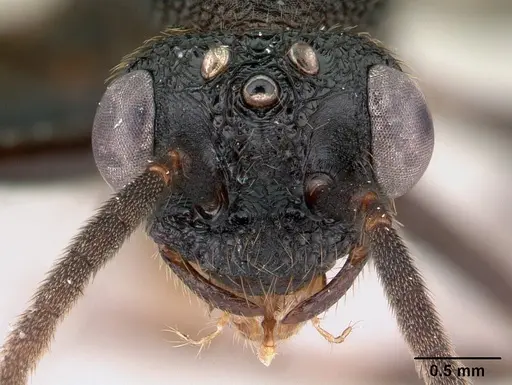
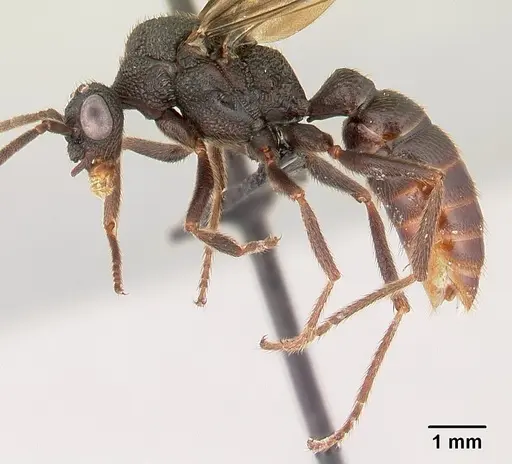
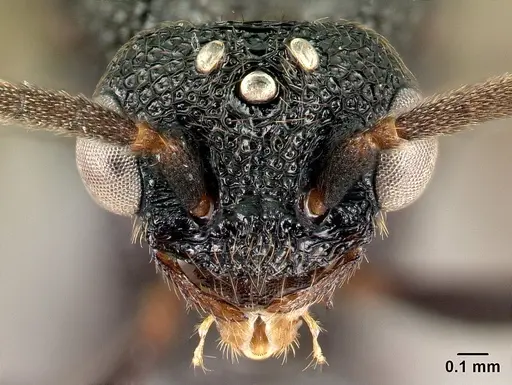
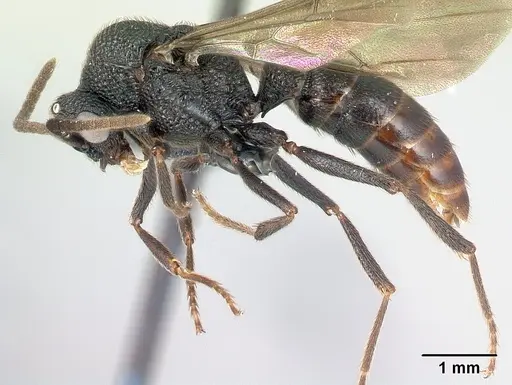
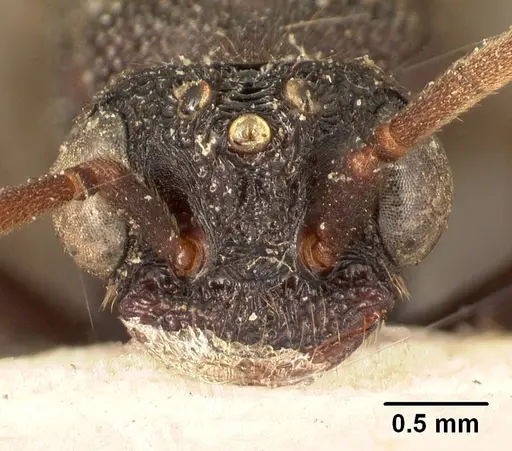
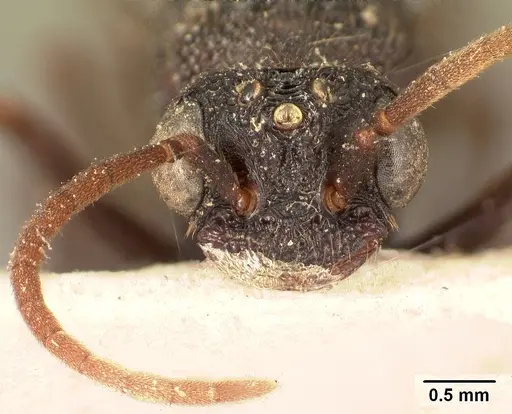
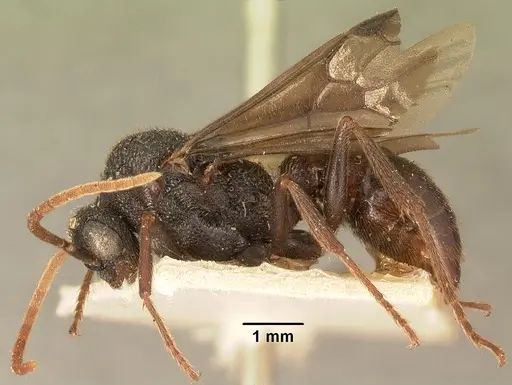
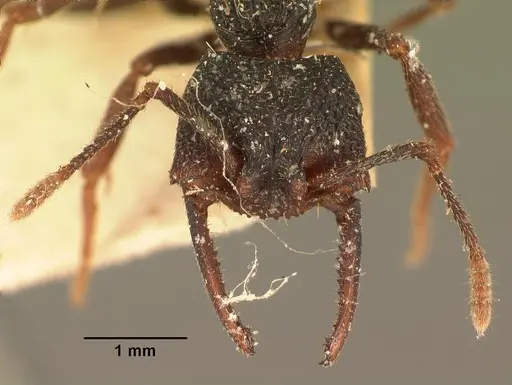
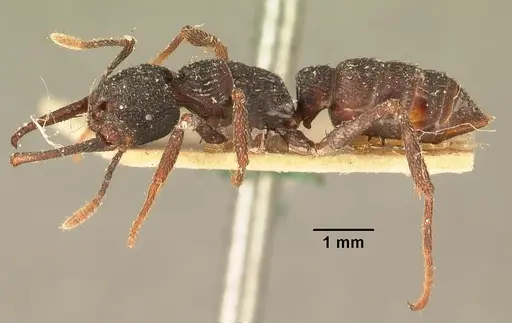
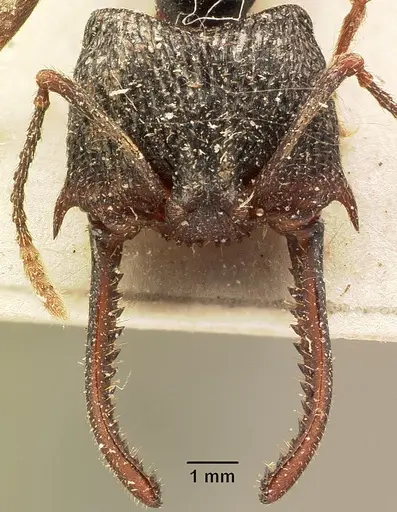
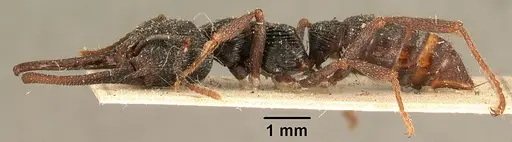
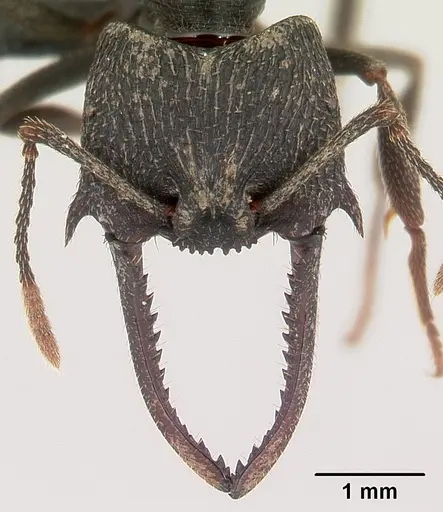
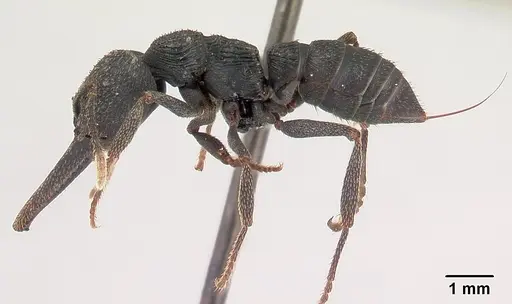
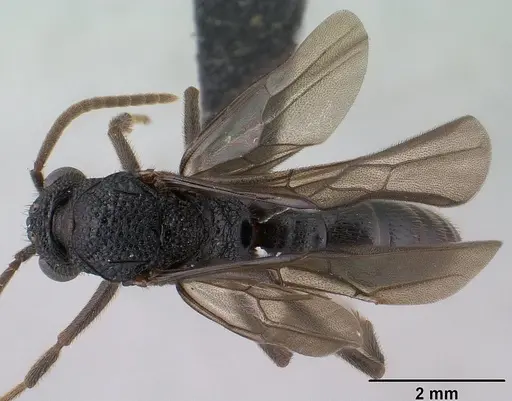
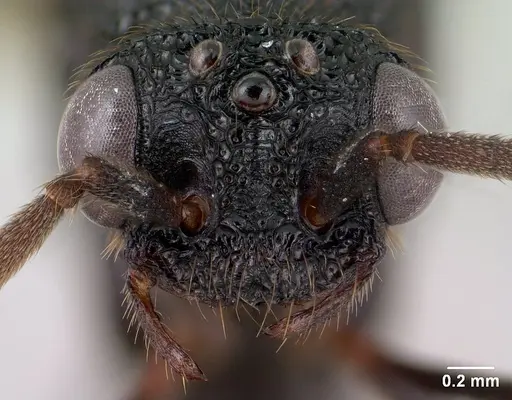
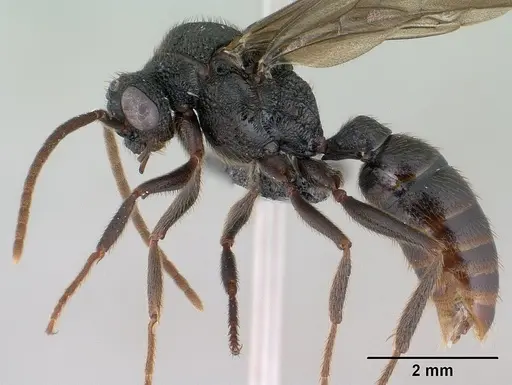
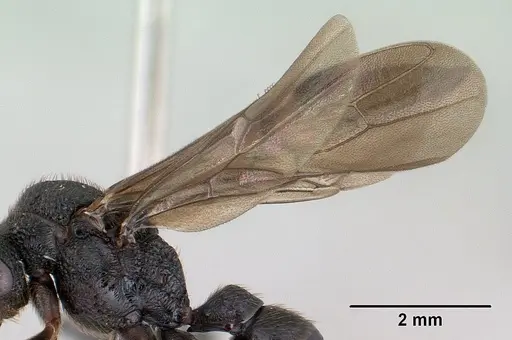
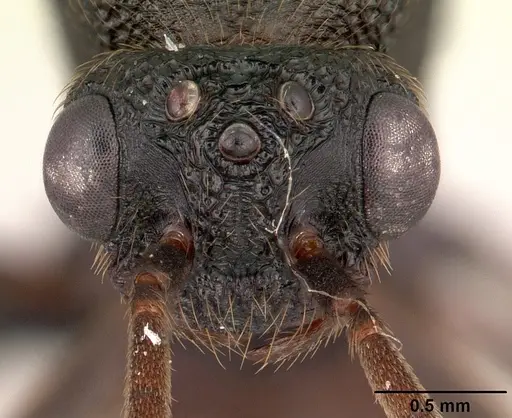
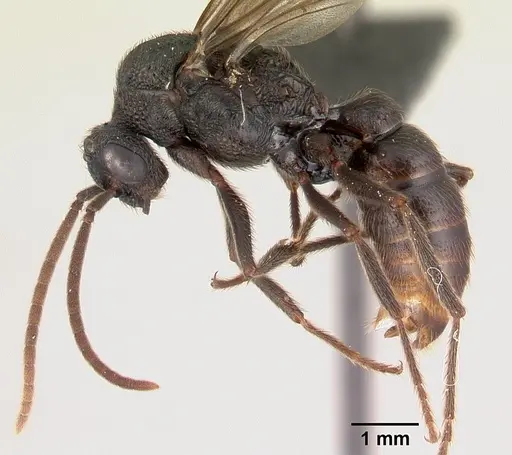
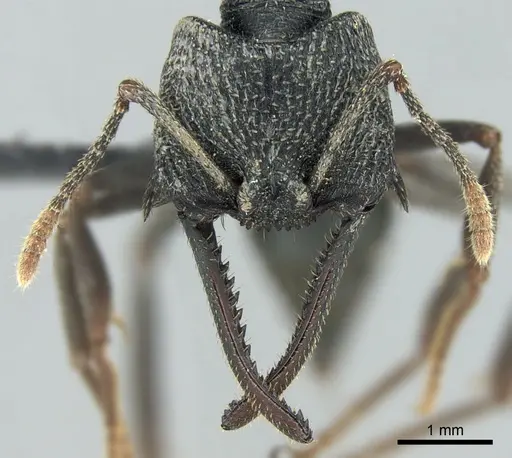
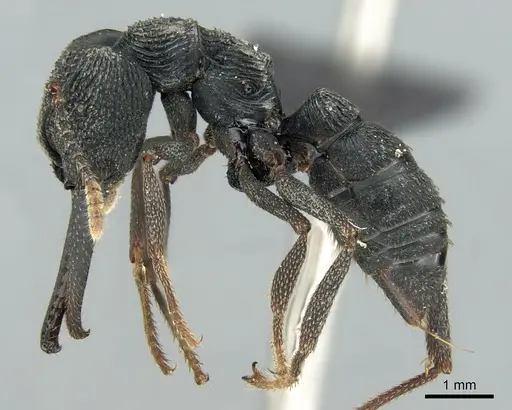
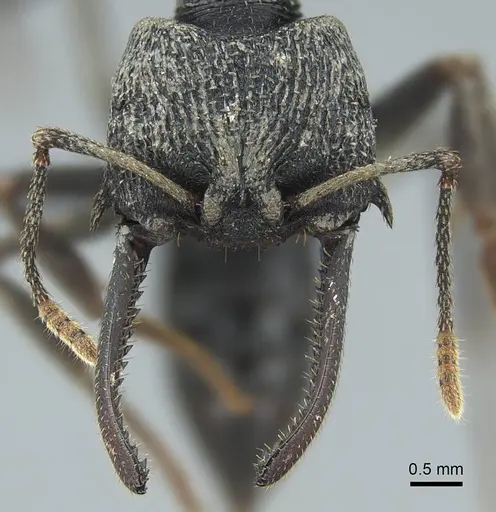
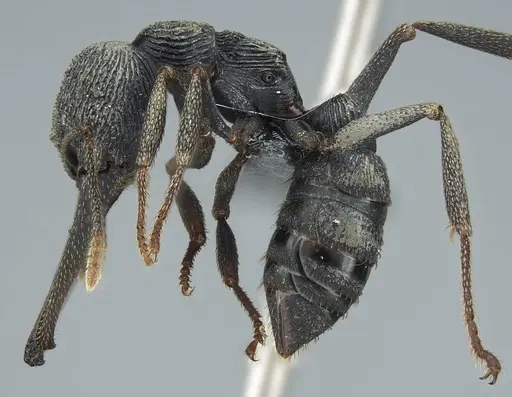
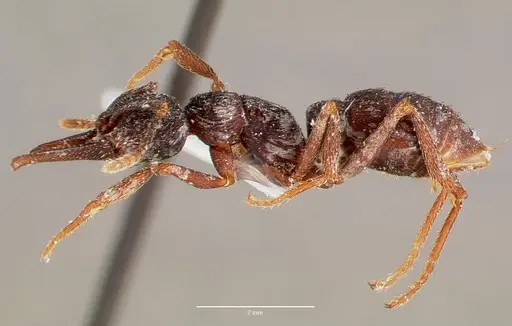
Mystrium oberthueri is a remarkable predatory ant from the rainforests of Madagascar. These ants are easily recognized by their jet-black coloration and the deep longitudinal striations on their pronotum. Workers measure 2.0-2.6mm and are robust ants with distinctive features including a sharp angle between the dorsal and posterior faces of the head [1].
What makes this species truly extraordinary is its colony structure. Unlike most ants where queens are larger than workers, M. oberthueri ergatoid (wingless) queens are actually SMALLER than their workers, a rare phenomenon in the ant world. Colonies average 40 adults with roughly half being ergatoid queens, and only about 5% of those queens actually mate and reproduce [2]. The colony reproduces through fission rather than independent foundation, a queen never leaves to start her own nest. Instead, the colony splits when it grows large enough [3].
Quick Summary
- Difficulty: Expert
- Origin & Habitat: Primary rainforests of northeastern Madagascar, specifically in damp rotten wood on the ground including small branches and root mats [2][1].
- Colony Type: Multi-queen colonies (polygynous) with ergatoid (permanently wingless) queens. Approximately half the adult population are queens, but only 5% are mated and reproduce. Colonies reproduce by fission, the colony splits rather than founding independently [2][3].
- Colony: Optionally polygyne
- Size & Growth:
- Queen: 1.4-1.9mm, ergatoid queens are SMALLER than workers (unusual!) [1][3]
- Worker: 2.0-2.6mm [1]
- Colony: Average 40 adults per colony, ranging from 24-34 workers,15-39 non-reproductive queens, and 1-5 reproductive queens [2]
- Growth: Moderate
- Development: Unknown, no direct development data available. Based on related Amblyoponinae and tropical ant patterns, estimate 6-10 weeks at optimal temperature. (Development timeline has not been directly studied. Related Mystrium species suggest moderate development speed.)
- Antkeeping:
- Temperature: Keep warm, around 24-26°C. This is a tropical rainforest species from Madagascar requiring stable warm conditions [4].
- Humidity: High humidity is essential, they naturally nest in damp rotten wood. Keep the nest substrate consistently moist but not waterlogged. Provide a humidity gradient so ants can choose their preferred zone [4].
- Diapause: No, being a tropical species from Madagascar, they do not require hibernation. Maintain warm conditions year-round.
- Nesting: Natural nesting: damp rotten wood on the ground, small branches, and root mats [2]. Captive recommendations: Y-tong (AAC) nests or plaster nests work well. The key is providing consistently damp substrate material. Avoid dry setups, they need moisture. Naturalistic setups with damp wood pieces can also work.
- Behavior: These ants are specialized centipede predators. Workers handle foraging and nest defense while queens (even reproductive ones) focus on brood care and tasks inside the nest, a unique division of labor where queens are 'multi-purpose' individuals [2][3]. Workers are more active during emigrations, making more return trips and transporting more brood than queens. Queens specialize in intranidal tasks regardless of their reproductive status. Colonies relocate frequently when their wood nest dries out or decays [4]. Escape risk is moderate, workers are not tiny but can squeeze through small gaps. Use standard ant farm barriers.
- Common Issues: No independent colony foundation, colonies cannot be started by a single queen. You must acquire an established colony through fission or purchase., Specialized diet, they are centipede specialists and may be reluctant to accept standard ant foods. Live prey is likely essential., Frequent colony relocations, colonies may abandon nests that dry out, requiring attentive humidity maintenance., Small colony size, maximum around 40 adults means this species stays relatively small., Queen mortality risk during fission, colony splitting is stressful and some individuals may not survive the process.
Understanding Ergatoid Queens
Mystrium oberthueri has one of the most unusual queen systems in all of antkeeping. Instead of the large, winged queens typical of most ant species, M. oberthueri has ergatoid queens, permanently wingless queens that are actually SMALLER than the workers [3]. This is extremely rare in the ant world.
In each colony, roughly half the adults are ergatoid queens, but only about 5% of those queens actually mate and reproduce [2]. The remaining queens are virgin and non-reproductive. Both reproductive and non-reproductive queens perform brood care and intranidal tasks, they never forage outside the nest. Workers handle all foraging and nest defense [2].
This means the queen caste has been essentially replaced by these small ergatoid queens. The colony produces many of them, but most never reproduce, they function as a specialized worker subcaste that focuses on caring for brood [3]. For antkeepers, this means you cannot start a colony with a single founding queen. You must acquire an established colony fragment or wait for natural fission.
Colony Reproduction Through Fission
Unlike most ant species where a queen leaves to start a new colony alone, M. oberthueri reproduces through fission, the colony essentially splits in two [3]. This is called 'dependent foundation' because new colonies form from existing ones rather than from independent founding.
When a colony grows large enough, it splits. Some workers, queens (both reproductive and non-reproductive), and brood move to a new nesting site while others remain in the original location. Research shows that during emigrations, workers are most active, making the most trips between the old and new nest sites. Non-reproductive queens make fewer trips, and reproductive queens make the fewest, they mostly move directly to the new nest without returning [2].
This has major implications for antkeepers: you cannot start a colony with a single queen like you would with Lasius or Camponotus. The only way to obtain this species is to purchase an established colony or acquire a fragment during fission.
Feeding and Predation
Mystrium ants are specialized centipede predators, they hunt and capture large centipedes as their primary food source [4]. While direct predation hasn't been observed, centipede remains have been found inside nests, and hunting is thought to be nocturnal and occur in groups.
In captivity, this specialized diet presents challenges. You may need to provide small live centipedes or other large prey items. Beyond centipedes, they likely accept other large arthropods. Standard ant foods like sugar water may not be accepted, this is a predator, not a nectar feeder.
For antkeepers, plan to establish a steady source of live prey. Small crickets, mealworms, and other arthropods may be accepted. The key is providing protein-rich prey rather than sugar sources. This is not a beginner-friendly species in terms of feeding.
Temperature and Humidity Needs
Being from the primary rainforests of northeastern Madagascar, this species requires warm and humid conditions year-round. There is no hibernation or diapause requirement, maintain tropical conditions consistently.
Temperature should be in the range of 24-26°C. Lower temperatures will slow activity and potentially harm brood development. A heating cable on one side of the nest can create a temperature gradient, allowing ants to regulate their own exposure.
Humidity is critical, they naturally nest in damp rotten wood on the forest floor. The nest substrate must remain consistently moist but never waterlogged. Check regularly and rehydrate before the substrate dries completely. A humidity gradient is ideal so ants can choose their preferred moisture level. Dry conditions will cause colonies to relocate or fail. [4]
Colony Emigration Behavior
M. oberthueri colonies relocate frequently, likely because they nest in small pieces of wood that decay or dry out over time [2]. Research shows emigrations are highly coordinated processes with distinct phases.
During emigration, workers are most active, they initiate the move, make the most trips between old and new nests, and transport the most brood. Queens (both reproductive and non-reproductive) participate but are less active, making fewer return trips. Some workers and queens are 'pioneers', they arrive at the new nest before emigration officially begins [2].
The emigration follows three phases: initial (disturbance to 10% of adults in new nest), exponential (10% to 80%), and final (80% to 90%). The entire process can take anywhere from about 15 minutes to over 3 hours. Chemical trails help guide ants between nest sites [2].
For antkeepers: this means your colony may abandon a nest that dries out. Maintain humidity consistently to prevent unnecessary relocations, which are stressful for the colony.
Frequently Asked Questions
Can I start a Mystrium oberthueri colony with a single queen?
No. Unlike most ant species, M. oberthueri does not have independent colony foundation. Ergatoid queens mate near their natal nest and return inside, they never leave to found colonies alone. Colonies reproduce through fission (splitting), so you must acquire an established colony or colony fragment. This is not a species for beginners who want to start from a founding queen.
How long does it take for eggs to develop into workers in Mystrium oberthueri?
The exact development timeline has not been directly studied. Based on related Amblyoponinae ants and typical tropical ant development, expect approximately 6-10 weeks from egg to worker at optimal temperature (around 24-26°C). This is an estimate, actual development time may vary.
What do Mystrium oberthueri ants eat?
They are specialized centipede predators in the wild. In captivity, they need live prey, small centipedes if possible, or other large arthropods like crickets and mealworms. Sugar sources are unlikely to be accepted. This is a predator species, not a forager of honeydew or nectar.
Do Mystrium oberthueri ants sting?
Being in the subfamily Amblyoponinae, they likely have a functional stinger, though the sting may be mild. Their primary defense is their powerful mandibles. The sting is not considered dangerous to humans.
How big do Mystrium oberthueri colonies get?
Colonies are relatively small, averaging around 40 adults total. This includes workers, non-reproductive queens, and reproductive queens. This is not a species that produces massive colonies. Expect a maximum of perhaps 40-50 ants in a mature colony.
Can I keep multiple queens together in one colony?
Yes, this is normal for the species. M. oberthueri is polygynous, colonies naturally have multiple ergatoid queens (around half the population). However, these are related queens from the same colony, not unrelated queens combined by a keeper. Combining unrelated queens has not been studied and is not recommended.
Do Mystrium oberthueri need hibernation?
No. Being from the tropical rainforests of Madagascar, they do not require hibernation or winter cooling. Keep them warm year-round at around 24-26°C. Cold temperatures will harm the colony.
Why are the queens smaller than workers in this species?
This is one of the most unusual aspects of M. oberthueri. The ergatoid (wingless) queens are actually smaller than the workers, a phenomenon called 'dwarf ergatoid queens.' This is rare in ants and represents an evolutionary shift where the traditional large, winged queen caste has been replaced by smaller, wingless queens that specialize in reproduction and brood care while workers handle foraging and defense [3][5].
What is the best nest type for Mystrium oberthueri?
Y-tong (AAC) nests or plaster nests with damp substrate work well. The key requirement is consistently moist nesting material, they naturally live in damp rotten wood on the forest floor. Avoid dry setups. A naturalistic setup with damp wood pieces can also work. Ensure humidity is maintained.
Is Mystrium oberthueri good for beginners?
No. This is an expert-level species due to several challenges: no independent colony foundation (must buy established colony), specialized centipede diet requiring live prey, high humidity requirements, and frequent relocation behavior when nests dry out. This species is best suited for experienced antkeepers who can provide the specific conditions it requires.
References

This caresheet is licensed under CC BY-SA 4.0 .
CASENT0006083
View on AntWeb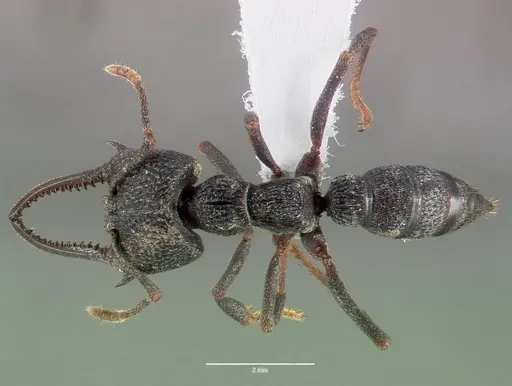
CASENT0072302
View on AntWeb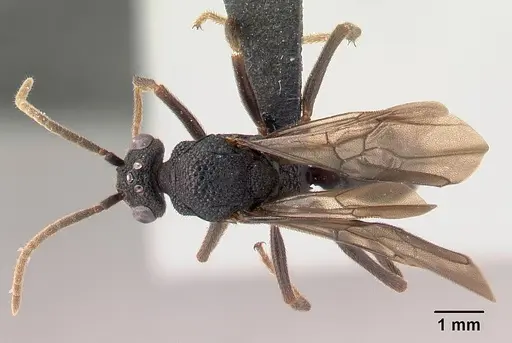
CASENT0082909
View on AntWeb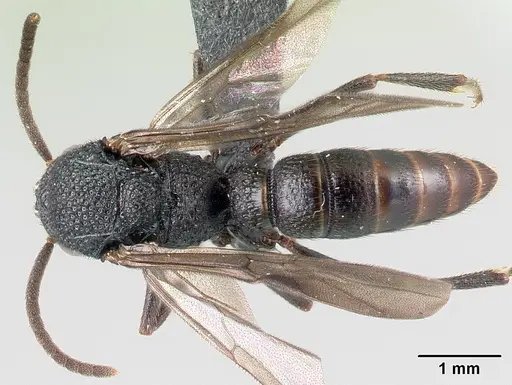
CASENT0101701
View on AntWeb
CASENT0101949
View on AntWeb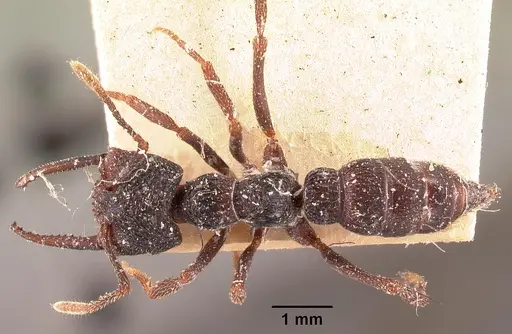
CASENT0101993
View on AntWeb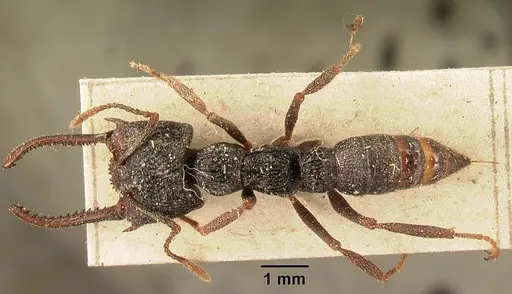
CASENT0136493
View on AntWeb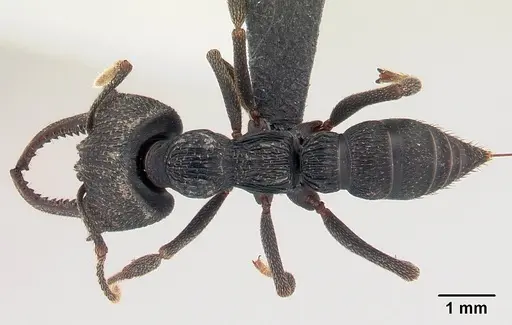
CASENT0144568
View on AntWeb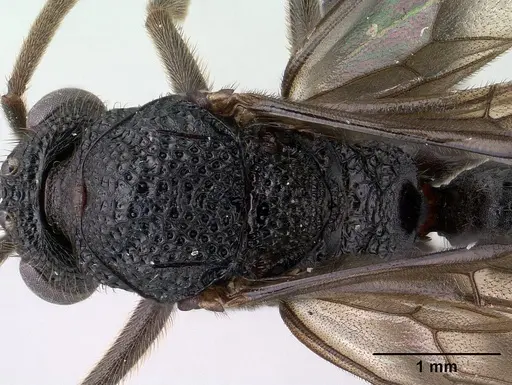
CASENT0179499
View on AntWeb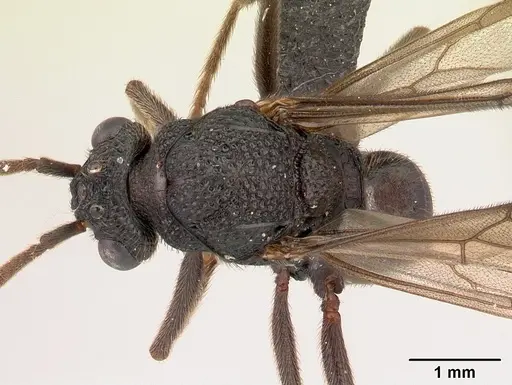
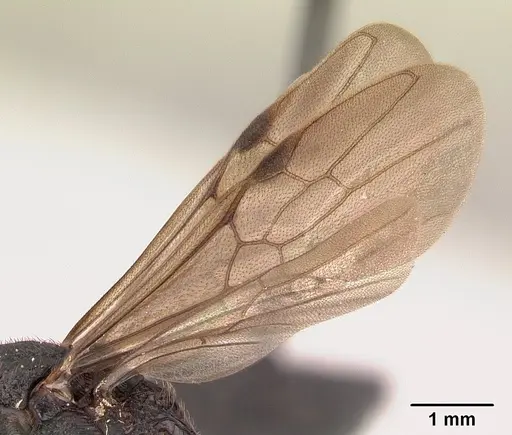
CASENT0496064
View on AntWeb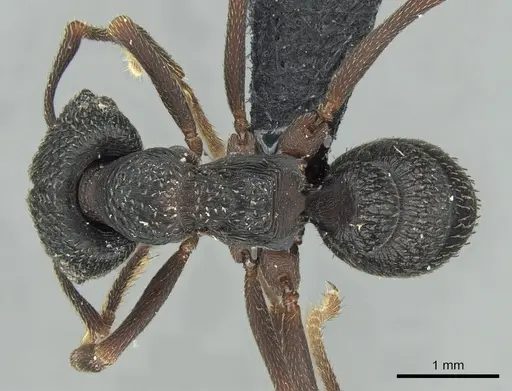
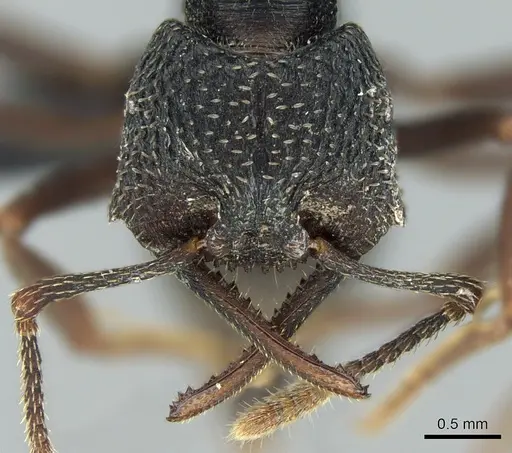
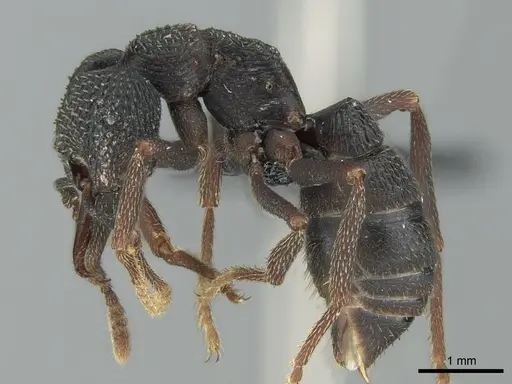
CASENT0496066
View on AntWeb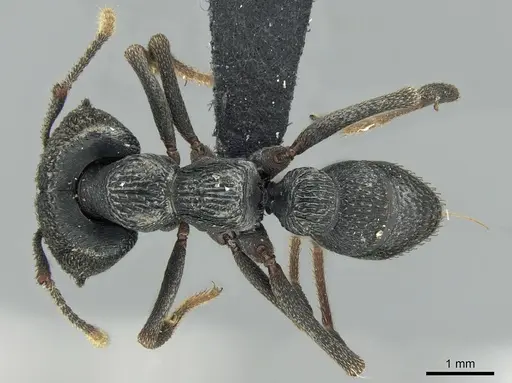
CASENT0840884
View on AntWeb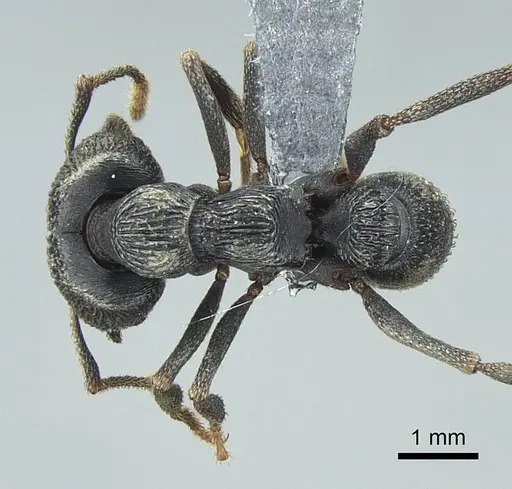
MCZTYPE20363
View on AntWeb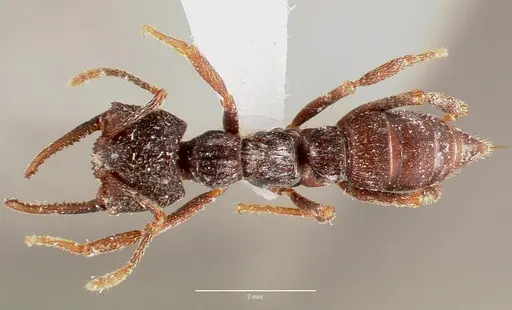

Literature
Loading...Loading products...