

Mystrium eques
- Scientific Name
- Mystrium eques
- Tribe
- Amblyoponini
- Subfamily
- Amblyoponinae
- Author
- Yoshimura & Fisher, 2014
- Distribution
- Found in 1 countries
Mystrium eques Overview
Mystrium eques is an ant species of the genus Mystrium. It is primarily documented in 1 countries , including Madagascar. Detailed taxonomic data and occurrence records can be further explored via authoritative databases such as AntWeb or the Global Biodiversity Information Facility (GBIF).
Mystrium eques
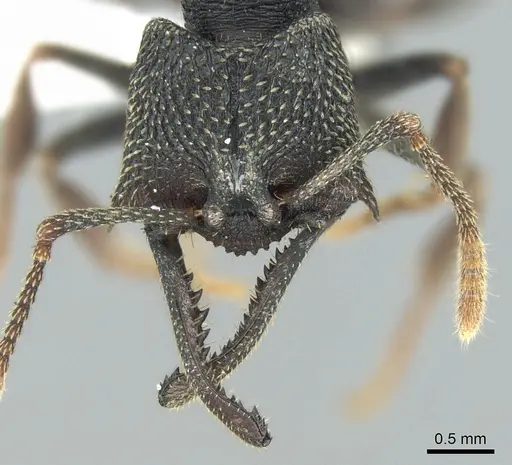
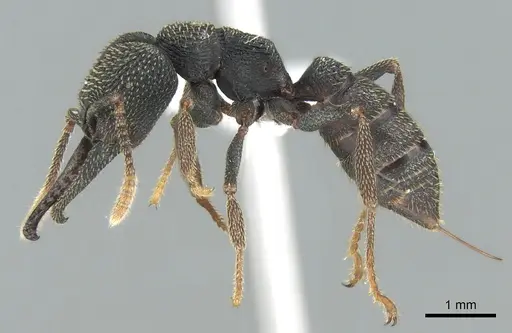
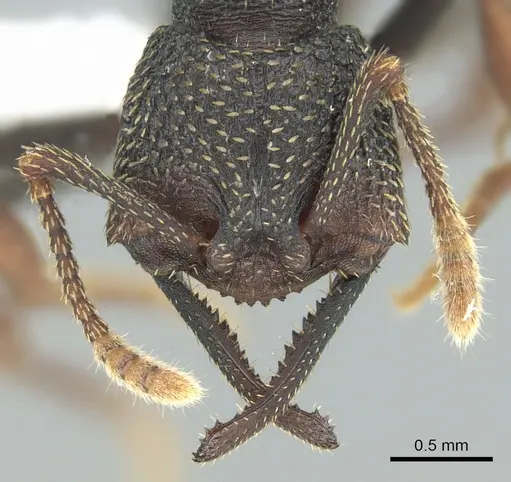
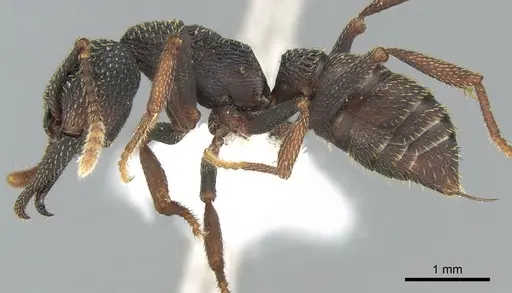
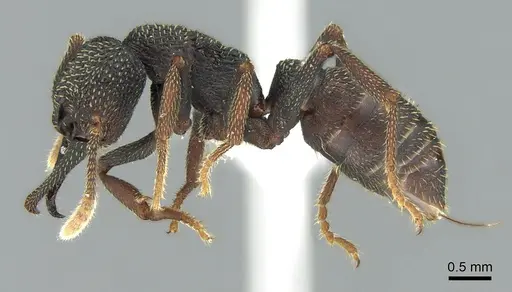
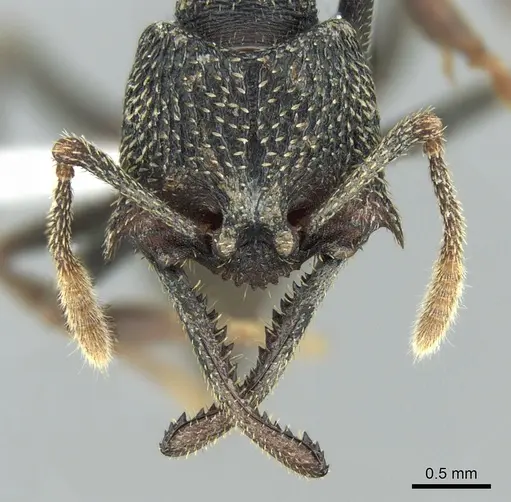
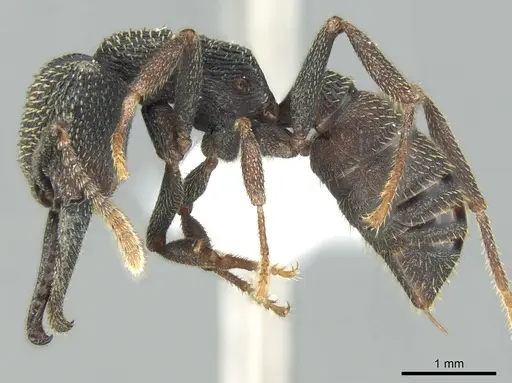
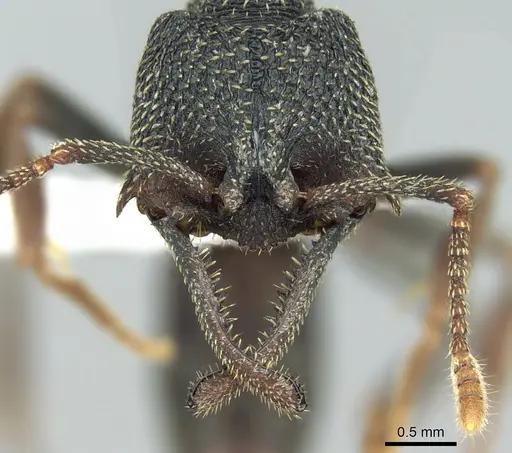
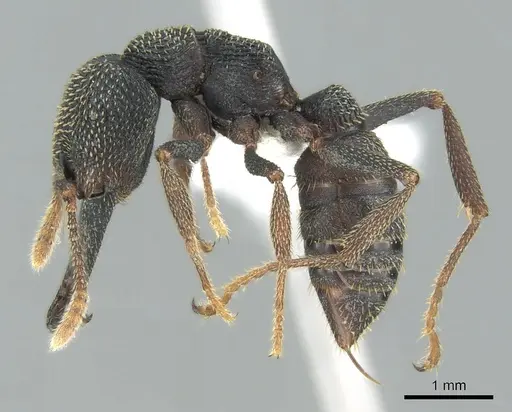
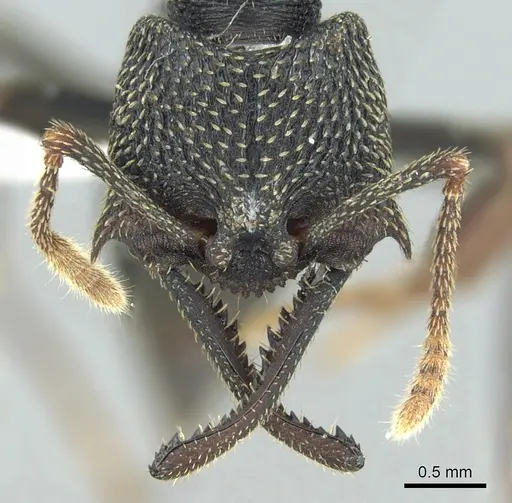
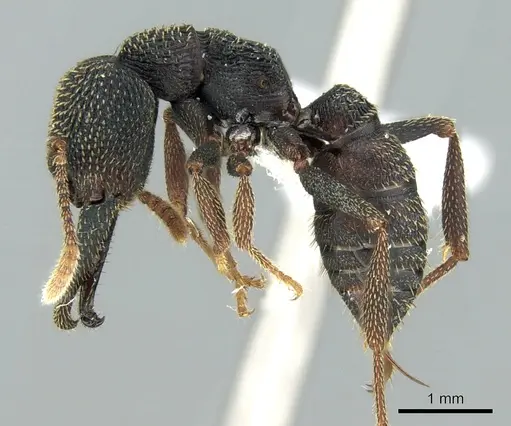
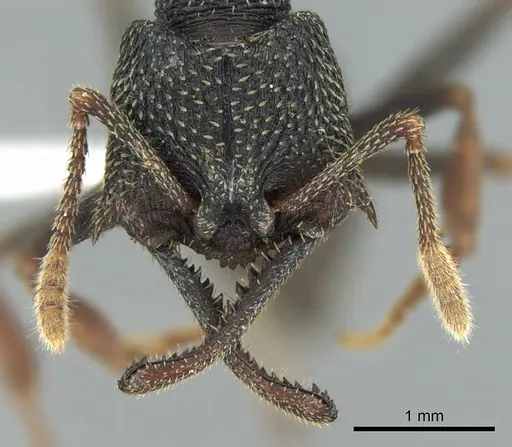
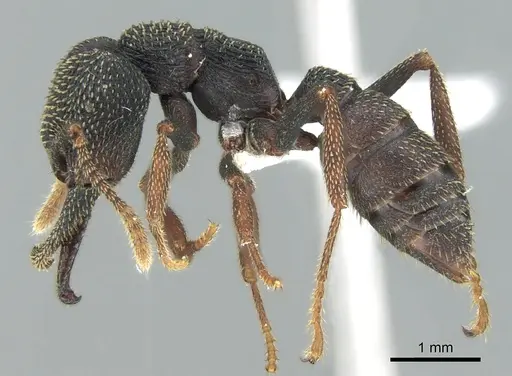
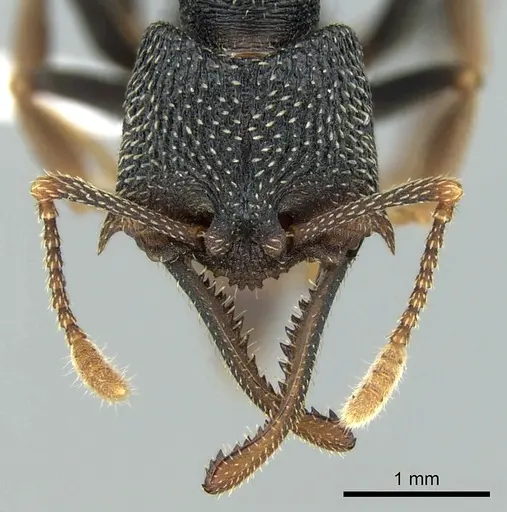
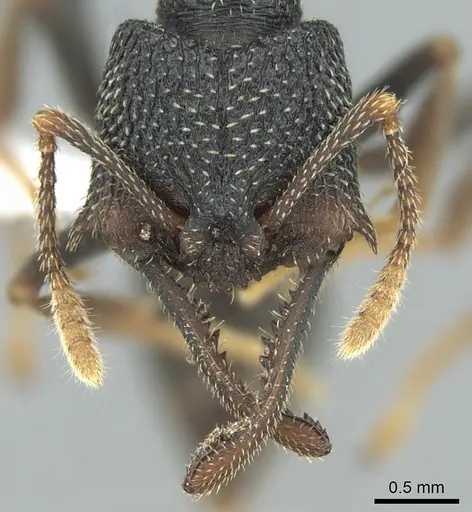
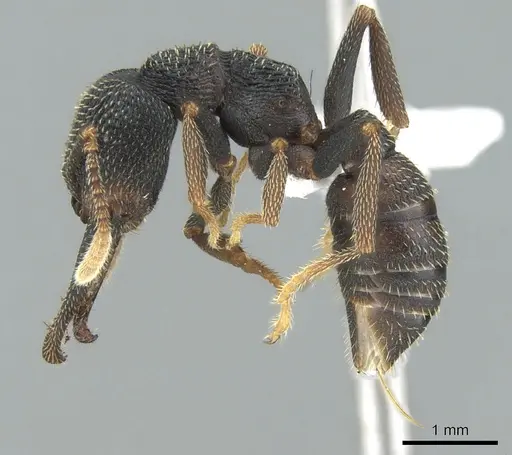
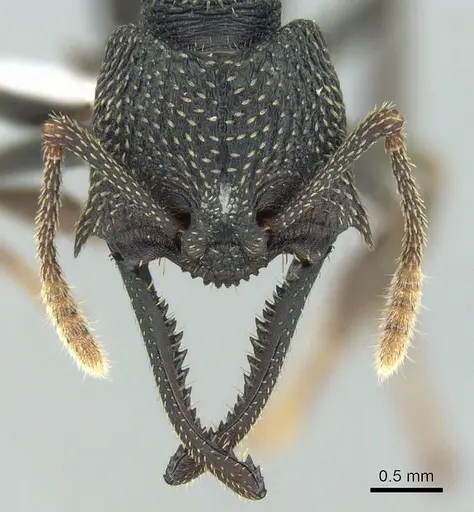
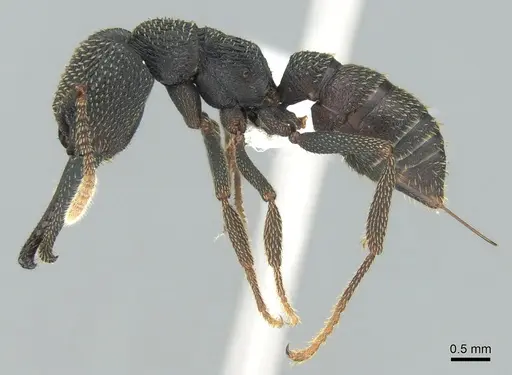
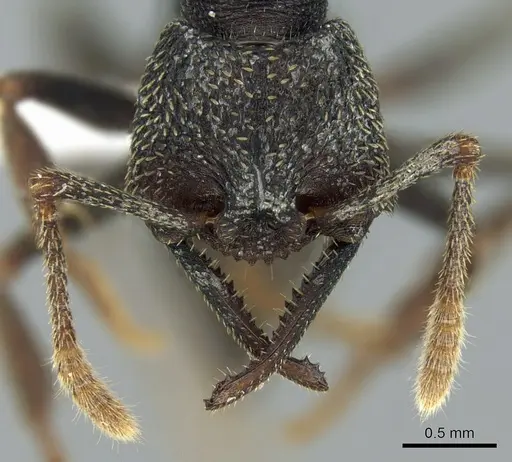
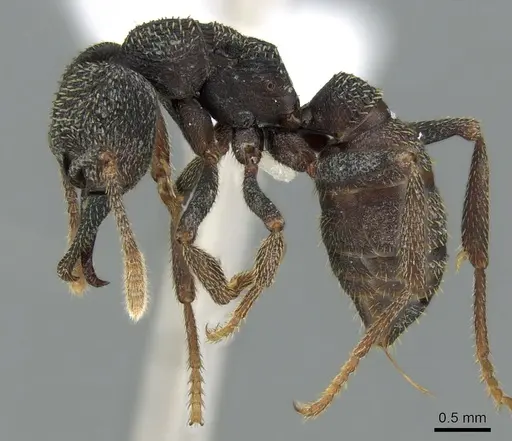
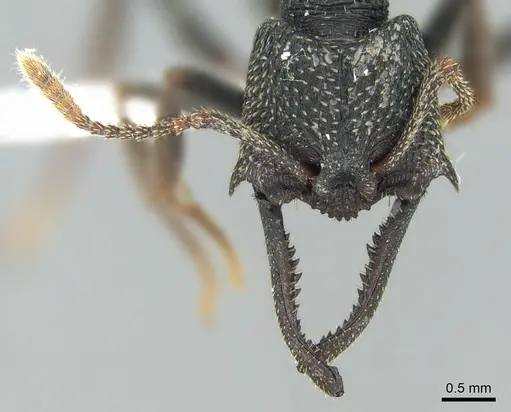
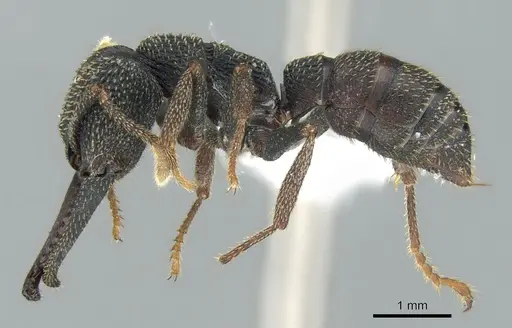
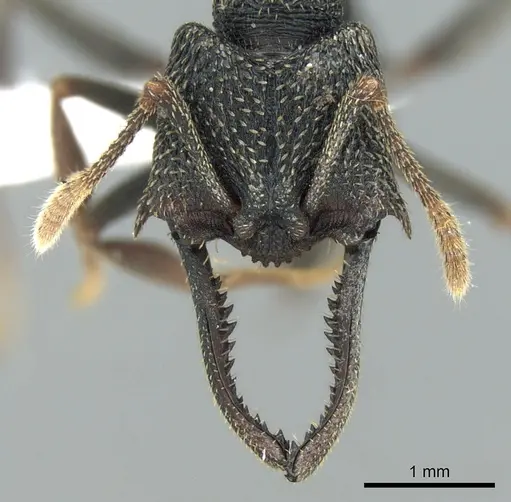
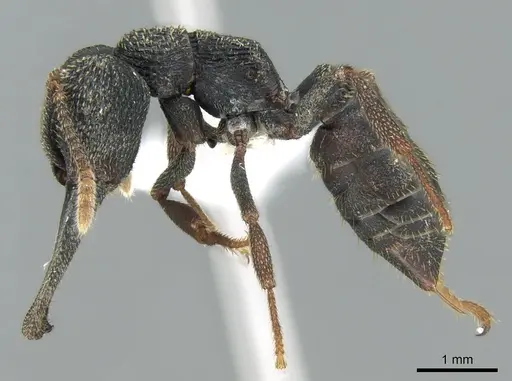
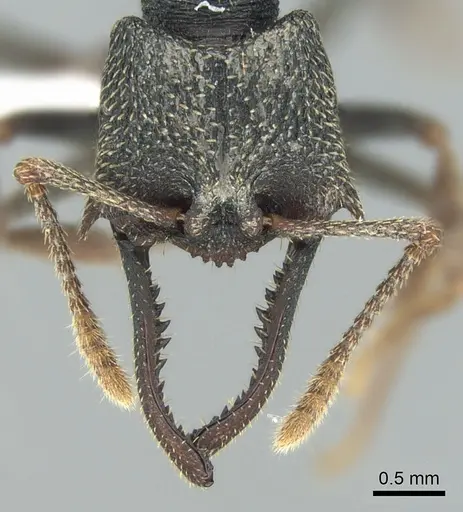
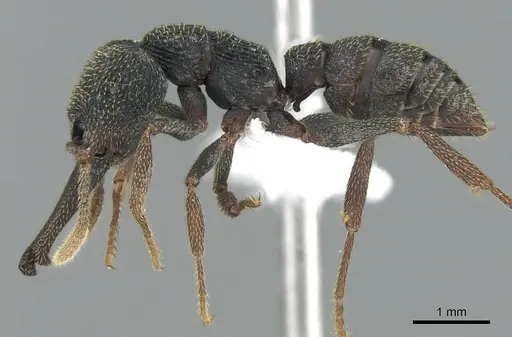
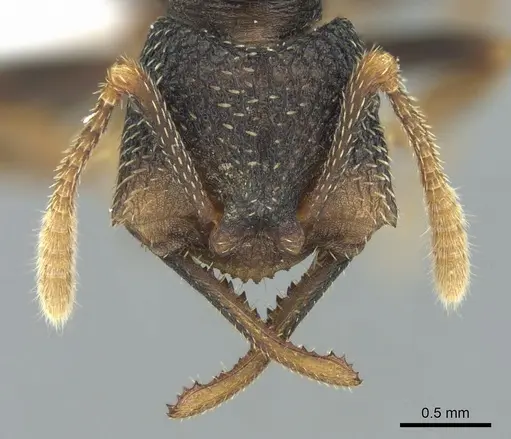
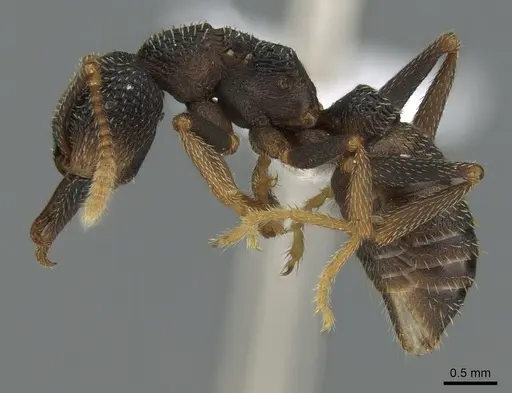
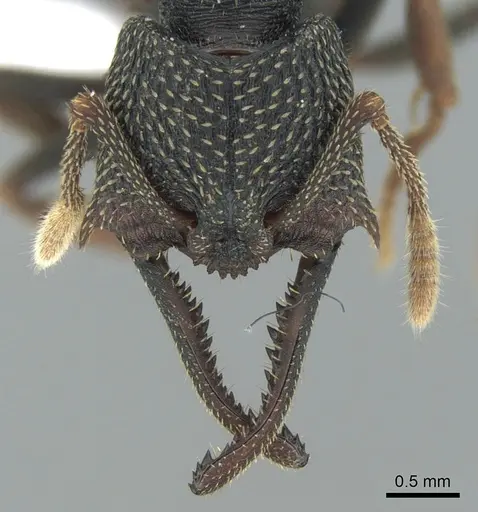
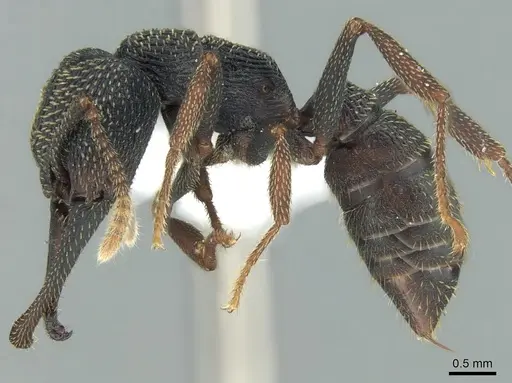
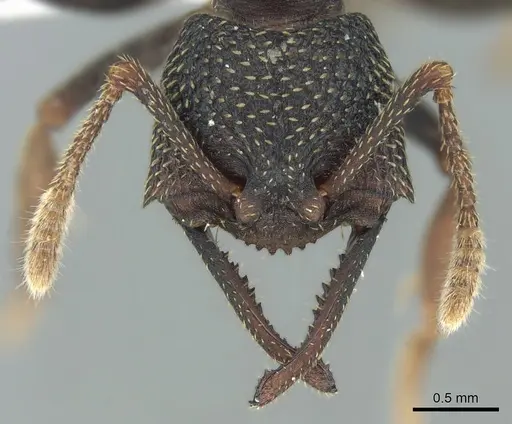
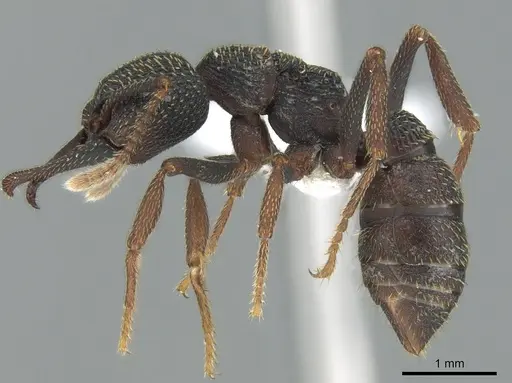
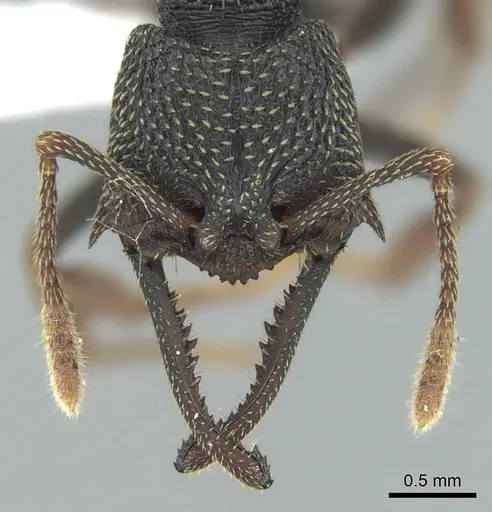
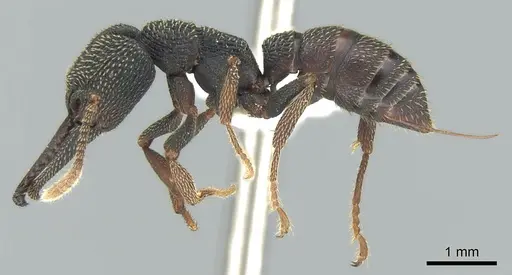
Mystrium eques is a small ant species endemic to Madagascar, belonging to the subfamily Amblyoponinae. Workers measure 1.72-2.11mm with a distinctive blackish-brown body and brighter appendages, featuring four yellowish segments at the tip of their antennae [1]. The species is easily recognized by the strongly convex anterior margin of the clypepeus (the shield-like plate above the mandibles) and the sharp angle between the posterior and dorsal faces of the head vertex. Queens are ergatoid, meaning they are wingless and develop from workers rather than as fully winged reproductive forms, and measure 1.48-1.62mm [1]. This species was formally described in 2014 and remains poorly studied in terms of its biology and colony structure.
Quick Summary
- Difficulty: Unknown, no captive husbandry data available
- Origin & Habitat: Madagascar (Toamasina province, Masoala Peninsula, Montagne d'Akirindro, Ambanizana, Manompana, Ile Sainte Marie, Manombo), likely tropical forest habitat [1]
- Colony Type: Ergatoid queen system, queens are wingless with vestigial wing pads, suggesting replacement reproductives develop from workers within established colonies rather than new queens dispersing to found colonies [1]
- Size & Growth:
- Queen: 1.48-1.62mm (ergatoid) [1]
- Worker: 1.72-2.11mm [1]
- Colony: Unknown, no colony size data available
- Growth: Unknown
- Development: Unknown, no development data available for this species (Development timeline has not been studied. Related Amblyoponinae species typically take 2-4 months from egg to worker at tropical temperatures, but this is an estimate only.)
- Antkeeping:
- Temperature: Unknown, likely requires warm tropical conditions (24-28°C) based on Madagascar origin, but no specific data exists
- Humidity: Unknown, likely requires high humidity typical of tropical forest floor species, but no specific data exists
- Diapause: Unknown, no seasonal data available for this species
- Nesting: No nesting data available. Based on typical Amblyoponinae behavior, they likely nest in soil or rotting wood in humid, shaded microhabitats [2]
- Behavior: Behavior is unstudied in captivity. Based on genus-level knowledge, Amblyoponinae ants are typically subterranean predators that hunt small invertebrates. Workers are likely moderate-sized for the subfamily with good escape prevention recommended due to their small size. The ergatoid queen system suggests colonies may have replacement reproductives available if the primary queen dies.
- Common Issues: No captive husbandry information exists, this species has not been kept in captivity by hobbyists, Colony size and growth rate are unknown, making care difficult to optimize, Temperature and humidity requirements are unconfirmed, Wild-caught colonies may have parasites or diseases not yet characterized, This species is extremely rare in the antkeeping hobby
Species Identification and Morphology
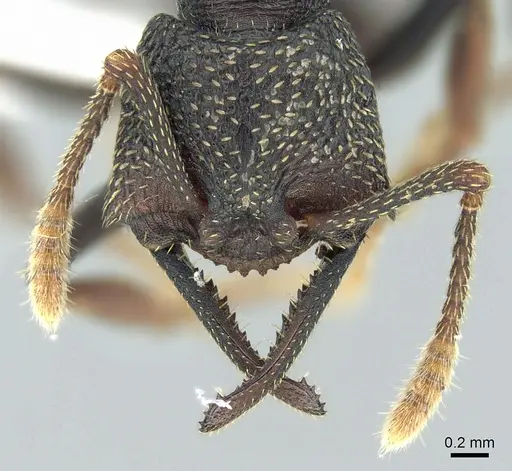
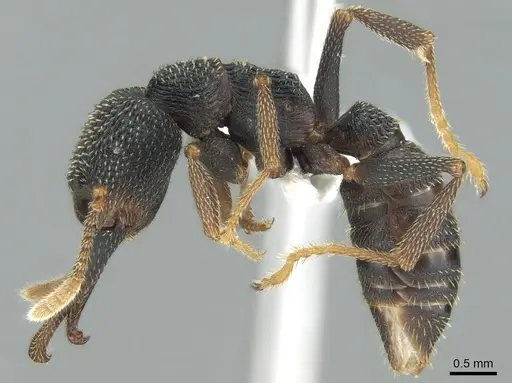
Mystrium eques workers are distinctive among Mystrium species due to several key features. The pronotum (the first segment of the thorax) has strong, deep longitudinal striations across its entire dorsal surface. The clypeus (the plate above the mandibles) has a strongly convex anterior margin that projects forward like a shield, this is what inspired the species name 'eques' (Latin for knight or horseman). The back of the head (vertex) forms an almost right angle between its posterior and dorsal faces, creating a distinctive profile. Workers are blackish-brown with brighter appendages, and the last four segments of the antennae are yellowish [1]. Ergatoid queens are similar but smaller (1.48-1.62mm) with vestigial wings that appear as small appendages without developed wing sclerites, this indicates they cannot fly and likely serve as replacement reproductives within established colonies [1].
Distribution and Habitat
Mystrium eques is endemic to Madagascar, known only from the eastern coast regions in Toamasina province. Specimens have been collected from the Masoala Peninsula, Montagne d'Akirindro, Ambanizana, Manompana, Ile Sainte Marie, and Manombo [1]. The type locality is at Tampolo on the Masoala Peninsula,40.4km south-southeast of Maroantsetra at just 30 meters elevation [1]. This coastal lowland location suggests the species prefers humid tropical conditions. No specific habitat data (nesting preferences, foraging behavior) has been documented in scientific literature.
Colony Structure and Reproduction
The colony structure of Mystrium eques is unusual. Queens are ergatoid, they develop as wingless forms rather than the typical winged queens seen in most ant species. This means new colonies are not founded through nuptial flights. Instead, replacement reproductives likely arise from the worker caste within established colonies, similar to how some other Amblyoponinae species maintain continuity. The ergatoid queens have vestigial wings reduced to small appendages with undeveloped wing sclerites [1]. The exact colony size, whether colonies have single or multiple reproductive queens, and how new colonies establish are all unknown. Male specimens have not been collected or described [1][3].
Keeping Mystrium eques - Current Knowledge
Mystrium eques cannot be recommended for antkeepers at this time due to complete lack of captive husbandry information. This species was only formally described in 2014 and remains one of the least-studied Malagasy ants. No one has documented keeping this species in captivity, so there are no established care protocols, feeding observations, or temperature preferences known to hobbyists. If specimens become available, care would need to be developed through careful experimentation. Based on the Madagascar origin and typical Amblyoponinae biology, a starting point of warm (24-28°C), humid conditions with access to small live prey would be logical hypotheses to test. However, this is entirely speculative and any keeper attempting this species should document their observations carefully for the benefit of the antkeeping community.
Related Species and Comparative Biology
Mystrium belongs to the subfamily Amblyoponinae, a group of ants known for their often unusual queen reproductive systems and specialized predatory habits. The genus Mystrium contains multiple species endemic to Madagascar, with M. eques being one of the more recently described species. The ergatoid queen system seen in M. eques is shared with several other Mystrium species and represents an alternative reproductive strategy where colonies maintain replacement reproductives that develop from workers rather than producing dispersing winged queens. This is somewhat similar to gamergate systems in some other ant genera. The closely related species M. oberthueri can be distinguished from M. eques by having a straight (not convex) anterior clypeal margin [1].
Frequently Asked Questions
Can I keep Mystrium eques as a pet ant?
This species is not recommended for antkeepers. Mystrium eques was only described in 2014 and has never been documented in captive husbandry. No care protocols, feeding observations, or successful breeding records exist for this species. It remains extremely rare in both scientific collections and the antkeeping hobby.
How big do Mystrium eques colonies get?
The maximum colony size is unknown. No colony size data has been published for this species. Related Amblyoponinae species typically form colonies of several dozen to a few hundred workers.
What do Mystrium eques ants eat?
Feeding behavior has not been documented for this species. Based on typical Amblyoponinae biology, they are likely predatory on small invertebrates, but specific prey preferences are unknown.
Do Mystrium eques ants sting?
Stinging behavior has not been documented for this species. Most Amblyoponinae ants have the ability to sting but their small size typically makes it imperceptible to humans.
What temperature should I keep Mystrium eques at?
Optimal temperature is unknown. Based on the Madagascar lowland origin, warm tropical conditions (24-28°C) would be a reasonable starting hypothesis, but this is entirely speculative.
How long does it take for Mystrium eques to develop from egg to worker?
The development timeline is completely unknown. No observations of brood development exist for this species.
Is Mystrium eques a good species for beginners?
No. This species has no captive husbandry data and would be extremely difficult to keep successfully. It is not suitable for beginners or even experienced antkeepers due to the complete lack of established care protocols.
Can I keep multiple Mystrium eques queens together?
This is unknown. The colony structure (whether naturally single-queen or multi-queen) has not been studied. Combining unrelated queens of this species has never been documented.
Where does Mystrium eques live in the wild?
Mystrium eques is endemic to eastern Madagascar, specifically the Toamasina province region including the Masoala Peninsula. It has been found at low elevations around 30 meters in coastal areas.
Why are the queens wingless?
Mystrium eques has ergatoid queens, wingless queens that develop from workers rather than as dispersing winged forms. This is a reproductive strategy where replacement reproductives are maintained within the colony rather than producing new queens that fly off to found separate colonies. The wings are reduced to small vestigial appendages [1].
References

This caresheet is licensed under CC BY-SA 4.0 .
CASENT0317390
View on AntWeb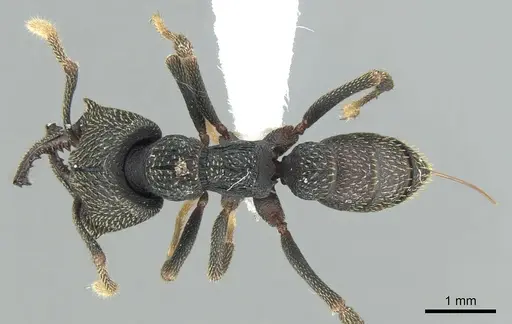
CASENT0317391
View on AntWeb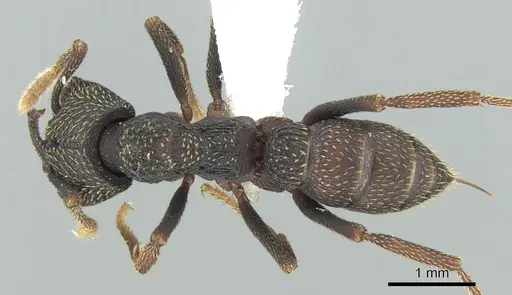
CASENT0317392
View on AntWeb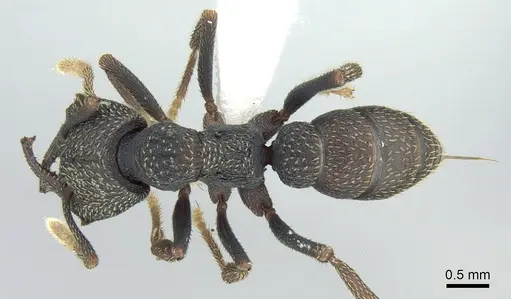
CASENT0317393
View on AntWeb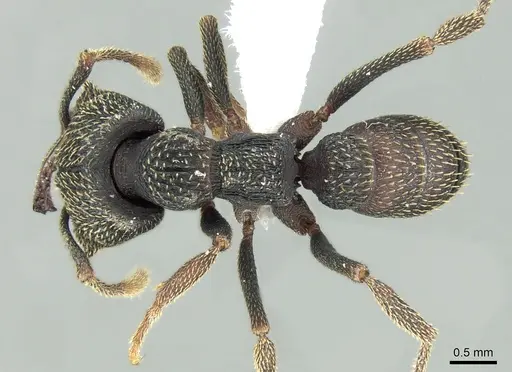
CASENT0317394
View on AntWeb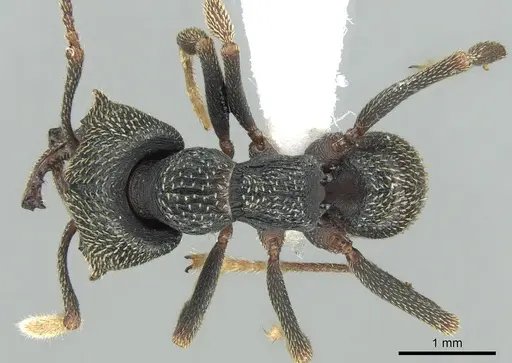
CASENT0317395
View on AntWeb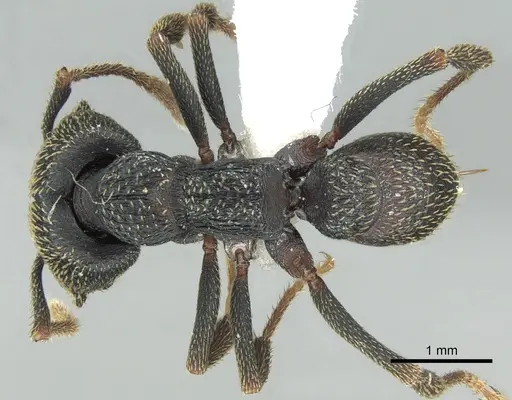
CASENT0317396
View on AntWeb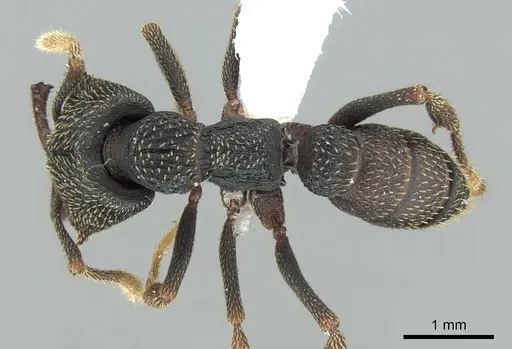
CASENT0317397
View on AntWeb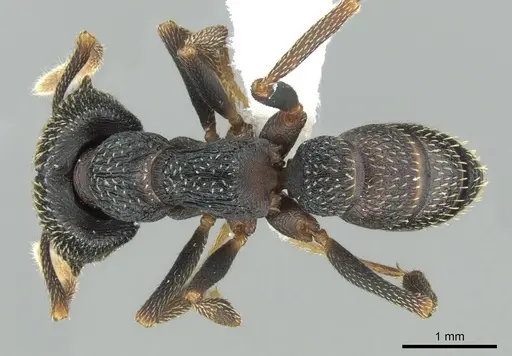
CASENT0317398
View on AntWeb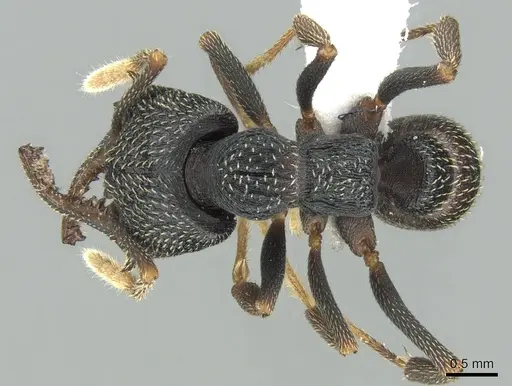
CASENT0317399
View on AntWeb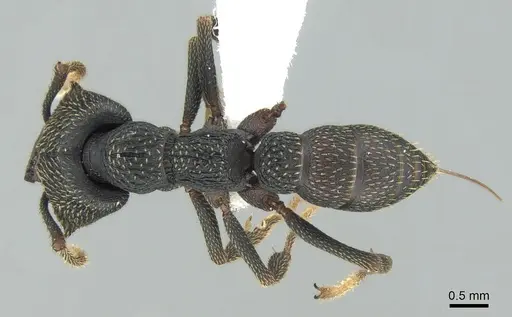
CASENT0418311
View on AntWeb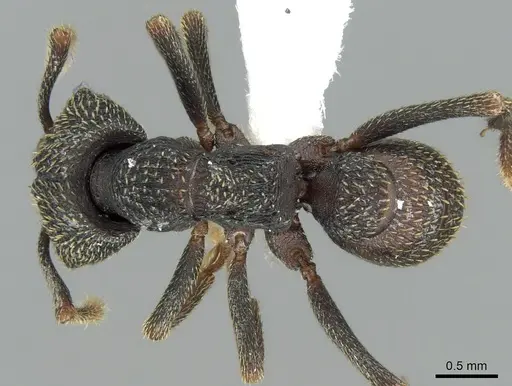
CASENT0418312
View on AntWeb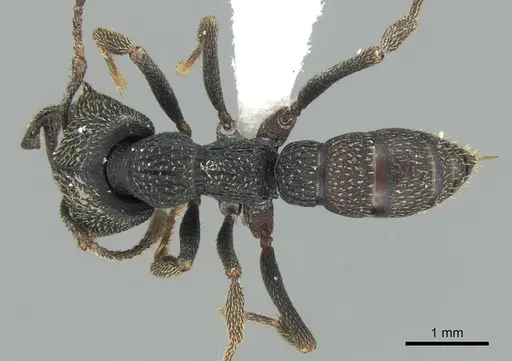
CASENT0418313
View on AntWeb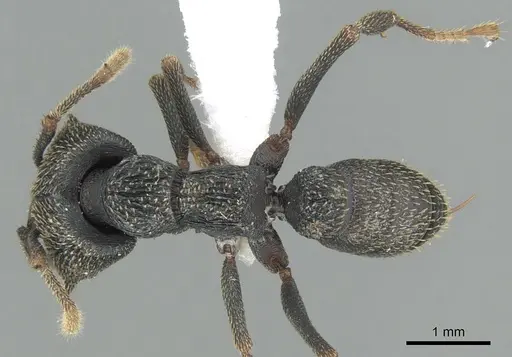
CASENT0418314
View on AntWeb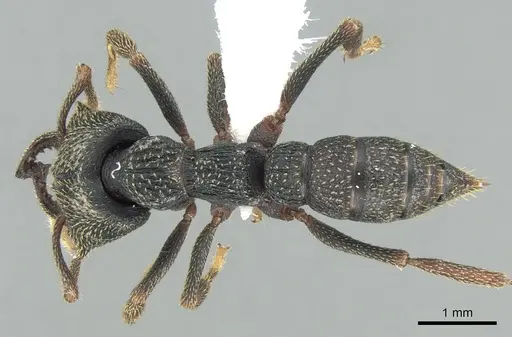
CASENT0418315
View on AntWeb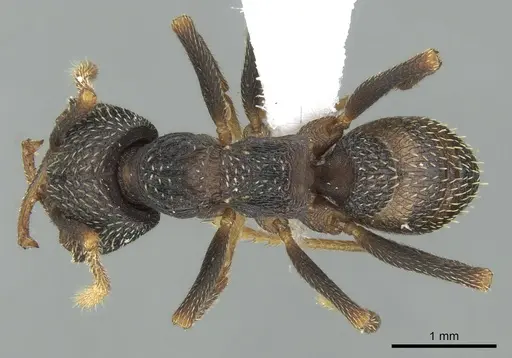
CASENT0418316
View on AntWeb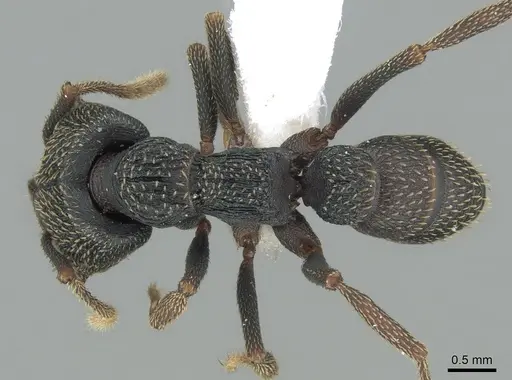
CASENT0418317
View on AntWeb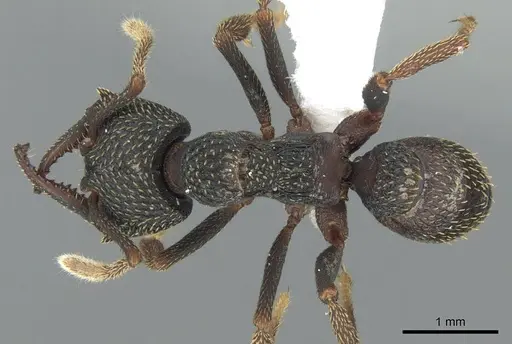
CASENT0418318
View on AntWeb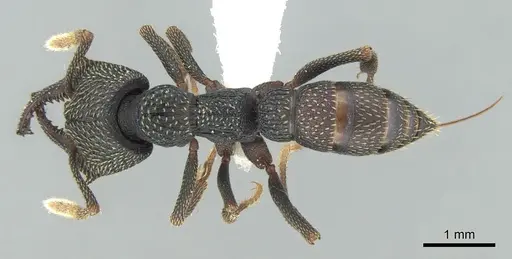
Literature
Loading...Loading products...