Octostruma obtusidens - "None"
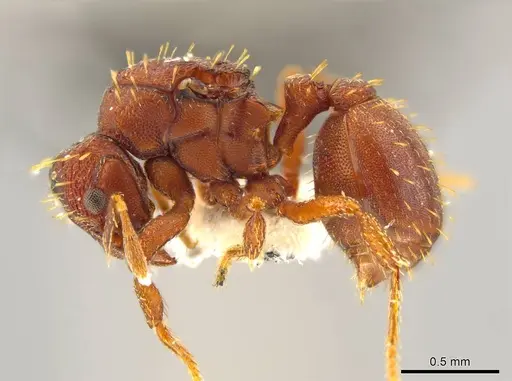
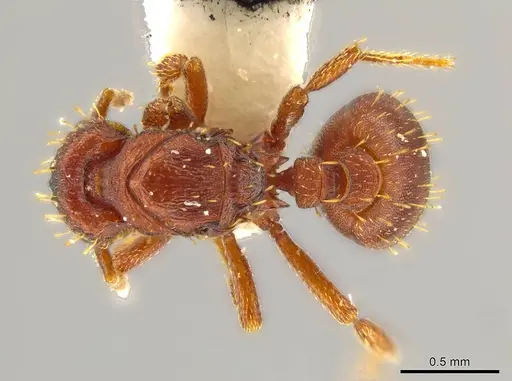
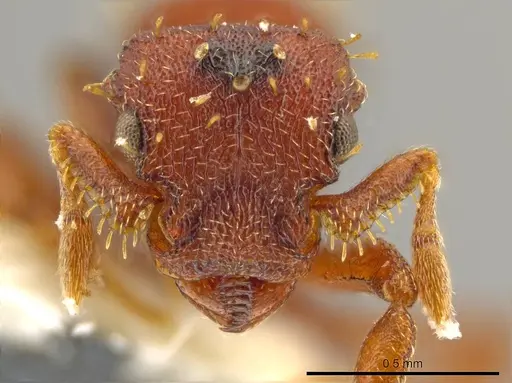
Octostruma obtusidens is a fascinating, yet challenging, ant species belonging to the Myrmicinae subfamily. These tiny, orange-colored ants are known for their incredibly cryptic lifestyle, spending most of their lives hidden within the leaf litter and soil layers of tropical rainforests. A distinguishing feature of their workers is their uniquely shaped mandibles, which are bluntly rounded at the basal five teeth and are used with precision to snap onto small, soft-bodied prey. Their bodies are covered in distinctive ground pilosity that is curved and projects from the surface, giving them a slightly textured appearance. Queens are only slightly larger than their worker counterparts.
- Difficulty: Expert
- Origin & Habitat: Neotropical Region (including Brazil, Colombia, Costa Rica, French Guiana, Guatemala, Honduras, and Panama) in Lowland rainforests and seasonal moist forests, from sea level up to 800 meters. They prefer the upper layers of soil, leaf litter, and rotten wood. Nests have also been observed in unique locations like snail shells and within peaty masses on epiphytic ferns..
- Colony Type: Polygynous (multiple queens), semi-claustral founding.
- Size & Growth:
- Queen: 0.96-0.99mm
- Worker: 0.76-0.8mm
- Colony: Small (tens of workers). Slow, due to their typically small colony sizes. growth.
- Antkeeping:
- Temperature: Maintain a warm environment, ideally between 24-28°C. Consistent temperatures are crucial for tropical species..
- Humidity: High humidity is essential, ranging from 70-90%. This can be achieved with a consistently moist substrate and proper ventilation..
- Diapause: Not required. Not specified at Not specified.
- Nesting: These ants thrive in naturalistic setups that mimic their native forest floor habitat. Nests should include ample leaf litter, decaying wood, and a soil-based substrate. Formicaria with a deep substrate layer, such as a naturalistic soil setup or a deep plaster/dirt hybrid nest, are ideal to allow for their subterranean tunneling..
- Behavior: Low (towards handler, high towards specific prey) aggressiveness.
- Common Issues: Difficulty in sourcing appropriate live prey, Maintaining consistently high humidity without mold, Colony stalling due to inadequate diet or stress, Queen stress from disturbance or improper conditions, Lack of visible activity due to cryptic nature.
Keeping Octostruma obtusidens in a home formicarium is a significant challenge, largely due to their naturally cryptic behavior. These ants spend most of their time hidden in the substrate, making observations of their fascinating daily lives quite rare. Antkeepers aiming to maintain this species should prioritize creating an environment that minimizes stress from disturbance, ensuring they feel secure enough to exhibit their natural foraging and nesting behaviors. Providing plenty of hiding spots within the outworld and nest is paramount for their well-being and for any chance of observing them.
Their dietary needs are highly specialized; Octostruma obtusidens are strict predators of small, soft-bodied arthropods. This means they won't accept typical feeder insects like crickets or roaches. Successful long-term care requires a consistent supply of appropriate live prey such as springtails, small spiders, or tiny larval insects. Without a reliable source of these specific food items, maintaining a healthy colony will prove incredibly difficult, often leading to colony decline. Experimentation with various micro-arthropods may be necessary to find suitable options.
Colonies of Octostruma obtusidens are typically polygynous, meaning they can have multiple queens coexisting peacefully within a single nest. However, despite the presence of multiple queens, these colonies usually remain quite small, rarely exceeding a few dozen workers. This inherently small colony size, combined with their slow growth rate, means that any losses in worker count can significantly impact the colony's viability, making them particularly sensitive to environmental fluctuations or feeding inconsistencies.
One interesting, albeit challenging, aspect of their biology is their seemingly limited behavioral repertoire. Observations suggest they do not engage in trophallaxis (food sharing by mouth-to-mouth transfer), with workers and larvae feeding directly from captured prey within the brood chambers. Furthermore, there's no observed alarm communication, meaning they don't warn each other of danger. This lack of complex social communication might contribute to their cryptic lifestyle and makes them a unique study for advanced antkeepers interested in more primitive ant behaviors.
Maintaining stable high humidity without leading to mold is a critical balancing act for this species. Their natural habitat is consistently moist leaf litter, but stagnation can quickly lead to fungal growth, which is detrimental to the colony. Utilizing a substrate with good drainage capabilities and ensuring adequate ventilation in the outworld, while still retaining high ambient moisture, is key. Incorporating natural elements like decaying wood can also help regulate humidity and prevent mold accumulation.
Octostruma obtusidens workers possess a present sting, which they use to subdue their prey. While their sting is effective for their micro-arthropod diet, it's generally considered to be of little to no threat to human keepers due to their minuscule size and docile nature towards larger organisms. However, handling them directly is still not recommended, as it can be stressful for these delicate ants and may result in an uncomfortable, though mild, sting if provoked.
Frequently Asked Questions
What kind of prey do Octostruma obtusidens prefer in a captive setup?
These ants are specialist predators, primarily hunting small, soft-bodied arthropods. Think micro-fauna like springtails, small spiders, or tiny insect larvae. Standard antkeeping feeder insects like mealworms or crickets are usually too large or unsuitable for them.
How large do Octostruma obtusidens colonies typically grow in a formicarium?
Octostruma obtusidens colonies tend to stay quite small, even under ideal conditions. You can expect them to reach a maximum of a few tens of workers. Their growth rate is generally slow compared to many other ant species.
Do Octostruma obtusidens queens found their colonies alone?
While not extensively documented for this exact species, Octostruma obtusidens queens are observed to be polygynous, meaning multiple queens can co-found or join an existing colony. Their founding type is considered semi-claustral, indicating they may need to forage during the initial colony establishment phase.
What's the best type of nest for Octostruma obtusidens?
Given their natural habitat, a naturalistic setup with a deep, moist substrate is best. This could be a specialized soil-based formicarium, or a plaster/dirt hybrid that allows them to tunnel and hide. Including plenty of leaf litter and small pieces of decaying wood will help them feel secure and provide foraging opportunities.
Are Octostruma obtusidens workers capable of stinging?
Yes, Octostruma obtusidens workers do possess a sting. They use it effectively to subdue their small arthropod prey. However, due to their tiny size, their sting is generally not considered a significant threat to antkeepers, though it's best to avoid direct handling.
Do Octostruma obtusidens need a diapause period?
As a tropical species, Octostruma obtusidens does not require a diapause or hibernation period. They thrive in consistent warm temperatures and high humidity year-round.
What's the ideal temperature and humidity for Octostruma obtusidens?
For optimal health and activity, maintain temperatures between 24-28°C (75-82°F) and a high humidity level of 70-90%. Consistency in these conditions is crucial for their well-being.
Why are Octostruma obtusidens considered an 'Expert' level species for antkeeping?
Their expert rating comes from several factors: their highly specialized and hard-to-source diet, their extremely cryptic nature which makes observation difficult, and the precise environmental conditions (high humidity without mold, stable temperatures) required to keep them healthy. They are not for beginners.
Can I observe trophallaxis (food sharing) in my Octostruma obtusidens colony?
It's highly unlikely. Observations suggest that Octostruma obtusidens do not engage in trophallaxis. Workers and larvae typically feed directly from the captured prey within the nest chambers, which is a unique characteristic for ant enthusiasts to note.
What are 'intercaste workers' in Octostruma obtusidens?
Intercaste workers are individuals that exhibit characteristics intermediate between a typical worker and a queen. For Octostruma obtusidens, these are workers that are larger than average and may show a more convex mesosoma (the middle section of their body) or additional bristles on their head and mesosoma. They represent a fascinating aspect of their caste system.
How do these ants use their unique mandibles?
Octostruma obtusidens workers utilize their distinctive, bluntly rounded mandibles with a rapid snapping motion. They clamp onto the appendages of their prey, then slowly maneuver their gaster (abdomen) around to deliver a sting, effectively immobilizing their meal. Their specialized labrum also helps in securing the prey.
Are there any specific concerns about mold in their habitat?
Absolutely. Maintaining the high humidity Octostruma obtusidens needs without fostering mold growth is a constant challenge. Using a well-draining substrate, ensuring good ventilation in the outworld, and perhaps incorporating elements like charcoal or specific wood types can help mitigate mold issues.
How do Octostruma obtusidens defend their colony since they don't show alarm communication?
Without observed alarm communication, their primary defense seems to be their cryptic nature. They rely on being well-hidden within the substrate and leaf litter. Their small colony size and slow movements suggest that active defense against larger threats isn't their main strategy.
What are 'ground pilosity' and how do they function for this species?
Ground pilosity refers to the short, curved setae (bristles) that project from the surface of their body. In some related species, these setae are thought to help in adhering a layer of soil for camouflage, making them blend seamlessly into their environment. While not fully confirmed for O. obtusidens, it's a common trait among many cryptic litter ants.
Where can one acquire Octostruma obtusidens for antkeeping?
Given their extremely cryptic nature and specific requirements, Octostruma obtusidens are very rarely available in the antkeeping hobby. They are typically collected by specialized entomologists in their native Neotropical habitats for scientific study rather than for trade.