

Myrmoteras iriodum
- Scientific Name
- Myrmoteras iriodum
- Tribe
- Myrmoteratini
- Subfamily
- Formicinae
- Author
- Moffett, 1985
- Distribution
- Found in 1 countries
Myrmoteras iriodum Overview
Myrmoteras iriodum is an ant species of the genus Myrmoteras. It is primarily documented in 1 countries , including Malaysia. Detailed taxonomic data and occurrence records can be further explored via authoritative databases such as AntWeb or the Global Biodiversity Information Facility (GBIF).
Myrmoteras iriodum
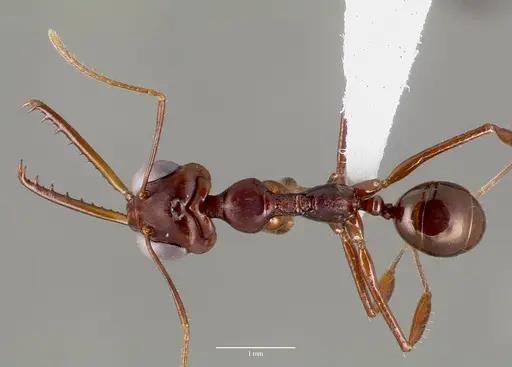
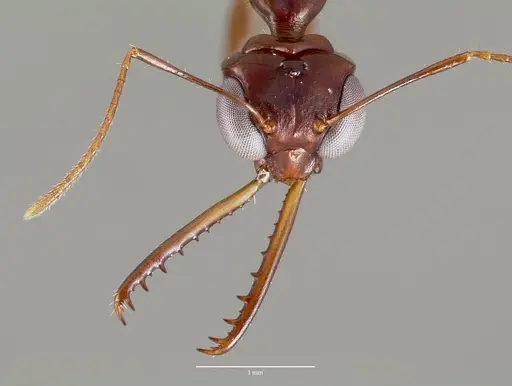
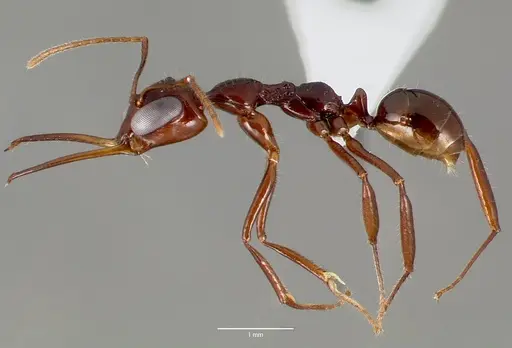
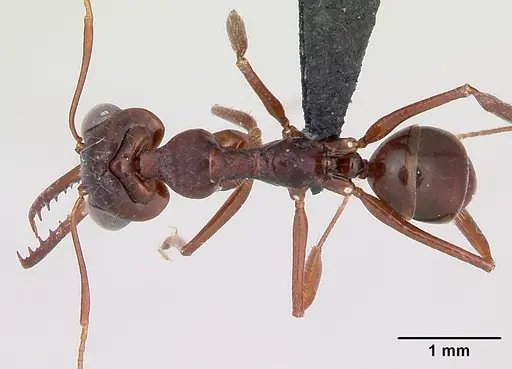
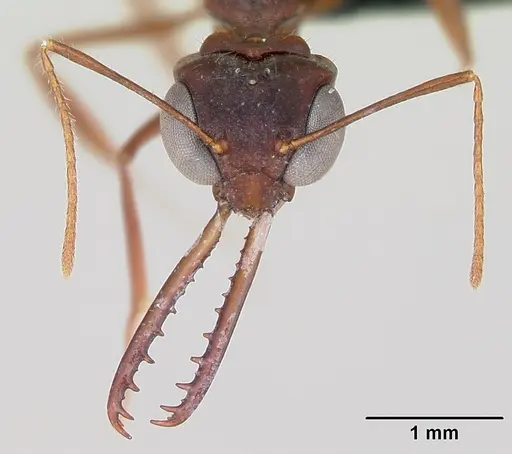
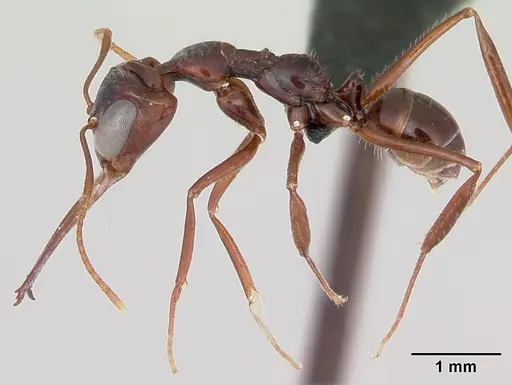
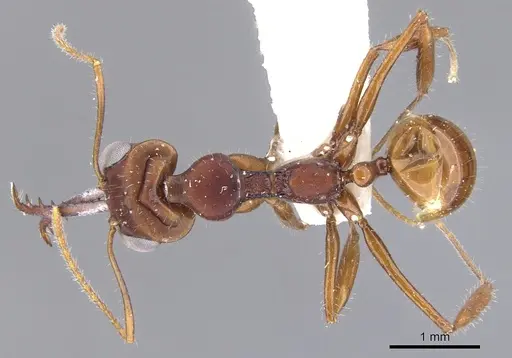
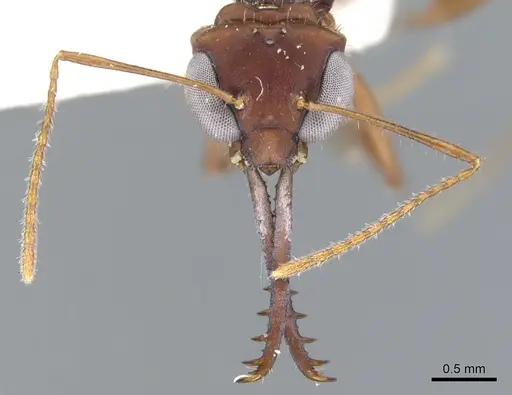
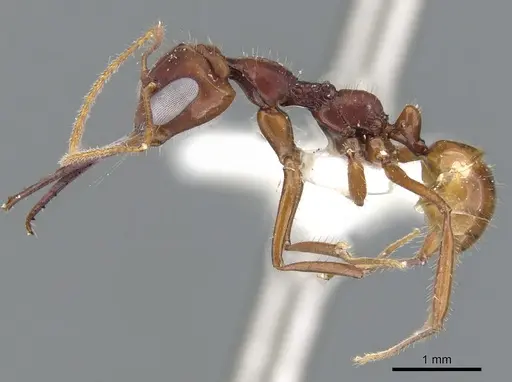
Myrmoteras iriodum is a small trap-jaw ant species native to Borneo, Indonesia, and Malaysia. Workers measure 6.4-6.8mm with a distinctive orange-red coloration and strong iridescence on the head and trunk. The most striking feature is their extraordinarily long mandibles, which can open to 280 degrees, the widest recorded among any ant species. These ants are specialized predators that hunt soft-bodied arthropods like springtails using a lightning-fast snap of their trap-jaw mandibles, striking in as little as 0.5 milliseconds. Colonies are tiny, typically containing fewer than 25 workers, and nest under rocks in forest floor habitats.
Quick Summary
- Difficulty: Expert
- Origin & Habitat: Tropical rainforests of Borneo, Indonesia, and Malaysia. Nests are found under rocks in forest floor habitats at elevations around 250m [1][2].
- Colony Type: Monogynous, colonies have a single mated queen. Some colonies may have additional dealate queens but only one is mated [1].
- Colony: Monogyne
- Founding: Semi-claustral
- Size & Growth:
- Queen: 7.0mm (TL), HW 1.23mm [1]
- Worker: 6.4-6.8mm (TL), HW 1.14-1.20mm [2]
- Colony: Up to 22 workers (average 8.2 ± 7.1) [1]
- Growth: Slow
- Development: Approximately 11 months from founding to first worker emergence [1] (Development is very slow compared to most ant species. The first worker is not nanitic (1.16mm head width, only slightly smaller than normal workers at 1.19mm).)
- Antkeeping:
- Temperature: Keep at 25°C based on laboratory conditions [3]. This is a tropical species requiring warm, stable temperatures in the mid-20s°C range.
- Humidity: High humidity required, they come from damp forest floor habitats. Keep nest substrate consistently moist but not waterlogged.
- Diapause: No, this is a tropical species with no documented diapause requirement.
- Nesting: In nature they nest under rocks on the forest floor. In captivity, a naturalistic setup with moist substrate and a small nest chamber works well. The nest should have tight chambers scaled to their small size.
- Behavior: These ants are specialized predators with a fascinating trap-jaw mechanism. Workers keep their mandibles open at 280 degrees while foraging and strike when trigger hairs on their labrum contact prey. They primarily hunt springtails and other soft-bodied micro-arthropods. Despite having a functional venom gland, they never use formic acid for hunting, they rely entirely on their powerful mandibles. Workers and virgin queens both forage and hunt. Colonies are peaceful and non-aggressive toward humans. Escape prevention should be excellent given their small size.
- Common Issues: very slow colony growth means beginners may lose patience or overfeed, small colony size makes them vulnerable to stress and disturbance, non-claustral founding requires the queen to forage, she may fail if not provided appropriate prey, tropical humidity requirements can be difficult to maintain consistently, wild-caught colonies may have parasites that kill them in captivity
The Trap-Jaw Mechanism
Myrmoteras iriodum possesses one of the most remarkable predatory adaptations in the ant world. Their mandibles can open to an extraordinary 280 degrees, the widest recorded among any ant species [4]. When hunting, workers keep their mandibles perpetually open while foraging. When trigger hairs on the labrum (a small flap above the mouth) contact prey, the mandibles snap shut in as little as 0.5 milliseconds [3]. The strike is powerful enough to kill soft-bodied arthropods like springtails instantly, without using formic acid despite having a functional venom gland [1]. The mechanism works like a loaded spring: the large mandible closer muscle stores potential energy while the mandibles are held open by a latch, then releases it all at once when triggered [3]. This is the only trap-jaw lineage in the entire Formicinae subfamily, making these ants truly unique [3].
Feeding and Diet
These ants are specialized predators that primarily hunt springtails (Collembola). When given a choice between small (0.4mm) and large (1.3mm) springtails, they strongly prefer the smaller prey [1]. They also hunt young termite nymphs and small cricket nymphs [1]. Workers forage and bring prey back to the nest chamber, where they masticate it by holding the prey between mandible tips. Workers and queens cross their mandibles repeatedly while chewing, sometimes adjusting prey with their forelegs. After feeding, they pass the masticated prey to larvae, fellow workers, or queens using their forelegs [1]. Foragers also lick diluted sugar water, confirming they accept sugar sources [1]. In captivity, you should offer small live prey like springtails as the primary food. Sugar water or honey water can be offered occasionally.
Colony Founding
Unlike most ant species where the queen seals herself in and lives off stored fat, M. iriodum queens are non-claustral, they must leave the nest to forage and hunt prey before the first workers emerge [1]. Laboratory observations showed a solitary queen foraging and hunting prey before first worker emergence. The first worker appeared 11 months after the founding queen was collected [1]. This is an extremely long founding period compared to most ants. The queen produces brood during this solitary period, and some cocoons may disappear (possibly consumed). The first worker had a head width of 1.16mm, not nanitic, just slightly smaller than normal workers [1]. This founding method means you must provide the queen with appropriate prey during colony establishment, not just sugar.
Nest Preferences and Setup
In the wild, these ants nest under rocks in damp forest floor habitats. Colonies are tiny, with an average of only 8 workers and a maximum of 22 workers recorded [1]. The nest chamber is simple, researchers found larvae and pupae scattered on the nest floor with no organized egg clusters [1]. For captive keeping, a naturalistic setup with moist substrate and a small nest chamber works best. The nest should have tight chambers scaled to their small size. High humidity is essential, these ants come from the damp understory of tropical rainforests. Use a small formicarium or test tube setup with consistent moisture. Because colonies stay small, they don't need large spaces.
Temperature and Seasonal Care
Laboratory colonies were successfully kept at 25°C with a 12:12 light:dark cycle [3]. As a tropical species from Southeast Asia, they require warm, stable temperatures in the mid-20s°C range. No diapause has been documented, these ants come from a tropical climate with year-round warmth. Room temperature may be sufficient if your home is kept warm, but you may need a heating cable or mat to maintain consistent temperatures, especially in cooler climates. Keep them away from drafts and temperature fluctuations. The key is warmth without drying out the nest.
Behavior and Colony Dynamics
M. iriodum colonies have several unusual behaviors. Workers and virgin queens keep mandibles fully open (280 degrees) most of the time in the foraging arena [1]. When prey moves fast, they chase but usually give up, they prefer to ambush slow-moving or stationary prey [1]. Virgin dealate queens (wingless reproductive females) often forage and hunt similar to workers, showing behavior more similar to foraging workers than to the queen [1]. Inside the nest, stomodeal trophallaxis (mouth-to-mouth food sharing) among female individuals is common [1]. Queens rarely show brood care except immediately after laying eggs [1]. Workers and virgin queens sometimes perform a strange behavior where they insert mandibles between the nest floor and larvae, opening about 30 degrees then quickly closing, the function is unknown [1].
Exocrine Glands
Research has documented an extensive system of exocrine glands in M. iriodum. The mandibular gland is particularly well-developed, with 25-30 secretory cells on each side [4]. The intramandibular gland has approximately 200 pores per mandible, which may relate to their specialized predation [4]. They possess a functional venom gland (typical for Formicinae) but never use formic acid for hunting [1]. The metapleural gland produces antimicrobial secretions for colony hygiene [4]. The propharyngeal, labial, and postpharyngeal glands are all present and well-developed [4]. This complex gland system supports their specialized lifestyle as trap-jaw predators.
Frequently Asked Questions
How long does it take for Myrmoteras iriodum to produce first workers?
Approximately 11 months from colony founding. This is very slow compared to most ant species. The queen must forage and hunt prey during this solitary period before workers emerge [1].
What do Myrmoteras iriodum ants eat?
They are specialized predators primarily hunting springtails (Collembola). They prefer small springtails around 0.4mm and will also hunt young termite nymphs and small cricket nymphs. Workers also lick sugar water. In captivity, offer small live prey like springtails as the primary food, with occasional sugar water or honey water [1].
How big do Myrmoteras iriodum colonies get?
Very small, maximum around 22 workers in established colonies. The average colony has only about 8 workers [1]. This is one of the smallest colony sizes known among ants.
Can I keep multiple Myrmoteras iriodum queens together?
No. Colonies are monogynous with a single mated queen. While some colonies may have additional dealate (wingless) queens, only one is mated and reproductive. Combining unrelated queens is not recommended and has not been documented [1].
What temperature do Myrmoteras iriodum ants need?
Keep them at 25°C based on successful laboratory conditions. This is a tropical species requiring warm, stable temperatures in the mid-20s°C range. No diapause is required [3].
Are Myrmoteras iriodum good for beginners?
No. This is an expert-level species due to several challenges: very slow colony growth (11+ months to first workers), non-claustral founding requiring prey for the queen, tiny colony sizes that are vulnerable to stress, and specific humidity/temperature requirements. They are best suited for experienced antkeepers with a track record of keeping difficult species.
Do Myrmoteras iriodum need hibernation?
No. This is a tropical species from Southeast Asia with no documented diapause requirement. They need year-round warmth [3].
What type of nest should I use for Myrmoteras iriodum?
A small naturalistic setup with moist substrate works best. In nature they nest under rocks in damp forest floor habitats. Use a small formicarium or test tube setup with consistent moisture and tight chambers scaled to their tiny colony size. High humidity is essential [1][2].
References

This caresheet is licensed under CC BY-SA 4.0 .
Literature
Loading...Loading products...