

Myrmoteras indicum
- Scientific Name
- Myrmoteras indicum
- Subgenus
- Myagroteras
- Tribe
- Myrmoteratini
- Subfamily
- Formicinae
- Author
- Moffett, 1985
- Distribution
- Found in 1 countries
Myrmoteras indicum Overview
Myrmoteras indicum is an ant species of the genus Myrmoteras. It is primarily documented in 1 countries , including India. Detailed taxonomic data and occurrence records can be further explored via authoritative databases such as AntWeb or the Global Biodiversity Information Facility (GBIF).
Myrmoteras indicum
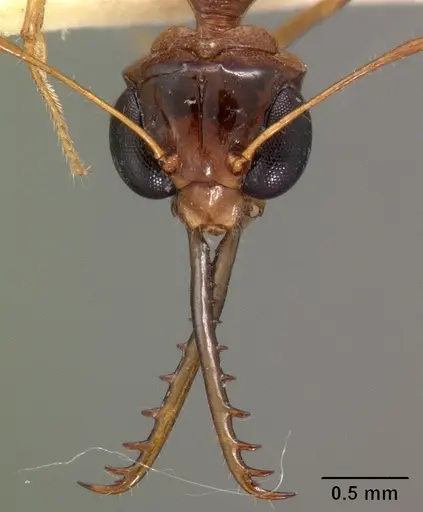
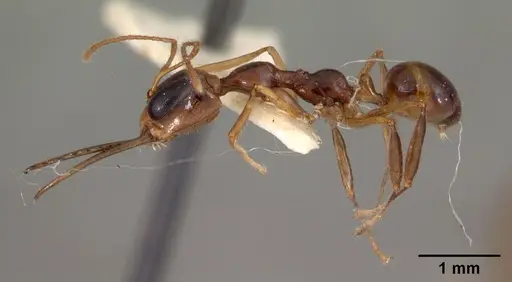
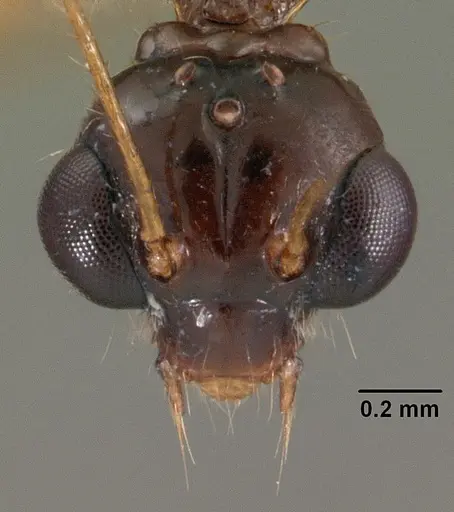
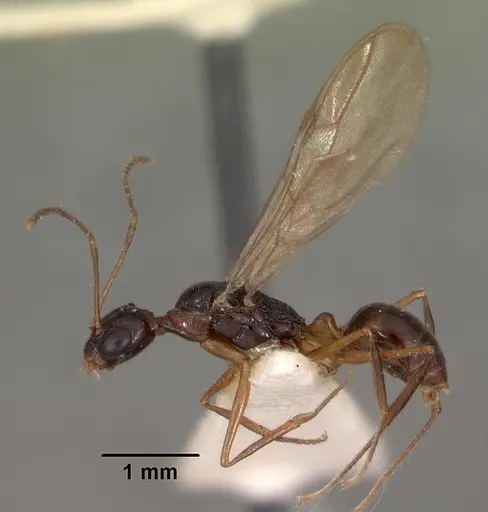
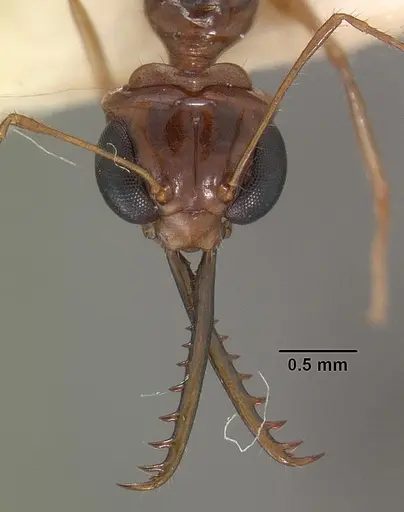
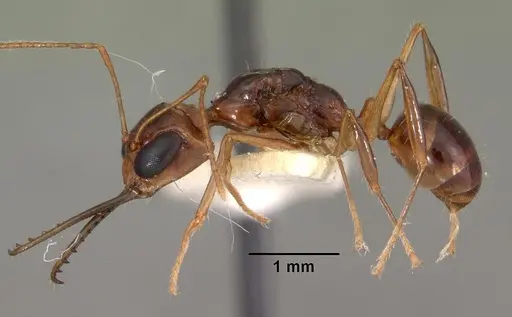
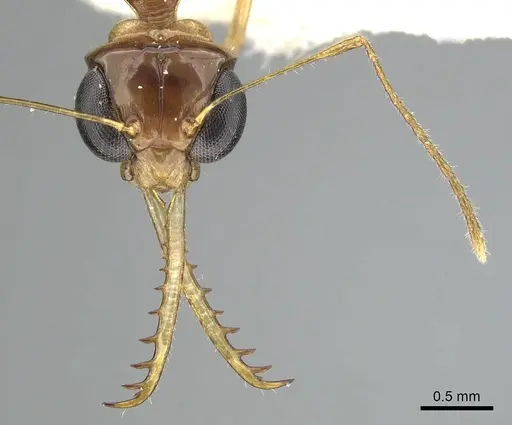
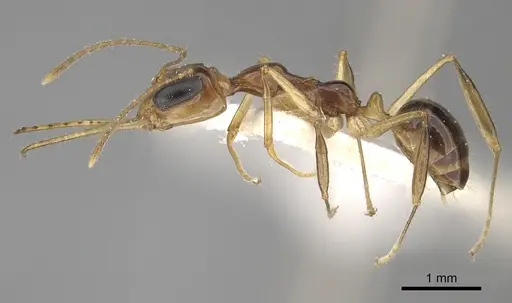
Myrmoteras indicum is a striking ant species endemic to the higher elevations of India's Western Ghats and Nilgiris mountain ranges. Workers are relatively large at 5.3-5.9mm with a distinctive reddish-orange coloration across the head, trunk, and gaster. The most notable physical feature is their mandibles, which bear 11-13 teeth (typically 12) with a single apical denticle, a key identification trait that separates them from related species. Queens grow to about 6.2mm and are similarly colored [1][2].
This species is known for spectacular mating swarms where hundreds of queens position themselves on exposed shrubs while thousands of males flock to them in a mating frenzy. These swarms occur on sun-exposed areas within 2-3 meters of the ground, with male-to-female ratios estimated at 50-100:1. The species occurs at altitudes between 450 and 2,150 meters, which likely contributes to the minor variations seen between populations from different localities [3].
Quick Summary
- Difficulty: Expert
- Origin & Habitat: Endemic to higher elevations (450-2,150m) in the Western Ghats and Nilgiris of India, specifically recorded from Karnataka, Kerala, and Tamil Nadu. Found in humid forest environments at these elevations [4][3].
- Colony Type: Colony structure is unconfirmed. No data exists on whether they are single-queen (monogyne) or multi-queen (polygyne) colonies.
- Size & Growth:
- Queen: 6.2mm [1]
- Worker: 5.3-5.9mm, HW 0.94-1.05mm [1]
- Colony: Unknown, no colony size data available
- Growth: Unknown, no development timing data exists
- Development: Unknown, no direct measurements available (No research has documented the development timeline. Based on typical Formicinae patterns and their elevation habitat, expect development to take several months, possibly 3-6 months at optimal temperatures.)
- Antkeeping:
- Temperature: Keep cool compared to most tropical ants, aim for 18-22°C. Their high-elevation habitat suggests they prefer cooler conditions than typical lowland tropical species. A temperature gradient allowing them to choose their preferred zone is recommended.
- Humidity: Maintain high humidity (70-85%) reflecting their moist forest habitat at higher elevations. Keep the nest substrate consistently moist but not waterlogged.
- Diapause: Likely required. Based on their temperate-to-elevational habitat and seasonal monsoons in the Western Ghats, they probably experience a period of reduced activity during winter months. Provide a cool hibernation period around 10-15°C for 2-3 months.
- Nesting: No specific captive nesting data exists. Based on their forest floor habitat and elevation, they likely nest in soil or rotting wood in nature. In captivity, a naturalistic setup with moist substrate or a Y-tong/plaster nest with high humidity would be appropriate.
- Behavior: No specific behavioral data exists for this species in captivity. Based on genus-level observations, they are likely moderately active foragers. Their distinctive mandibles suggest they may be predators or scavengers, but their exact foraging behavior is unconfirmed. Escape prevention should be moderate, workers are a good size (5-6mm) so standard barriers should work, but always use caution with any exotic species.
- Common Issues: this species has never been kept in captivity, all care recommendations are speculative based on habitat, high elevation origin means they likely need cooler temperatures than typical tropical ants, overheating is a major risk, no information on what they eat in captivity, diet experimentation will be necessary, humidity requirements are inferred but not confirmed, monitor for desiccation or mold, no data on colony founding behavior, claustral vs semi-claustrl is unknown
Natural History and Distribution
Myrmoteras indicum is a rare ant species found only in the higher elevations of India's Western Ghats and Nilgiris mountain ranges. Scientists have recorded them from altitudes between 450 and 2,150 meters, suggesting they are restricted to cooler, upland environments. This habitat choice has resulted in fragmented populations across isolated mountain peaks, which may explain the slight variations seen in specimens from different localities [3].
The species was formally described by Moffett in 1985 and remains poorly studied. It belongs to the subgenus Myagroteras, characterized by distinctive features including a labrum with rounded anterior margin and short hairs, a strongly developed frontal sulcus, and relatively long mandibles [1]. The only known species in the bakeri group from India, workers can be distinguished from related species by their single apical denticle and relatively slender tibiae [1].
One of the most remarkable aspects of this species' biology is its mating behavior. In Kerala, observers witnessed massive mating swarms where hundreds of queens positioned themselves on exposed shrubs in full sun, while millions of males gathered around them in a frenzy. The entire sun-exposed side of the mountain, within 2-3 meters of the ground, was filled with males and females. This suggests the species engages in massive synchronized mating events [3].
Temperature and Environmental Needs
This is one of the most challenging aspects of keeping Myrmoteras indicum, as their high-elevation habitat means they need significantly cooler conditions than most ant species commonly kept in captivity. In their natural environment in the Western Ghats and Nilgiris, temperatures remain moderate even during summer months due to the elevation. Expect optimal temperatures in the range of 18-22°C, considerably cooler than typical tropical ant setups.
You should provide a temperature gradient within the nest setup, allowing the ants to self-regulate by moving between warmer and cooler areas. A heating cable on only one side of the nest, set to low output, can create this gradient. Monitor colony behavior, if workers consistently cluster in cooler areas, reduce temperatures further. Never exceed 25°C as this species is not adapted to tropical heat.
During winter months, provide a hibernation period at 10-15°C for 2-3 months. This aligns with their natural seasonal cycle in the monsoonal Western Ghats environment where winter brings cooler, drier conditions. Reduce feeding during this period and minimize disturbance.
Feeding and Diet
The diet of Myrmoteras indicum in captivity remains entirely unknown, no research or keeper observations exist. As a member of the Formicinae subfamily, they likely have typical omnivorous tendencies, but their specialized mandibles with a single apical denticle suggest possible predatory behavior. The genus Myrmoteras is not well-studied, and specific feeding observations from the wild are lacking.
For initial captive care, offer a varied diet including: sugar water or honey as an energy source, small live insects appropriate to their size (fruit flies, small crickets, mealworms), and observe acceptance carefully. Start with small amounts and monitor over 24-48 hours, removing uneaten food to prevent mold. Be prepared for the possibility that this species may have specialized dietary needs not met by standard ant feeds.
Given the complete lack of captive data, document your observations carefully. If standard foods are rejected, consider offering small live prey items that might trigger their natural foraging instincts. The high-elevation forest floor environment suggests they may be more predatory than typical omnivorous ants.
Housing and Nesting
No established captive husbandry protocols exist for this species, so you will need to adapt based on their natural history. They are found at higher elevations in the Western Ghats, typically in humid forest environments. This suggests they require higher humidity than typical ants, aim for 70-85% relative humidity within the nest.
A naturalistic setup with moist substrate would be a logical starting point. Use a mixture of soil and organic material that holds moisture well while providing some drainage. Alternatively, a Y-tong (acrylic) nest or plaster nest with a water reservoir can maintain consistent humidity. Regardless of setup, ensure adequate ventilation to prevent stagnant air while maintaining moisture levels.
Given their worker size of 5-6mm, standard nest chambers sized for medium ants will work. Avoid overly large, open spaces, they prefer more confined spaces similar to their natural nesting sites in soil or rotting wood. Provide an outworld area for foraging that is easy to maintain and observe.
Colony Establishment and Founding
The colony founding behavior of Myrmoteras indicum remains completely unconfirmed. No scientific papers document how queens establish new colonies in this species. Based on their membership in the Formicinae subfamily, claustral founding (where the queen seals herself in a chamber and lives off stored fat reserves until workers emerge) is possible but not guaranteed.
If you obtain a founding queen, the safest approach is to provide a claustral setup: a test tube or small container with a water reservoir, kept in dark, quiet conditions at around 18-22°C. Provide minimal disturbance for 4-8 weeks while monitoring for the appearance of workers (nanitics). If the queen leaves the sealed chamber to forage, switch to a semi-claustral approach with small prey items available.
The spectacular mating swarms observed in the wild suggest queens emerge in large numbers simultaneously during specific seasonal conditions. Replicating this in captivity is not possible, but understanding this behavior helps set expectations, you may receive dealate (wingless) queens that have already mated.
Frequently Asked Questions
How difficult is Myrmoteras indicum to keep?
This is an expert-level species that has never been documented in captive husbandry. All care recommendations are speculative based on their high-elevation habitat in the Western Ghats. Expect a steep learning curve with significant experimentation needed for diet, temperature, and humidity requirements. Not recommended for beginners.
What temperature do Myrmoteras indicum ants need?
Keep them cool, aim for 18-22°C. Their natural habitat at 450-2,150m elevation in the Western Ghats experiences much cooler temperatures than typical tropical lowlands. Overheating is likely fatal. Provide a temperature gradient so ants can choose their preferred zone.
What do Myrmoteras indicum ants eat?
Their diet in captivity is completely unknown. Start with sugar water/honey and small live insects appropriate to their 5-6mm worker size. Document all feeding observations carefully as no captive data exists. They may have specialized dietary needs.
Do Myrmoteras indicum ants need hibernation?
Likely yes. Based on their temperate-to-elevational habitat and the seasonal climate of the Western Ghats, provide a cool hibernation period (10-15°C) for 2-3 months during winter. Reduce feeding during this time.
How big do Myrmoteras indicum colonies get?
Colony size is unknown, no research has documented maximum colony sizes. Based on worker size and typical Formicinae patterns, expect moderate-sized colonies possibly reaching several hundred workers, but this is speculative.
Where is Myrmoteras indicum found?
This species is endemic to the higher elevations of India's Western Ghats and Nilgiris mountain ranges, specifically recorded from Karnataka, Kerala, and Tamil Nadu states. They occur at altitudes between 450 and 2,150 meters.
Can I keep multiple Myrmoteras indicum queens together?
Unknown. No research documents their colony structure (monogyne vs polygyne). Do not attempt combining unrelated foundress queens without documented evidence of acceptance, the risks of queen aggression are high.
How long does it take for Myrmoteras indicum to develop from egg to worker?
Unknown, no development timing research exists for this species. Based on typical Formicinae patterns and their cooler habitat, expect development to take several months, possibly 3-6 months at optimal temperatures.
References

This caresheet is licensed under CC BY-SA 4.0 .
CASENT0102131
View on AntWeb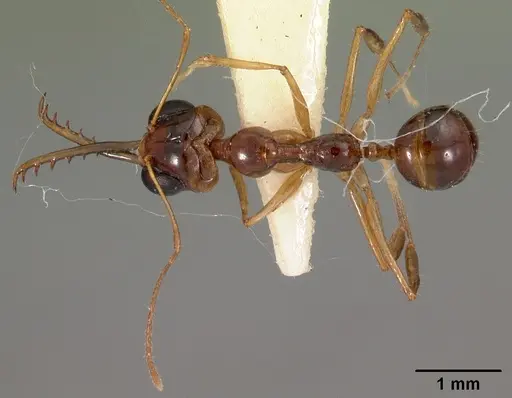
CASENT0102162
View on AntWeb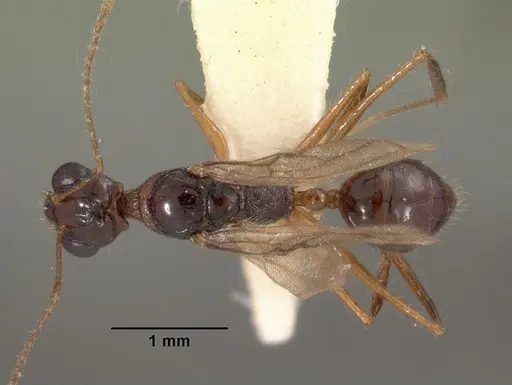
CASENT0102163
View on AntWeb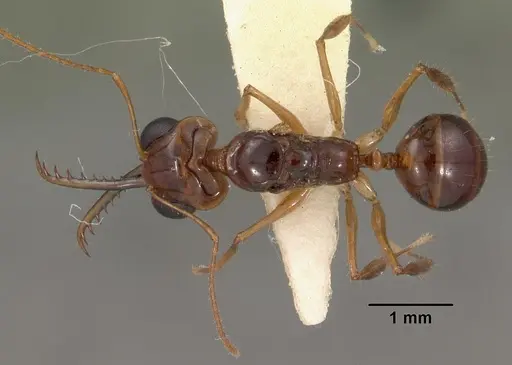
CASENT0249877
View on AntWeb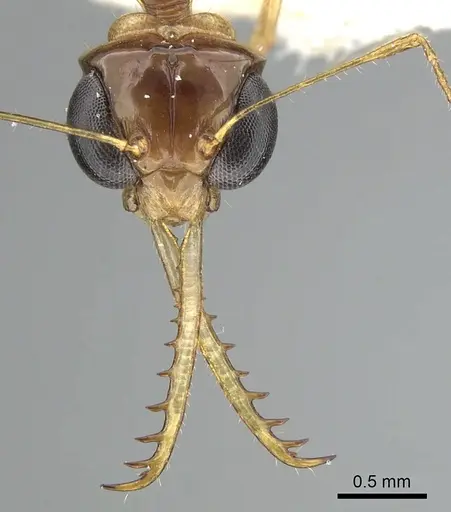
Literature
Loading...Loading products...