

Myrmicocrypta urichi
- Scientific Name
- Myrmicocrypta urichi
- Tribe
- Attini
- Subfamily
- Myrmicinae
- Author
- Weber, 1937
- Distribution
- Found in 2 countries
Myrmicocrypta urichi Overview
Myrmicocrypta urichi is an ant species of the genus Myrmicocrypta. It is primarily documented in 2 countries , including Colombia, Trinidad and Tobago. Detailed taxonomic data and occurrence records can be further explored via authoritative databases such as AntWeb or the Global Biodiversity Information Facility (GBIF).
Myrmicocrypta urichi
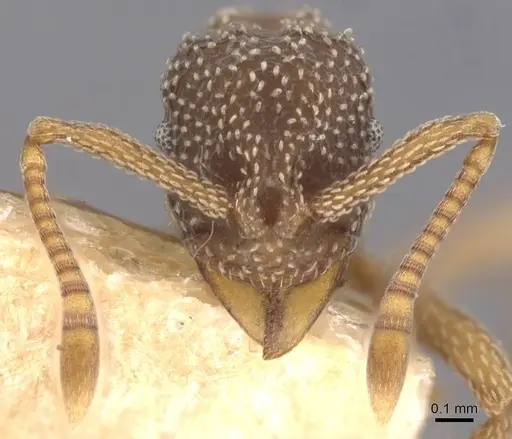
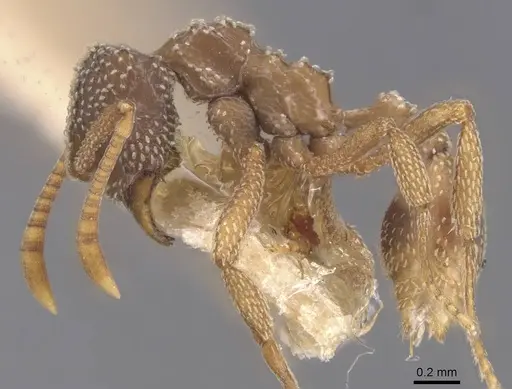
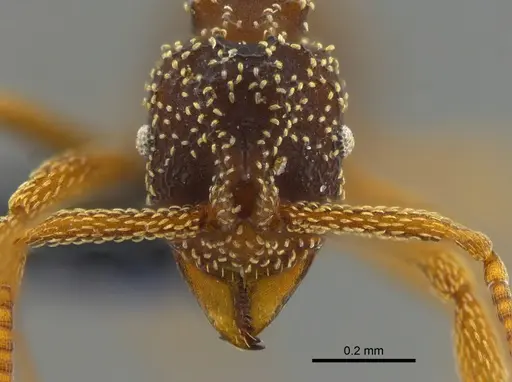
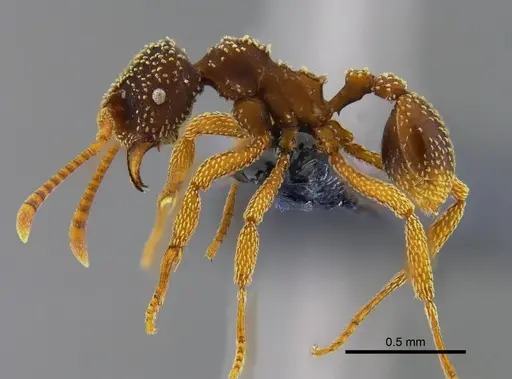
Myrmicocrypta urichi is a small, cryptic fungus-growing ant belonging to the tribe Attini. Workers are dark brown and covered with scales, with distinctive morphological features including an apical mandibular tooth as long as the preapical tooth, and a postpetiole that is 2.5 times broader than long [1]. This species is native to the Neotropical region, found in Colombia, Venezuela, the Lesser Antilles, and Trinidad and Tobago [1][2]. The genus Myrmicocrypta is known for cultivating specific lineages of fungi, and M. urichi cultivates fungal subclade E [3]. Like all Attini ants, this species has an obligate mutualistic relationship with fungus, larvae feed exclusively on fungus while adults consume partial fungus [4]. The queen carries the fungal cultivar from the parent colony when she establishes a new nest [4].
Quick Summary
- Difficulty: Hard
- Origin & Habitat: Native to the Neotropical region, Colombia, Venezuela, Lesser Antilles, and Trinidad and Tobago. Found at elevations from 250m to 980m in Colombia, including lowland areas in Caquetá and higher elevations in Antioquia [1][5]. Inhabits tropical forest environments where it cultivates fungus in underground chambers.
- Colony Type: Likely monogyne (single queen colonies) based on typical Attini patterns. Queens carry the fungal cultivar from parent colony to establish new nests, this is obligate for all Attini species [4]. Colony size appears moderate based on related species.
- Colony: Monogyne
- Founding: Claustral
- Size & Growth:
- Queen: Estimated 5-7mm based on genus patterns for Myrmicocrypta species
- Worker: Small ants, approximately 3-4mm [1]
- Colony: Likely several hundred workers based on related Attini species
- Growth: Slow, fungus cultivation requires careful balance and growth is typically slower than generalist ants
- Development: Unknown for this species. Based on typical Attini development, likely 8-12 weeks at optimal temperature. (Development is tied to fungal growth, the colony must cultivate fungus before producing brood efficiently)
- Antkeeping:
- Temperature: Keep warm, around 24-28°C. This species comes from tropical regions and requires consistent warmth [6]. Use a heating cable on one side of the nest to create a gradient if room temperature is below this range.
- Humidity: High humidity is essential, these ants live in damp forest floor environments. Keep the nest substrate consistently moist but not waterlogged. The fungus they cultivate needs moisture to survive. Aim for 70-80% humidity in the nest area.
- Diapause: Unlikely, being a tropical species, they probably do not require a true diapause. However, they may slow down during cooler periods.
- Nesting: In nature, they likely nest in soil or small cavities in rotting wood. In captivity, a small test tube setup or acrylic nest with fine chambers works well. The key is maintaining the fungal cultivar, use a small chamber where fungus can be cultivated separately from the main nest area if possible.
- Behavior: These are cryptic, slow-moving ants that spend much of their time tending to their fungal garden. They are not aggressive and rarely venture far from the nest. Workers are small and may be overlooked by predators due to their cryptic habits. Escape risk is moderate, they are small but not particularly active climbers. However, excellent escape prevention is still recommended due to their small size.
- Common Issues: The fungal cultivar is essential, without it, the colony will die. Never separate ants from their fungus and never introduce a colony to a new fungus strain., Fungus death is the most common cause of colony failure. The fungus requires specific humidity and temperature conditions to survive., Overfeeding can cause mold problems that kill the fungus. Keep the nest clean and remove uneaten organic matter promptly., These ants are difficult to find in the antkeeping hobby, they are rarely available and require specialized care., Slow growth means colonies can appear stagnant for months while establishing their fungal garden, this is normal and keepers should not panic.
The Fungus-Growing Lifestyle
Myrmicocrypta urichi belongs to the tribe Attini, a group of ants that have evolved an obligate mutualistic relationship with cultivated fungi. This is not optional, unlike other ants that might supplement their diet with fungus, Attini ants are completely dependent on their fungal gardens for survival [4]. The larvae require exclusively fungal food to develop, while adult workers consume partial fungus as part of their diet. The fungal relationship is so specialized that when a new queen leaves her parent colony, she carries a fragment of the fungal cultivar in her mouth to start a new garden in her founding chamber [4]. This makes M. urichi fundamentally different from most ant species in captivity, you are not just keeping ants, you are keeping a two-organism symbiosis that requires attention to both partners.
Feeding and the Fungus Garden
Feeding fungus-growing ants is unlike feeding any other ant species. You cannot simply offer protein and sugar water. Instead, you must provide the right conditions for the fungus to grow, and the ants will harvest from it. The fungus needs a substrate to grow on, typically leaf litter, dead wood, or other organic matter that the workers will collect and process. In captivity, you can offer small pieces of leaf litter, cardboard, or specialized fungal substrate. The workers will cut this into small pieces and cultivate the fungus on it. Avoid offering direct protein sources like insects unless you observe the ants accepting them, some Attini species will accept small prey, but the fungus must always be the primary food source. Never overfeed, as decaying organic matter promotes mold that can destroy the fungal garden. [4]
Temperature and Humidity
Being a tropical species from Colombia, Venezuela, and the Caribbean, M. urichi requires warm and humid conditions. Keep the nest area at 24-28°C consistently, temperatures below 20°C can slow fungal growth and potentially harm the colony. Use a small heating cable on one side of the nest to create a temperature gradient if your room temperature is below this range. Humidity is equally critical because the fungus requires moisture to grow. The nest substrate should feel consistently damp but never waterlogged. A good approach is to use a test tube water reservoir connected to the nest area, allowing moisture to diffuse through the substrate. Monitor for condensation, some condensation is good, but excessive moisture can lead to mold problems. [6]
Colony Establishment and Growth
Starting a colony of M. urichi is challenging because the queen must bring her fungal cultivar fragment with her during the nuptial flight. If you obtain a wild-caught queen, she should already have the fungus fragment. If you obtain a colony, never separate the ants from their fungus, the two are obligately dependent on each other. Founding colonies grow very slowly because the queen must first establish her fungal garden before she can produce brood. The first workers (nanitics) will be small and may take several months to emerge. Once established, growth continues slowly but steadily as the fungal garden expands. Patience is essential, a healthy colony can live for many years, but the initial establishment phase requires dedication. [4]
Housing and Nest Setup
For M. urichi, use a small nest with chambers scaled to their tiny worker size of 3-4mm. A small test tube setup works well for founding colonies, with the queen in a single tube connected to a water reservoir. As the colony grows, you can move to a small acrylic nest or a naturalistic setup with a small soil chamber. The key requirement is maintaining the fungus, the nest should have a small area where organic substrate can be placed for the fungus to grow on. Avoid large, open spaces that can be difficult for these small ants to navigate. Escape prevention should be excellent despite their small size, use tight-fitting lids and fine mesh barriers. Provide a small outworld for foraging and waste disposal. [1]
Frequently Asked Questions
What do Myrmicocrypta urichi ants eat?
They do not eat traditional ant foods. These are fungus-growing ants that cultivate a fungal garden, the larvae eat exclusively fungus while adults eat partial fungus. You must provide organic substrate (leaf litter, cardboard, dead wood) for the fungus to grow on. Some colonies may accept small live prey, but this is not required.
How long does it take for Myrmicocrypta urichi to produce first workers?
The exact timeline is unknown for this species, but based on typical Attini development, expect 8-12 months or more from founding to first workers. The queen must first establish her fungal garden before she can raise brood. Growth is very slow compared to generalist ant species.
Are Myrmicocrypta urichi good for beginners?
No. This is an expert-level species due to the specialized fungal cultivation requirements. The fungus must be kept alive and healthy, if it dies, the colony dies. They are also rarely available in the antkeeping hobby. Beginners should start with easier species like Lasius or Messor.
Do Myrmicocrypta urichi need hibernation?
No. Being a tropical species from Colombia, Venezuela, and the Caribbean, they do not require hibernation. Keep them warm year-round at 24-28°C.
Can I keep multiple Myrmicocrypta urichi queens together?
This has not been documented. Based on typical Attini behavior, they are likely single-queen colonies. Combining unrelated queens is not recommended as it has not been studied for this species.
Why is my Myrmicocrypta urichi colony dying?
The most likely cause is fungal garden failure. The fungus requires specific humidity (70-80%) and temperature (24-28°C) to survive. Mold from overfeeding or poor ventilation can also kill the fungus. Never separate ants from their fungus, they cannot survive without it.
What temperature should I keep Myrmicocrypta urichi at?
Keep them at 24-28°C consistently. Use a heating cable on one side of the nest to create a gradient if needed. Temperatures below 20°C can harm the fungus and slow or stop colony growth.
How big do Myrmicocrypta urichi colonies get?
Based on related Attini species, colonies likely reach several hundred workers over several years. They are not among the largest Attini ants, some related species can reach thousands, but M. urichi appears to be a smaller species.
Where is Myrmicocrypta urichi found?
This species is native to the Neotropical region, specifically Colombia, Venezuela, the Lesser Antilles, and Trinidad and Tobago. They are found at elevations from 250m to 980m in tropical forest environments.
References

This caresheet is licensed under CC BY-SA 4.0 .
CASENT0912513
View on AntWeb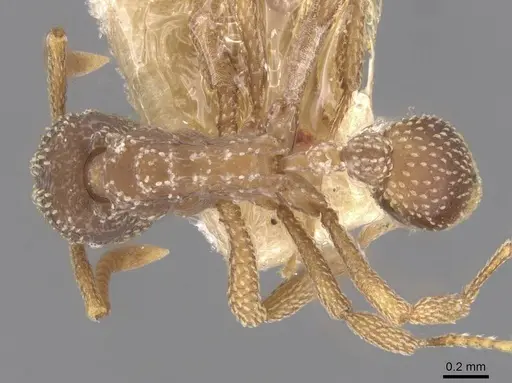
CBUMAGENT41969
View on AntWeb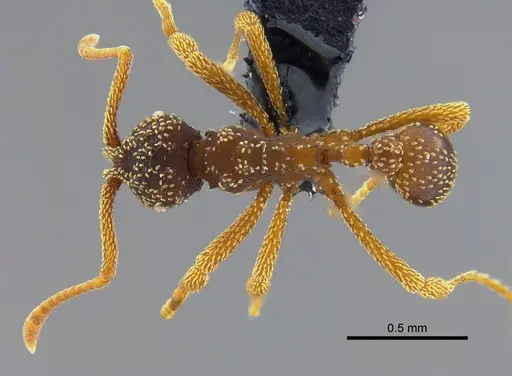
Literature
Loading...Loading products...