Myrmicaria arachnoides - "Southeast Asian Stilt Ant"
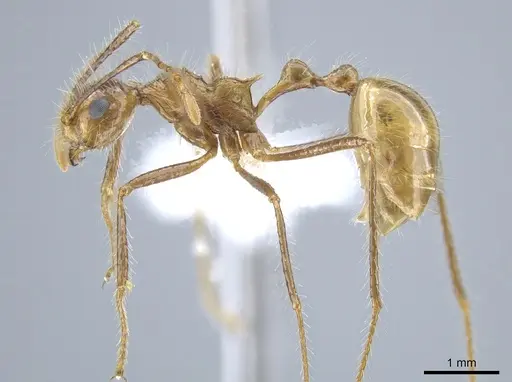
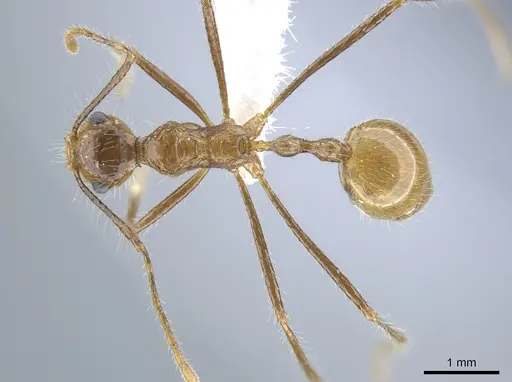
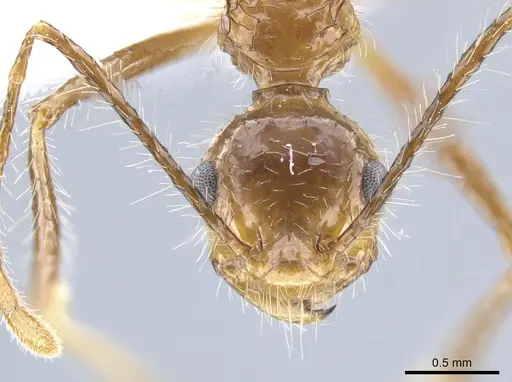
Myrmicaria arachnoides is a fascinating ant species from Southeast Asia, known for its distinctive appearance and unique nesting habits. Workers and queens are typically two-colored, often brown-beige, with a humped thorax and notably long legs, which gives them a 'stilt-like' appearance, allowing them to sit up on their long extremities when disturbed. They are monomorphic, meaning workers in a colony are all roughly the same size and do not have specialized major or soldier castes. These ants are not typically found nesting in the soil; instead, they are known for constructing intricate carton nests, similar to wasps, often on the underside of plant leaves. When threatened, they can emit a small drop of turpentine-like defensive secretion from their protruding sting.
- Difficulty: Hard
- Origin & Habitat: Southeast Asia, including Borneo, Brunei Darussalam, Indonesia, Malaysia, and Singapore, often found in mountainous regions around 800m elevation. in Tropical rainforests, specifically in the canopy of lowland dipterocarp forests, building nests on plant leaves..
- Colony Type: Polygyne (multiple queens) and Polydomous (multiple nests), claustral (though they build carton nests, queens start colonies independently) founding.
- Size & Growth:
- Queen: 8.5-10.0mm
- Worker: 6.0-7.0mm
- Colony: Medium (thousands), potentially up to 20,000 individuals across multiple nests.. Slow initially, then speeds up once the colony is established. growth.
- Antkeeping:
- Temperature: Maintain a temperature range of 18-25°C, ideally closer to 24-30°C in the arena and nest for optimal activity..
- Humidity: High air humidity is crucial, 60-80% for nest building and 70-90% in both the arena and nest..
- Diapause: Not required. Not specified at Not specified.
- Nesting: Requires a setup that allows for carton nest building on smooth surfaces or plant leaves, simulating their natural arboreal nests..
- Behavior: Medium (they possess a sting and can release a defensive secretion when threatened) aggressiveness.
- Common Issues: Failure to build carton nests due to insufficient humidity, Humidity fluctuations, Temperature instability, Lack of appropriate nesting surfaces, Stress from inadequate enclosure size.
One of the most distinctive aspects of Myrmicaria arachnoides is their unique nesting strategy. Unlike many common ant species that prefer to nest in the soil, these ants are arboreal, constructing fascinating carton nests on the undersides of leaves or other smooth surfaces. Replicating this in captivity requires specific considerations, such as providing a secure, enclosed setup with high humidity to facilitate their nest-building efforts. Without adequate humidity, they simply won't be able to construct their intricate paper-like structures.
Keeping Myrmicaria arachnoides is generally considered difficult, primarily due to their specialized nest-building requirements and need for consistent environmental conditions. A formicarium with a top covering is highly advisable to help maintain stable temperature and high air humidity, which are critical for their well-being and successful nest construction. This isn't a species for a casual setup; it demands attention to detail and a commitment to providing the right environment.
These ants are polygynous, meaning colonies can house multiple queens, and they also exhibit polydomy, establishing several satellite nests close to each other on different leaves of the same plant in the wild. This natural behavior means that, in a captive setting, providing ample space and multiple potential nesting sites within their outworld could be beneficial for colony expansion and overall health. Observing their multi-nest behavior can be a rewarding aspect of keeping them.
Myrmicaria arachnoides workers are monomorphic, meaning there's no visible size difference between worker castes like minors, majors, or soldiers. However, colony size can influence worker size, with older and larger colonies potentially producing larger workers, which is linked to a more defined division of labor. They are omnivores, readily consuming honey water and various insects, such as small crickets and flies. Ensuring a consistent supply of both sugar sources and protein is vital for a thriving colony.
Frequently Asked Questions
What kind of enclosure is best for Myrmicaria arachnoides?
For Myrmicaria arachnoides, you'll want a formicarium that allows them to build their characteristic carton nests. A vertical setup with smooth surfaces or even artificial leaves in an enclosed basin with a secure top is ideal. High humidity is key, so consider setups with integrated humidification or those that can be frequently misted without risking mold. A good outworld area is also important for foraging and waste disposal.
How do I ensure enough humidity for their carton nests?
Maintaining high humidity (60-90%) is critical. Regularly misting the enclosure, especially the surfaces where they might build their nests, can help. Some advanced formicariums have features for maintaining higher humidity. Using a hygrometer to monitor the humidity levels diligently is a must, as too little will prevent nest construction and too much can lead to mold issues.
What do Myrmicaria arachnoides eat?
These ants are omnivores, so a balanced diet is essential. They enjoy sugary liquids like honey water or sugar water for energy. For protein, offer a variety of small feeder insects such as fruit flies, small crickets, or roaches. Always ensure the insects are captive-bred and free from pesticides.
Are Myrmicaria arachnoides aggressive?
They are considered to have medium aggressiveness. While not overly aggressive towards handlers if undisturbed, they do possess a sting and can emit a turpentine-like defensive secretion when they feel threatened. Always handle with care and use appropriate tools when interacting with their setup.
Do they require a diapause or hibernation period?
No, Myrmicaria arachnoides is a tropical species and does not require a diapause or hibernation period. They should be kept at stable tropical temperatures year-round. While some ant species may slow down egg-laying in cooler periods, these ants remain active and need consistent feeding.
How fast do Myrmicaria arachnoides colonies grow?
Colony growth for Myrmicaria arachnoides is generally slow during the initial founding stages. Queens might lay eggs, but some may be consumed, and development can be slow. However, once the colony establishes itself with a decent number of workers (around 15-20), the growth rate tends to accelerate, leading to populous colonies of several thousand individuals.
Can I keep multiple queens together?
Yes, Myrmicaria arachnoides are polygynous, meaning they can have multiple queens in a single colony. In the wild, they often form polydomous colonies with several queens across multiple nests. If you acquire a colony with multiple queens, they can generally be kept together without issues, and it may even contribute to faster colony growth.
What kind of substrate do I need in their outworld?
Since Myrmicaria arachnoides are arboreal nesters, the substrate in their outworld isn't as critical for nesting purposes as it would be for a terrestrial species. However, a naturalistic substrate like sand or loam can be used for aesthetics or if you plan to include live plants. The most important aspect is providing smooth, vertical surfaces for their carton nest construction.
How long does it take for eggs to become workers?
The full life cycle from egg to adult worker for Myrmicaria arachnoides can take approximately 5 to 8 weeks, varying with temperature and humidity. Like many ant species, the egg to larva stage is typically around 10-12 days, followed by the larval and pupal stages which can take several weeks.
Are they suitable for beginner ant keepers?
Myrmicaria arachnoides are generally considered a 'Hard' difficulty species due to their specific requirements for carton nest building and the need for very stable, high humidity and temperature. While rewarding for experienced keepers, beginners might find them challenging to establish and maintain successfully. It's often recommended for those with some prior ant-keeping experience.