

Myrmica weberi
- Scientific Name
- Myrmica weberi
- Tribe
- Myrmicini
- Subfamily
- Myrmicinae
- Author
- Elmes & Radchenko, 2009
- Distribution
- Found in 1 countries
Myrmica weberi Overview
Myrmica weberi is an ant species of the genus Myrmica. It is primarily documented in 1 countries , including Nepal. Detailed taxonomic data and occurrence records can be further explored via authoritative databases such as AntWeb or the Global Biodiversity Information Facility (GBIF).
Myrmica weberi
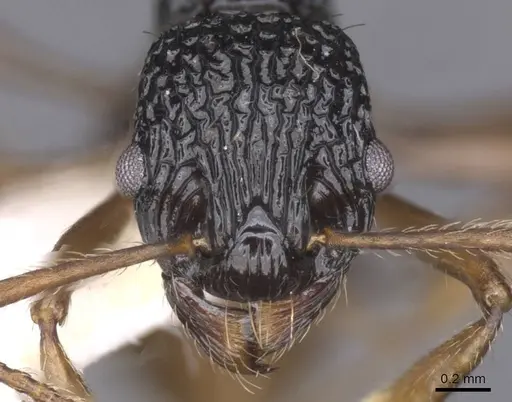
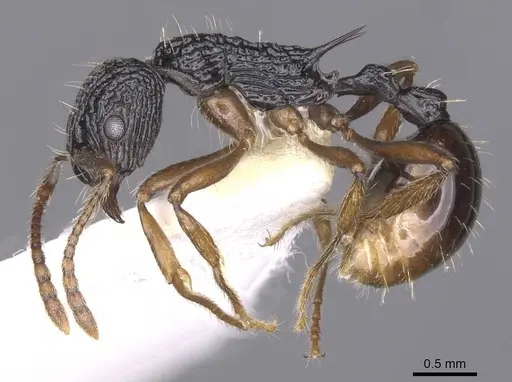
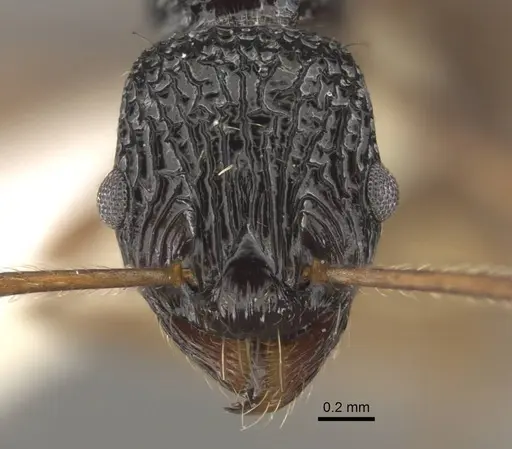
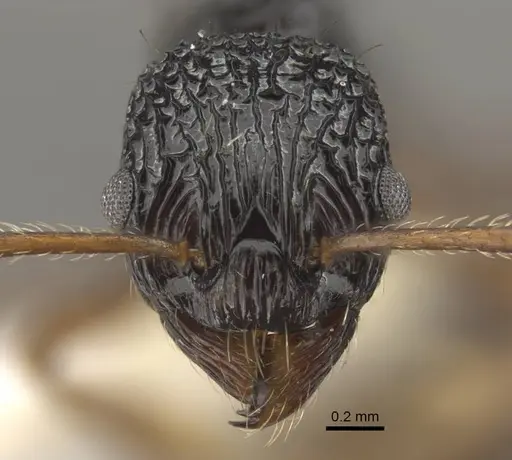
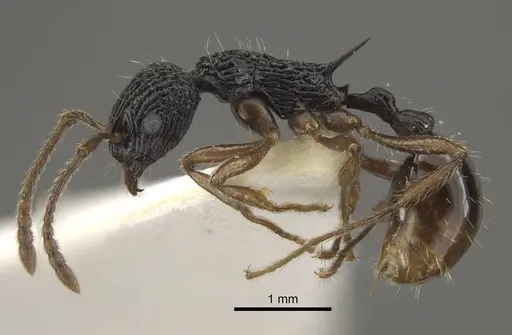
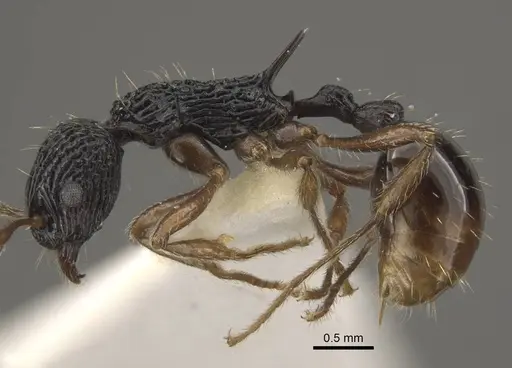
Myrmica weberi is a small, dark ant species native to the high altitudes of the Central Himalayan region (Nepal, India, and Bhutan). Workers measure about 4.5-5.5mm with a distinctive appearance featuring very long, thin propodeal spines and a black to blackish-brown body with contrasting brownish-yellow legs and antennae [1]. The species was described in 2009 and named in honor of the American myrmecologist Dr. N.A. Weber. It belongs to the ritae species group and is closely related to Myrmica indica and Myrmica alperti, from which it differs in its smaller size and more developed reticulation on the head [1]. This is a reclusive species that nests under moss, dead wood, and rocks, with colonies foraging close to the ground and in leaf litter [2].
Quick Summary
- Difficulty: Medium
- Origin & Habitat: High-altitude Himalayan region (Nepal, India, Bhutan) at elevations of 2000-3000 meters. Found in damp, cool mountainous areas with mossy undergrowth, typically in yak meadows and open forest clearings [1][2].
- Colony Type: Colonies have been documented with multiple queens (at least 2 queens observed in one colony sample), suggesting potential for polygyne or oligogyne colony structure. Queens are small and can be similar in size to the largest workers [1].
- Colony: Optionally polygyne, Oligogyne
- Founding: Claustral
- Size & Growth:
- Queen: Queens measure approximately 5mm in head width (HW 0.98mm), notably small and even smaller than the largest workers [1]
- Worker: Workers are 4.5-5.5mm (HL 1.098mm, HW 0.919mm on average) [1]
- Colony: Colony size is not directly documented, but based on related Myrmica species and the reclusive nature, likely moderate (100-500 workers typical for the genus)
- Growth: Moderate, typical for Myrmica genus at cool temperatures
- Development: Estimated 8-12 weeks at optimal temperatures based on typical Myrmica development patterns (Development likely slower than lowland species due to high-altitude adaptation, expect 2-3 months from egg to first worker at 18-22°C)
- Antkeeping:
- Temperature: Keep colonies cool, around 18-22°C. This is a high-altitude species that prefers cooler temperatures than many common ant pets. Avoid overheating, room temperature or slightly below is ideal. A gentle gradient allowing workers to choose their preferred temperature is recommended.
- Humidity: Moderate to high humidity (60-80%). These ants naturally live in damp mountain habitats under moss and rocks. Keep the nest substrate consistently moist but not waterlogged. Provide a water tube as a humidity source.
- Diapause: Yes, as a Himalayan high-altitude species, colonies will benefit from a winter rest period. Reduce temperature to around 5-10°C for 2-3 months (October-March) to simulate natural seasonal cycles. Do not feed during diapause.
- Nesting: Prefers moist, cool nest conditions. Y-tong (acrylic) nests work well, or a test tube setup with a water reservoir. The nest should have chambers scaled appropriately for their small size. Naturalistic setups with moss, soil, and small rocks can mimic their natural under-rock and moss-covered nesting sites.
- Behavior: This is a relatively docile Myrmica species. Workers are not particularly aggressive but will defend the colony if threatened. They have a functional stinger but rarely use it on human skin due to their small size. Foraging occurs primarily at ground level and in leaf litter. Escape risk is moderate, they are small but not extremely tiny, so standard escape prevention (Fluon barrier) is sufficient. Workers are active and will forage for protein and sugar sources.
- Common Issues: temperature stress, this species is adapted to cool high-altitude conditions and can overheat easily at typical room temperatures above 25°C, drying out, being from damp mountain habitats, they need consistent moisture and can fail if kept too dry, difficulty obtaining, this is a rarely kept species with limited availability in the antkeeping hobby, slow growth, high-altitude species typically develop slower than lowland ants, requiring patience during founding, escape risk, while not extremely tiny, their small size means gaps in equipment can allow escapes
Housing and Nest Setup
Myrmica weberi is a small ant that needs appropriately scaled housing. For founding colonies, a standard test tube setup works well, fill with water, plug with cotton, and wrap the portion with water in aluminum foil to block light. The ants will naturally stay in the dark, humid portion. For established colonies, Y-tong (acrylic) nests or plaster nests work well, as they allow you to control humidity easily. Given their high-altitude origin, avoid heated nests, these ants prefer cool conditions. A naturalistic setup with a soil substrate, moss, and small stones can mimic their natural habitat under rocks and in leaf litter. Ensure the outworld (foraging area) is connected properly and use Fluon or another barrier to prevent escapes. [1][2]
Temperature Management
Temperature is the most critical factor for keeping Myrmica weberi successfully. This species is adapted to cool mountain conditions at 2000-3000m elevation and does not tolerate heat well. Keep the nest area at 18-22°C, this is cooler than many ant species require. Room temperature is often ideal. If your room is warmer than 22°C, consider moving the colony to a cooler location or using a small cooling method. Never place the nest in direct sunlight or near heat sources. During summer months, ensure the colony space is well-ventilated and stays within the acceptable range. In winter, the colony will naturally slow down and this is when you should provide the diapause period. [1][2]
Feeding and Diet
Like other Myrmica species, Myrmica weberi is omnivorous and will accept both protein and sugar sources. Offer protein foods such as small insects (fruit flies, small crickets, mealworms), and sugar sources like sugar water, honey, or diluted jam. Feed protein 2-3 times per week, and keep a constant sugar source available. In the wild, these ants forage in leaf litter and likely catch small invertebrates. Remove uneaten food after 24-48 hours to prevent mold. During diapause (winter), do not feed the colony, they will be dormant and not eat. [2]
Seasonal Care and Diapause
As a high-altitude Himalayan species, Myrmica weberi expects seasonal temperature changes. From roughly October to March, reduce the colony temperature to 5-10°C to provide a winter rest period (diapause). This is essential for the health of the colony and mimics their natural environment where temperatures drop significantly at altitude. During diapause, move the colony to a cool, dark location like an unheated garage or basement. Do not feed during this period. In spring, gradually warm the colony back to room temperature (18-22°C) and resume feeding. This cycle helps regulate their biological rhythms and promotes healthy colony development. [1][2]
Colony Structure and Multi-Queen Care
Myrmica weberi appears to naturally form colonies with multiple queens (polygynous or oligogynous structure), with field samples showing at least 2 queens in a single colony [1]. This is unusual compared to many Myrmica species that are strictly single-queen. If you obtain a colony with multiple queens, they can typically be kept together. However, if you are starting with a single queen, do not attempt to introduce additional unrelated queens, this has not been documented as successful for this species. The queens are notably small, even smaller than the largest workers, which is an interesting morphological trait of this species.
Frequently Asked Questions
Is Myrmica weberi a good species for beginners?
Myrmica weberi is not typically recommended for complete beginners due to its specific temperature requirements (needs cool conditions) and the fact that it is rarely available in the antkeeping hobby. However, if you have experience keeping other Myrmica species or ants that require cool temperatures, it can be a rewarding species to keep. The main challenges are keeping them cool (below 25°C) and maintaining proper humidity.
What temperature should I keep Myrmica weberi at?
Keep Myrmica weberi at cool temperatures between 18-22°C. This is a high-altitude Himalayan species that prefers cooler conditions than most common ant pets. Room temperature is often ideal. Avoid temperatures above 25°C, as this can stress or kill the colony.
How long does it take for Myrmica weberi to produce first workers?
Based on typical Myrmica development patterns, expect 8-12 weeks from egg to first worker (nanitics) at optimal temperatures of 18-22°C. This is slower than many lowland ant species due to the species' high-altitude adaptation. Patience is required during the founding stage.
Do Myrmica weberi ants sting?
Yes, Myrmica weberi has a functional stinger like other Myrmica species. However, due to their small size, the sting is typically not painful to humans and rarely occurs. They are generally docile and will only sting if directly threatened or handled roughly.
Can I keep multiple Myrmica weberi queens together?
Yes, this species appears to naturally form multi-queen colonies in the wild. Field samples have documented colonies with at least 2 queens. If your colony started with multiple queens, they can typically coexist. However, if you have a single-queen founding colony, do not attempt to add more queens, this has not been studied for this species.
Does Myrmica weberi need hibernation?
Yes, as a high-altitude Himalayan species, Myrmica weberi benefits from a winter rest period (diapause). From October to March, reduce temperatures to 5-10°C and do not feed. This mimics their natural seasonal cycle at high elevations. After diapause, gradually warm the colony and resume normal feeding.
What do Myrmica weberi eat?
Myrmica weberi is omnivorous. Offer protein sources like small insects (fruit flies, small crickets, mealworms) 2-3 times per week, and keep a constant sugar source available (sugar water, honey, or diluted jam). In the wild, they forage in leaf litter and catch small invertebrates.
How big do Myrmica weberi colonies get?
Colony size is not well documented for this rare species, but based on related Myrmica species, colonies likely reach several hundred workers (estimated 100-500). The queens are notably small, even smaller than the largest workers.
Where is Myrmica weberi found in the wild?
Myrmica weberi is native to the Central Himalayan region at high elevations (2000-3000m), found in Nepal, India (West Bengal, Bihar), and Bhutan. It is a reclusive species that nests under moss, dead wood, and rocks, foraging close to the ground in damp, cool mountain habitats.
When should I move Myrmica weberi from a test tube to a formicarium?
Move Myrmica weberi to a formicarium (like a Y-tong or plaster nest) once the colony reaches roughly 30-50 workers and the test tube is becoming crowded. Ensure the new nest can maintain cool, moist conditions. Given their preference for cool, damp environments, Y-tong nests with a water reservoir or plaster nests work well.
References

This caresheet is licensed under CC BY-SA 4.0 .
CASENT0913089
View on AntWeb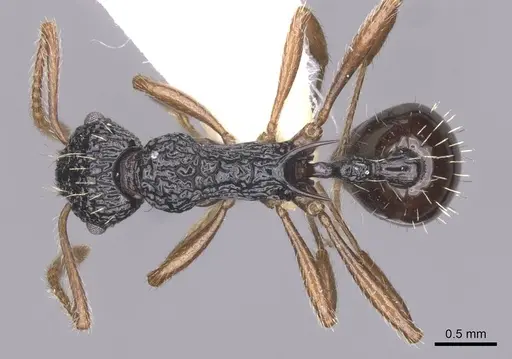
CASENT0917724
View on AntWeb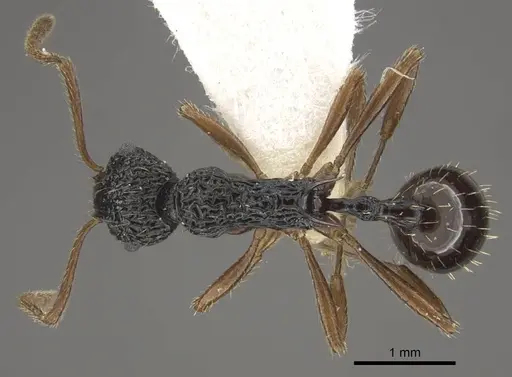
Literature
Loading...Loading products...