

Myrmica trullicornis
- Scientific Name
- Myrmica trullicornis
- Tribe
- Myrmicini
- Subfamily
- Myrmicinae
- Author
- Buren, 1944
- Distribution
- Found in 1 countries
Myrmica trullicornis Overview
Myrmica trullicornis is an ant species of the genus Myrmica. It is primarily documented in 1 countries , including United States of America. Detailed taxonomic data and occurrence records can be further explored via authoritative databases such as AntWeb or the Global Biodiversity Information Facility (GBIF).
Myrmica trullicornis
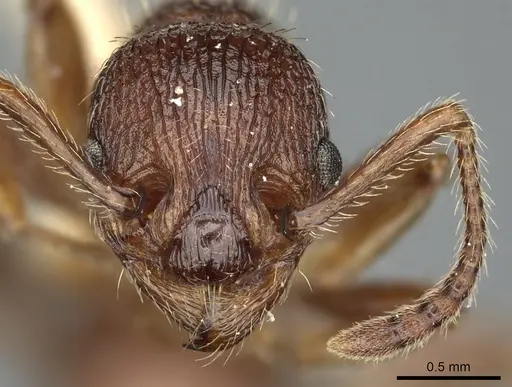
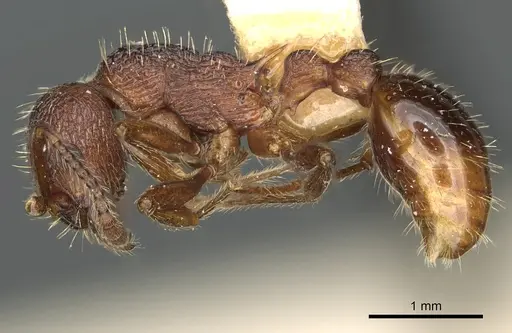
Myrmica trullicornis is a small Myrmica ant species native to the central United States, specifically documented in Illinois and Iowa [1]. Workers are typical Myrmica-sized at 4-6mm, with the species being identified by a unique flange structure at the base of the antennal scape, this flange is much broader and almost dish-like compared to the narrower, more elongated flange found in the similar species M. spatulata [1]. The species was originally described in 1944 as a subspecies of M. sabuleti, later became a junior synonym of M. americana, then was treated as a subspecies of M. hamulata, and was finally raised to full species status in 2016 [1]. Type specimens were collected from woodland colonies in Ames, Iowa [2].
This is one of the lesser-studied North American Myrmica species, so much of its specific biology remains undocumented. However, as a Myrmica species, it shares general traits with its relatives, these are moderate-sized ants that form single-queen colonies and are known for their relatively non-aggressive temperament combined with a functional stinger. The genus Myrmica is well-established in the antkeeping hobby, and general care guidelines for the genus provide a solid foundation for keeping this species.
Quick Summary
- Difficulty: Medium
- Origin & Habitat: Central United States (Illinois, Iowa), woodland habitats [2][1]
- Colony Type: Single-queen (monogyne) colonies, typical for Myrmica genus [3]
- Colony: Monogyne
- Founding: Claustral
- Size & Growth:
- Queen: Estimated 7-9mm based on genus typical Myrmica queen size [3]
- Worker: 4-6mm typical for Myrmica genus [3]
- Colony: Likely reaches several thousand workers like other Myrmica species [3]
- Growth: Moderate, typical for temperate Myrmica species
- Development: Estimated 6-10 weeks based on typical Myrmica development at room temperature [3] (Development time is estimated from genus-level data since species-specific timing is unconfirmed)
- Antkeeping:
- Temperature: Keep at 20-24°C with a slight gradient. Myrmica species do well at room temperature but benefit from modest heating during active growth periods [3]
- Humidity: Moderate humidity around 50-70%. Keep nest substrate moist but not waterlogged, these are woodland ants that tolerate typical indoor conditions [3]
- Diapause: Yes, Myrmica species require a winter hibernation period of 3-4 months at 5-10°C [3]
- Nesting: Y-tong (acrylic) nests or plaster nests work well. In nature they nest in soil and rotting wood in woodland areas. Provide a dark nesting area with moderate moisture [3]
- Behavior: Generally non-aggressive but will defend the nest if threatened. Workers are active foragers that search for insects, nectar, and honeydew. They possess a functional stinger, though their sting is mild compared to some other ants. Workers are moderate in size and can escape through small gaps, use standard ant farm barriers. They are diurnal and show consistent activity patterns throughout the warm season [3]
- Common Issues: colonies often fail during first hibernation if temperature is too warm or substrate is too dry, slow initial growth can lead keepers to overfeed or disturb the nest prematurely, test tube setups can flood if water reservoirs are overfilled, poor escape prevention, workers can slip through standard barrier setups if gaps exist, wild-caught colonies may contain parasites that can devastate captive colonies
Housing and Nest Setup
Myrmica trullicornis can be housed in standard antkeeping setups. A test tube setup works well for founding colonies, fill a test tube about one-third with water, insert a cotton plug to create a water reservoir, then place the queen in the tube. For established colonies, Y-tong (acrylic) nests or plaster nests provide good visibility and humidity control. These ants are woodland species, so they appreciate a nest chamber that stays moderately dark. Outworld space should allow for foraging, a simple plastic container with a secure lid works fine. Escape prevention should be moderate since workers are 4-6mm and can fit through small gaps. Apply fluon or use a barrier tape around the rim of the outworld. [3]
Feeding and Diet
Myrmica trullicornis is omnivorous like other Myrmica species. Offer protein sources such as small insects (fruit flies, small mealworms, crickets) and sugar sources (honey water, sugar water). In the wild, these ants forage for honeydew from aphids and small arthropods. Feed protein 2-3 times per week for growing colonies, and keep a sugar source available at all times. Remove uneaten prey after 24-48 hours to prevent mold. Colonies that accept varied diets tend to grow faster and produce more robust workers. [3]
Temperature and Seasonal Care
Keep Myrmica trullicornis at 20-24°C during the active season. Room temperature (around 21-23°C) is typically suitable. A slight temperature gradient in the outworld allows workers to choose their preferred zone. During winter, colonies require a diapause (hibernation) period of 3-4 months at 5-10°C. This can be provided by moving the colony to a cool basement, garage, or refrigerator (not freezer). Hibernation is essential for colony health and triggers reproductive behavior in spring. Do not skip hibernation as it can weaken colonies over time. [3]
Behavior and Temperament
Myrmica trullicornis workers are active foragers with moderate temperament. They are not aggressive toward humans but will defend their nest if disturbed. Each worker has a functional stinger, though the sting is mild and comparable to a minor mosquito bite for most people. Workers communicate using chemical signals and will recruit nestmates to food sources. The colony will establish defined foraging trails once established. These ants are diurnal and show peak activity during daylight hours. They are not prone to excessive biting or escaping like some tropical species, but standard barrier precautions should still be taken. [3]
Colony Growth and Development
A newly mated queen will seal herself in a claustral chamber and lay her first eggs after a few weeks. The first workers (nanitics) are typically smaller than mature workers but will help expand the colony. Growth is moderate, expect the colony to reach 50-100 workers within the first year under good conditions. Myrmica colonies can live for many years, with queens potentially living 15-20 years. Patience is key with this genus, as colonies take time to reach their full potential. Avoid disturbing the nest during the founding stage as this can cause the queen to abandon or consume her brood. [3]
Frequently Asked Questions
How long does it take for Myrmica trullicornis to produce first workers?
First workers typically appear 6-10 weeks after the queen lays eggs, depending on temperature. This estimate is based on typical Myrmica genus development since species-specific timing is unconfirmed. Keep the colony at stable room temperature (21-23°C) during this period.
Do Myrmica trullicornis ants sting?
Yes, they have a functional stinger. However, their sting is mild compared to many other ants and is comparable to a minor mosquito bite for most people. They are not aggressive and will only sting if directly threatened or handled roughly.
What temperature range is best for Myrmica trullicornis?
Keep them at 20-24°C during the active season. Room temperature is usually suitable. They require a winter hibernation period at 5-10°C for 3-4 months.
How big do Myrmica trullicornis colonies get?
Based on typical Myrmica genus patterns, mature colonies likely reach several thousand workers. The exact maximum for this specific species is unconfirmed due to limited research.
Do I need to hibernate Myrmica trullicornis?
Yes, hibernation is required. Myrmica species need a winter diapause period of 3-4 months at 5-10°C. This rest period is essential for colony health and triggers spring reproduction. Skip hibernation can lead to colony decline over time.
Can I keep multiple Myrmica trullicornis queens together?
No, this species is monogyne (single-queen). Unlike some ants that can form multi-queen colonies, Myrmica trullicornis colonies typically have only one queen. Introducing additional queens will result in fighting.
What should I feed Myrmica trullicornis?
Offer a varied diet including small insects (fruit flies, small mealworms, crickets) for protein and sugar sources (honey water, sugar water). Feed protein 2-3 times per week and keep sugar water available at all times.
Is Myrmica trullicornis good for beginners?
This species is rated as medium difficulty. While Myrmica in general are hardy and established in the hobby, this specific species has limited documented care information. Beginners may find the hibernation requirements and slower growth challenging, but the species is manageable for those willing to learn.
When should I move my colony to a formicarium?
Move from test tube to a formicarium once the colony reaches 50-100 workers and the test tube is becoming cramped. Ensure the formicarium has appropriate humidity control and a suitable outworld before transitioning.
Why is Myrmica trullicornis so hard to find information on?
This species was only raised to full species status in 2016 and was previously considered a subspecies or synonym of other Myrmica species for decades. Limited research exists specifically on this species, so much of what we know is inferred from general Myrmica genus behavior.
References

This caresheet is licensed under CC BY-SA 4.0 .
CASENT0900350
View on AntWeb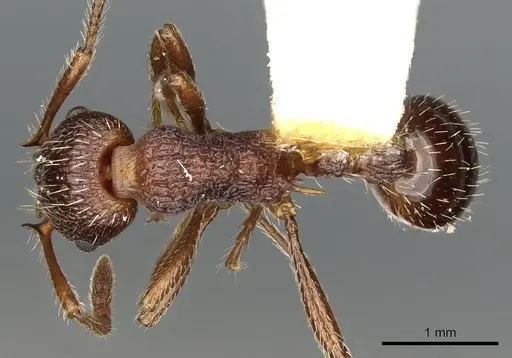
Literature
Loading...Loading products...