

Myrmica serica
- Scientific Name
- Myrmica serica
- Tribe
- Myrmicini
- Subfamily
- Myrmicinae
- Author
- Wheeler, 1928
- Distribution
- Found in 1 countries
Myrmica serica Overview
Myrmica serica is an ant species of the genus Myrmica. It is primarily documented in 1 countries , including Taiwan, Province of China. Detailed taxonomic data and occurrence records can be further explored via authoritative databases such as AntWeb or the Global Biodiversity Information Facility (GBIF).
Myrmica serica
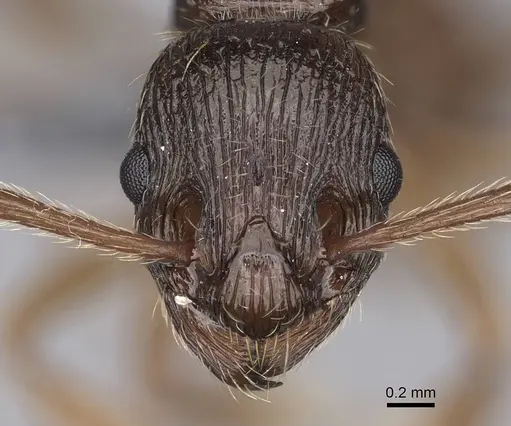
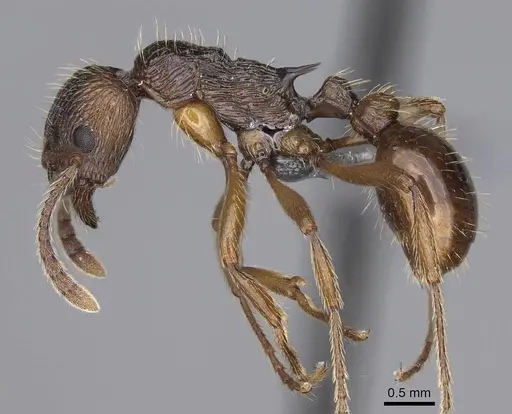
Myrmica serica is a medium-sized Myrmica ant belonging to the ritae species group, native to the mountainous regions of central and southern China, Taiwan, and northern Vietnam [1][2]. Workers are smaller than the similar Myrmica titanica and can be identified by the frons having at least six sinuous rugae between the frontal carinae, which distinguishes them from the sympatric M. pulchella and M. sinensis that have only four very coarse rugae [3]. These ants inhabit high-altitude forests between 1200-2200m, where they build nests in rotting wood, under stones, in tree stumps, and in dead bamboo, much like their European cousins M. ruginodis and M. rubra [2]. Colonies can grow quite large, with some nests containing over 1000 workers, and they are one of the commonest and most widespread species of the ritae group across their range [2][3].
What makes M. serica particularly interesting is its adaptability to different nesting situations depending on what's available, they use deeply embedded stones in sunny exposed areas, rotten wood within forests, and natural cavities in dead wood [2]. Workers are not particularly aggressive compared to other Myrmica species like M. arisana, and while they can sting, the pain is comparable to any other similarly-sized Myrmica [2][3]. Nuptial flights occur in early August, with mating taking place high above the tree canopy [3][2].
Quick Summary
- Difficulty: Medium
- Origin & Habitat: Mountain forests of central and southern China, Taiwan, and northern Vietnam at altitudes of 1200-2200m. They nest in rotting wood, under stones, in tree stumps, and in dead bamboo in open clearings and forest edges [2][3].
- Colony Type: Moderately polygynous, some colonies have 2-3 queens, though single-queen colonies are also possible. Colonies can reach over 1000 workers [3][2].
- Colony: Optionally polygyne
- Founding: Claustral
- Size & Growth:
- Queen: Estimated 5-6mm based on genus (Myrmica queens typically 5-7mm)
- Worker: Approximately 4-5mm based on genus typical measurements
- Colony: Up to 1000+ workers in established colonies [2][3]
- Growth: Moderate, typical for Myrmica species
- Development: Estimated 6-10 weeks based on typical Myrmica development at optimal temperature (Development time is temperature-dependent, cooler high-altitude habitat suggests they develop at moderate rates similar to other temperate Myrmica species)
- Antkeeping:
- Temperature: Keep around 18-22°C. These are mountain ants from cool high-altitude forests, so they prefer cooler conditions than many tropical species. A gradient allowing them to choose their preferred temperature works best [2].
- Humidity: Moderate to high, they come from damp forest environments. Keep the nest substrate consistently moist but not waterlogged. Provide a water tube for drinking access.
- Diapause: Yes, as a Palearctic/mountain species from high altitudes, they require a winter dormancy period. Provide 3-4 months of cold hibernation at temperatures around 5-10°C during winter [4][3].
- Nesting: They accept various nest types including Y-tong, acrylic, plaster, or naturalistic setups with rotting wood pieces and stones. They prefer tight chambers and narrow passages typical of Myrmica. Provide access to damp substrate and ensure good ventilation to prevent mold [2].
- Behavior: Workers are not particularly aggressive and are less aggressive than many other Myrmica species. They forage like typical forest Myrmica, actively searching for honeydew and small prey. They have a functional sting but it is no more painful than other similarly-sized Myrmica. Escape risk is moderate, use standard barrier methods but they are not particularly prone to escaping compared to tiny species [2][3].
- Common Issues: high-altitude origin means they need cooler temperatures, overheating can kill colonies, they require a proper hibernation period, colonies that don't cool down may fail to thrive or produce reproductives, damp conditions are essential, too dry and brood will desiccate, colonies can grow large (1000+ workers) so plan for eventual housing upgrades, wild-caught colonies may have parasites that can devastate captive populations
Nest Preferences and Housing
Myrmica serica is adaptable when it comes to nesting sites, in the wild they use whatever cavity spaces are available in their mountain forest habitat. They nest in rotting wood, under stones (especially deeply embedded ones in sunny spots), in dead bamboo, and in natural cavities of fallen or standing dead trees [2]. This adaptability carries over to captivity, they do well in Y-tong nests, acrylic formicaria, plaster nests, or naturalistic setups with wood and stones. The key is providing tight chambers and passages scaled to their worker size (4-5mm), with consistently damp substrate. They prefer darker, more enclosed nest areas and will often expand their nest into any provided foraging space. A water tube connected to the nest helps maintain humidity and provides drinking water, important for these forest-dwelling ants [2].
Feeding and Diet
Like other Myrmica species, M. serica is omnivorous with a preference for protein-rich foods. Workers forage actively and will collect honeydew from aphids, hunt small insects and other arthropods, and scavenge on sweet secretions. In captivity, offer protein sources like small crickets, mealworms, fruit flies, or other small insects twice weekly. Sugar water, honey, or commercial ant sweets should be available constantly, these ants need carbohydrates for energy. They are foragers like typical forest Myrmica, actively searching the outworld for food [2]. Fresh water should always be accessible. Avoid overfeeding as uneaten prey can mold and cause health problems in the nest.
Temperature and Seasonal Care
These are mountain ants from cool high-altitude forests (1200-2200m), so they prefer temperatures on the cooler side, aim for 18-22°C. This is significantly cooler than many common ant species, and overheating is one of the most common mistakes keepers make with this species. Use a heating cable only if room temperature falls below 18°C, and always place it on top of the nest rather than underneath to avoid evaporating moisture too quickly. Create a temperature gradient so workers can choose their preferred spot. During summer, ensure they are not in direct sunlight or hot rooms. Come autumn, prepare for hibernation, these ants require a cold period to trigger reproductive behavior and maintain colony health. Provide 3-4 months of dormancy at 5-10°C in a cool basement, refrigerator (if safe), or unheated garage [4][3].
Behavior and Temperament
Myrmica serica workers are notably less aggressive than many other Myrmica species, they are actually described as less aggressive than the related M. arisana found in nearby locations in Taiwan [2]. They have a functional sting but report it as no more painful than any other similarly-sized Myrmica, essentially a mild sting that most people find tolerable. Workers are active foragers, behaving like typical forest Myrmica species such as M. ruginodis and M. kotokui. They will explore their outworld actively, search for food, and tend aphids for honeydew. Colonies can become quite populous (1000+ workers), so they become more visible and active as they grow. They are not particularly prone to escaping but standard barrier methods (fluon, talcum powder) should still be used [2][3].
Colony Growth and Development
M. serica colonies can grow quite large, some nests in Taiwan were estimated to contain over 1000 workers [2][3]. Founding is claustral, like all Myrmica: the queen seals herself into a small chamber and raises the first workers (nanitics) entirely on her stored fat reserves without foraging. Development from egg to first worker takes an estimated 6-10 weeks under optimal conditions, though this is temperature-dependent and likely slower given their cool mountain origin. Colonies are moderately polygynous, while some nests have 2-3 queens, single-queen colonies also occur [3]. This means you may encounter multiple reproductive females in wild-caught colonies, though they typically coexist peacefully. Growth rate is moderate, not as fast as some tropical species but faster than very slow-growing ants. Plan for colony expansion over 2-3 years to reach significant numbers.
Frequently Asked Questions
Can I keep Myrmica serica in a test tube?
Yes, test tubes work well for founding colonies. Make sure to provide a water reservoir and keep the tube in a dark, cool location. Once the colony reaches 20-30 workers, consider moving them to a larger formicarium with more space.
What temperature do Myrmica serica ants need?
Keep them at 18-22°C, they are mountain ants from cool high-altitude forests and do not tolerate heat well. Room temperature is often ideal. Use heating only if absolutely necessary and never let temperatures exceed 25°C.
Do Myrmica serica ants sting?
Yes, they can sting but it is no more painful than other Myrmica species of similar size. Most keepers describe it as a mild, brief sting that is tolerable. They are not particularly aggressive compared to other Myrmica [2][3].
How long does it take for Myrmica serica to raise first workers?
Expect 6-10 weeks from egg to first worker at optimal temperature (around 20°C). This is slower than tropical species due to their cool mountain origin. The queen will seal herself in and raise nanitics alone on her stored reserves.
Do Myrmica serica need hibernation?
Yes, they require a winter dormancy period of 3-4 months at temperatures around 5-10°C. This is essential for their health and to trigger reproductive behavior. Skip hibernation and colonies may fail to produce reproductives or decline over time [4][3].
How big do Myrmica serica colonies get?
Colonies can reach over 1000 workers in established nests [2]. They are moderately polygynous with some colonies having 2-3 queens, which helps support larger colony sizes.
Can I keep multiple Myrmica serica queens together?
Yes, this species is naturally polygynous, some wild colonies have 2-3 queens [3]. However, if combining unrelated foundresses, introduce them carefully and monitor for aggression. Established colonies typically coexist peacefully.
What do Myrmica serica ants eat?
They are omnivorous like other Myrmica. Offer protein (small insects like fruit flies, crickets, mealworms) twice weekly, and keep sugar water or honey available constantly. They also forage for honeydew and will scavenge on dead insects.
Are Myrmica serica good for beginners?
They are moderate difficulty, not the easiest but not challenging. Their main requirements are cooler temperatures (unlike most beginner species), proper hibernation, and maintaining damp conditions. If you can provide these, they are rewarding ants to keep.
When should I move Myrmica serica to a formicarium?
Move them once they reach around 30-50 workers and the test tube is becoming cramped. They prefer darker nests, so cover the formicarium with a dark cloth or use a nest with limited light exposure. Ensure the new setup has damp substrate and appropriate chamber sizes.
References

This caresheet is licensed under CC BY-SA 4.0 .
CASENT0248686
View on AntWeb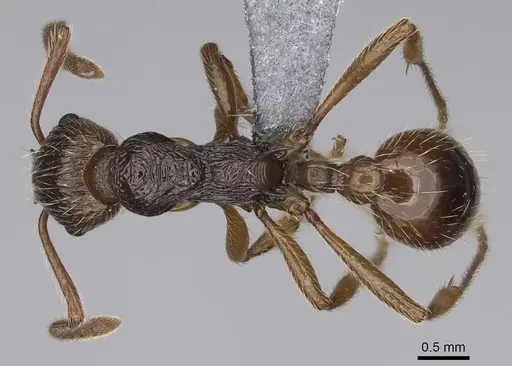
Literature
Loading...Loading products...