

Myrmica margaritae
- Scientific Name
- Myrmica margaritae
- Tribe
- Myrmicini
- Subfamily
- Myrmicinae
- Author
- Emery, 1889
- Distribution
- Found in 1 countries
Myrmica margaritae Overview
Myrmica margaritae is an ant species of the genus Myrmica. It is primarily documented in 1 countries , including China. Detailed taxonomic data and occurrence records can be further explored via authoritative databases such as AntWeb or the Global Biodiversity Information Facility (GBIF).
Myrmica margaritae
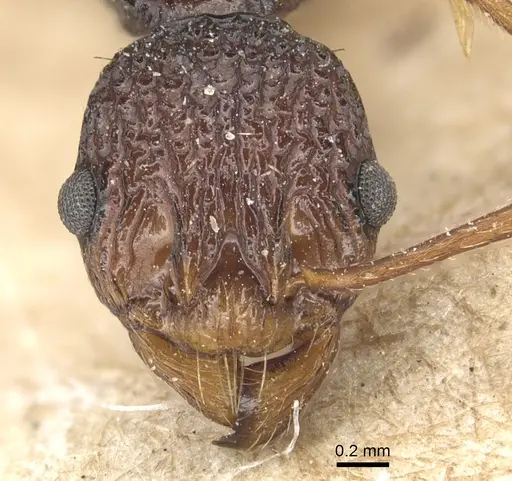
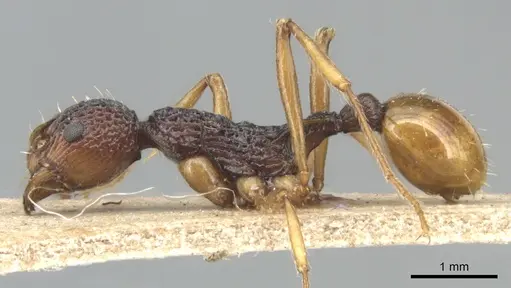
Myrmica margaritae is a small to medium-sized Myrmica ant native to Southeast Asia, particularly found in India, Myanmar, and southern China. Workers measure 4.5-6.2mm with a distinctive appearance featuring very coarse longitudinal striations on the head and a relatively hairless body compared to other Myrmica species. The head and mesosoma are reddish-brown to dark brown, while the gaster ranges from orange-yellow to yellowish-brown. This species belongs to the ritae species group and is known for its extremely coarse head sculpture, one of the most distinctive features among Myrmica ants, with only four rugae between the frontal carinae at eye level. Queens reach 7.5-7.8mm and closely resemble workers in coloration and sculpture. The species has been recorded at altitudes between 1000 and 1900 meters, primarily in forested regions.
Quick Summary
- Difficulty: Unknown, likely Medium
- Origin & Habitat: Southeast Asia, found in India (Meghalaya), Myanmar (northern Burma), and southern China (Yunnan, Sichuan, Hunan, Hubei, Anhui, Zhejiang). Inhabits forested areas at elevations of 1000-1900m, including pine forests and sacred forest areas [1][2][3].
- Colony Type: Colony structure is unconfirmed. Based on typical Myrmica patterns, likely single-queen (monogyne) colonies, though this has not been directly documented for this species.
- Size & Growth:
- Queen: 7.5-7.8mm [1]
- Worker: 4.5-6.2mm [1][4][2]
- Colony: Unknown, no colony size data available for this species
- Growth: Unknown, estimated based on genus patterns
- Development: 6-10 weeks (estimated based on typical Myrmica development) (Development timeline is unconfirmed for this specific species. Estimates based on related Myrmica species suggest 6-10 weeks from egg to first worker at optimal temperatures.)
- Antkeeping:
- Temperature: Keep at room temperature, roughly 20-24°C. No specific thermal data exists for this species, but Myrmica generally tolerate a range from 18-26°C. A gentle gradient allowing workers to choose their preferred temperature is ideal.
- Humidity: Moderate to high humidity preferred, similar to other Myrmica species. Keep nest substrate consistently moist but not waterlogged. Provide a water source.
- Diapause: Likely yes, Myrmica species typically require a winter rest period (diapause) of 2-3 months at reduced temperatures (5-10°C). This has not been directly documented for M. margaritae but is expected based on genus patterns and its temperate to subtropical distribution.
- Nesting: In nature, likely nests in soil or under stones in forested areas. In captivity, standard Myrmica setups work well, test tubes for founding colonies, Y-tong or plaster nests for established colonies. Provide soil or sand as substrate.
- Behavior: Myrmica margaritae is a typical Myrmica in behavior, workers are moderately aggressive and will defend the nest. They have a functional stinger and can deliver a mild sting. Workers are active foragers, primarily hunting small insects and tending aphids for honeydew. Based on the single feeding record, they prey on scale insects (Matsucoccus sinensis) in pine forests. Escape prevention should be moderate, workers are medium-sized and not particularly prone to escaping compared to tiny ants.
- Common Issues: limited availability, this is a rarely collected species with very few specimens documented, lack of species-specific care data means keepers must rely on genus-level estimates, wild-caught colonies may have parasites or diseases since the species is poorly studied in captivity, hibernation requirements are inferred but not confirmed, improper winter care could cause colony failure, coarse sculpture and sparse pilosity may make them more visible but also more sensitive to environmental conditions
Appearance and Identification
Myrmica margaritae workers are small to medium-sized ants measuring 4.5-6.2mm. They have a distinctive appearance that sets them apart from most other Myrmica species. The most notable feature is the extremely coarse sculpture on the head dorsum, there are only four rugae between the frontal carinae at the level of the eyes, which is unusually sparse. The head and mesosoma are reddish-brown to deep brown, while the gaster is orange-yellow to yellowish-brown. Another unusual characteristic is the very sparse pilosity, they have relatively few standing hairs on the occipital margin and alitrunk dorsum compared to other Myrmica. The propodeum spines are slender and point backward without spreading. Queens are larger at 7.5-7.8mm and possess three ocelli, with thoracic structure adapted for flight. [1][4][2]
Distribution and Habitat
This species is found across Southeast Asia, with documented records from India (particularly Meghalaya in the East Khasi hills), Myanmar (northern Burma), and southern China. In China, records exist from Yunnan, Sichuan, Hubei, Hunan, Anhui, Zhejiang, Guangxi, Fujian, and Taiwan. They have been collected at altitudes between 1000 and 1900 meters, suggesting they prefer cooler montane to subalpine environments. The altitude range is quite broad, from 1000m up to 1900m elevation. In India, they have been found in the sacred forest of Mawphlang in Meghalaya, and in China they are known to inhabit pine forests where they feed on scale insects. [1][2][3]
Feeding and Diet
Based on limited field observations, Myrmica margaritae is predatory on scale insects. Specifically, they have been documented feeding on adult Matsucoccus sinensis in pine forests in Hubei Province, China. This suggests their primary diet in nature consists of small insects, particularly soft-bodied homopterans like scale insects. In captivity, they should be offered a typical Myrmica diet: protein sources such as small insects (fruit flies, small crickets, mealworms), and sugar sources including sugar water, honey, or honeydew. Like other Myrmica, they likely benefit from regular protein feeding and constant access to sugar water. The preference for scale insects suggests they may be more specialized predators than some generalist Myrmica, so offering a variety of small live or frozen insects is advisable. [1]
Temperature and Seasonal Care
No specific temperature requirements have been documented for Myrmica margaritae. However, based on their distribution in temperate to subtropical Asia and altitude range of 1000-1900m, they likely prefer cooler conditions than tropical ants. Keep them at room temperature, ideally in the range of 20-24°C. Since this is a mountain species from higher elevations, they may tolerate and even prefer temperatures on the cooler end of the Myrmica range. For winter care, Myrmica species typically require a diapause (hibernation) period of 2-3 months at temperatures between 5-10°C. This is likely necessary for M. margaritae as well, though not directly documented. Provide a gradual cooling period in autumn and a stable cold period through winter to support healthy colony cycles.
Nesting and Colony Setup
In the wild, Myrmica margaritae likely nests in soil or under stones in forested areas, similar to other Myrmica species. The limited collection data suggests they prefer shaded, cooler microhabitats at higher elevations. For captive care, standard Myrmica setups work well. For founding colonies, use a test tube setup with a water reservoir and cotton plug, buried at an angle in substrate. For established colonies, Y-tong nests, plaster nests, or naturalistic setups with soil work well. Provide a moisture gradient so workers can regulate humidity themselves. The coarse sculpture and sparse pilosity of this species are natural characteristics, not indicators of poor health, they are simply less hairy than most Myrmica.
Availability and Collection
Myrmica margaritae is one of the rarer Myrmica species in the antkeeping hobby. It is not commonly available from suppliers because it has been documented from relatively few specimens and has a limited distribution in remote mountainous regions. The species was originally described from only two type specimens collected in 1887 in northern Burma. Recent surveys have expanded the known range to include parts of China and India, but wild colonies remain difficult to locate. If available, expect to pay a premium price. Captive breeding is rare since the species is not commonly kept. Prospective keepers may need to connect with specialized collectors or breeders who work with rare Asian Myrmica species.
Frequently Asked Questions
How long does it take for Myrmica margaritae to produce first workers?
The exact development timeline is unconfirmed for this species. Based on typical Myrmica development patterns, expect approximately 6-10 weeks from egg to first worker at optimal temperatures (around 20-24°C). The claustral founding period likely takes 4-6 weeks before eggs appear, then another 4-8 weeks for brood development.
What do Myrmica margaritae ants eat?
Based on field observations, they are predatory on scale insects (specifically Matsucoccus sinensis). In captivity, offer small insects like fruit flies, small crickets, or mealworms as protein. They also need sugar sources, provide sugar water, honey, or honeydew regularly. They may be more specialized predators than generalist Myrmica.
Do Myrmica margaritae ants sting?
Yes, like other Myrmica species, they have a functional stinger and can deliver a mild sting. However, they are not considered dangerously aggressive and typically only sting when directly threatened or handled roughly.
What temperature should I keep Myrmica margaritae at?
Keep them at room temperature, ideally 20-24°C. As a species from higher elevations (1000-1900m) in temperate to subtropical Asia, they likely prefer cooler conditions than many other ants. Avoid temperatures above 26°C.
Do Myrmica margaritae need hibernation?
Yes, hibernation is likely required. Myrmica species typically need a winter rest period of 2-3 months at reduced temperatures (5-10°C). Provide this diapause period in winter to support normal colony cycles and reproductive health.
How big do Myrmica margaritae colonies get?
Colony size data is not available for this species. Based on typical Myrmica patterns, colonies likely reach several hundred workers over several years. They are not among the largest Myrmica species.
Is Myrmica margaritae a good species for beginners?
No. This is not a recommended species for beginners. It is rarely available, poorly documented in captivity, and care must be based on genus-level estimates rather than species-specific data. The limited availability and lack of captive breeding success stories make it a species for experienced keepers interested in rare Asian Myrmica.
Can I keep multiple Myrmica margaritae queens together?
The colony structure is unconfirmed for this species. Based on typical Myrmica patterns, they likely form single-queen colonies. Combining unrelated queens is not recommended and has not been documented for this species.
Where is Myrmica margaritae found?
Myrmica margaritae is found in Southeast Asia, specifically India (Meghalaya), Myanmar (northern Burma), and southern China (Yunnan, Sichuan, Hubei, Hunan, Anhui, Zhejiang). They inhabit forested areas at elevations between 1000 and 1900 meters.
How do I identify Myrmica margaritae?
They have extremely coarse sculpture on the head with only four rugae between the frontal carinae at eye level, this is their most distinctive feature. They also have notably sparse body pilosity (fewer hairs than typical Myrmica). Workers are 4.5-6.2mm with reddish-brown to dark brown head and mesosoma, and orange-yellow to yellowish-brown gaster.
References

This caresheet is licensed under CC BY-SA 4.0 .
CASENT0904097
View on AntWeb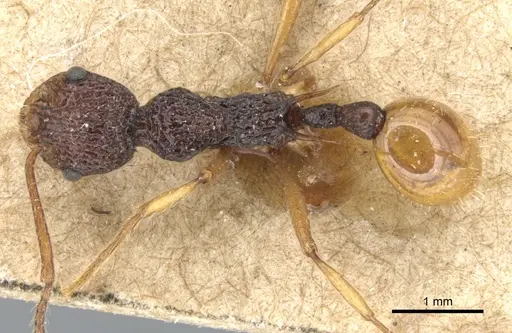
Literature
Loading...Loading products...