

Myrmica inezae
- Scientific Name
- Myrmica inezae
- Tribe
- Myrmicini
- Subfamily
- Myrmicinae
- Author
- Forel, 1902
- Distribution
- Found in 1 countries
Myrmica inezae Overview
Myrmica inezae is an ant species of the genus Myrmica. It is primarily documented in 1 countries , including India. Detailed taxonomic data and occurrence records can be further explored via authoritative databases such as AntWeb or the Global Biodiversity Information Facility (GBIF).
Myrmica inezae
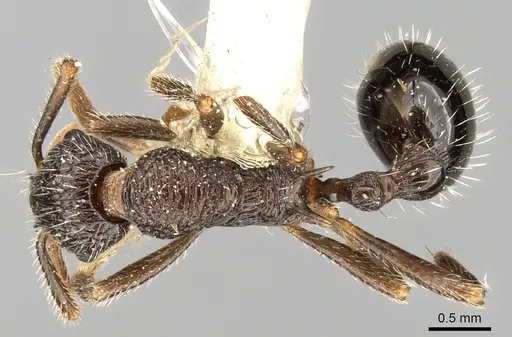
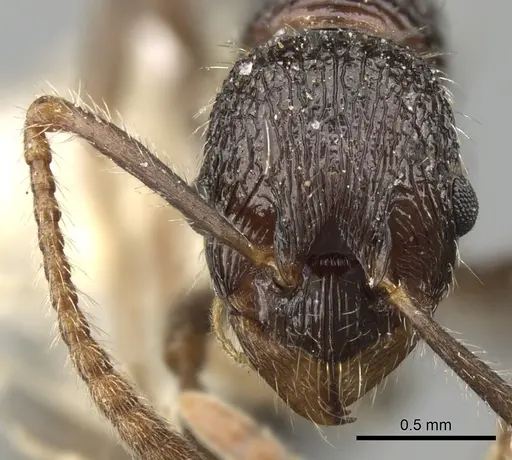
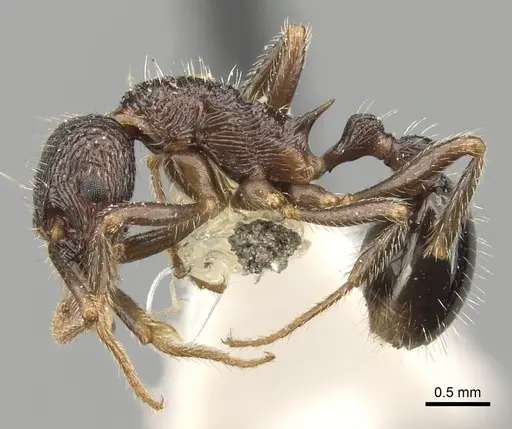
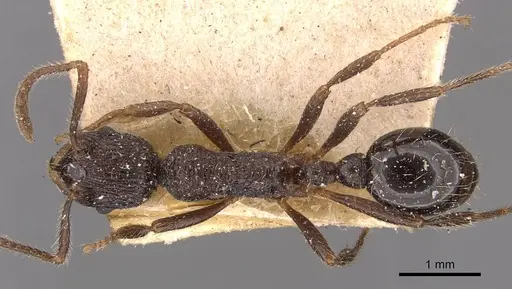
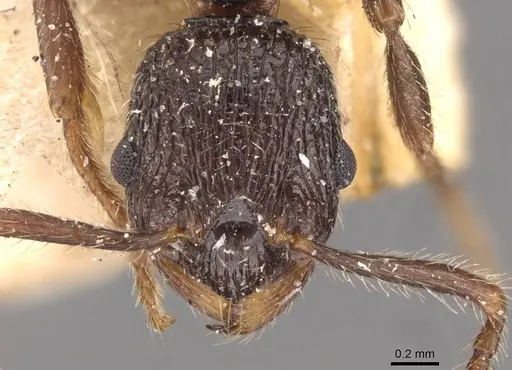
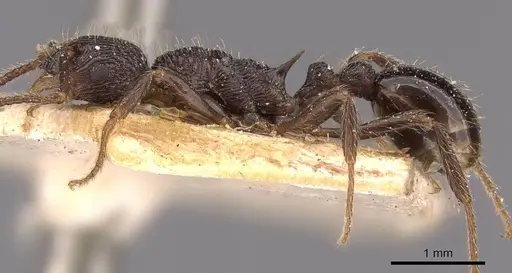
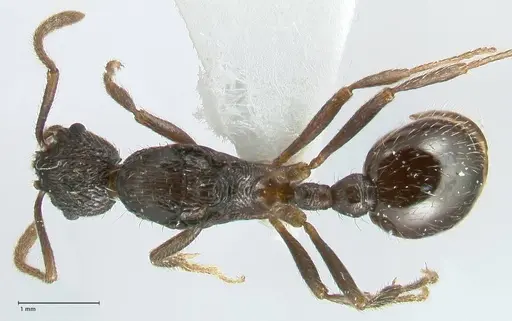
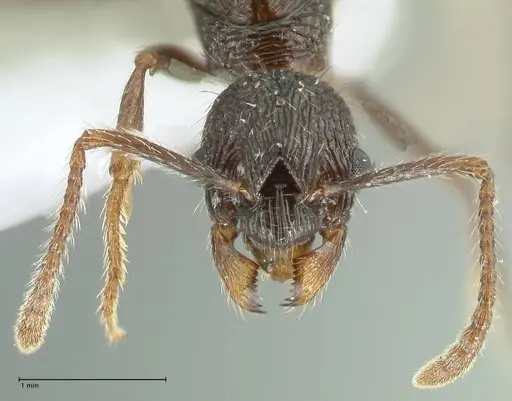
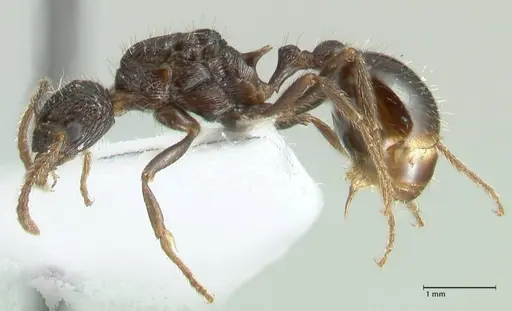
Myrmica inezae is a distinctive Himalayan ant species belonging to the inezae species group. Workers are characterized by their long scapes, elongated petioles with notably long and thin peduncles, and relatively long propodeal spines. The entire mesosoma (the middle body section) has coarse transverse rugae (wrinkles), making them quite recognizable among Myrmica species. Workers reach around 5.9mm in total length [1]. This species is endemic to the Indian Himalayas, found at high elevations between 1900-3000m above sea level [2][3].
What makes M. inezae particularly interesting is its colonial structure and survival strategy in harsh mountain conditions. These ants are polygynous (multiple queens per colony) and form colonies of 100-150 workers [3]. Rather than founding colonies independently, mated queens are typically adopted by established colonies, this is likely an adaptation to survive the extreme Himalayan winters, as solitary hibernation could be lethal [3]. The life cycle appears slower than most other Myrmica species that inhabit open areas [3].
Quick Summary
- Difficulty: Medium
- Origin & Habitat: Endemic to the Indian Himalayas (Uttarakhand, Himachal Pradesh) at elevations of 1900-3000m. Nests are found under stones and in rotten logs in shady locations, typically in areas with Cedrus and Pinus trees and dense ground vegetation [2][3].
- Colony Type: Polygynous (multiple queens per colony) with 100-150 workers. Mated queens are adopted by established colonies rather than founding independently [3].
- Colony: Polygyne
- Size & Growth:
- Queen: Not specifically measured in primary literature, estimated similar to related Myrmica species at 5-7mm based on genus patterns
- Worker: 5.9mm total length, head length 1.16-1.28mm, head width 0.90-0.98mm [1]
- Colony: 100-150 workers [3]
- Growth: Slow, appears slower than most Myrmica species in open habitats [3]
- Development: Unconfirmed, no direct development data available. Based on typical Myrmica genus patterns and slow life cycle noted for this species, estimate 8-12 weeks at optimal temperature. (The slow life cycle noted in research suggests development takes longer than many common Myrmica species. Larval stages have been described in detail with three instars [3].)
- Antkeeping:
- Temperature: Keep nest area around 15-20°C. In the wild, nest temperature never exceeds 17°C even when air reaches 21-30°C [2]. This is a cool-adapted species, avoid overheating.
- Humidity: Moderate to high humidity (54-79% range in natural habitat). Keep substrate consistently moist but not waterlogged. Provide a gradient with slightly drier areas available.
- Diapause: Yes, these ants are adapted to high-altitude Himalayan conditions with cold winters. Expect reduced activity during winter months. Mated queens overwinter until March [3].
- Nesting: Prefers cool, shaded nesting sites. In captivity, they do well in test tubes or acrylic nests placed in a cool area away from direct heat. Naturalistic setups with stones or rotting wood pieces work well. Keep the nest in a cool location, this species clearly prefers temperatures lower than typical room temperature.
- Behavior: Workers are active foragers but prefer cooler conditions. They nest under stones and in rotting wood in the wild, so they appreciate having dark, enclosed nest spaces. Being a Myrmica species, they can sting if threatened, though the sting is mild. Escape risk is moderate, they're not particularly small but can squeeze through small gaps. Colonies are polygynous, so multiple queens coexist peacefully. The slow-moving nature and preference for cool conditions makes them less aggressive than some Myrmica species.
- Common Issues: overheating is the biggest threat, these ants naturally live in cool mountain environments and nest temperatures never exceed 17°C in the wild, solitary queen founding appears rare or absent, mated queens need to be adopted by established colonies, making founding in captivity challenging, slow growth means colonies develop slowly and beginners may lose patience, high-altitude adaptation means they may not tolerate typical room temperatures, keep them cool, polygynous colonies may be difficult to establish from scratch since queens rely on adoption by existing colonies
Natural History and Distribution
Myrmica inezae is endemic to the high-altitude Himalayan regions of India, specifically found in Uttarakhand and Himachal Pradesh states at elevations between 1900-3000 meters above sea level [2][3]. This makes it a true mountain specialist, adapted to cool conditions that prevail at these elevations.
The species nests under stones and in rotting logs in shady locations. Their preferred habitat features dense ground vegetation with Cedar (Cedrus) and Pine (Pinus) trees providing shade [2]. Perhaps most remarkably, while air temperatures at collection sites ranged from 21.4°C to 30°C, the actual nest temperature never exceeded 17°C, these ants are clearly adapted to cool, stable underground conditions [2].
The inezae species group is considered relictual, meaning it's an ancient group that has survived with relatively little change, and is closely related to the ritae species group [3]. The distinctive morphology with coarse transverse rugae on the mesosoma and long propodeal spines makes workers relatively easy to identify within the genus.
Colony Structure and Reproduction
Myrmica inezae is polygynous, meaning colonies contain multiple queens, typically 100-150 workers per colony [3]. This is unusual compared to many Myrmica species and represents an adaptation to harsh Himalayan conditions.
Perhaps the most interesting aspect of this species' biology is how new queens establish themselves. Rather than founding colonies independently (which would require surviving harsh winters alone), mated queens are mostly adopted by established colonies [3]. This strategy likely evolved because solitary hibernation at high altitudes could be lethal, by joining an existing colony, new queens benefit from the colony's collective warmth and resources.
Alates (winged reproductive ants) appear in June and July and take their nuptial flights immediately after emerging [3]. Mated queens then overwinter until March of the following year before becoming active [3]. This timing ensures larvae develop during the warmer summer months.
Temperature and Housing Requirements
This is a cool-adapted species and temperature management is critical for success in captivity. In the wild, nest temperatures never exceed 17°C even when air temperatures reach 21-30°C [2]. The optimal temperature range for this species is 21-30°C air temperature, but the nest should be kept significantly cooler [2][3].
For antkeepers, this means providing a cool nesting area, think 15-20°C for the nest itself. A heating cable is NOT recommended and could be fatal. Instead, keep the colony in a naturally cool location or use room temperature if your home is on the cooler side. Test tubes or acrylic nests work well, placed in an area that stays cool year-round.
Humidity requirements are moderate, natural habitat humidity ranges from 54-79% [2]. Keep the nest substrate consistently moist but not waterlogged. A water tube for humidity works well, and you can provide a moisture gradient with slightly drier areas for the ants to choose from.
Feeding and Diet
Like other Myrmica species, Myrmica inezae is omnivorous with a preference for protein sources. In the wild, they likely forage for small insects and tend aphids for honeydew.
In captivity, offer protein sources such as small insects (fruit flies, small crickets, mealworms) regularly, roughly twice per week. Sugar water or honey should be available constantly, as Myrmica ants have high energy needs for their active foraging. A small drop of sugar water every few days keeps them well-fed.
Given their slow life cycle compared to other Myrmica species [3], be careful not to overfeed, excess food can mold and cause problems. Remove any uneaten prey after 24-48 hours.
Growth and Development
The larval stages of Myrmica inezae have been studied in detail, revealing three distinct instars (growth stages) [3]. First instar larvae measure 1.41-1.47mm, second instar 1.95-2.01mm, and third instar 2.94-3.00mm. The growth rate between instars averages 1.29x, with faster growth between L1-L2 (1.36x) than L2-L3 (1.23x) [3].
The life cycle appears notably slower than most Myrmica species that inhabit open habitats [3]. This makes sense given their high-altitude, cool environment, metabolic processes simply take longer in cooler conditions.
For antkeepers, this means patience is essential. Colonies grow slowly, and founding colonies may take longer to produce their first workers than typical Myrmica species. Don't be alarmed if development seems slow, that's normal for this species.
Winter Care and Diapause
As a high-altitude Himalayan species, Myrmica inezae is adapted to cold winters. In their natural habitat, temperatures drop significantly during winter months at 1900-3000m elevation.
Mated queens overwinter until March before becoming active [3], indicating a natural diapause period. In captivity, you should simulate this seasonal cycle. Reduce temperatures during winter months (roughly October to March in the Northern Hemisphere) to around 5-10°C, a refrigerator or cold garage works well.
During diapause, reduce feeding significantly, the colony will be less active and require less food. Simply keep the colony cool and check that the water tube doesn't freeze. This winter rest period is essential for the health of the colony and aligns with their natural biology.
Frequently Asked Questions
How long does it take for Myrmica inezae to produce first workers?
The exact egg-to-worker timeline is unconfirmed for this species, but it develops slowly compared to other Myrmica species. Based on typical genus patterns and the slow life cycle noted in research, expect 8-12 months from founding to first workers. Patience is essential with this species.
Can I keep multiple Myrmica inezae queens together?
Yes, this species is naturally polygynous, meaning multiple queens coexist in the same colony. In fact, new queens are typically adopted by established colonies rather than founding independently. However, introducing unrelated queens to an established colony may still trigger aggression, proceed cautiously.
What temperature should I keep Myrmica inezae at?
Keep the nest area cool at 15-20°C. This is critical, in the wild, nest temperature never exceeds 17°C even when air reaches 30°C. Do NOT use heating cables or heat mats. If your room is naturally cool (under 22°C), that's ideal. Overheating is the biggest threat to this species.
Do Myrmica inezae ants sting?
Yes, like other Myrmica species, they can sting if threatened. However, their sting is relatively mild compared to some ants. They are not particularly aggressive and will typically flee rather than attack. The sting sensation is similar to a minor bee sting, painful but not dangerous to healthy humans.
Are Myrmica inezae good for beginners?
This species is best suited for intermediate to experienced antkeepers. The main challenges are: keeping them cool (they don't tolerate warmth), slow growth requiring patience, and the difficulty of establishing new colonies since queens are typically adopted by existing colonies rather than founding independently. If you're determined to keep them, start with an established colony if possible.
How big do Myrmica inezae colonies get?
Colonies reach 100-150 workers at maturity [3]. This is smaller than many common Myrmica species, likely due to their high-altitude lifestyle and the challenges of the Himalayan environment. Don't expect massive colonies, these are modest-sized colonies but long-lived.
Do Myrmica inezae need hibernation?
Yes, they require a winter diapause period. As a high-altitude Himalayan species, they are adapted to cold winters. Reduce temperatures to 5-10°C for roughly 6 months (typically October-March). This aligns with their natural cycle where mated queens overwinter until March.
What do Myrmica inezae eat?
They are omnivorous like most Myrmica species. Offer protein (small insects like fruit flies, pinhead crickets, or mealworms) roughly twice weekly. Keep sugar water or honey available constantly. Remove uneaten prey after 24-48 hours to prevent mold.
When do Myrmica inezae alates take nuptial flights?
Alates appear in June and July and take their nuptial flights immediately after emerging [3]. If you're keeping a colony and want to observe reproduction, expect alates during early to mid-summer.
Why are my Myrmica inezae dying?
The most likely cause is overheating, this species cannot tolerate warm temperatures. Nest temperature must stay below 17°C. Other possibilities include: too-dry substrate, overfeeding leading to mold, or attempting to establish a colony from a lone queen (they prefer colony adoption). Check that your setup keeps them cool first.
References

This caresheet is licensed under CC BY-SA 4.0 .
Literature
Loading...Loading products...