

Myrmica angulinodis
- Scientific Name
- Myrmica angulinodis
- Tribe
- Myrmicini
- Subfamily
- Myrmicinae
- Author
- Ruzsky, 1905
- Distribution
- Found in 1 countries
Myrmica angulinodis Overview
Myrmica angulinodis is an ant species of the genus Myrmica. It is primarily documented in 1 countries , including Mongolia. Detailed taxonomic data and occurrence records can be further explored via authoritative databases such as AntWeb or the Global Biodiversity Information Facility (GBIF).
Myrmica angulinodis
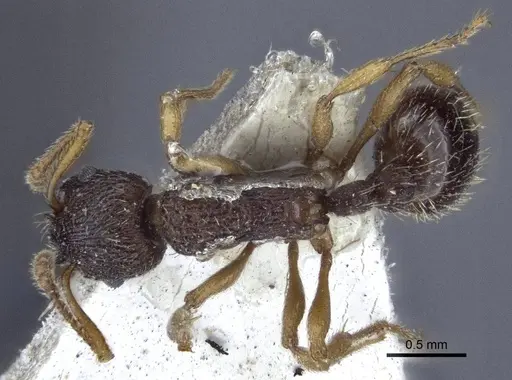
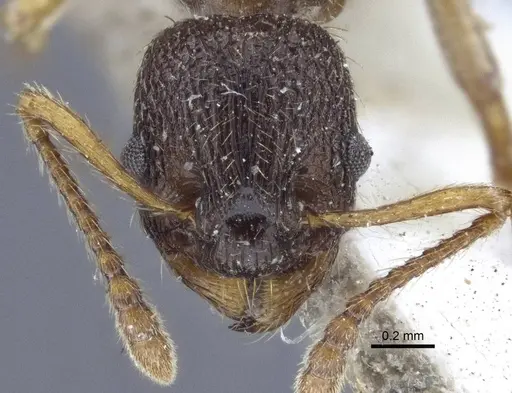
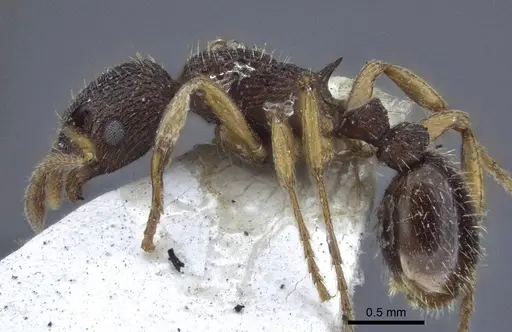
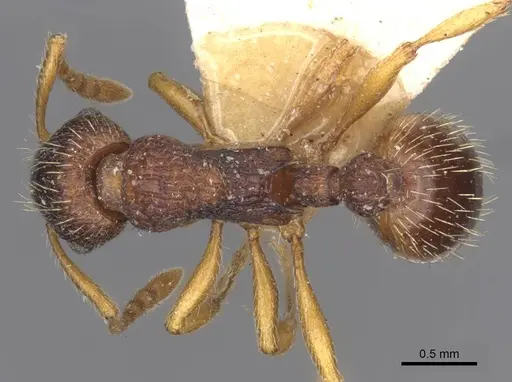
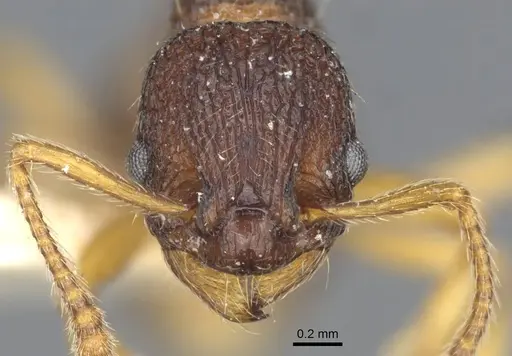
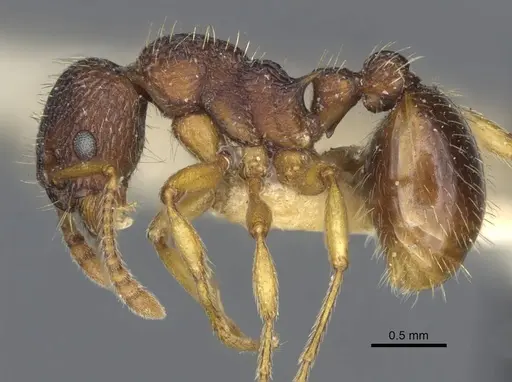
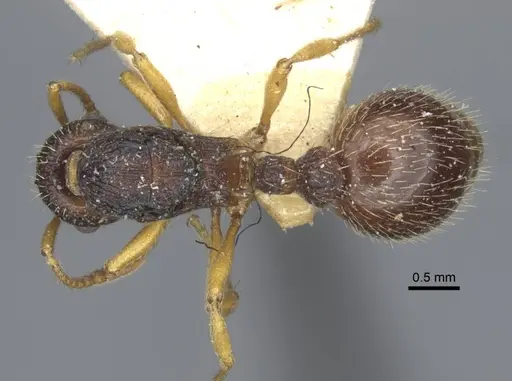
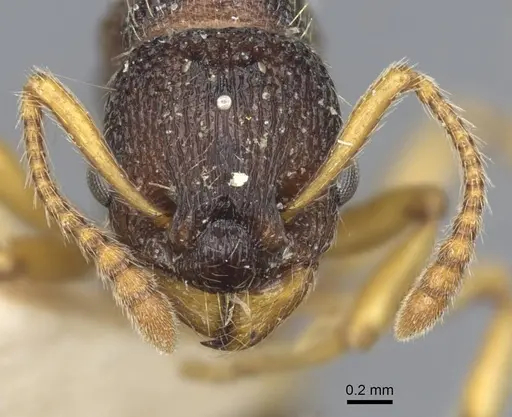
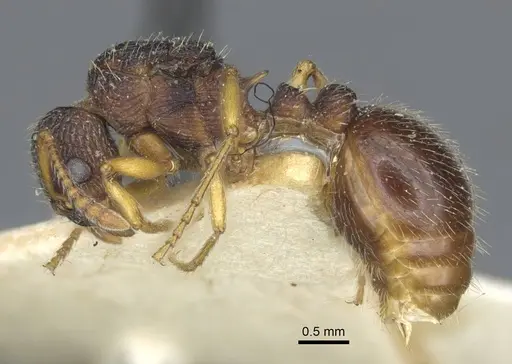
Myrmica angulinodis is a boreal forest ant native to Siberia, Mongolia, northern China, and the Korean Peninsula. Workers measure 4.0-4.5mm with a brown to dark reddish-brown body, often with darker head and gaster, and yellowish-brown legs [1][2]. This species belongs to the kasczenkoi species group and is identified by its distinctly angled scape base (bent at nearly 90°) and sharply angled, subtriangular petiolar node when viewed from the side [3]. In its native range, M. angulinodis is a common taiga species that can make up 60% of ant nests in some old forests, nesting primarily in rotten wood but also in soil and under stones [3]. This species serves as a host for the endangered Maculinea teleius butterfly in northern Mongolia [4][5].
Quick Summary
- Difficulty: Medium
- Origin & Habitat: Boreal forests (taiga) of Siberia, from Kuznetsky Alatau to the Pacific Ocean, also found in Mongolia, northern China, and the Korean Peninsula. In the north of its range it lives from sea level to several hundred meters, while in the Korean Peninsula it inhabits mountain forests and subalpine meadows at 1100-2500m elevation [3][6].
- Colony Type: Multi-queen colonies have been documented, with colonies reaching up to 1700 workers and 30 queens [3]. The species is not strictly monogyne or polygyne, colonies can have multiple queens.
- Colony: Optionally polygyne
- Founding: Claustral
- Size & Growth:
- Queen: Not specifically measured in available papers, typical Myrmica queen size is 5-7mm
- Worker: 4.0-4.5mm body length, head width 0.81-1.00mm [1][2]
- Colony: Up to 1700 workers with 30 queens documented in wild colonies [3]
- Growth: Moderate, typical Myrmica development timeline
- Development: 6-10 weeks based on typical Myrmica genus patterns (Development time inferred from genus-level data, specific species measurements not available)
- Antkeeping:
- Temperature: Keep at 20-24°C. This is a boreal species adapted to cooler conditions, avoid overheating. Room temperature in the low 20s°C is ideal, with a slight gradient if possible.
- Humidity: Moderate to high. Keep nest substrate moist but not waterlogged. These ants prefer damp forest floor conditions, aim for consistently moist soil/wood nesting material.
- Diapause: Yes, this is a boreal species requiring winter hibernation. Provide a cold period at 5-10°C for 3-4 months during winter, simulating natural seasonal cycle.
- Nesting: In nature they nest in rotten wood, soil, and under stones. In captivity, a naturalistic setup with rotting wood pieces or a Y-tong/plaster nest with moisture retention works well. They prefer enclosed dark spaces.
- Behavior: Workers are general scavengers but will attend extrafloral nectaries and collect aphid honeydew [7]. They are not particularly aggressive but will defend their nest. Workers forage on the ground surface and under stones. Escape risk is moderate, use standard Myrmica escape prevention.
- Common Issues: hibernation failure, colonies often die if not given proper cold period, overheating, being a boreal species, they do poorly in warm conditions above 25°C, dry nesting material, they need consistently moist substrate, wild-caught colonies may contain parasites that can devastate captive colonies, slow growth can lead to keeper impatience and overfeeding
Natural History and Distribution
Myrmica angulinodis is a classic boreal forest ant found across Siberia from the Kuznetsky Alatau mountains to the Pacific Ocean, with populations also in Mongolia, northern China, and the Korean Peninsula [6]. This species is strongly associated with taiga forests dominated by spruce, larch, fir, and birch, preferring areas with more open canopy and often living in clearings and glades [3]. In some old-growth Siberian forests, M. angulinodis is one of the most common ant species, accounting for up to 60% of all ant nests [3]. The species shows ecological flexibility, in northern Mongolia about 80% of colonies live in mountain forest biotopes, with roughly two-thirds nesting in rotten wood (usually tree stumps), while the remainder use grass tussocks, soil, or shelter under stones. In drier steppe-like areas, only 15% nest in rotten wood, with the majority choosing soil or stone cover instead [3]. In the Korean Peninsula, this ant inhabits mountain forests and subalpine meadows at elevations between 1100 and 2500 meters [3]. Mating swarms have been observed in early August at hilltops around 1050m elevation [3].
Nest Preferences and Housing
In the wild, M. angulinodis strongly prefers nesting in rotten wood, this is their primary nesting substrate in forested areas [3]. They will also nest in soil and under stones, showing flexibility depending on habitat conditions. For captive care, provide a naturalistic setup with rotting wood pieces or use a Y-tong/plaster nest that can retain moisture. The nest should be dark and enclosed, mimicking their natural underground or within-wood chambers. Because they come from damp boreal forests, the nesting material should be kept consistently moist but never waterlogged. A test tube setup can work for founding colonies, but established colonies do best in setups that allow for moisture retention in wood or soil substrate. Avoid dry acrylic nests, these ants need access to damp conditions.
Feeding and Diet
Like most Myrmica species, M. angulinodis are generalist scavengers that will consume a variety of foods [7]. In the wild they eat dead insects, attend extrafloral nectaries, and collect honeydew from aphids. In captivity, offer a balanced diet of protein sources (small insects like fruit flies, pinhead crickets, mealworms) and sugar sources (sugar water, honey, or diluted honey). Protein should be offered 2-3 times per week, with sugar water constantly available. These ants will readily accept both live and dead prey. Avoid overfeeding, remove uneaten prey after 24-48 hours to prevent mold issues.
Temperature and Seasonal Care
As a boreal forest species, M. angulinodis is adapted to cooler temperatures and does poorly in warm conditions. Keep the nest area at 20-24°C, room temperature in the low 20s°C is ideal. Avoid temperatures above 25°C, as this species is not heat-tolerant. During the active season (spring through fall), room temperature is usually sufficient. In winter, this species requires a proper hibernation period of 3-4 months at temperatures between 5-10°C. This cold period is essential for colony health and triggers natural reproductive cycles. Failure to provide adequate hibernation often leads to colony decline. You can achieve this by moving the colony to an unheated garage, basement, or refrigerator (in a temperature-controlled container) during winter months. [3]
Colony Structure and Growth
M. angulinodis forms multi-queen colonies that can grow quite large. The largest wild colony excavated contained approximately 1700 workers and 30 queens [3]. This indicates the species is facultatively polygyne, colonies can function with either single or multiple queens. Workers are 4.0-4.5mm in body length with a brown to dark reddish-brown coloration, often having a darker head and gaster [1][2]. Growth rate is moderate, typical for the Myrmica genus. Founding colonies start slowly as the claustral queen raises her first workers (nanitics) from stored body reserves. Once the first workers emerge, colony growth accelerates but remains steadier rather than explosive. Expect 6-10 weeks from egg to first worker at optimal temperatures.
Frequently Asked Questions
How long does it take for Myrmica angulinodis to raise first workers?
Expect 6-10 weeks from egg to first worker at optimal temperatures (around 20-24°C). This is typical for Myrmica species. The clausal queen seals herself in and raises her first brood alone using stored fat reserves.
Do Myrmica angulinodis ants need hibernation?
Yes, absolutely. This is a boreal species requiring 3-4 months of cold dormancy at 5-10°C during winter. Without proper hibernation, colonies will weaken and may die. This mimics their natural cycle in taiga forests.
What do Myrmica angulinodis eat?
They are generalist scavengers. Offer small insects (fruit flies, pinhead crickets, mealworms) as protein 2-3 times per week, and keep sugar water or honey available constantly. They also collect honeydew from aphids in the wild.
Can I keep multiple Myrmica angulinodis queens together?
Yes, wild colonies can have up to 30 queens, indicating they are facultatively polygyne. However, introducing unrelated queens in captivity carries risks. It's generally safer to start with a single queen colony.
What size colony do Myrmica angulinodis reach?
Wild colonies can reach up to 1700 workers with 30 queens. In captivity, expect moderate growth over several years to a substantial colony size.
Are Myrmica angulinodis good for beginners?
This species is rated as medium difficulty. They require proper hibernation and prefer cooler, damper conditions than many common ant species. Not the easiest choice for beginners, but manageable with proper research.
What temperature do Myrmica angulinodis need?
Keep them at 20-24°C. This is a cool-adapted boreal species that does not tolerate heat well, avoid temperatures above 25°C.
Where does Myrmica angulinodis live in the wild?
They are native to Siberia, Mongolia, northern China, and the Korean Peninsula. They live in boreal taiga forests, preferring open canopy areas, clearings, and glades. They nest in rotten wood, soil, and under stones.
Do Myrmica angulinodis sting?
Myrmica ants have the ability to sting, though their sting is not particularly potent for human handlers. They may sting if directly threatened or handled roughly.
When do Myrmica angulinodis have nuptial flights?
Mating swarms have been observed in early August (10th-12th) at higher elevations around 1050m. This gives a general timeframe for when winged reproductives might emerge in captivity.
References

This caresheet is licensed under CC BY-SA 4.0 .
Literature
Loading...Loading products...