

Myrmelachista nigrocotea
- Scientific Name
- Myrmelachista nigrocotea
- Tribe
- Myrmelachistini
- Subfamily
- Formicinae
- Author
- Longino, 2006
- Distribution
- Found in 2 countries
Myrmelachista nigrocotea Overview
Myrmelachista nigrocotea is an ant species of the genus Myrmelachista. It is primarily documented in 2 countries , including Costa Rica, Honduras. Detailed taxonomic data and occurrence records can be further explored via authoritative databases such as AntWeb or the Global Biodiversity Information Facility (GBIF).
Myrmelachista nigrocotea
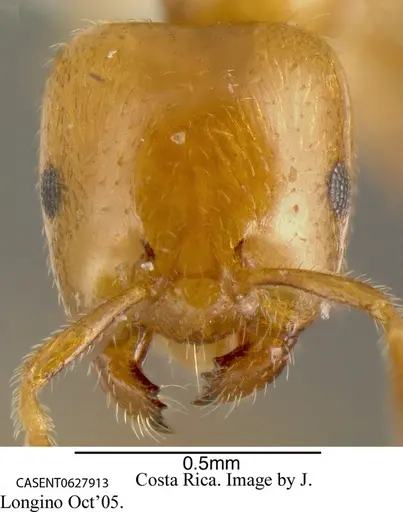
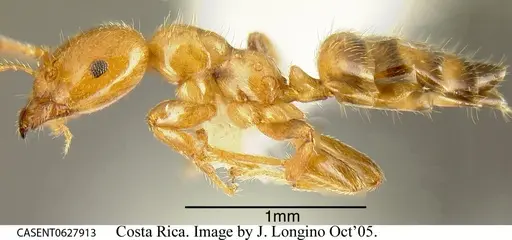
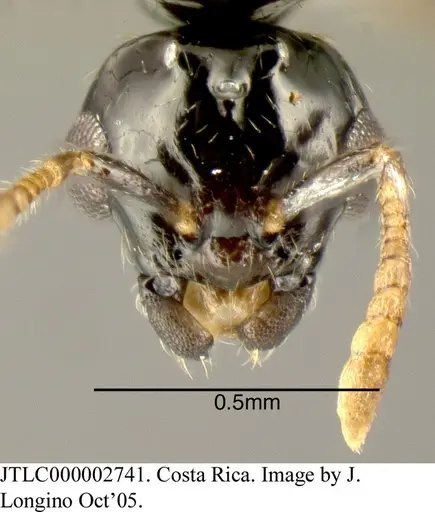
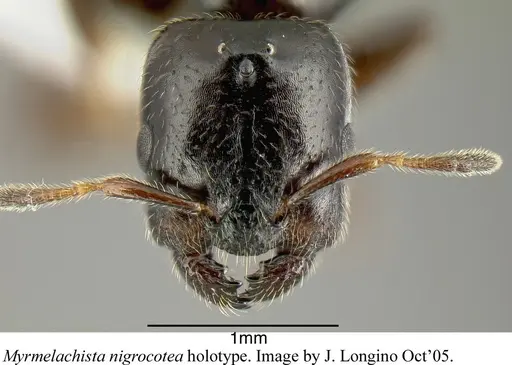
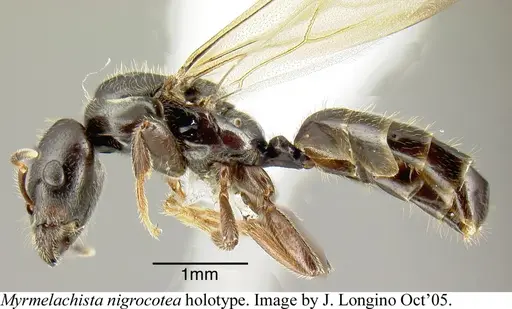
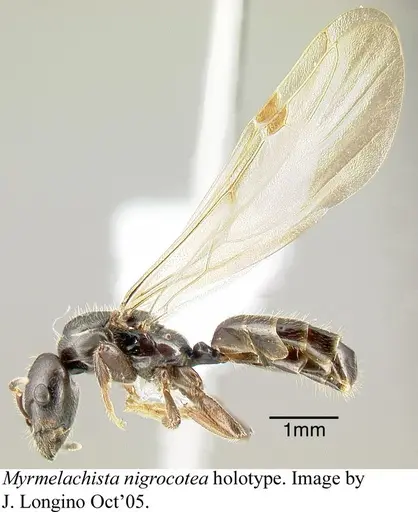
Myrmelachista nigrocotea is a small arboreal ant native to the wet forests of Costa Rica and Honduras. Workers are tiny at just 0.5-0.7mm with a distinctive yellow coloration, while queens are larger at about 1.1-1.2mm and completely black, giving the species its name (nigrocotea means 'black Ocotea' referring to both the queen's color and their preferred host plants). This species nests exclusively inside living stems of understory trees in the laurel and mahogany families, particularly in Ocotea species. Colonies are unusual in that they can have either a single queen or multiple queens (2-4) living together in the same stem system. They are often found tending scale insects (Pseudococcidae) inside their host plants, which provide a steady supply of honeydew [1][2].
Quick Summary
- Difficulty: Medium
- Origin & Habitat: Native to Costa Rica and Honduras, found in mature wet forest habitats at 500-1100m elevation in the Cordillera Volcánica Central, Cordillera de Tilarán, and Cordillera de Guanacaste. They nest inside living stems of understory trees in the Lauraceae and Meliaceae families, particularly Ocotea species [1][2].
- Colony Type: Facultatively polygynous, colonies can have a single queen (monogyne) or multiple queens (polygyny) with 2-4 dealate queens in the same nest. This flexibility in colony structure is unusual among ants [1].
- Colony: Optionally polygyne
- Size & Growth:
- Queen: 1.14-1.22mm head width [1]
- Worker: 0.56-0.68mm head length [1]
- Colony: Unknown maximum, but colonies contain multiple dealate queens and are associated with Pseudococcidae [1]
- Growth: Unknown, likely moderate based on tropical arboreal ant patterns
- Development: Unconfirmed, estimated 4-8 weeks based on typical tropical Formicinae development (Direct development data unavailable. Tropical arboreal ants in this subfamily typically develop faster than temperate species.)
- Antkeeping:
- Temperature: Keep at 22-26°C, they are a tropical wet forest species requiring warm, stable conditions. A gentle gradient allowing them to choose their preferred temperature works best.
- Humidity: High humidity is essential, aim for 70-85% relative humidity. These ants live inside plant stems in a perpetually damp forest understory, so the nest should remain consistently moist but not waterlogged.
- Diapause: No, as a tropical species, they do not require hibernation. However, slight temperature reductions during the dry season may be beneficial if mimicking natural cycles.
- Nesting: Arboreal specialists, they naturally nest inside living plant stems. In captivity, they do well in test tube setups with added stem-like structures or in acrylic nests with narrow chambers. Keep the nest humid and provide access to a small water source. They may accept artificial nests designed for small arboreal species.
- Behavior: These are docile, non-aggressive ants that spend most of their time inside their nest or tending scale insects on plants. Workers are tiny and relatively slow-moving. They are not known to sting and pose no danger to keepers. Their small size means they can escape through very small gaps, excellent escape prevention is necessary. They are arboreal by nature and will readily climb vertical surfaces. Colonies with multiple queens are peaceful and show no aggression between queens [1].
- Common Issues: escape prevention is critical due to their tiny 0.5mm workers, they can squeeze through standard test tube cotton if not careful, humidity management is challenging, too dry and colonies desiccate, too wet and mold becomes a problem, tropical species may struggle in air-conditioned rooms or environments with temperature fluctuations, wild-caught colonies may carry scale insects or other parasites that can complicate captivity, limited captive breeding data means established husbandry techniques are not well-developed
Housing and Nest Setup
Myrmelachista nigrocotea is an arboreal species that naturally lives inside living plant stems. In captivity, you will need to replicate this environment as closely as possible. Test tube setups work well for founding colonies, use a small test tube with a water reservoir at one end, secured with cotton. For established colonies, consider an acrylic nest designed for small arboreal ants with narrow chambers. You can also create a naturalistic setup with small diameter tubes or stems to mimic their natural nesting sites. The key is providing a humid, enclosed space that stays consistently moist. Cover any ventilation holes with fine mesh, these ants are tiny and will escape through standard screen. Connect the nest to an outworld where you can offer food. The outworld should be simple and easy to clean, with a barrier of fluon on the edges to prevent escapes. [1][2]
Feeding and Diet
In the wild, M. nigrocotea tends colonies of Pseudococcidae (scale insects) inside their host plants, feeding on the honeydew these insects produce. This means their diet in captivity should focus on sugar sources and protein. Offer sugar water (1:4 ratio) or honey water (1:3 ratio) in a small container like a cotton ball or test tube, replace every 2-3 days to prevent mold. For protein, offer tiny insects like fruit flies, small mealworms, or pinhead crickets. Since they are small, prey items should be appropriately sized, no larger than their own body size. Some keepers report success with commercial ant foods designed for omnivorous species. Feed protein 2-3 times per week, and always have sugar water available. Remove any uneaten prey after 24 hours to prevent mold issues. [1]
Temperature and Humidity Management
As a tropical wet forest species from Costa Rica, M. nigrocotea requires warm and humid conditions. Keep the nest area at 22-26°C, this matches their natural elevation range of 500-1100m in the Costa Rican cloud forests. Use a small heat mat on one side of the nest to create a gentle temperature gradient, allowing the ants to self-regulate by moving between warmer and cooler areas. Humidity is critical: aim for 70-85% relative humidity inside the nest. The substrate or water reservoir should feel consistently damp but never sitting with standing water. Mist the nest area occasionally if it starts drying out, but avoid direct spraying on the ants. A hygrometer near the nest helps monitor conditions. If you live in a dry climate, you may need to use a humidifier in the room or keep the ant setup in a more enclosed space. [1][2]
Colony Structure and Multi-Queen Care
One of the most interesting aspects of M. nigrocotea is their flexible colony structure. In the wild, colonies can have either a single queen or multiple queens (2-4 dealate queens have been documented in natural colonies). This is called facultatively polygynous, the species can form either type of colony. If you acquire a colony with multiple queens, do not assume they will fight. These queens coexist peacefully in the same nest system. In fact, having multiple egg-layers can accelerate colony growth. However, if you are starting with a single queen, do not attempt to introduce additional queens, this typically leads to aggression. The presence of multiple queens appears to be a natural colony foundation strategy rather than forced aggregation. Monitor colony health regardless of queen number, the key is stability. [1]
Seasonal Care and Activity Cycles
Unlike temperate ant species, M. nigrocotea does not require a true hibernation period. However, they do experience seasonal variation in their natural habitat. The wet forests of Costa Rica have distinct wet and dry seasons, and slight adjustments to their care may benefit them. During the dry season (roughly December through April in Costa Rica), you might slightly reduce humidity and provide slightly cooler temperatures, but do not dramatically change conditions. Keep temperatures within their acceptable range year-round. The ants will naturally reduce activity during cooler periods but remain active. Avoid placing their setup near air conditioning vents or drafty windows, as temperature fluctuations stress colonies. If you notice reduced foraging, ensure food is still available but offered in smaller amounts. [1][2]
Frequently Asked Questions
How long does it take for Myrmelachista nigrocotea to produce first workers?
The exact egg-to-worker development time is unconfirmed for this species. Based on typical tropical Formicinae development patterns, expect approximately 4-8 weeks from egg to first nanitic workers. The timeline depends on temperature, warmer conditions within their range (22-26°C) speed up development, while cooler temperatures slow it down.
Can I keep multiple Myrmelachista nigrocotea queens together?
Yes, this species is facultatively polygynous, meaning colonies can naturally have multiple queens (2-4 documented in the wild). If you acquire a colony that already has multiple queens, they should coexist peacefully. However, do not attempt to combine unrelated foundress queens, this is different from natural polygyny and typically results in aggression.
What do Myrmelachista nigrocotea ants eat?
They are omnivorous with a preference for sugar and protein. Offer sugar water or honey water constantly, and protein sources like small insects (fruit flies, tiny mealworms) 2-3 times weekly. In the wild, they tend scale insects for honeydew, so sugar sources are particularly important. They are too small for large prey items.
Do Myrmelachista nigrocotea need hibernation?
No, they are a tropical species from Costa Rica and do not require hibernation. Keep them at consistent warm temperatures (22-26°C) year-round. Slight seasonal adjustments to humidity are acceptable but not necessary. Avoid cold temperatures below 18°C for extended periods.
Why are my Myrmelachista nigrocotea escaping?
These ants are very small (workers are only 0.5-0.7mm) and can escape through tiny gaps. Ensure all ventilation holes are covered with fine mesh (at least 0.3mm). Apply fluon or similar barrier compounds to the edges of their outworld. Check that cotton plugs in test tubes are packed tightly. Even small gaps in tubing connections can allow escapes.
Are Myrmelachista nigrocotea good for beginners?
This species is rated as medium difficulty. While they are docile and not dangerous, they have specific humidity and temperature requirements typical of tropical arboreal ants. Their small size also makes escape prevention challenging. Some experience with ant keeping is recommended before attempting this species. Beginners should master easier species first.
How big do Myrmelachista nigrocotea colonies get?
The maximum colony size is not well-documented in scientific literature. Based on their biology (arboreal, living in plant stems, tending scale insects), colonies are likely moderate in size, probably dozens to low hundreds of workers. The presence of multiple queens in some colonies can support faster growth. Expect gradual growth over months rather than rapid expansion.
References

This caresheet is licensed under CC BY-SA 4.0 .
Literature
Loading...Loading products...