

Myrmelachista longinoda
- Scientific Name
- Myrmelachista longinoda
- Tribe
- Myrmelachistini
- Subfamily
- Formicinae
- Author
- Forel, 1899
- Distribution
- Found in 2 countries
Myrmelachista longinoda Overview
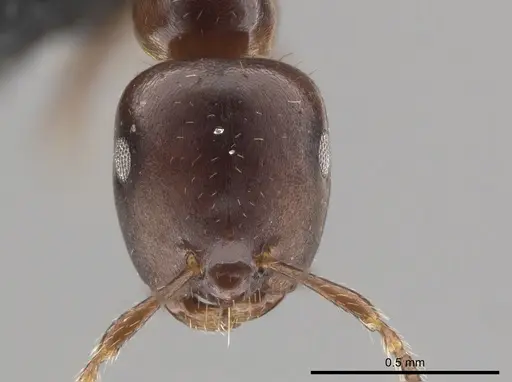
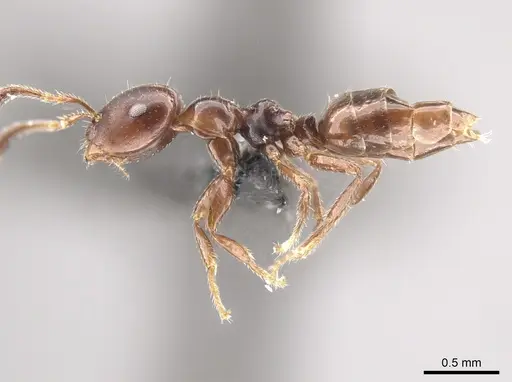
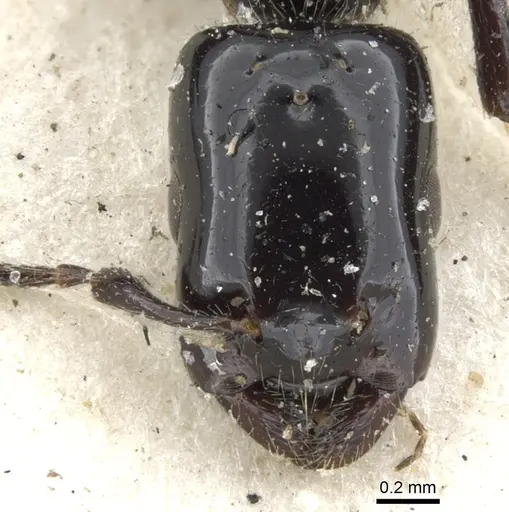
Myrmelachista longinoda is an ant species of the genus Myrmelachista. It is primarily documented in 2 countries , including Brazil, Panama. Detailed taxonomic data and occurrence records can be further explored via authoritative databases such as AntWeb or the Global Biodiversity Information Facility (GBIF).
Myrmelachista longinoda
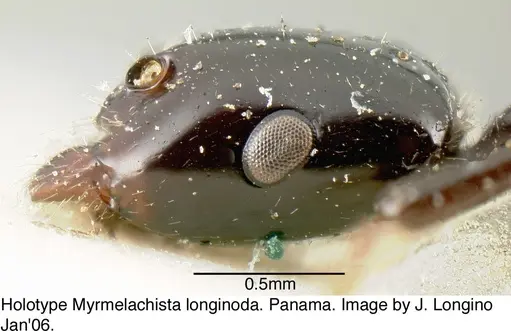
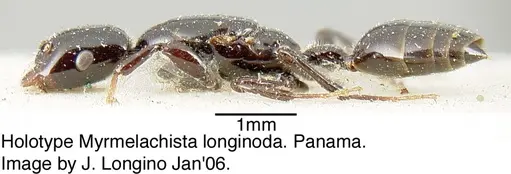
Myrmelachista longinoda is a rare Neotropical ant species described from Panama in 1899. Only the queen has ever been documented, workers remain unknown to science. The genus Myrmelachista belongs to the Formicinae subfamily and is part of the Myrmelachistini tribe. These are small to medium ants, with the known queen measuring at least 6mm. The species has been recorded from Panama and appears in Costa Rica inventories, suggesting a broader Central American distribution [1][2].
Because this species is known from only a single specimen, virtually nothing is documented about its biology, behavior, or colony structure. The genus Myrmelachista includes species that are often associated with vegetation and some are known to inhabit plant cavities, but specific details for M. longinoda remain unconfirmed. This makes it an extremely challenging species to keep, suitable only for advanced antkeepers who enjoy documenting unknown biology.
Quick Summary
- Difficulty: Expert
- Origin & Habitat: Neotropical region, Panama and likely Costa Rica. Specific habitat requirements are unknown [1][2].
- Colony Type: Unconfirmed, only the queen is known, workers have never been described. Colony structure is entirely unknown.
- Size & Growth:
- Queen: At least 6mm (known from holotype queen) [1]
- Worker: Approximately 6-6.2mm based on unconfirmed source [1]
- Colony: Unknown
- Growth: Unknown
- Development: Unconfirmed, no development data exists for this species (No workers have ever been described, so development timeline is entirely unknown. Estimate based on related Formicinae: 6-10 weeks at tropical temperatures)
- Antkeeping:
- Temperature: Start around 24-28°C (tropical species). Monitor colony activity and adjust. Provide a gentle temperature gradient.
- Humidity: Keep moderately humid, around 60-80%. Neotropical species typically prefer damp conditions. Provide a water tube for drinking water.
- Diapause: Unlikely, tropical species from Panama typically do not require hibernation. However, slight seasonal slowdown may occur.
- Nesting: Unknown for this species. Many Myrmelachista species are arboreal or associated with plants. A Y-tong or acrylic nest with narrow chambers may work, but this is entirely speculative. naturalistic setups with plant material may be worth experimenting with.
- Behavior: Completely unstudied. Based on genus patterns, likely relatively docile like other Formicinae. Escape risk is moderate given the ~6mm worker size, standard barriers should suffice but fine mesh is recommended. No aggression or stinging data exists for this species.
- Common Issues: This species is known from only a single queen specimen, workers have never been described, making captive keeping extremely speculative, No documented diet, feeding must be experimental, start with sugar water and small protein sources, No known colony structure means you cannot predict if the species is single-queen or multi-queen, Lack of any published biology means keepers are essentially documenting unknown natural history, Risk of obtaining misidentified ants if purchasing, only the queen is definitively known
Why This Species Is Extremely Challenging
Myrmelachista longinoda represents one of the most poorly documented ant species you could attempt to keep. The entire scientific knowledge consists of a single queen collected in Panama in 1899, workers, males, and any biological observations simply do not exist in the literature [1]. This means you will be essentially pioneering the captive biology of this species entirely from scratch. There are no care guides, no development timelines, no feeding preferences, and no established protocols. Every observation you make would be new scientific contribution. This level of uncertainty makes M. longinoda suitable only for expert antkeepers who enjoy documenting species with no prior captive data [1][2].
Housing and Nesting
Since workers have never been described, nest recommendations are entirely speculative. The genus Myrmelachista includes species that are often found in plant stems, under bark, or in arboreal cavities. A Y-tong or acrylic formicarium with moderate chamber sizes (scaled to ~6mm ants) would be a reasonable starting point. Given the Neotropical origin, humidity should be maintained in the 60-80% range. Provide a water tube connected to the nest for drinking water. Temperature should be warm, in the 24-28°C range. Start with standard conditions and observe colony behavior, adjustments will be necessary as you learn what this species prefers.
Feeding and Diet
No specific feeding data exists for this species. As a Formicinae, it likely has typical ant dietary needs: sugar sources (honey water, sugar water) for energy, and protein (insects) for brood development. Start with a regimen of constant sugar water and protein offerings 2-3 times per week. Monitor acceptance carefully, Neotropical species can have varied diets. Some Myrmelachista species are known to tend aphids or feed on honeydew, so sugar sources are likely accepted. Protein needs are unknown but likely similar to other Formicinae.
Temperature and Seasonal Care
As a species from Panama (tropical Central America), M. longinoda likely does not require hibernation. Keep temperatures in the warm range, roughly 24-28°C. A heating cable on one side of the nest can create a gradient allowing the ants to self-regulate. Since nothing is known about their seasonal behavior, observe for any annual cycles, tropical ants may show subtle seasonal patterns related to wet/dry seasons rather than temperature. No diapause is expected based on the natural range.
Growth and Development Expectations
Since no workers have ever been described, development timeline is entirely unknown. Based on related Formicinae (which includes genera like Camponotus and Lasius), expect egg-to-worker development of roughly 6-10 weeks at optimal tropical temperatures. The first workers (nanitics) will likely be smaller than fully grown workers. Growth rate is unknown but likely moderate like most Formicinae. Given the complete lack of data, treat all estimates as starting points, your colony will be the first to document these parameters scientifically.
Frequently Asked Questions
Is Myrmelachista longinoda suitable for beginners?
No. This species is absolutely not suitable for beginners. It is known from only a single queen collected in 1899, no workers, no biology, no development data, and no established care protocols exist. Keeping this species means pioneering all aspects of its captive care with no guidance. Only expert antkeepers who enjoy documenting unknown biology should attempt this species.
What do Myrmelachista longinoda ants eat?
Diet is completely unconfirmed for this species. Based on genus patterns, they likely accept sugar sources (honey water, sugar water) and protein (insects). Start with constant sugar water and offer small protein items like fruit flies, pinhead crickets, or mealworms. Monitor carefully for acceptance and adjust based on what your colony actually consumes.
How long does it take for Myrmelachista longinoda to produce first workers?
Unknown, no development data exists for this species. Based on related Formicinae patterns, expect roughly 6-10 weeks from egg to first worker at tropical temperatures (24-28°C). This is entirely an estimate since workers have never been described and development has never been documented.
Can I keep multiple Myrmelachista longinoda queens together?
Unknown. Colony structure has never been documented for this species. The genus Myrmelachista shows variation in colony structure, but nothing is known specifically for M. longinoda. Do not attempt combining unrelated queens, there is no data to suggest this is safe or successful. Start with a single queen.
What temperature should I keep Myrmelachista longinoda at?
Start around 24-28°C based on the species' Neotropical (Panama) origin. Provide a temperature gradient so the ants can self-regulate. This is an estimate since no thermal preferences have been documented. Monitor colony activity, if workers seem sluggish, increase temperature slightly, if they avoid the warm area, reduce it.
Do Myrmelachista longinoda need hibernation?
Unlikely. As a tropical species from Panama, they probably do not require a hibernation period. Some slight seasonal slowdown may occur related to wet/dry seasons, but no diapause is expected. Keep temperatures stable year-round.
How big do Myrmelachista longinoda colonies get?
Unknown. Colony size has never been documented. The genus Myrmelachista includes species with colonies ranging from dozens to hundreds of workers. Without any data, colony size expectations are impossible to determine. Your colony may be the first to document maximum size.
Where can I obtain Myrmelachista longinoda?
This species is extremely rare in the antkeeping hobby. It is essentially never available for purchase since only a single queen has ever been documented scientifically. Any colony offered for sale would likely be misidentified or from undocumented wild collection. If you wish to attempt keeping this species, you would need to locate a supplier who specifically caught this species in Panama, which is highly unlikely [1].
References

This caresheet is licensed under CC BY-SA 4.0 .
CASENT0647170
View on AntWeb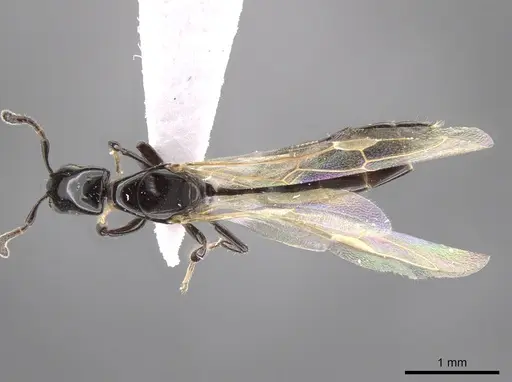
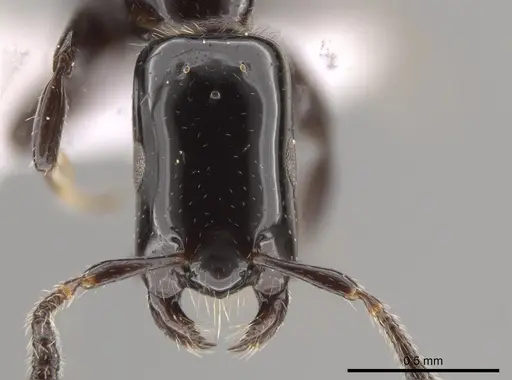
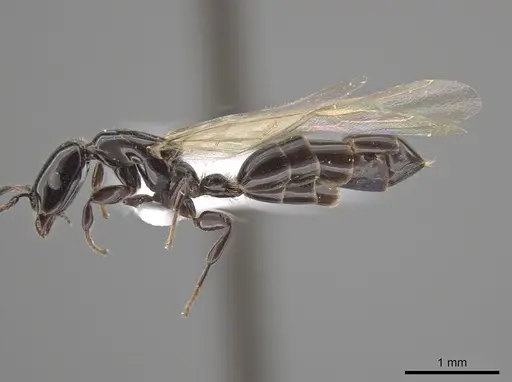
CASENT0647351
View on AntWeb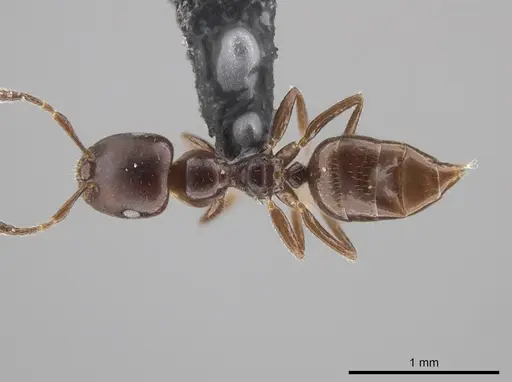
CASENT0903114
View on AntWeb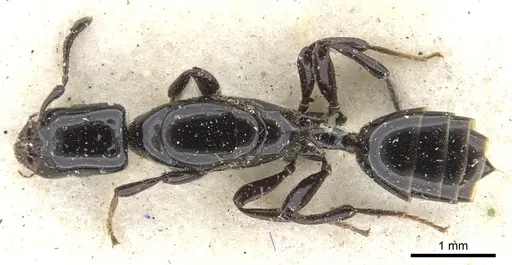
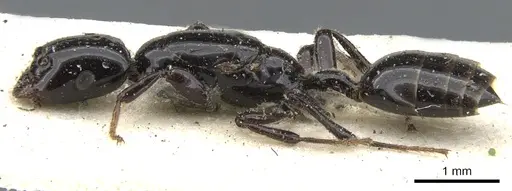
JTL088948
View on AntWeb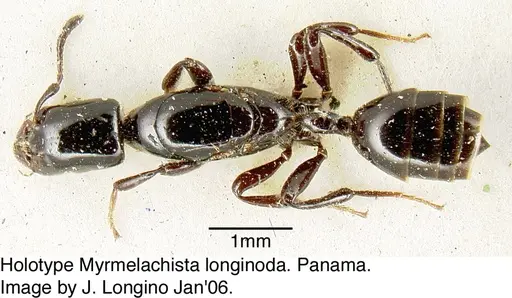
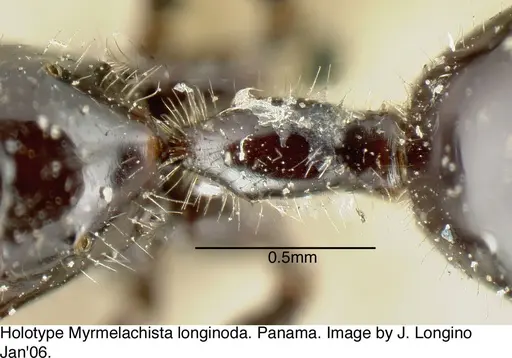
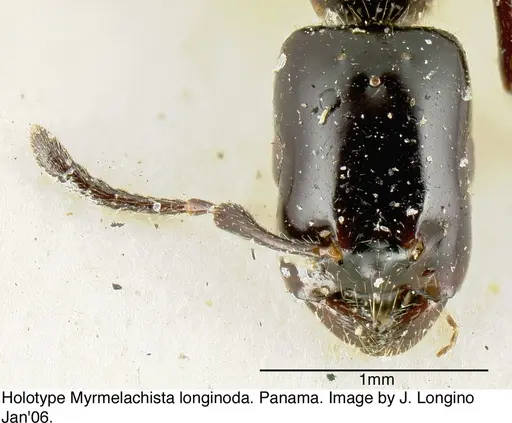
Literature
Loading...Loading products...