

Myrmelachista lauroatlantica
- Scientific Name
- Myrmelachista lauroatlantica
- Tribe
- Myrmelachistini
- Subfamily
- Formicinae
- Author
- Longino, 2006
- Distribution
- Found in 1 countries
Myrmelachista lauroatlantica Overview
Myrmelachista lauroatlantica is an ant species of the genus Myrmelachista. It is primarily documented in 1 countries , including Costa Rica. Detailed taxonomic data and occurrence records can be further explored via authoritative databases such as AntWeb or the Global Biodiversity Information Facility (GBIF).
Myrmelachista lauroatlantica
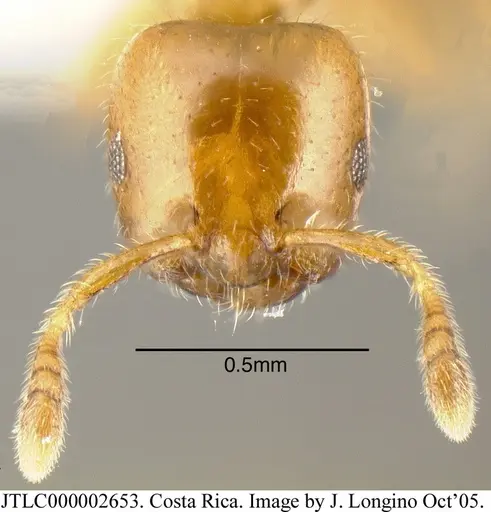
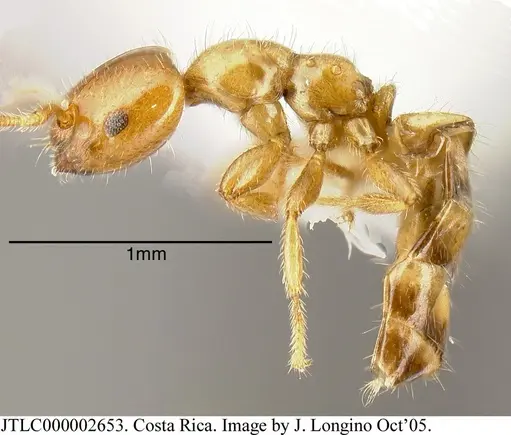
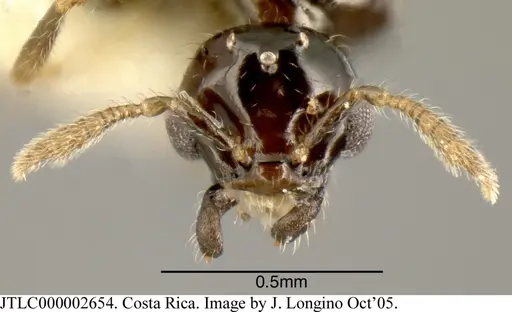
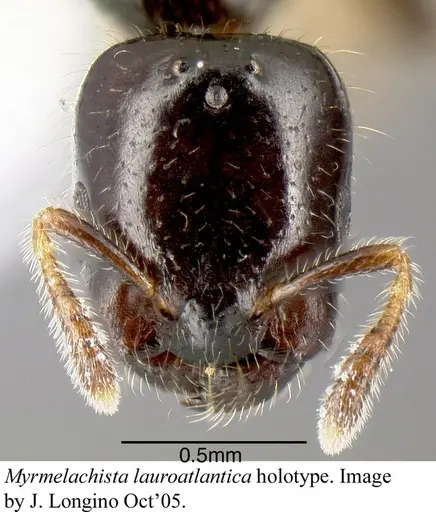
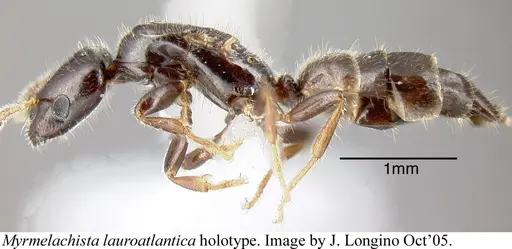
Myrmelachista lauroatlantica is a tiny arboreal ant native to the Atlantic lowland rainforests of Costa Rica. Workers are distinctive yellow with faint dark bands on their abdomen, measuring just 0.42-0.58mm in head width. Queens are striking solid black and significantly larger at 0.76-0.93mm head width. This species is a plant specialist, it lives exclusively inside the living stems of trees in the Lauraceae family, particularly Ocotea and Licaria species. Colonies can be either single-queen or multi-queen, with some nests containing up to 25 reproductive queens [1].
What makes this species unusual is its extreme specialization, nearly every Lauraceae plant in suitable habitat can harbor a colony. They nest in the hollow stems of these plants, using them as both shelter and a sustainable food source. This makes them challenging to keep in captivity since they require access to living plant stems, which most antkeepers cannot easily provide [1].
Quick Summary
- Difficulty: Expert
- Origin & Habitat: Atlantic lowland rainforests of Costa Rica, specifically in the live stems of Lauraceae trees like Ocotea dendrodaphne and Licaria species [1][2].
- Colony Type: Facultatively polygynous, colonies can have a single queen (monogyne) or multiple queens (polygynous). Some stems contain 25+ dealate queens along with workers, brood, and males [1].
- Colony: Optionally polygyne
- Size & Growth:
- Queen: 0.76-0.93mm head width [1]
- Worker: 0.42-0.58mm head width [1]
- Colony: Unknown, likely hundreds to low thousands based on typical Myrmelachista patterns
- Growth: Unknown
- Development: Unconfirmed, no development data exists for this species (Development timeline has not been studied. Related tropical arboreal ants typically develop in 4-8 weeks at optimal temperatures.)
- Antkeeping:
- Temperature: Tropical species, keep at 24-28°C. Use a heating cable on one side of the nest to create a gentle gradient.
- Humidity: High humidity required, rainforest species. Keep nest substrate consistently moist but not waterlogged. Aim for 70-85% humidity in the nest area.
- Diapause: No, this is a tropical species from Costa Rica with no seasonal temperature variation. They do not require hibernation.
- Nesting: This species is an obligate stem-dweller. They will not thrive in standard test tubes or acrylic nests. They require access to living or recently dead plant stems from the Lauraceae family (laurel family). This includes stems from Ocotea, Licaria, Nectandra, and related genera. A naturalistic setup with live plant stems is essentially required for success [1].
- Behavior: These ants are tiny and arboreal. Workers are slow-moving and not aggressive. They are specialized plant-dwellers and will not forage extensively in the open. Their tiny size (under 0.6mm) means escape prevention is critical, they can squeeze through extremely small gaps. Colonies are relatively peaceful and focused on tending scale insects or aphids inside their host stems.
- Common Issues: specialized habitat requirements make captive care extremely difficult, they require living plant stems, tiny size means escapes are likely without fine mesh barriers, no captive breeding data exists, wild colonies are the only source, humidity must be consistently high or colonies will fail, cannot be kept in standard formicariums, need naturalistic plant stem setup
Why This Species Is Difficult to Keep
Myrmelachista lauroatlantica is one of the most specialized ants in the world when it comes to nesting habitat. Unlike most ants that will accept test tubes, acrylic nests, or plaster formicariums, this species is an obligate stem-dweller. They live exclusively inside the living or recently dead stems of trees in the Lauraceae family, particularly Ocotea and Licaria species. In their natural habitat in Costa Rica's Atlantic lowlands, nearly every suitable Lauraceae plant contains a colony [1].
This specialization makes captive breeding extremely challenging. There is no established method for keeping this species in captivity, and no captive breeding records exist. The only colonies available would be wild-caught, which raises significant ethical and practical concerns. If you are set on keeping this species, you would need to create a naturalistic vivarium with actual Lauraceae plant stems, which most antkeepers cannot source or maintain [1].
Natural History and Host Plants
In the wild, these ants are found exclusively in the stems of Lauraceae trees. Around the Tortuguero area on Costa Rica's Caribbean coast, understory trees like Ocotea dendrodaphne and Licaria species are common, and nearly all contain M. lauroatlantica colonies. The ants appear to benefit from the shelter and stable moisture conditions inside plant stems, while potentially tending scale insects or aphids that feed on the plant sap [1].
Colonies can be remarkably large in terms of queen numbers. One small Licaria stem contained 25 dealate (wingless) queens along with workers, brood, and an adult male. Another contained a cluster of 3 dealate queens. A large fallen Licaria tree that produced sucker shoots along its length harbored a massive polygynous colony with clusters of dealate queens in many chambers [1]. This suggests the species can form extensive multi-queen colonies when habitat conditions allow.
Colony Structure and Social Organization
Myrmelachista lauroatlantica shows remarkable flexibility in colony structure. The species is facultatively polygynous, meaning colonies can have either a single queen or multiple queens. Many colonies are monogyne (single queen), but polygynous colonies with multiple reproductive queens are common. This flexibility allows the species to adapt to different stem sizes and resource availability [1].
The multiple queen colonies appear to form when a stem is large enough to support more than one colony's worth of individuals, or when colonies spread to colonize new stems. The presence of adult males in some colonies suggests reproduction occurs within established nests, with new queens likely dispersing to find their own stems [1].
Housing and Nesting Requirements
Standard ant-keeping setups will not work for this species. Test tubes, acrylic nests, and plaster formicariums all fail to provide what this ant needs: access to living plant stems. A naturalistic vivarium with actual Lauraceae plant material is essentially required [1].
If attempting to keep this species, you would need to source stems from Ocotea, Licaria, Nectandra, or related genera in the laurel family. The stems should be recently dead but not rotting, with a hollow center or pith that the ants can inhabit. Maintaining the correct humidity inside these stems while allowing for observation would be challenging. Most antkeepers who succeed with specialized stem-dwelling ants use converted terrariums or vivariums that mimic the rainforest understory.
Temperature and Humidity
As a tropical species from Costa Rica's Atlantic lowlands, this ant requires warm and humid conditions year-round. The region experiences minimal seasonal temperature variation, with typical temperatures in the mid-to-high 20s Celsius. Keep the nest area at 24-28°C using a heating cable on one side to create a gentle gradient.
Humidity should be high, think damp rainforest understory. The nest material should remain consistently moist but never waterlogged. In a naturalistic setup, misting the enclosure regularly helps maintain humidity. However, avoid stagnant air as this promotes mold growth. Use adequate ventilation while maintaining moisture.
Feeding and Diet
Like other Myrmelachista species, these ants likely feed on honeydew from sap-sucking insects (aphids, scale insects, mealybugs) that they tend inside their host stems, along with small insects they capture. In captivity, you would need to establish a sustainable source of honeydew-producing insects within the plant stem system.
Supplement with small live prey like fruit flies, pinhead crickets, or small mealworms. Sugar sources like honey water or sugar water may be accepted, but the primary diet should be protein from small insects. Because they live inside plant stems, feeding occurs within the nest structure rather than in an open foraging area.
Frequently Asked Questions
Can I keep Myrmelachista lauroatlantica in a test tube?
No, this species is an obligate stem-dweller and cannot be kept in standard test tubes or formicariums. They require access to living or recently dead plant stems from the Lauraceae family. This makes them one of the most difficult ants to keep in captivity.
What do Myrmelachista lauroatlantica eat?
They likely feed on honeydew from scale insects and aphids they tend inside their host plant stems, plus small insects. In captivity, you would need to establish a sustainable honeydew source plus offer small live prey like fruit flies.
How big do Myrmelachista lauroatlantica colonies get?
Colony size is not well documented, but polygynous colonies can contain 25+ queens along with workers and brood. Expect hundreds to low thousands of workers in established colonies.
Are Myrmelachista lauroatlantica good for beginners?
No, this species is extremely difficult to keep and not recommended for any level of antkeeper. They require specialized naturalistic housing with Lauraceae plant stems, and no established captive breeding methods exist.
Do Myrmelachista lauroatlantica need hibernation?
No, this is a tropical species from Costa Rica with no seasonal temperature variation. They do not require hibernation or winter cooling. Keep them warm year-round at 24-28°C.
Can I keep multiple queens together?
Yes, this species is facultatively polygynous, meaning colonies naturally can have either a single queen or multiple queens. In the wild, some stems contain 25+ queens. However, combining unrelated foundress queens has not been studied.
Where does Myrmelachista lauroatlantica live?
This species is found only in Costa Rica's Atlantic lowland rainforests. They are specialized inhabitants of live stems of trees in the Lauraceae family, particularly Ocotea and Licaria species.
How long does it take for eggs to develop into workers?
The development timeline has not been studied for this species. Based on related tropical arboreal ants, expect approximately 4-8 weeks from egg to worker at optimal temperatures.
Why are these ants so hard to find for sale?
This species has never been kept in captivity by antkeepers. They require living plant stems, and no established captive breeding methods exist. Wild collection is difficult and ethically questionable given their specialized habitat requirements.
References

This caresheet is licensed under CC BY-SA 4.0 .
Literature
Loading...Loading products...