

Myrmelachista joycei
- Scientific Name
- Myrmelachista joycei
- Tribe
- Myrmelachistini
- Subfamily
- Formicinae
- Author
- Longino, 2006
- Distribution
- Found in 1 countries
Myrmelachista joycei Overview
Myrmelachista joycei is an ant species of the genus Myrmelachista. It is primarily documented in 1 countries , including Costa Rica. Detailed taxonomic data and occurrence records can be further explored via authoritative databases such as AntWeb or the Global Biodiversity Information Facility (GBIF).
Myrmelachista joycei
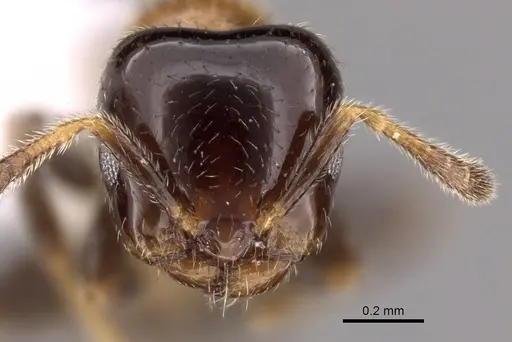
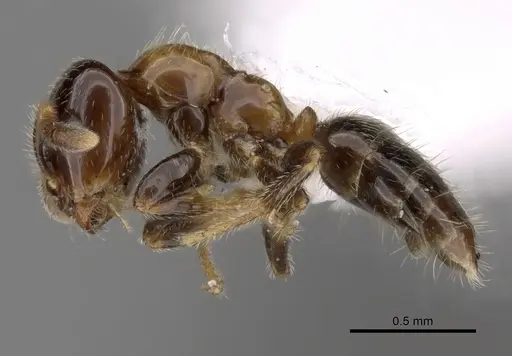
Myrmelachista joycei is a small arboreal ant native to the cloud forests of Costa Rica and Nicaragua. Workers measure 0.56-0.67mm with a dark brown head and gaster, while queens are larger at 0.75-1.08mm with a distinctive black head [1]. This species is remarkably abundant in Monteverde cloud forest, where it ranks among the most common ants in the canopy [1].
What makes M. joycei unusual is its nesting biology, it lives inside live branches of canopy trees, with colonies extending deep into the wood and forming galleries beneath epiphyte mats. Colonies are strongly polygynous, meaning they have multiple egg-laying queens scattered throughout the nest structure [1]. This is a true tree-dwelling ant that rarely if ever comes down to the forest floor.
Quick Summary
- Difficulty: Expert
- Origin & Habitat: Cloud forests of Costa Rica and Nicaragua above 1000m elevation, from the Cordillera de Tilarán south to the Cordillera de Talamanca [1]. They inhabit the canopy of cloud forest trees, nesting in live branches and beneath epiphytes [1].
- Colony Type: Strongly polygynous, colonies contain multiple physogastric (egg-laying) queens scattered throughout the nest structure. Large colonies can occupy an entire tree crown [1].
- Colony: Polygyne
- Size & Growth:
- Queen: 0.75-1.08mm head width [1]
- Worker: 0.56-0.67mm head width [1]
- Colony: Very large, can occupy entire tree crowns [1]
- Growth: Unknown, likely moderate to fast given tropical species
- Development: Unknown, no direct data available (Inferred from related Formicinae: likely 4-8 weeks at tropical temperatures. This is a significant gap in the research.)
- Antkeeping:
- Temperature: Cloud forest species, keep warm but not hot. Estimated 22-26°C based on habitat. Avoid temperatures above 30°C.
- Humidity: Requires high humidity typical of cloud forests. Estimate 70-85% relative humidity. Provide moisture through damp nest materials.
- Diapause: Unknown, tropical cloud forest species may not have true diapause, but may reduce activity in cooler months
- Nesting: Arboreal nesting is essential. This species nests in live wood and requires a nest setup that mimics hollow branches, wooden formicaria, bamboo sections, or custom acrylic nests with wood chambers. They will not accept ground-based nests.
- Behavior: These are arboreal ants that live high in tree canopies. Workers are small and active in the canopy, tending sap-sucking insects (Pseudococcidae and Coccidae) for honeydew [1]. They are not aggressive and lack a functional sting. Escape prevention is critical due to their tiny size, they can squeeze through remarkably small gaps. Colonies are polygynous with multiple queens, so you should not introduce additional queens to an established colony.
- Common Issues: arboreal nature makes captive housing challenging, standard ground nests are completely unsuitable, tiny size means escape prevention must be excellent, use fine mesh and seal all gaps, high humidity requirements can lead to mold if ventilation is poor, polygynous colonies may be difficult to establish from single queen catches, no captive breeding data exists, this is an essentially unstudied species in captivity
Natural History and Distribution
Myrmelachista joycei is endemic to the cloud forests of Central America, found exclusively in Costa Rica and Nicaragua at elevations above 1000m [1]. In Costa Rica, its range extends from the Cordillera de Tilarán south to the Cordillera de Talamanca, with a single record from cloud forest near Matagalpa in Nicaragua [1].
This species is one of the most abundant arboreal ants in the Monteverde cloud forest, occurring in a high frequency of tree crowns [1]. Colonies can become enormous, potentially occupying an entire tree crown. The species nests in live branches of various tree species including Sapium oligoneuron, Vismia, Clusia alata, Cecropia angustifolia, Ficus, Ocotea austinii, and Erythrina [1]. Workers create galleries beneath epiphyte mats and extend deep into the center of live branches, sometimes in branches up to 10cm in diameter [1].
Like other Myrmelachista species, M. joycei tends sap-sucking insects (Pseudococcidae and Coccidae) for honeydew, which forms a significant part of their diet [1].
Housing and Nesting
Housing Myrmelachista joycei presents significant challenges due to their strictly arboreal nature. Standard test tube setups and ground-based formicaria are completely unsuitable, this species will not thrive in horizontal ground nests.
You will need to provide a vertical, arboreal-style nest that mimics their natural hollow branch environment. Options include bamboo sections (natural bamboo with hollow centers), wooden formicaria designed for arboreal species, or custom acrylic nests with narrow vertical chambers. The nest should have multiple chambers connected by small tunnels, replicating the branching structure they naturally inhabit.
Because they nest in live wood in nature, consider providing a wooden nest block or bamboo that the ants can potentially expand into. The nest should be positioned in the upper portion of the enclosure, not on the floor. Include climbing branches or structures that allow workers to move between nest chambers and foraging areas. [1]
Temperature and Humidity
As a cloud forest species from high elevations in Costa Rica, M. joycei requires cooler temperatures than typical tropical ants and high humidity. Aim for temperatures in the range of 22-26°C, avoiding anything above 30°C. The cloud forest environment at 1500m elevation experiences mild temperatures year-round.
Humidity should be kept high, around 70-85% relative humidity. Mist the enclosure regularly and ensure the nest material remains damp but not waterlogged. Good ventilation is essential to prevent mold, but avoid excessive airflow that would dry out the nest. Consider using a moisture reservoir in the nest setup to maintain consistent humidity.
Whether this species requires any form of winter rest is unknown. Tropical cloud forests don't experience harsh winters, so a true diapause is unlikely. However, activity may decrease during the cooler months in your region. [1]
Feeding and Diet
Based on field observations, M. joycei tends sap-sucking insects (Pseudococcidae and Coccidae) and collects honeydew from them [1]. This means they are likely omnivorous with a strong preference for sugar sources.
In captivity, you should provide a constant sugar source such as sugar water, honey, or ant feeders. They will also accept protein in the form of small insects, though their tiny size limits what they can effectively hunt. Offer small prey items like fruit flies, pinhead crickets, or small mealworms. Given their arboreal nature and relationship with honeydew-producing insects, they may be less interested in hunting ground-dwelling prey.
Feed sugar sources continuously and protein 2-3 times per week. Remove uneaten prey after 24-48 hours to prevent mold issues in the humid environment.
Colony Structure and Social Organization
Myrmelachista joycei is strongly polygynous, meaning colonies naturally contain multiple egg-laying queens [1]. In large colonies, physogastric queens (with distended abdomens full of eggs) are scattered throughout the nest structure in clusters [1]. This is fundamentally different from single-queen species.
If you catch a founding queen, she may be one of many that will eventually join the colony. However, starting with a single queen is still the most practical approach for keepers. Do not attempt to introduce additional unrelated queens to an established colony, while polygynous in nature, the introduction of foreign queens typically results in aggression.
Colonies can grow very large in nature, potentially reaching thousands of workers and occupying entire tree crowns [1]. The growth rate in captivity is unknown, but given suitable conditions, you can expect steady growth over several years.
Challenges and Considerations
This is not a species for beginners. The combination of arboreal nesting requirements, high humidity needs, tiny worker size, and lack of captive husbandry data makes M. joycei an expert-level species.
The most significant challenge is providing appropriate housing. You cannot use standard formicarium designs, the ants need vertical, branch-like nest structures. Escape prevention is critical due to their minute size, even small gaps in standard setups will allow workers to escape.
There is essentially no captive breeding data for this species. Everything we know comes from field observations in their natural cloud forest habitat. You will essentially be pioneering captive husbandry for this species, which means careful observation and documentation of your results will be valuable.
Consider whether your setup can maintain the high humidity (70-85%) this species requires without developing mold. Excellent ventilation is key, along with regular cleaning of uneaten food. [1]
Frequently Asked Questions
Can I keep Myrmelachista joycei in a test tube?
No, test tubes are completely unsuitable. This is an arboreal species that nests in live tree branches. You need a vertical nest setup that mimics hollow branches, bamboo sections, wooden formicaria, or custom acrylic nests with narrow vertical chambers.
What do Myrmelachista joycei eat?
They are honeydew-tenders in nature, tending sap-sucking insects (Pseudococcidae and Coccidae) for honeydew. In captivity, provide constant sugar (sugar water, honey) and small protein sources like fruit flies or tiny insects. They will not hunt large prey due to their tiny size.
How long does it take for first workers to appear?
Unknown, this species has not been studied in captivity. Based on related Formicinae, estimate 4-8 weeks at tropical temperatures (24-28°C), but this is a rough guess.
Are Myrmelachista joycei ants good for beginners?
No. This is an expert-level species due to their arboreal nesting requirements, need for high humidity, tiny size making escape likely, and complete lack of captive husbandry data. Standard ant keeping setups will not work.
What temperature do Myrmelachista joycei ants need?
Keep them at 22-26°C. As a cloud forest species from 1500m elevation in Costa Rica, they prefer cooler conditions than typical tropical ants. Avoid temperatures above 30°C.
Can I keep multiple queens together?
Yes, naturally occurring colonies are strongly polygynous with multiple egg-laying queens. However, starting a colony from a single queen is more practical. Do not introduce unrelated queens to an established colony.
Why are my Myrmelachista joycei dying?
The most likely causes are: wrong nest type (not arboreal/vertical), low humidity, temperatures too high, or escapes due to inadequate barriers. This species has very specific requirements that differ from most commonly kept ants.
Do Myrmelachista joycei need hibernation?
Unknown. As a tropical cloud forest species, true hibernation is unlikely. However, they may reduce activity during cooler months. Monitor your colony and adjust care based on their activity levels.
How big do Myrmelachista joycei colonies get?
In nature, colonies can be enormous, potentially thousands of workers occupying entire tree crowns. The captive maximum is unknown since this species has rarely if ever been kept.
References

This caresheet is licensed under CC BY-SA 4.0 .
CASENT0280543
View on AntWeb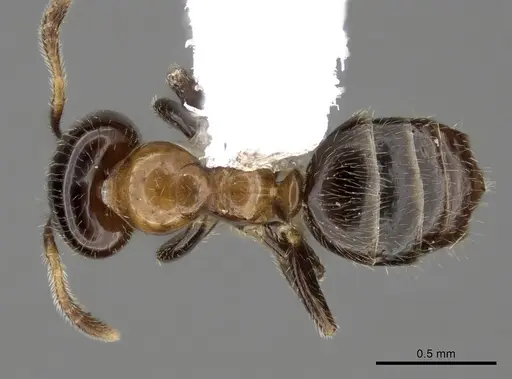
Literature
Loading...Loading products...