

Myrmelachista gagates
- Scientific Name
- Myrmelachista gagates
- Tribe
- Myrmelachistini
- Subfamily
- Formicinae
- Author
- Wheeler, 1936
- Distribution
- Found in 2 countries
Myrmelachista gagates Overview
Myrmelachista gagates is an ant species of the genus Myrmelachista. It is primarily documented in 2 countries , including Dominican Republic, Haiti. Detailed taxonomic data and occurrence records can be further explored via authoritative databases such as AntWeb or the Global Biodiversity Information Facility (GBIF).
Myrmelachista gagates
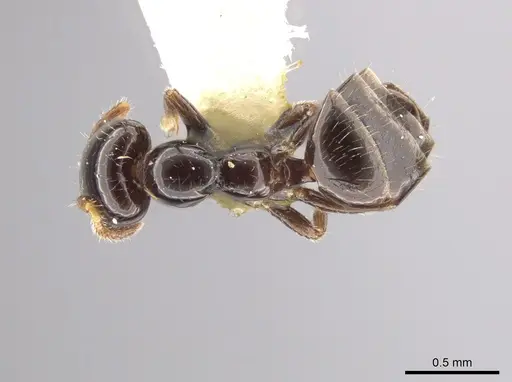
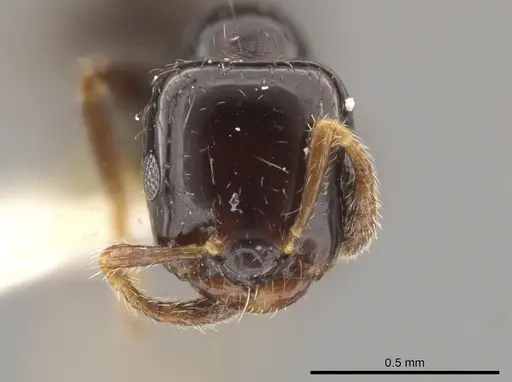
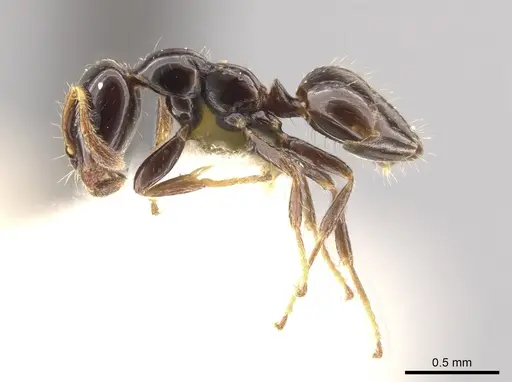
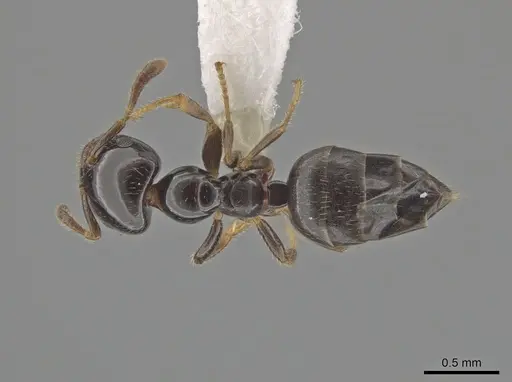
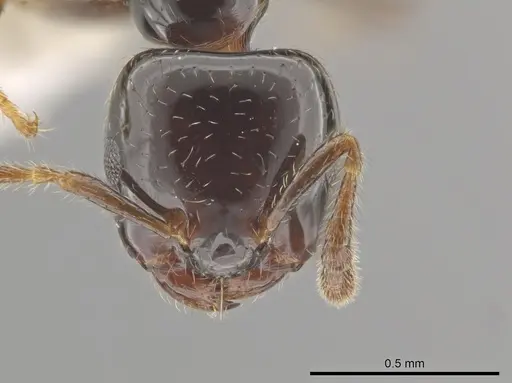
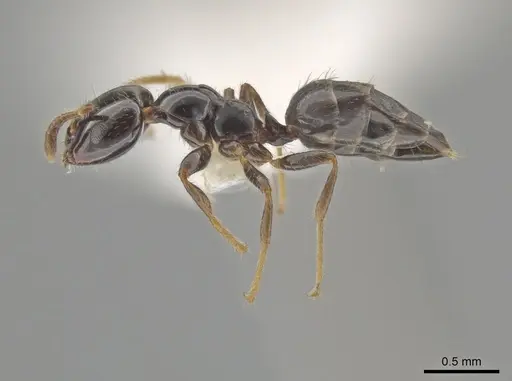
Myrmelachista gagates is a tiny, jet-black ant endemic to the island of Hispaniola in the Caribbean. Workers measure just 1.7mm and have a distinctive smooth, glossy black body with a rectangular-shaped head. They belong to the Formicinae subfamily and are one of only two Myrmelachista species found on Hispaniola. The genus Myrmelachista is unique among ants in having only nine antennal segments (most ants have twelve) with a three-segmented club at the tip. This species was first described from a single worker collected in Haiti in 1934 and has since been found in two locations in the Dominican Republic at high elevations between 1,190-2,134 meters [1][2].
This is an extremely rare species in the wild with virtually no captive husbandry information available. In their natural habitat, they've been found nesting under bark in pine forests and in leaf litter in deciduous transitional forests along riverbanks [1][2]. The combination of their high-elevation distribution and Caribbean origin suggests they may prefer cooler, moderately humid conditions compared to typical tropical ants.
Quick Summary
- Difficulty: Expert
- Origin & Habitat: Endemic to Hispaniola (Haiti and Dominican Republic). Found at high elevations of 1,190-2,134m in pine forests and deciduous transitional forests [1][2]. Type locality is La Visite, Haiti at 6,000-7,000ft elevation [3].
- Colony Type: Unknown, colony structure has not been documented. No queens have been described in scientific literature.
- Size & Growth:
- Queen: Unknown, queens have never been described [3]
- Worker: 1.7mm [3]
- Colony: Unknown, only a handful of workers have ever been collected [1][2]
- Growth: Unknown
- Development: Unknown, no development data exists for this species (No data available on any life stages. Related Myrmelachista species suggest development may take several months, but this is purely speculative.)
- Antkeeping:
- Temperature: Likely prefers cooler conditions given high-elevation habitat. Based on similar high-elevation Caribbean ants, aim for 18-22°C. Avoid overheating, they come from mountains, not lowland tropics.
- Humidity: Moderate to high humidity likely needed. Their forest habitat suggests 60-80% relative humidity with moist substrate. The Dominican Republic collection sites along riverbanks indicate they prefer damp environments.
- Diapause: Unknown, high elevation suggests some seasonal adaptation may be needed. Monitor for colony slowing during winter months.
- Nesting: Natural nesting sites include chambers under bark of live pine trees and leaf litter in forest floors [1][2]. In captivity, a small naturalistic setup with damp substrate and bark or wood pieces would likely suit them. A small acrylic or Y-tong nest with tight chambers scaled to their tiny 1.7mm size would work.
- Behavior: Behavior is unstudied. Based on genus patterns, they are likely generalist foragers that scavenge and tend aphids for honeydew. Their tiny size (1.7mm) makes them excellent escape artists, use fine mesh barriers and ensure all openings are sealed. They are not known to be aggressive but may bite if threatened. Their small size and cryptic habits make them difficult to observe.
- Common Issues: escape prevention is critical due to their tiny 1.7mm size, they can squeeze through standard mesh, no captive husbandry information exists, this is essentially an experimental species, extremely limited availability, wild colonies are rarely found, no information on queen founding or colony establishment, high-elevation origin means they may be sensitive to overheating
Discovery and Rarity
Myrmelachista gagates is one of the rarest ant species in the Caribbean. The species was first described in 1936 by William Morton Wheeler from a single worker collected in La Visite, Haiti at an elevation of 6,000-7,000 feet [3]. For decades, this was the only known specimen. It wasn't until 2014 that researchers found additional specimens, two more workers collected in the Dominican Republic, one from leaf litter in a deciduous forest and another from a nest under pine bark [1][2]. This means in nearly 90 years of study, only three workers of this species have ever been documented. There are no described queens, no observed nuptial flights, and no colony collections. Everything we know about this ant fits in a very small box.
Identification and Distinguishing Features
Identifying Myrmelachista gagates requires understanding what makes this genus unique. All Myrmelachista ants have only nine antennal segments instead of the typical twelve found in most ants. They also have a three-segmented antennal club at the tip of their antennae [3]. Among Caribbean species, M. gagates is distinctive for its smooth, jet-black body and the rectangular shape of its head, which is more sharply angular than related species. It's similar to the Cuban species Myrmelachista rogeri but differs in head and thorax shape, color, and pilosity. The other Myrmelachista species found on Hispaniola is M. ramulorum, which can be distinguished by these physical characteristics. For antkeepers, the tiny 1.7mm size and glossy black coloration are the most reliable field marks.
Natural Habitat and Elevation
This species is a true mountain dweller. Found at elevations between 1,190 and 2,134 meters above sea level, M. gagates occupies highland habitats that are cooler and wetter than the lowland tropics [1][2]. The two known Dominican Republic collection sites illustrate their habitat preferences: one in a deciduous transitional forest along a riverbank (damp, shaded conditions), and another in a pine forest in Valle Nueva National Park where they nested under the bark of a live pine tree [1][2]. This combination suggests they prefer cool, humid forest environments with access to decaying wood or bark for nesting. The high elevation means they experience cooler temperatures year-round than typical Caribbean lowland ants.
Housing and Nesting in Captivity
Since no captive husbandry information exists for this species, we must make educated guesses based on their natural history and related ants. The bark-nesting behavior suggests they would do well in a small naturalistic setup with damp substrate and pieces of wood or bark. Given their tiny 1.7mm size, chambers and passages must be very small, a Y-tong nest or small acrylic formicarium with tight dimensions would be appropriate. The forest habitat indicates they need moderate to high humidity (aim for 60-80%) and should be kept cooler than most tropical ants, perhaps 18-22°C. Avoid temperatures above 25°C. Provide a water tube but monitor for flooding given their small size. Escape prevention is critical, use fine mesh and check all connections regularly.
Feeding and Diet
The diet of M. gagates has never been studied in the wild or captivity. As a member of the Formicinae subfamily (which includes ants like Camponotus and Lasius), they likely have a generalist diet similar to related genera, accepting sugar sources, honeydew, and small insects. However, without any documented feeding observations, this is purely speculative. Start with sugar water or honey diluted with water, and offer small live prey like fruit flies or springtails. Given their tiny 1.7mm size, prey items must be very small. Monitor carefully for acceptance and remove uneaten food to prevent mold. Do not expect this species to be readily available for feeding experiments, they are among the rarest ants in the world.
Challenges and Ethical Considerations
Prospective keepers must understand that Myrmelachista gagates is essentially unknown in ant culture. There are no established husbandry protocols, no experienced keepers to consult, and no captive breeding programs. The species is endemic to a single island and has been found at only a handful of locations. Collecting this species from the wild would be ethically questionable given how rare they are, and no established captive colonies exist to propagate. This caresheet represents educated speculation rather than proven husbandry advice. For most antkeepers, working with better-documented Caribbean species like some Brachymyrmex or Wasmannia species would be far more practical. If you somehow obtain this species, document everything, your observations could contribute to genuine scientific knowledge of one of the world's rarest ants.
Frequently Asked Questions
How long do Myrmelachista gagates ants live?
No data exists on lifespan for this species. Related Myrmelachista queens might live several years, but this is entirely speculative.
Can I keep Myrmelachista gagates in a test tube?
A test tube setup could work as a founding setup, but their tiny 1.7mm size means you need to ensure the cotton is packed tightly to prevent escape. A small naturalistic setup with damp substrate may be better long-term given their natural bark-nesting behavior.
Are Myrmelachista gagates good for beginners?
No. This is an expert-level species with no captive husbandry information whatsoever. There are no established protocols, no captive colonies to learn from, and they are among the rarest ants in the world. Beginners should start with better-documented species.
What do Myrmelachista gagates eat?
Unknown, never documented. Based on genus and subfamily, they likely accept sugar sources and small insects, but this is speculation. Start with diluted honey/sugar water and tiny live prey like fruit flies.
How fast do Myrmelachista gagates colonies grow?
Unknown, no colony development has ever been documented. Even basic metrics like time from egg to worker are completely unstudied.
Do Myrmelachista gagates need hibernation?
Unknown. Their high-elevation habitat (1,190-2,134m) suggests some seasonal adaptation, but specific diapause requirements have never been studied. Monitor your colony for seasonal slowdowns.
Where can I get Myrmelachista gagates?
This species is essentially unavailable in the antkeeping hobby. Only three workers have ever been documented in nearly 90 years of study. There are no known captive colonies. Obtaining this species would require wild collection, which would be ethically questionable given their extreme rarity.
What temperature should I keep Myrmelachista gagates at?
Based on their high-elevation habitat, keep them cooler than typical tropical ants, aim for 18-22°C. Avoid temperatures above 25°C. They likely experience cool, mountain conditions year-round in their natural habitat.
How big do Myrmelachista gagates colonies get?
Unknown, only isolated workers have ever been collected, never a full colony. Colony size estimates are impossible with available data.
References

This caresheet is licensed under CC BY-SA 4.0 .


Literature
Loading...Loading products...