

Myrmelachista flavoguarea
- Scientific Name
- Myrmelachista flavoguarea
- Tribe
- Myrmelachistini
- Subfamily
- Formicinae
- Author
- Longino, 2006
- Distribution
- Found in 1 countries
Myrmelachista flavoguarea Overview
Myrmelachista flavoguarea is an ant species of the genus Myrmelachista. It is primarily documented in 1 countries , including Costa Rica. Detailed taxonomic data and occurrence records can be further explored via authoritative databases such as AntWeb or the Global Biodiversity Information Facility (GBIF).
Myrmelachista flavoguarea
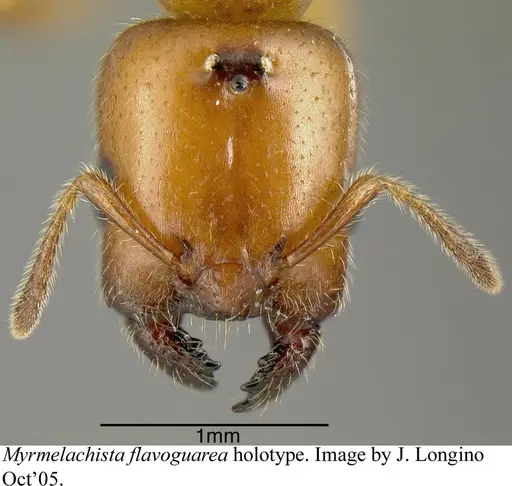
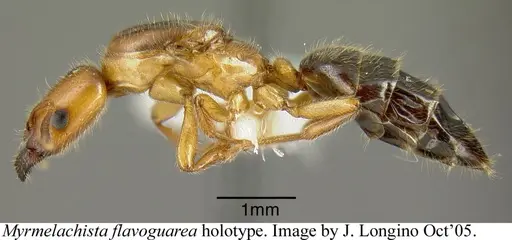
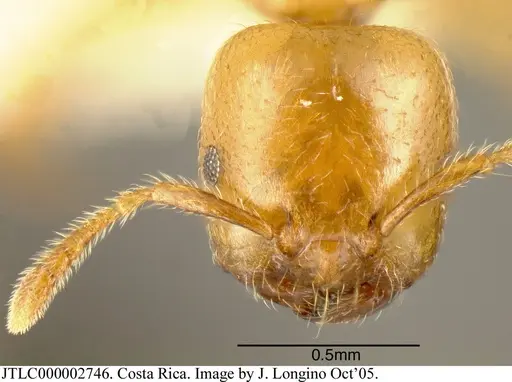
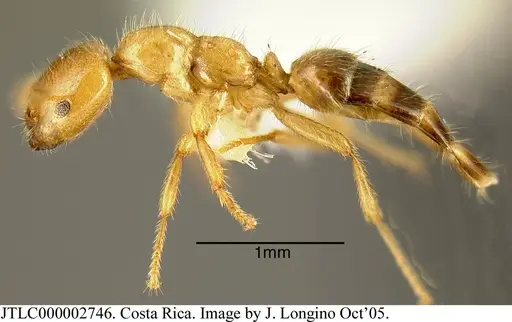
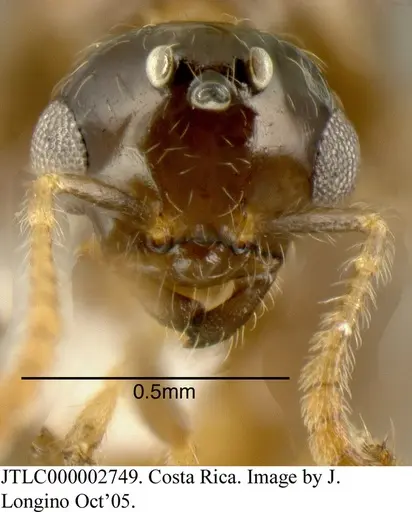
Myrmelachista flavoguarea is a tiny arboreal ant species native to Costa Rica's wet forests. Workers measure just 0.6-0.8mm with a yellow-orange body and darker abdomen, while queens are larger at 1.2mm with a distinctive orange head [1]. This species is remarkable because it is an obligate inhabitant of a specific Guarea tree species (Guarea tafae-malekui), living exclusively inside the plant's hollow stem from ground level to the shoot apex [1][2]. Colonies contain one or two egg-laying queens and hundreds of workers that patrol the plant's new growth surfaces [1]. The only entrance holes are near the shoot apex, and workers rarely venture onto the plant's exterior [1]. This extreme specialization makes them one of the most host-specific ants in the world.
Quick Summary
- Difficulty: Expert
- Origin & Habitat: Costa Rica, known only from Rio Peñas Blancas at 800m elevation in the Cordillera de Tilarán. They live in wet forest understory, specifically inside an undescribed Guarea treelet that reaches 2-3m height [1][2].
- Colony Type: Likely monogyne with one or two physogastric (reproductive) queens per colony. Colonies occupy the entire stem of their host plant [1].
- Colony: Monogyne, Oligogyne
- Size & Growth:
- Queen: 1.17-1.24mm head width [1]
- Worker: 0.64-0.87mm head length [1]
- Colony: Unknown, hundreds of workers based on observations [1]
- Growth: Unknown
- Development: Unknown, no direct data available (Development timeline has not been studied. Based on related Myrmelachista species and their small size, expect relatively fast development of several weeks to a few months.)
- Antkeeping:
- Temperature: Keep at room temperature around 20-24°C. Based on their origin at 800m elevation in Costa Rica's wet forests, they prefer moderate temperatures with high humidity [1]. Avoid overheating.
- Humidity: High humidity required, these ants live inside living plant stems in wet forest understory. Maintain 70-85% humidity in the enclosure. The substrate or setup should remain consistently moist but not waterlogged.
- Diapause: Unknown, no data on overwintering requirements. As a tropical species from moderate elevation, they likely do not require true hibernation but may slow down during cooler periods.
- Nesting: This species cannot be kept in standard ant nests. They are obligate plant-inhabitants and require a naturalistic setup with their host plant or a suitable substitute. A vertical terrarium with live or artificial Guarea stems, or similar hollow plant material, is essential. They need access to the plant's interior where they form their colony.
- Behavior: Very docile and non-aggressive. Workers are tiny and rarely leave the host plant. They show high morphological uniformity and spend most of their time inside plant stems or patrolling new growth surfaces [2]. They farm hemipteran partners (coccids and pseudococcids) inside specialized xylem pockets [2]. Escape risk is low given their arboreal, plant-dependent lifestyle, but their tiny size means they could slip through small gaps if they do exit the plant. They are not known to sting and pose no danger to keepers.
- Common Issues: extreme host specificity makes them nearly impossible to keep, they require their specific Guarea host plant, no established captive breeding, all colonies available are wild-caught, high humidity requirements can lead to mold problems in enclosures, tiny size makes them difficult to observe and care for properly, stress from captivity often leads to colony decline in such specialized species
Housing and Enclosure Requirements
Myrmelachista flavoguarea cannot be kept in traditional ant nests. They are obligate plant-inhabitants and require a specialized naturalistic setup. The ideal enclosure mimics their natural habitat inside a Guarea stem, a vertical terrarium with live or artificial plant material that provides a hollow interior space. The enclosure should be tall enough to accommodate a 2-3m scale representation (scaled down for captivity) with the stem running from bottom to top. Maintain high humidity by misting regularly and using a moisture-retaining substrate. The enclosure must have excellent ventilation to prevent mold while retaining humidity. Provide a water reservoir or drip system to keep the setup consistently moist. Without their specific host plant or suitable substitute, these ants will not thrive in captivity. [1][2]
Feeding and Nutrition
In the wild, these ants farm hemipteran partners (coccids and pseudococcids) inside specialized xylem pockets within their host plant [2]. The ants tend these scale insects for honeydew, which provides a sugar source. Workers also patrol new growth surfaces, likely collecting nectar or honeydew directly from the plant [2]. In captivity, you would need to establish a colony of suitable scale insects inside the enclosure to provide a sustainable food source. Supplemental feeding with sugar water or honey may be accepted, but the primary nutrition comes from tending hemipterans. Live prey acceptance is unknown, they are not known to be active predators. The specialized diet makes this species extremely challenging to keep long-term.
Temperature and Humidity Control
Based on their origin at 800m elevation in Costa Rica's Cordillera de Tilarán, these ants prefer moderate temperatures around 20-24°C with minimal fluctuation. Avoid temperatures above 28°C, which could stress the colony. High humidity is critical, aim for 70-85% relative humidity. This matches the wet forest understory conditions where they naturally occur. Use a hygrometer to monitor conditions and adjust misting frequency accordingly. A heating cable may be needed in cooler climates, but position it carefully to avoid drying out the enclosure. Room temperature in most homes should be suitable, but monitor for seasonal changes that might require adjustment. [1]
Ecological Specialization and Conservation
Myrmelachista flavoguarea represents an extraordinary case of ecological specialization. They are obligate inhabitants of a single, specific Guarea species (Guarea tafae-malekui) that is itself endemic to Costa Rica [2]. This ant-plant relationship appears to be a case of convergent evolution with other Myrmelachista species that inhabit understory Lauraceae plants [1]. The host plant is a dwarf treelet reaching only 2-3m in height, with a thin cortical layer and soft pith that allows the ants to form colonies throughout the stem [2]. Colony-founding queens restrict their search to this specific host plant [2]. This level of specialization means the ants cannot survive without their specific plant partner, making captive breeding extremely difficult if not impossible.
Handling and Observation
Given their tiny size (workers are only 0.6-0.8mm), observation requires good lighting and magnification. Workers are docile and show no aggression toward keepers. They spend most of their time inside the plant stem, with only occasional workers visible on surfaces near the shoot apex [1]. When viewing the colony, you may see workers patrolling new growth surfaces, this is normal behavior as they tend their hemipteran partners and collect honeydew. The queens remain inside the stem and are rarely visible. Because of their arboreal lifestyle and the need to maintain the plant enclosure, minimal disturbance is best. Avoid opening the enclosure frequently as this disrupts humidity and stresses the colony.
Frequently Asked Questions
Can I keep Myrmelachista flavoguarea in a test tube?
No. This species is an obligate plant-inhabitant and cannot survive in traditional ant keeping setups like test tubes or formicariums. They require a naturalistic enclosure with their host plant or suitable hollow plant material to form a colony.
What do Myrmelachista flavoguarea eat?
They primarily farm hemipteran partners (coccids and pseudococcids) inside their host plant for honeydew. In captivity, establishing a colony of suitable scale insects is essential for their survival. They may also accept sugar water or honey as supplements.
How hard is Myrmelachista flavoguarea to keep?
This is an expert-level species, possibly the most difficult ant to keep in captivity. They require their specific Guarea host plant, high humidity, and specialized hemipteran partners. There are no established captive breeding programs, and all available colonies are wild-caught. Most antkeepers should not attempt this species.
Where is Myrmelachista flavoguarea found in the wild?
They are endemic to Costa Rica, found only at Rio Peñas Blancas in the Cordillera de Tilarán at approximately 800m elevation. They live exclusively inside a specific Guarea species in wet forest understory.
How big do Myrmelachista flavoguarea colonies get?
Wild colonies contain hundreds of workers with one or two physogastric (reproductive) queens [1]. The exact maximum colony size is unknown, but they occupy the entire stem of their host plant from ground level to shoot apex.
Can I breed Myrmelachista flavoguarea in captivity?
Breeding this species in captivity has not been documented. Their extreme host specialization, requiring a specific Guarea plant species and hemipteran partners, makes captive breeding extremely challenging if not impossible. All available colonies are wild-caught.
Do Myrmelachista flavoguarea need hibernation?
Unknown. As a tropical species from moderate elevation in Costa Rica, they likely do not require true hibernation. However, they may slow down during cooler periods. More research is needed on their seasonal requirements.
What temperature should I keep Myrmelachista flavoguarea at?
Keep them at room temperature, around 20-24°C. This matches their natural habitat at 800m elevation in Costa Rica's wet forests. Avoid temperatures above 28°C.
References

This caresheet is licensed under CC BY-SA 4.0 .
Literature
Loading...Loading products...