

Myrmelachista flavocotea
- Scientific Name
- Myrmelachista flavocotea
- Tribe
- Myrmelachistini
- Subfamily
- Formicinae
- Author
- Longino, 2006
- Distribution
- Found in 3 countries
Myrmelachista flavocotea Overview
Myrmelachista flavocotea is an ant species of the genus Myrmelachista. It is primarily documented in 3 countries , including Costa Rica, Mexico, Panama. Detailed taxonomic data and occurrence records can be further explored via authoritative databases such as AntWeb or the Global Biodiversity Information Facility (GBIF).
Myrmelachista flavocotea
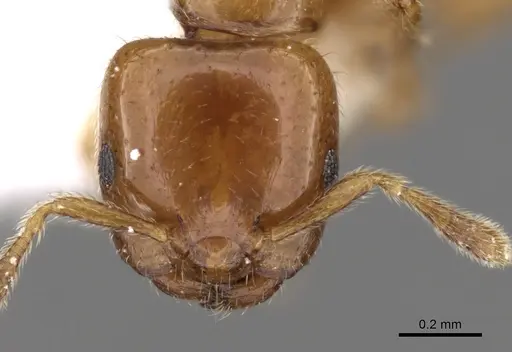
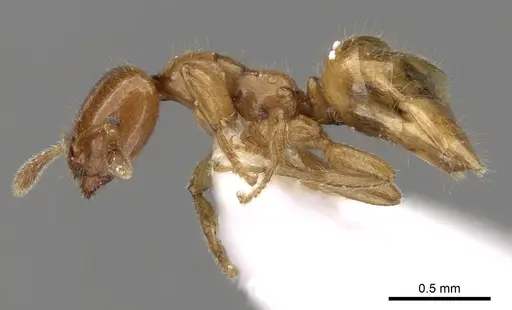
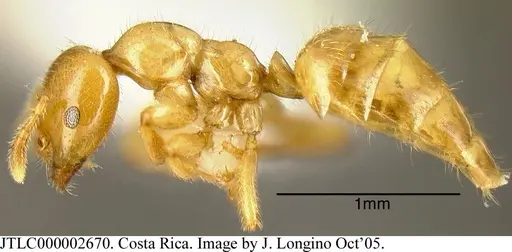
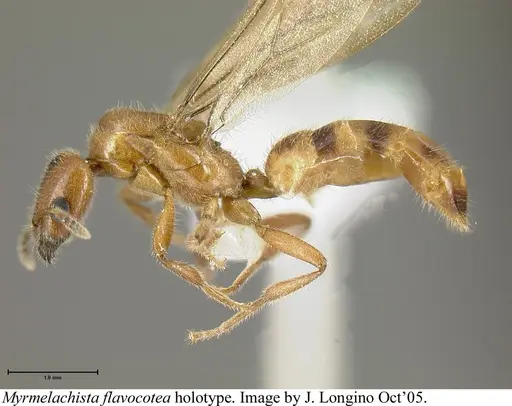
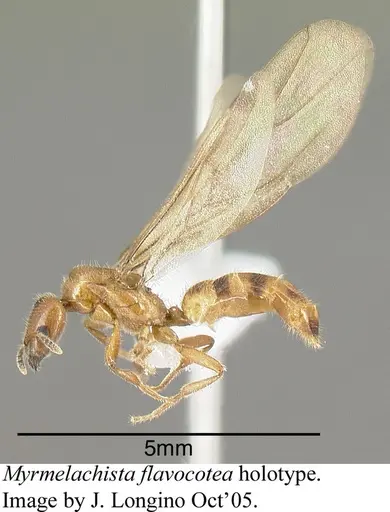
Myrmelachista flavocotea is a small, bright yellow-orange ant native to Costa Rica. Workers are uniformly yellow-orange and measure 0.59-0.69mm in head length, while queens are larger at 0.97-1.17mm with an orange head and light yellow-orange body featuring faint dark bands on the abdomen [1]. This species is an obligate inhabitant of understory treelets in the genus Ocotea (Lauraceae), meaning it lives exclusively inside the stems of these small trees from ground level all the way to the branch tips [1]. The species occurs throughout Costa Rica's Atlantic slope from 50-1000m elevation, with isolated populations at 600m on the Pacific slope in the Guanacaste Conservation Area [1]. Colonies are typically monogynous (single queen) but occasionally contain two egg-laying queens, and they can grow to contain hundreds to thousands of workers [1].
Quick Summary
- Difficulty: Hard
- Origin & Habitat: Costa Rica, Atlantic slope from 50-1000m elevation, also Pacific slope at 600m in Guanacaste Conservation Area. Inhabits understory treelets in the genus Ocotea (Lauraceae) [1].
- Colony Type: Typically monogynous (single queen colonies), though occasionally two physogastric (egg-laying) queens occur in the same colony. Workers are unicolonial, they do not fight conspecific workers even from trees up to a kilometer apart [1].
- Colony: Monogyne, Supercolonial
- Founding: Claustral
- Size & Growth:
- Queen: 0.97-1.17mm head length [1]
- Worker: 0.59-0.69mm head length [1]
- Colony: Hundreds to thousands of workers [1]
- Growth: Moderate
- Development: 6-10 weeks (estimated based on related Formicinae) (Development timeline not directly studied for this species. Estimates based on typical Formicinae development patterns.)
- Antkeeping:
- Temperature: Keep at 22-26°C. This species comes from a tropical elevation range (50-1000m) in Costa Rica, so it prefers warm, stable conditions. A gentle gradient allowing workers to self-regulate is ideal.
- Humidity: High humidity required, these ants live inside plant stems in a humid understory environment. Keep nest substrate consistently moist but not waterlogged. The arboreal nesting preference suggests they tolerate some moisture variation.
- Diapause: No, this is a tropical species from Costa Rica with no documented diapause requirement. Maintain warm conditions year-round.
- Nesting: This species is an obligate stem-dweller. In captivity, they do best in setups that mimic their natural stem habitat, narrow vertical tubes, Y-tong nests with tight chambers, or custom acrylic nests designed for small arboreal ants. They occupy all stem space from bottom to top, so provide vertical space.
- Behavior: These ants are relatively docile and not aggressive toward humans. Workers are unicolonial and show no intraspecific aggression, they will not fight workers from colonies in trees up to a kilometer away [1]. They are arboreal, living inside plant stems, and tend small scale insects (Pseudococcidae) that they farm for honeydew [1]. Their small size (under 1mm) means excellent escape prevention is critical, they can squeeze through tiny gaps. They are not known to sting.
- Common Issues: escape prevention is critical due to their very small size, use fine mesh and tight-fitting lids, tropical species requires warm, stable temperatures year-round, no hibernation allowed, arboreal nesting means they need vertical space and narrow chambers scaled to their tiny size, slow founding phase, claustral queens may take months to produce first workers, wild colonies may have symbiotic Pseudococcidae that are difficult to replicate in captivity
Nest Preferences and Housing
Myrmelachista flavocotea is an obligate inhabitant of understory Ocotea treelets, living inside the hollow stems from ground level all the way to the branch tips [1]. In captivity, you need to replicate this arboreal stem environment as closely as possible. Y-tong (acrylic) nests with narrow, vertically-oriented chambers work well. You can also use test tube setups connected vertically to create a stem-like environment. The key is providing tight chambers scaled to their tiny worker size (under 1mm body width) and vertical space that allows them to occupy all available height, just like they would in a natural tree stem. Avoid large, open spaces that would be unnatural for this stem-dwelling species.
Feeding and Diet
In the wild, these ants are known to tend low densities of Pseudococcidae (scale insects) inside their host stems [1]. This suggests they primarily consume honeydew from these farmed insects, along with small arthropods. In captivity, offer sugar water or honey as a constant energy source. For protein, provide small live prey appropriate to their tiny size, fruit flies, pinhead crickets, or small mealworms. The honeydew farming behavior means they may accept sugar sources readily, but protein is important for colony growth and brood development. Feed protein prey 2-3 times per week and keep sugar water available at all times.
Temperature and Seasonal Care
This is a tropical species from Costa Rica that experiences no cold seasons in its native range. You must maintain warm, stable temperatures year-round, aim for 22-26°C. Do not attempt hibernation or cooling periods. The species occurs from 50-1000m elevation on both slopes of Costa Rica's mountains, indicating it can tolerate some temperature variation, but it consistently prefers warmth. Use a heating cable on one side of the nest to create a gentle gradient if your room temperature falls below 22°C. Avoid temperature fluctuations and cold drafts. [1]
Colony Structure and Social Organization
Myrmelachista flavocotea colonies are typically monogynous, meaning they have a single queen [1]. However, occasional colonies have been found with two physogastric (actively egg-laying) queens [1]. The species shows unicolonial behavior, workers from different colonies do not fight each other, even when the colonies are separated by up to a kilometer [1]. This is unusual among Myrmelachista species, which typically show intraspecific aggression between nests. For antkeepers, this means you can potentially combine colonies without aggression, though this should be done cautiously. Colonies grow to contain hundreds to thousands of workers that occupy all available stem space in their host trees [1].
Escape Prevention
With workers measuring only 0.59-0.69mm in head length, these are tiny ants that can squeeze through remarkably small gaps. Excellent escape prevention is absolutely essential. Use tight-fitting lids on all enclosures, fine mesh (at least 0.5mm or smaller) for any ventilation holes, and reliable barrier methods like Fluon on enclosure edges. Even standard ant-keeping setups may have gaps these tiny ants can exploit. Check all connections between tubes, nests, and outworlds regularly. This is not a species where you can be casual about escape prevention. [1]
Growth and Development
The development timeline for M. flavocotea has not been directly studied, but based on typical Formicinae patterns, expect 6-10 weeks from egg to first worker at optimal temperatures. Queens are relatively small (0.97-1.17mm head length) compared to some other ant species, which may influence founding behavior. Colonies contain hundreds to thousands of workers in mature colonies [1]. Growth is likely moderate, not the fastest but not particularly slow either. The claustral founding phase may take several months as the queen raises her first workers alone, sealed in a chamber.
Unique Ecological Relationship
One of the most fascinating aspects of Myrmelachista flavocotea is its obligate relationship with understory Ocotea treelets. The ants live exclusively inside the stems of these plants, and in return, they likely protect the plant from herbivores and may tend scale insects that benefit the plant [1]. This is a classic example of mutualism. The ants show strong host fidelity, they have never been found in large canopy trees, only in short understory species (1-3m mature height) like Ocotea atirrensis, O. dendrodaphne, and O. tenera [1]. This specialized relationship means these ants are not adaptable to many nest types, they need stem-like structures.
Frequently Asked Questions
Can I keep Myrmelachista flavocotea in a test tube?
Yes, test tubes can work for founding colonies, but you'll need to connect multiple tubes vertically to give them the stem-like space they prefer. A single horizontal test tube is not ideal for this arboreal species. Consider using a vertical tube setup or a Y-tong nest with narrow, vertically-oriented chambers.
How long until first workers with Myrmelachista flavocotea?
Expect 6-10 weeks from egg to first worker at optimal temperature (22-26°C). This is an estimate based on related Formicinae species, as the specific development timeline has not been documented for this species. The claustral founding queen will seal herself in and raise the first brood alone.
Are Myrmelachista flavocotea good for beginners?
No, this species is not recommended for beginners. It has specific housing requirements (needs arboreal stem-like setup), requires warm tropical conditions year-round, has very small workers that require excellent escape prevention, and is difficult to acquire. This is a species for experienced antkeepers who can provide the specialized care it needs.
Can I keep multiple queens together?
In the wild, colonies are typically monogynous (single queen), though occasionally two physogastric queens are found in the same colony [1]. However, this refers to established colonies where queens have co-existed. Combining unrelated founding queens is not recommended as it has not been documented and could result in fighting.
What do Myrmelachista flavocotea eat?
They primarily consume honeydew from scale insects (Pseudococcidae) that they farm inside their host stems [1]. In captivity, offer sugar water or honey constantly, plus small live prey like fruit flies or tiny crickets 2-3 times per week for protein.
Do Myrmelachista flavocotea need hibernation?
No, this is a tropical species from Costa Rica with no diapause requirement. Keep them warm year-round at 22-26°C. Do not attempt to cool them down or simulate winter.
Why are my Myrmelachista flavocotea escaping?
Their small size (workers under 1mm) means they can squeeze through tiny gaps. You need excellent escape prevention, check all lids, use fine mesh for ventilation, and apply Fluon barriers. Even standard ant setups may have gaps too large for these tiny ants.
How big do Myrmelachista flavocotea colonies get?
Colonies can reach hundreds to thousands of workers [1]. In the wild, they occupy all stem space from ground level to branch tips in their host Ocotea treelets.
What is the best nest type for Myrmelachista flavocotea?
Y-tong (acrylic) nests with narrow, vertically-oriented chambers work best. The key is replicating their natural stem-dwelling habitat, narrow vertical spaces scaled to their tiny size. Avoid large, open spaces or horizontal-only layouts.
What temperature do Myrmelachista flavocotea need?
Keep them at 22-26°C. This tropical species comes from Costa Rica's warm, stable climate. Use a heating cable on one side of the nest if your room temperature is below 22°C to create a gentle gradient.
References

This caresheet is licensed under CC BY-SA 4.0 .
CASENT0106049
View on AntWeb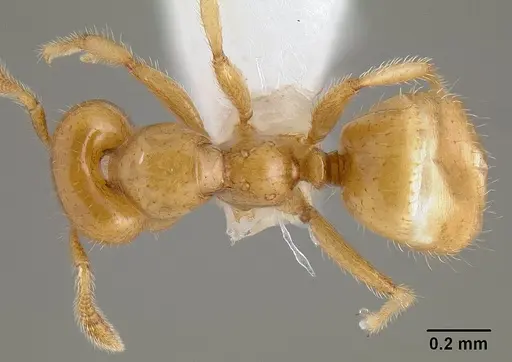
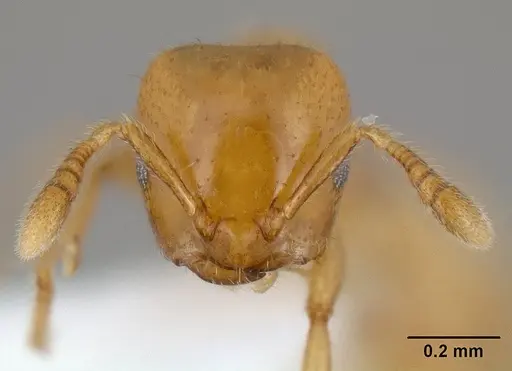
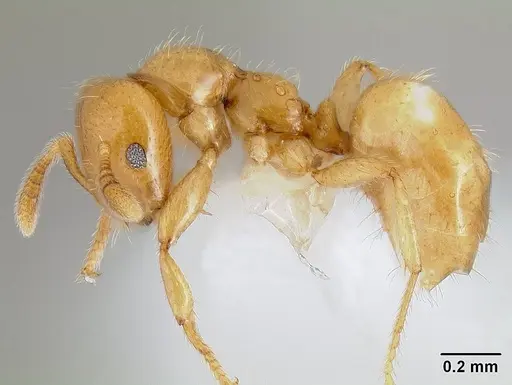
CASENT0280542
View on AntWeb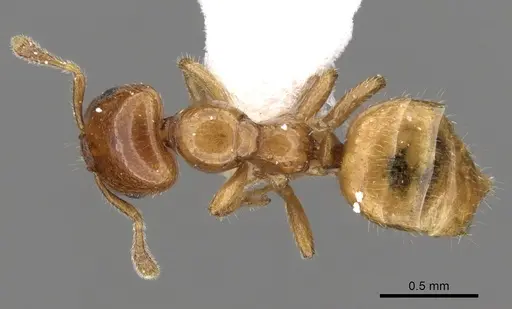
CASENT0631739
View on AntWeb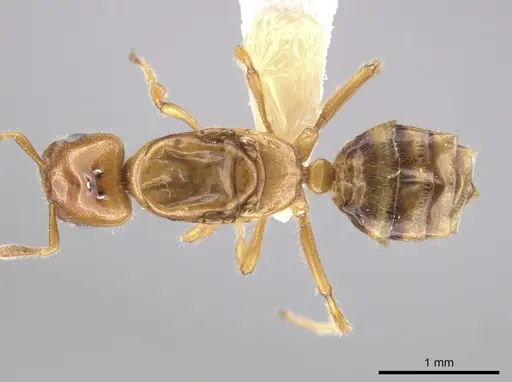
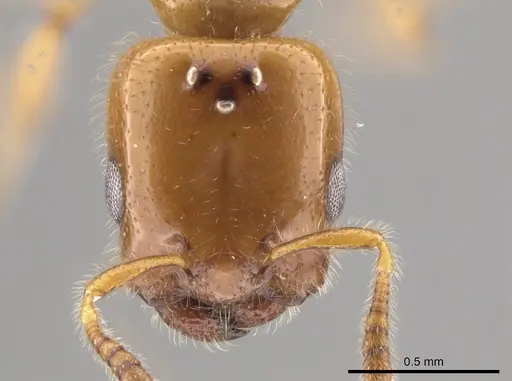
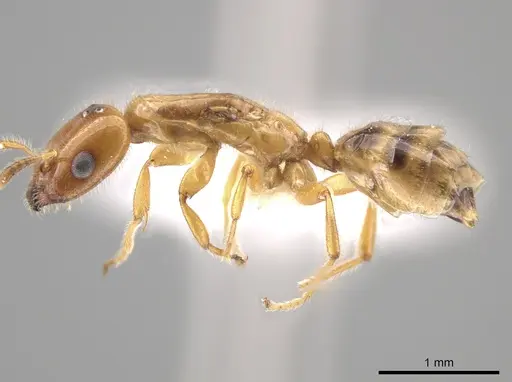
CASENT0631817
View on AntWeb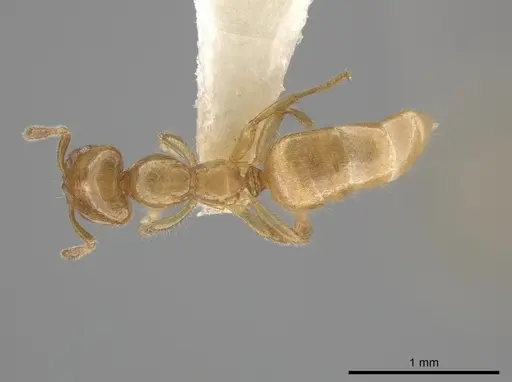
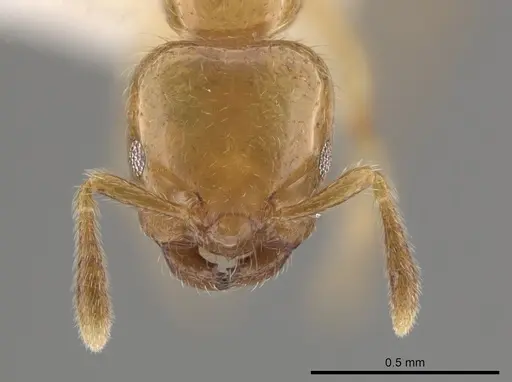
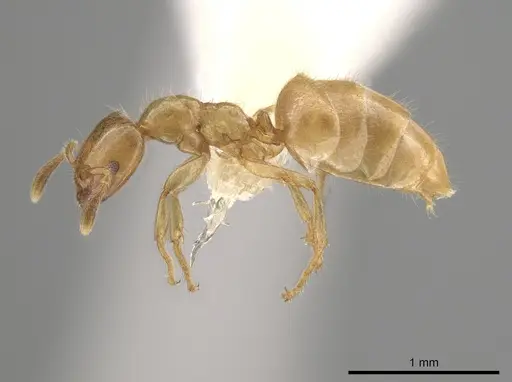
JTLC000002668
View on AntWeb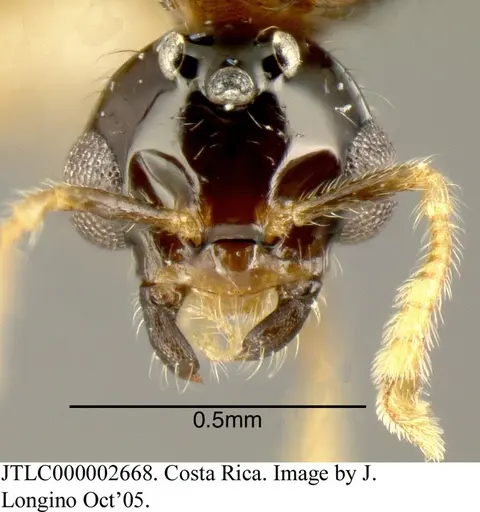
JTLC000002670
View on AntWeb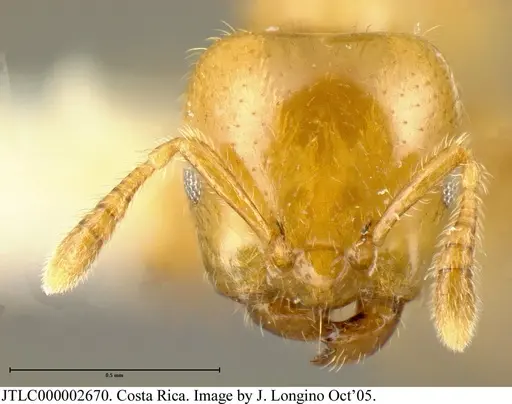
JTLC000006174
View on AntWeb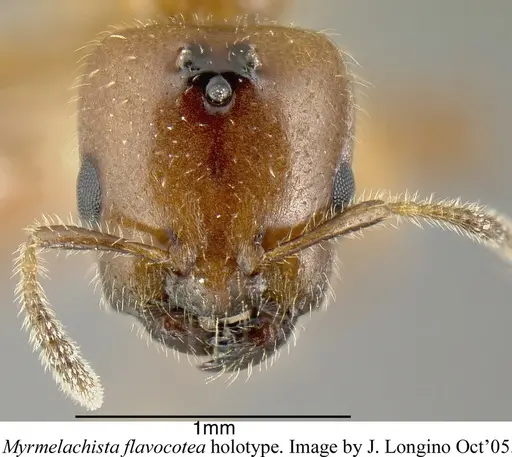
Literature
Loading...Loading products...