

Myrmecorhynchus carteri
- Scientific Name
- Myrmecorhynchus carteri
- Tribe
- Melophorini
- Subfamily
- Formicinae
- Author
- Clark, 1934
- Distribution
- Found in 1 countries
Myrmecorhynchus carteri Overview
Myrmecorhynchus carteri is an ant species of the genus Myrmecorhynchus. It is primarily documented in 1 countries , including Australia. Detailed taxonomic data and occurrence records can be further explored via authoritative databases such as AntWeb or the Global Biodiversity Information Facility (GBIF).
Myrmecorhynchus carteri
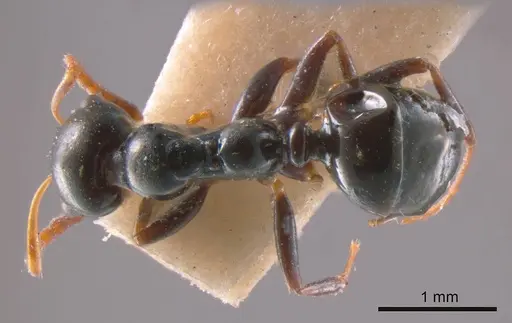
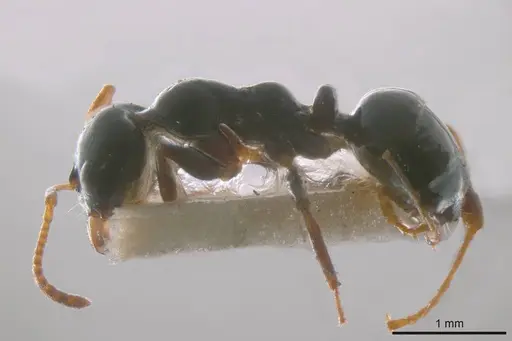
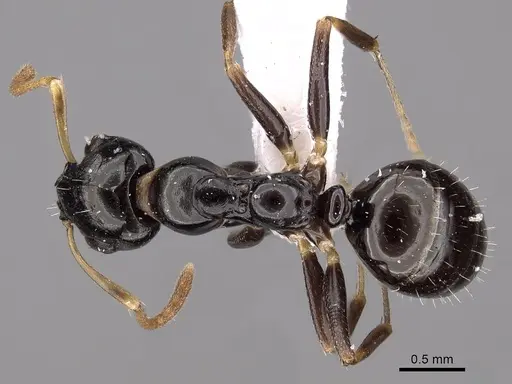
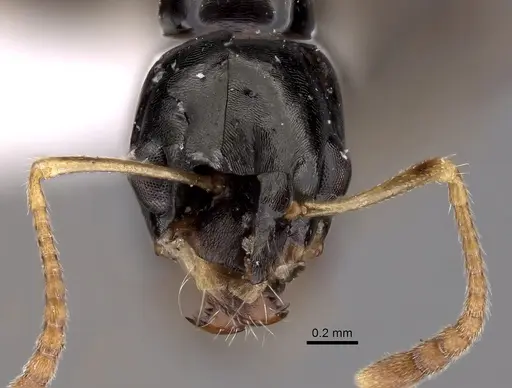
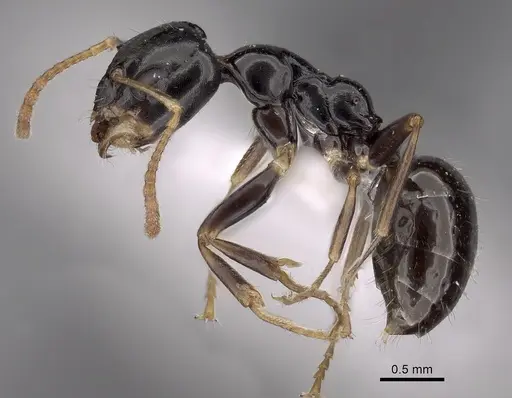
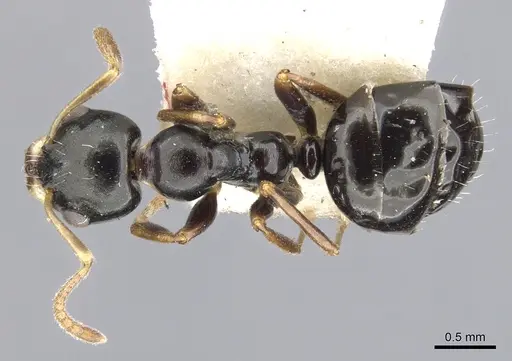
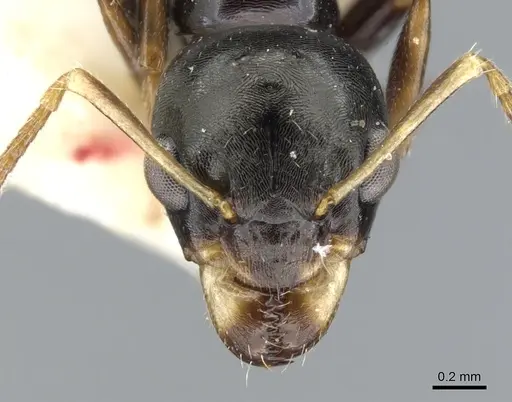
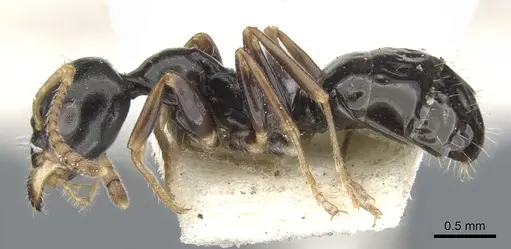
Myrmecorhynchus carteri is a small, polymorphic ant native to eastern and southern Australia, ranging from north-coastal New South Wales south to Tasmania [1]. Workers come in two distinct sizes: major workers measure 4.3-4.7mm while minor workers are smaller at 3-3.3mm [1]. The species is mostly black with bicolored mandibles (yellow at the base, dark at the tip), and may show a narrow band of yellow on the clypeus [1]. These ants are distinctive because they nest in dead branches and twigs above ground, making them arboreal nesters that forager primarily on tree trunks and vegetation [1][2].
What makes M. carteri interesting is its arboreal lifestyle, unlike many Australian ants that nest in soil, this species prefers dead wood and twigs in trees and shrubs [1]. They are small, inconspicuous ants with slow movements that are easily overlooked [2]. The colony contains both large major workers and smaller minor workers, a trait called polymorphism that helps them divide labor effectively.
Quick Summary
- Difficulty: Medium
- Origin & Habitat: Eastern and southern Australia, from north-coastal New South Wales to Tasmania. Found in mallee, thick scrub, dry to wet sclerophyll forests (including Eucalyptus pauciflora, E. perriniana and E. stellulata), coastal scrub, and rainforest [1].
- Colony Type: Colony structure is unconfirmed, the research does not specify whether they are single-queen or multi-queen colonies.
- Size & Growth:
- Queen: Unknown, queen size has not been documented in available research
- Worker: Major workers: 4.3-4.7mm, Minor workers: 3-3.3mm [1]
- Colony: Estimated small to moderate colonies based on genus patterns, likely under 500 workers
- Growth: Moderate, growth rate is estimated based on typical Formicinae development
- Development: Estimated 6-10 weeks based on related Formicinae species at optimal temperature (Direct development data unavailable, estimate based on genus-level patterns for Formicinae ants)
- Antkeeping:
- Temperature: Keep around 20-24°C. Based on their range extending to Tasmania (temperate climate), they likely tolerate cooler temperatures than tropical species. Provide a gentle temperature gradient so ants can choose their preferred spot.
- Humidity: Moderate to high, they inhabit wet sclerophyll forests and coastal scrub. Keep nest substrate slightly moist but not waterlogged. Provide some drier areas for ants to self-regulate.
- Diapause: Likely yes, their range includes Tasmania, indicating they experience cold winters. Provide a winter rest period of 8-12 weeks at 10-15°C.
- Nesting: Arboreal specialists, they naturally nest in dead branches and twigs above ground. In captivity, a Y-tong (AAC) nest or plaster nest with narrow chambers works well. Include small twigs or wood pieces in a naturalistic setup to mimic their natural arboreal nests.
- Behavior: Generally peaceful and non-aggressive. They are slow-moving and forage on vegetation and tree trunks rather than ground [2]. Minor workers are tiny (3mm) so escape prevention must be excellent, they can squeeze through standard test tube barriers. They are arboreal by preference and may not venture far from their nest chamber.
- Common Issues: escape prevention is critical due to their tiny minor workers at 3mm, use fine mesh barriers, slow growth means colonies take time to establish, don't overfeed or disturb frequently, arboreal nesting means they need wood-based nest materials, not just soil test tubes, winter dormancy is likely required given Tasmania range, skipping hibernation may harm the colony, limited research means many care details are estimates, observe your colony and adjust accordingly
Nest Preferences and Housing
Myrmecorhynchus carteri is an arboreal species that naturally nests in dead branches, twigs, and vines on shrubs or trees [1][2]. They occasionally nest in soil under rocks, but wood is clearly preferred [1]. In captivity, you should replicate this by providing nest materials that mimic dead wood. A Y-tong (acrylic) nest with narrow chambers works well, or you can use a plaster nest with small wood pieces embedded. If using a naturalistic setup, include thin twigs or small branches that the ants can use as nesting sites. Avoid deep soil setups unless you add significant wood material, these ants are adapted to above-ground nesting and may not thrive in purely soil-based formicariums. The nest should have chambers scaled to their size, with major workers reaching nearly 5mm.
Feeding and Diet
As members of the subfamily Formicinae, these ants likely have a varied diet including nectar, honeydew, and small insects. Foragers are commonly found on tree trunks and visiting flowers (including Eucryphia lucida), suggesting they feed on plant secretions [1]. In captivity, offer sugar water or honey water as a constant energy source. For protein, provide small insects like fruit flies, small crickets, or mealworms. Given their small size (especially the 3mm minor workers), prey items should be appropriately sized. Feed protein 2-3 times per week and keep sugar water available at all times. Remove uneaten prey after 24 hours to prevent mold.
Temperature and Seasonal Care
Based on their distribution from New South Wales to Tasmania, M. carteri occupies a temperate to warm-temperate climate zone. Keep the nest at roughly 20-24°C during the active season, with some variation allowed. A heating cable on one side of the nest creates a gradient so workers can regulate their own temperature. Because they occur in Tasmania, they almost certainly need a winter dormancy period. In autumn, gradually reduce temperature to around 10-15°C and maintain this for 8-12 weeks. During this time, reduce feeding significantly but keep a small water source available. Do not feed during deep hibernation. Resume normal temperatures in spring when colony activity increases. [1][2]
Behavior and Colony Dynamics
Myrmecorhynchus carteri is described as small and inconspicuous with slow movements [2]. They are most often encountered while foraging on vegetation or tree trunks rather than on the ground [2]. The worker caste is strongly polymorphic, meaning colonies contain both large major workers (4.3-4.7mm) and smaller minor workers (3-3.3mm) [1]. This polymorphism helps the colony function efficiently, major workers likely handle larger prey and nest defense while minor workers tend to brood care and foraging. They are not aggressive and lack a painful sting, making them manageable in captivity. However, their small size means they can escape through tiny gaps, always use fine mesh barriers and check lid seals regularly.
Growth and Development
The complete development timeline from egg to worker has not been documented for this species. Based on typical Formicinae patterns, expect roughly 6-10 weeks from egg to first worker at optimal temperature (around 22-24°C). The first workers, called nanitics, are often smaller than normal workers and may take time to develop. Growth is generally moderate, colonies build up gradually over several months to years. Be patient with founding colonies and avoid disturbing the queen unnecessarily. Major workers develop from larger pupae and appear as the colony matures. Colonies likely reach several hundred workers at maximum size based on related Melophorini ants.
Frequently Asked Questions
How long does it take for Myrmecorhynchus carteri to produce first workers?
The exact timeline is unconfirmed, but based on related Formicinae species, expect 6-10 weeks from egg to first worker at optimal temperature (around 22-24°C). Founding colonies require patience, do not disturb the queen during this critical period.
What size colony does Myrmecorhynchus carteri reach?
Colony size is estimated at several hundred workers at maturity based on genus patterns. They are not among the largest ant species, and their small to moderate size makes them manageable in captivity.
Can I keep multiple queens together?
The colony structure (single-queen vs multi-queen) has not been documented for this species. It is not recommended to combine unrelated foundress queens, as aggressive interactions may result in colony loss.
What nest type is best for Myrmecorhynchus carteri?
They are arboreal nesters that naturally live in dead branches and twigs. A Y-tong (AAC) nest or plaster nest with wood elements works best. Avoid deep soil-only setups, include wood or twig materials to mimic their natural habitat.
Do Myrmecorhynchus carteri need hibernation?
Yes, likely required. Their range extends to Tasmania, indicating they experience cold winters. Provide 8-12 weeks of dormancy at 10-15°C during winter months.
Are Myrmecorhynchus carteri good for beginners?
Difficulty is rated as medium. They are less common in the hobby and require specific arboreal-style housing. Their slow growth and limited research also make them a step up from beginner species like Lasius or Camponotus.
How often should I feed Myrmecorhynchus carteri?
Offer sugar water or honey water constantly as an energy source. Feed protein (small insects) 2-3 times per week. Remove uneaten prey after 24 hours to prevent mold growth in the nest.
Why are my Myrmecorhynchus carteri escaping?
Minor workers are only 3mm and can squeeze through tiny gaps. Use fine mesh barriers (at least 0.5mm mesh), check lid seals regularly, and apply fluon or barrier gel around the enclosure opening.
What temperature range is ideal for Myrmecorhynchus carteri?
Keep nest temperatures around 20-24°C during the active season. A gentle gradient allows workers to self-regulate. They likely tolerate cooler temperatures given their Tasmania range.
References

This caresheet is licensed under CC BY-SA 4.0 .
Literature
Loading...Loading products...