

Myrmecocystus nequazcatl
- Scientific Name
- Myrmecocystus nequazcatl
- Tribe
- Lasiini
- Subfamily
- Formicinae
- Author
- Snelling, 1976
- Distribution
- Found in 1 countries
Myrmecocystus nequazcatl Overview
Myrmecocystus nequazcatl is an ant species of the genus Myrmecocystus. It is primarily documented in 1 countries , including Mexico. Detailed taxonomic data and occurrence records can be further explored via authoritative databases such as AntWeb or the Global Biodiversity Information Facility (GBIF).
Myrmecocystus nequazcatl
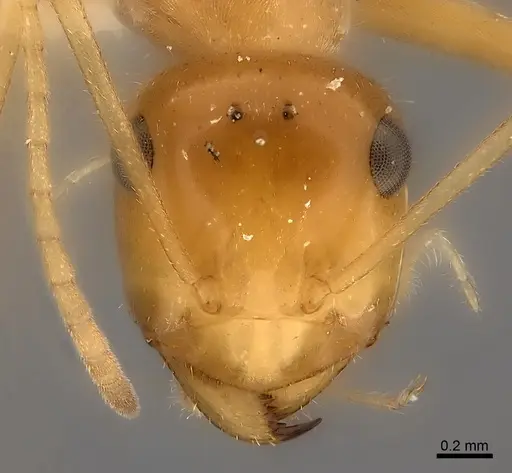
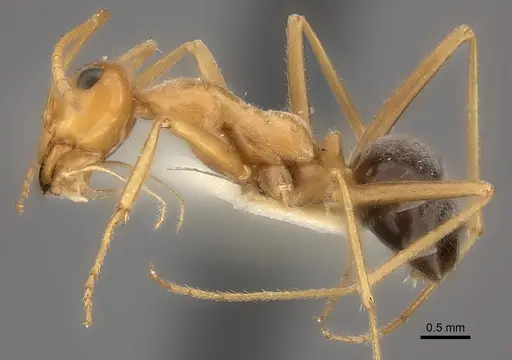
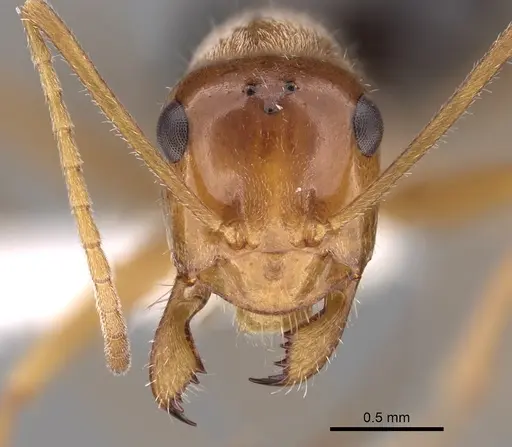
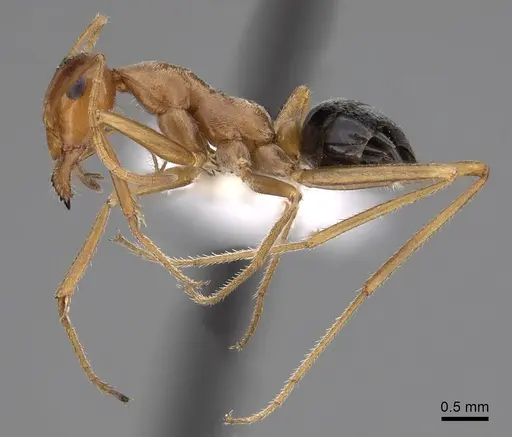
Myrmecocystus nequazcatl is a small honey ant species native to the Sonoran desert in Mexico. Workers measure 1-1.3mm with a distinctive color pattern: the head, thorax, and petiole are a bright rusty ferruginous (orange-red), while the gaster (abdomen) is blackish [1]. This species belongs to the Myrmecocystus genus, commonly called honey ants because they store honeydew in the bodies of special workers called repletes. The species name 'nequazcatl' comes from the Aztec (Nahuatl) word for honey ants [1].
This species is known only from the coastal region of Sonora, Mexico, along the Gulf of California, with inland records near Hermosillo. They inhabit desert areas including Palo Verde-Cactus shrubland and coastal sand dunes. Workers forage during the hottest part of the day (mid-day), which is unusual behavior that helps them avoid predators while accessing floral resources when competition from other ants is low [2]. Nests are marked by distinctive crater-shaped mounds up to 25cm in diameter [1].
Quick Summary
- Difficulty: Medium
- Origin & Habitat: Sonora, Mexico, Sonoran desert along the Gulf of California coast, inland to Hermosillo. Habitat includes Palo Verde-Cactus shrub and coastal sand dune desert [1][3].
- Colony Type: Likely single-queen (monogyne) colonies based on typical Myrmecocystus genus patterns. Colony structure has not been directly documented for this species.
- Colony: Monogyne
- Founding: Claustral
- Size & Growth:
- Queen: ~1.9mm head length,4.2mm Weber's length [1]
- Worker: 0.98-1.34mm head length,0.83-1.23mm head width [1]
- Colony: Unknown, no colony size data available. Related Myrmecocystus species typically reach several hundred workers.
- Growth: Unknown, no development timeline data available. Based on genus patterns, expect moderate growth rate.
- Development: Unconfirmed, no direct development data exists for this species. Related Myrmecocystus species suggest 6-10 weeks at warm temperatures. (Development timeline is unconfirmed. Myrmecocystus genus members typically develop in 6-10 weeks under warm desert conditions.)
- Antkeeping:
- Temperature: Keep at 26-32°C (warm desert conditions). This species is adapted to the hot Sonoran desert and benefits from a thermal gradient. Provide a warm side around 30-32°C and cooler area around 24-26°C.
- Humidity: Low to moderate, desert species. Keep nest area relatively dry with occasional moisture. Avoid damp conditions. Provide a water source but do not over-humidify the nest.
- Diapause: Likely, Myrmecocystus species typically undergo winter dormancy. Provide a cool period (15-18°C) for 2-3 months during winter months.
- Nesting: Natural nesting: nests in coarse-grain sandy clay with large crater mounds up to 25cm diameter [1]. Captive housing: Use a dry, well-drained setup. Y-tong (AAC) nests or plaster nests work well. Provide sand or sandy-clay substrate for nesting material. Keep nesting area dry and warm.
- Behavior: Workers are day-active foragers, specifically foraging during mid-day heat [1]. This is a thermoregulation strategy, they avoid the cooler night and early morning when other predators are active. They are likely not aggressive and will flee rather than engage. Escape risk is moderate, workers are small (about 1mm) but not as tiny as some species. Standard escape prevention (fluon on edges, tight-fitting lids) is adequate. As honey ants, they likely store honeydew in repletes (special workers), but this behavior has not been documented specifically for M. nequazcatl.
- Common Issues: limited data, this species has very little research behind it, so care recommendations are largely inferred from genus patterns, desert adaptation means they are sensitive to excess moisture, keep nesting area dry, mid-day foraging means they may be less active in captivity if temperature is not warm enough, no documented colony size or development timeline makes growth expectations uncertain, crater-nesting behavior may not translate well to captivity, they may not construct typical mounds in formicaria
Natural History and Distribution
Myrmecocystus nequazcatl is endemic to the Sonoran desert in Mexico, known only from Sonora state along the Gulf of California [3][4]. The species was described by R.R. Snelling in 1976 and is closely related to M. kennedyi, M. kathjuli, and M. wheeleri [1]. They inhabit two main habitat types: Palo Verde-Cactus shrubland and coastal sand dune desert [1].
Workers are distinctive in appearance with their bright ferruginous (rusty orange) head, thorax, and petiole contrasting against a blackish gaster. They have exceptionally long, slender, flexuous hairs on the pronotum (the first segment of the thorax), which helps distinguish them from related species [1]. The species name 'nequazcatl' is the Aztec (Nahuatl) word for honey ants, referencing the genus behavior of storing honeydew in worker abdomens.
Nests are characterized by large crater mounds up to 25cm in diameter, built from coarse sand particles. At Puerto Libertad, nests were found in deep sand with beautifully constructed craters having steep sides [1]. This crater-building behavior is thought to help with thermoregulation and ventilation of the nest.
Foraging Behavior and Diet
Myrmecocystus nequazcatl workers are day-active foragers, specifically foraging during mid-day hours when temperatures are highest [1]. This is a thermoregulation strategy common in desert ants, by foraging during the hottest part of the day, they avoid predators and competitors that are active during cooler periods.
As honey ants, they likely collect honeydew from aphids and scale insects, and may tend aphids for this purpose. They also probably scavenge for protein sources including small insects. In the wild, a beetle (possibly a tenebrionid) was recorded from one nest [1].
In captivity, you should provide a varied diet including sugar water or honey (for the honeydew replacement), and protein sources such as small insects. Based on related species, they likely accept sugar water readily and will scavenge small prey items.
Temperature and Heating Requirements
This is a desert species from the hot Sonoran region. They require warm conditions to thrive, aim for a temperature gradient with a warm side around 30-32°C and a cooler area around 24-26°C. The key is providing options so the ants can self-regulate by moving between warmer and cooler areas.
Myrmecocystus species are adapted to extreme desert heat, so they can tolerate higher temperatures than many ants. However, always provide a cooler retreat area to prevent overheating. A heating cable on one side of the nest (placed on top of the nest material, not underneath to avoid excessive drying) can help maintain warmth.
During winter, provide a cool period around 15-18°C for 2-3 months. This mimics their natural seasonal cycle in the Sonoran desert where temperatures drop significantly during winter months. [1]
Nesting and Housing
In the wild, M. nequazcatl nests in coarse-grain sandy clay soil and constructs distinctive crater mounds up to 25cm in diameter [1]. The craters have steep sides and are composed of coarse sand particles. This crater-building is thought to aid ventilation and thermoregulation.
For captive housing, provide a dry, well-drained setup. Y-tong (AAC) nests or plaster nests work well for this species. If using a naturalistic setup, provide sand or sandy-clay substrate that allows for burrowing. The key is keeping the nesting area relatively dry, avoid the damp conditions that work for forest-dwelling ants.
Because they construct crater mounds in the wild, they may appreciate a setup that allows some mound-building behavior, but don't expect them to construct large craters in captivity. Focus on providing dry, warm nesting conditions with appropriate substrate depth.
Colony Founding
The colony founding behavior of M. nequazcatl has not been directly documented. However, based on typical Myrmecocystus genus patterns, the queen likely performs claustral founding, she seals herself in a chamber underground and lives entirely on her stored fat reserves while raising the first brood [1].
This means you should provide a founding queen with a small, dark chamber with some moist (not wet) substrate. The queen will remain sealed inside while her eggs develop. Do not disturb her during this period. Once the first workers (nanitics) emerge, they will begin foraging and the colony can be gradually expanded.
Alates (reproductive ants) have been collected in early February, suggesting nuptial flights occur following spring rains [1]. There may also be autumn flights coinciding with October-November rains.
Frequently Asked Questions
How long does it take for Myrmecocystus nequazcatl to produce first workers?
The exact development timeline is unconfirmed for this species. Based on related Myrmecocystus species, expect 6-10 weeks from egg to first worker at warm temperatures (around 28-30°C). The first workers will be smaller than normal workers (nanitics).
What do Myrmecocystus nequazcatl ants eat?
Like other honey ants, they need sugar sources (honey water or sugar water) and protein (small insects like fruit flies, pinhead crickets, or mealworms). They are day foragers, so offer food during daylight hours when they are most active.
Can I keep Myrmecocystus nequazcatl in a test tube?
Yes, test tubes work well for founding colonies. Use a test tube with a water reservoir (but not too large to avoid flooding) and keep it in a warm, dark location. Once the colony grows to 20+ workers, consider moving to a small formicarium with proper heating and a dry nesting chamber.
Do Myrmecocystus nequazcatl ants need hibernation?
Yes, they likely need a winter rest period. Provide 2-3 months at cool temperatures (15-18°C) during winter. This mimics their natural seasonal cycle in the Sonoran desert.
Are Myrmecocystus nequazcatl good for beginners?
This species is rated as medium difficulty. While not the hardest species, there is limited captive breeding information available, and their desert habitat requirements (warm, dry conditions) differ from more common temperate ant species. Some experience with ant keeping is helpful.
How big do Myrmecocystus nequazcatl colonies get?
Colony size is not documented for this species. Related Myrmecocystus species typically reach several hundred workers. Expect moderate colony growth over several years.
When should I move my colony to a formicarium?
Move from test tube to formicarium when the colony reaches around 20-30 workers and you see activity increasing. Ensure the formicarium provides warm, dry conditions appropriate for this desert species.
What temperature range is best for Myrmecocystus nequazcatl?
Keep them warm: 26-32°C with a gradient. Provide a warm side around 30-32°C and cooler area around 24-26°C. They are adapted to hot desert conditions but still need a cooler retreat area.
What makes Myrmecocystus nequazcatl different from other honey ants?
This species is distinguished by its exceptionally long, slender pronotal hairs and its limited distribution, only known from Sonora, Mexico. The bright rusty orange coloration of workers with a blackish abdomen also helps identify it.
References

This caresheet is licensed under CC BY-SA 4.0 .
CASENT0217728
View on AntWeb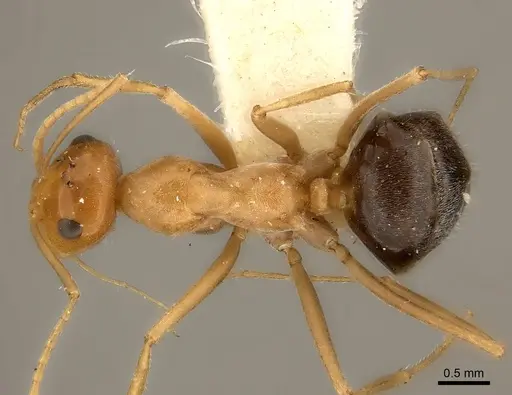
CASENT0280515
View on AntWeb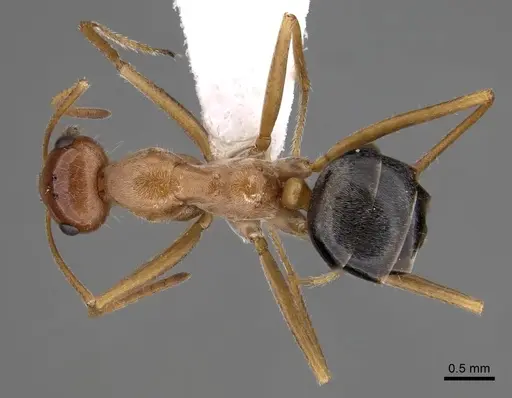
Literature
Loading...Loading products...