

Myrmecocystus colei
- Scientific Name
- Myrmecocystus colei
- Tribe
- Lasiini
- Subfamily
- Formicinae
- Author
- Snelling, 1976
- Common Name
- Cole's Honeypot Ant
- Distribution
- Found in 1 countries
Myrmecocystus colei Overview
Myrmecocystus colei (commonly known as the Cole's Honeypot Ant) is an ant species of the genus Myrmecocystus. It is primarily documented in 1 countries , including United States of America. Detailed taxonomic data and occurrence records can be further explored via authoritative databases such as AntWeb or the Global Biodiversity Information Facility (GBIF).
Myrmecocystus colei - "Cole's Honeypot Ant"
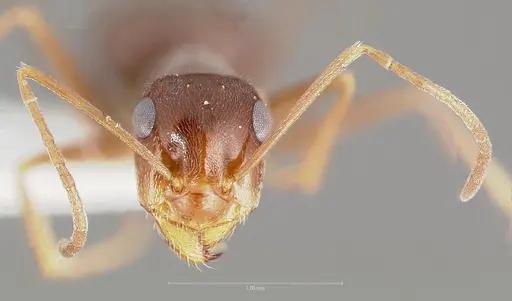
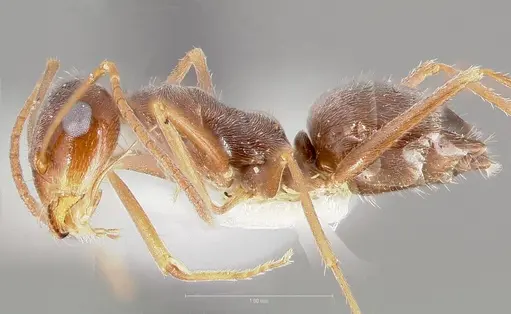
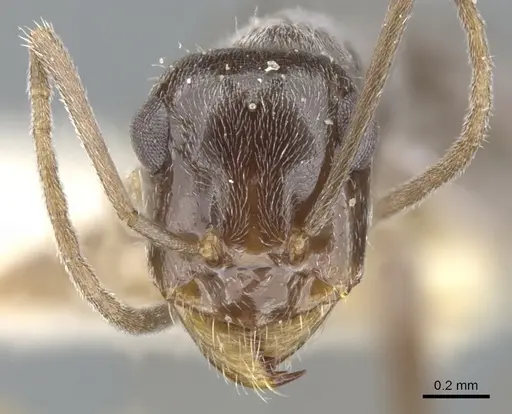
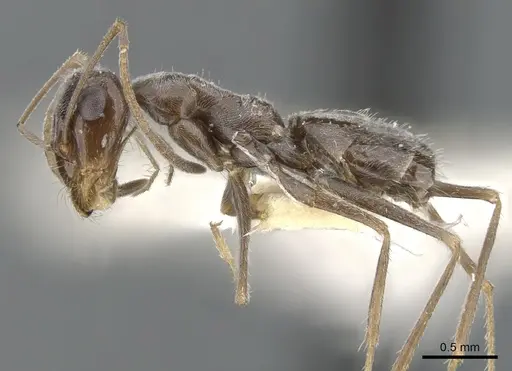
Myrmecocystus colei is a honey ant native to southern California, found from coastal valleys to the Mojave Desert. Workers are small at 0.76-1.26mm with a distinctive light to dark brownish coloration and yellowish mandibles and clypeus. Queens are larger at 1.40-1.46mm. This species is notable for its unique diurnal foraging behavior, unlike most honey ants that are active at dawn/dusk, M. colei forages during midday, a trait that evolved independently in this species [1][2]. They nest in compacted clayey soil overlain with gravel or coarse sand and are efficient scavenger-predators that also collect large quantities of nectar from flowers.
Quick Summary
- Difficulty: Medium
- Origin & Habitat: Southern California, from coastal valleys to Mojave Desert. Found in coastal sagebrush habitat, stream drainages, and areas where this habitat grades into Oak-Juniper-Joshua tree associations [3].
- Colony Type: Likely monogyne (single queen) based on typical Myrmecocystus genus patterns. Colony size data is limited but related species typically reach several hundred workers.
- Colony: Monogyne
- Founding: Claustral
- Size & Growth:
- Queen: 1.40-1.46mm [3]
- Worker: 0.76-1.26mm [3]
- Colony: Estimated several hundred workers based on related species
- Growth: Moderate, inferred from typical Myrmecocystus development
- Development: Estimated 6-10 weeks based on related Formicinae species at optimal temperature (Development time inferred from genus patterns, no direct species-specific data available)
- Antkeeping:
- Temperature: Keep at 22-28°C. This species is adapted to warm southern California conditions and can tolerate higher temperatures typical of desert habitats. A heating gradient allows workers to regulate their temperature [3].
- Humidity: Low to moderate, these are desert-adapted ants. Keep nest substrate relatively dry with occasional moisture zones. Avoid overly damp conditions.
- Diapause: Likely required. Southern California winters are mild but ants should experience a cool period (10-15°C) for 2-3 months to simulate natural seasonal cycle.
- Nesting: Compact clayey soil in nature. In captivity, a naturalistic setup with compacted soil or a Y-tong/plaster nest works well. They prefer tight chambers and passages scaled to their small size.
- Behavior: Diurnal foragers active at midday, an unusual trait among honey ants. Workers are assiduous scavenger-predators and also collect nectar from flowers. They are not particularly aggressive but will defend their colony. Escape risk is moderate due to their small size, use standard barrier methods.
- Common Issues: colonies may struggle if kept too humid, these are desert-adapted ants, diapause is likely required but timing and duration may differ from temperate species, limited colony size data makes growth expectations uncertain, test tube setups may dry out too quickly in heated enclosures, wild-caught colonies may have parasites or diseases
Housing and Nest Setup
Myrmecocystus colei nests in compacted clayey soil in the wild, often overlain with gravel or coarse sand. For captivity, a naturalistic setup with a compacted soil layer works best, mix clay and sand to create a firm substrate that holds tunnels. Alternatively, a Y-tong (acrylic) nest with narrow chambers can work, though they may prefer to dig in soil. Because they are small ants, ensure chambers and passages are appropriately scaled. Provide a water tube for humidity but avoid saturating the nest, these desert ants prefer drier conditions. [3]
Feeding and Diet
In the wild, M. colei workers are assiduous scavenger-predators and collect large quantities of nectar from flowers. In captivity, offer a varied diet: sugar water or honey as an energy source, and protein sources like small insects (fruit flies, pinhead crickets, mealworms). Their small size means prey should be appropriately sized. Nectar sources can be provided via sugar water, honey, or small pieces of fruit. Feed protein 2-3 times per week and keep sugar water available constantly. Remove uneaten prey after 24 hours to prevent mold. [3]
Temperature and Seasonal Care
These ants are adapted to warm southern California conditions, including desert areas. Keep the nest at 22-28°C, with a slight gradient allowing workers to thermoregulate. A heating cable on one side of the nest can create this gradient. During winter, provide a cool period around 10-15°C for 2-3 months to simulate their natural seasonal cycle, this is important for colony health and reproduction. Unlike tropical species, they do not need constant warmth year-round. [3]
Behavior and Foraging
Myrmecocystus colei has a unique foraging pattern, unlike most honey ants that are active at dawn or dusk, this species forages during midday [1][2]. This diurnal behavior evolved independently from their ancestors that were active at other times. Workers are active foragers that scavenge, hunt small prey, and collect nectar. They are not particularly aggressive but will defend the nest. Their small size means moderate escape prevention is needed, standard barriers like Fluon work well.
Frequently Asked Questions
How long does it take for Myrmecocystus colei to produce first workers?
Based on related Formicinae species, expect first workers (nanitics) around 6-10 weeks after the queen lays eggs, assuming optimal temperature around 24-26°C. Development is temperature-dependent, cooler conditions will slow growth.
What temperature do Myrmecocystus colei ants need?
Keep them at 22-28°C. They are adapted to warm southern California conditions and can handle the higher end of this range. A temperature gradient allows workers to regulate their body temperature.
Do Myrmecocystus colei ants need hibernation?
Yes, a cool period is likely required. Provide 2-3 months at 10-15°C during winter to simulate their natural seasonal cycle in southern California. This helps maintain colony health and may trigger reproduction in spring.
What do Myrmecocystus colei ants eat?
They are scavenger-predators that also collect nectar. Feed small insects (fruit flies, pinhead crickets, small mealworms) as protein 2-3 times weekly. Provide sugar water, honey, or small fruit pieces as an energy source. Keep sugar available constantly.
Are Myrmecocystus colei good for beginners?
They are moderate difficulty. Their desert-adapted nature means humidity control is important, too much moisture can be harmful. Their small size requires appropriate housing and escape prevention. If you can manage a dry nest environment, they are manageable for intermediate keepers.
How big do Myrmecocystus colei colonies get?
Based on related species, colonies likely reach several hundred workers. Exact maximum size is not well documented, but they are not among the largest honey ant species.
Can I keep multiple Myrmecocystus colei queens together?
This species is likely monogyne (single queen) based on typical Myrmecocystus patterns. Combining unrelated queens is not recommended as they likely will fight. Only keep one queen per colony.
When should I move Myrmecocystus colei to a formicarium?
Wait until the colony has 20-30 workers and is actively foraging in the outworld. A test tube setup works well for founding colonies. Move them when the test tube becomes crowded or the water tube runs dry.
Why is my Myrmecocystus colei colony declining?
Common causes include: too high humidity (they prefer dry conditions), poor nutrition, temperatures outside their range, or disease from wild-caught colonies. Ensure they have proper ventilation, appropriate prey size, and correct temperature gradient.
References

This caresheet is licensed under CC BY-SA 4.0 .
CASENT0005940
View on AntWeb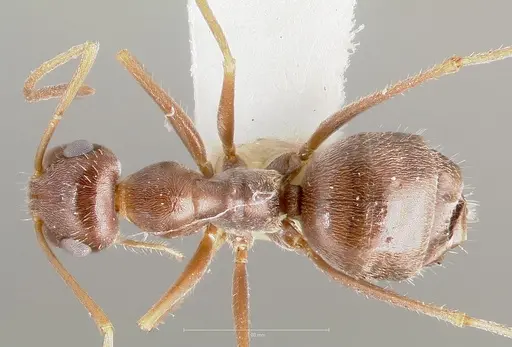
CASENT0903195
View on AntWeb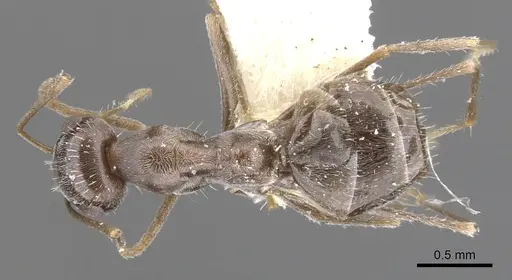
Literature
Loading...Loading products...