

Myrmecina taiwana
- Scientific Name
- Myrmecina taiwana
- Tribe
- Crematogastrini
- Subfamily
- Myrmicinae
- Author
- Terayama, 1985
- Distribution
- Found in 1 countries
Myrmecina taiwana Overview
Myrmecina taiwana is an ant species of the genus Myrmecina. It is primarily documented in 1 countries , including China. Detailed taxonomic data and occurrence records can be further explored via authoritative databases such as AntWeb or the Global Biodiversity Information Facility (GBIF).
Myrmecina taiwana
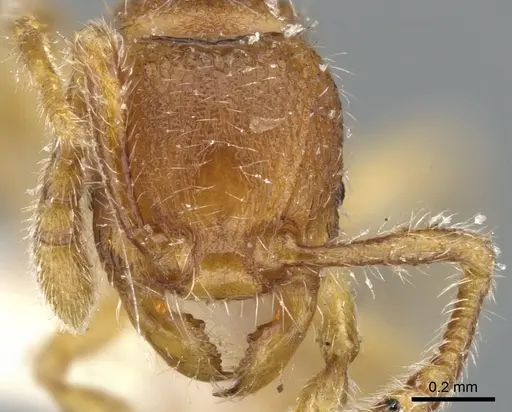
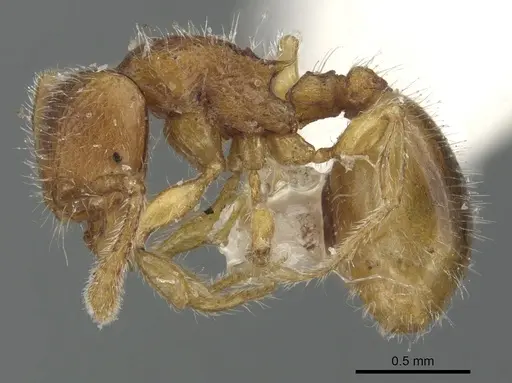
Myrmecina taiwana is a tiny ant species native to Taiwan and southern China. Workers measure just 2.4-2.7mm and have a distinctive yellowish-orange to yellow body color [1]. They have very small eyes with only 7-8 light-sensing cells, and short triangular spines on their rear [2][1]. These ants live in very small colonies averaging just 30-50 workers, making them one of the smallest colony-forming ants you can keep [3]. In the wild, they nest in soil, leaf litter, rotten wood, and under stones and moss [3].
Quick Summary
- Difficulty: Easy
- Origin & Habitat: Taiwan and southern China. This species lives in subtropical forest environments, typically found in leaf litter and soil microhabitats [3][4].
- Colony Type: Likely single-queen (monogyne) colonies based on typical Myrmecina patterns. Colonies are very small, typically 30-50 workers [3].
- Colony: Monogyne
- Founding: Claustral
- Size & Growth:
- Queen: Approximately 4-5mm (estimated based on genus patterns)
- Worker: 2.4-2.7mm [1]
- Colony: Up to 50 workers in mature colonies, very small colonies [3]
- Growth: Slow, small colony size means slow population growth
- Development: Estimated 6-10 weeks based on typical Myrmecina development patterns (Development timeline is not directly studied for this species. Small colony size suggests gradual growth.)
- Antkeeping:
- Temperature: Keep at room temperature, around 20-26°C. Being from subtropical Taiwan, they prefer warmer conditions but can tolerate typical indoor temperatures [4].
- Humidity: Moderate humidity. They naturally live in leaf litter and under stones, so keep the nest substrate lightly moist but not waterlogged. Provide some drier areas for workers to regulate their own humidity [3].
- Diapause: Not required. Being from subtropical Taiwan, they do not experience harsh winters. However, a slight cool period during winter months may be beneficial [4].
- Nesting: Naturalistic setups work best, a shallow layer of soil with leaf litter, or a small formicarium with compact chambers. They prefer tight, enclosed spaces scaled to their tiny size. Avoid large open areas [3].
- Behavior: These ants are very docile and non-aggressive. Workers are slow-moving and spend most of their time foraging in the leaf litter layer. They are not known to sting and pose no danger to keepers. Because of their tiny size, escape prevention is critical, they can squeeze through standard mesh barriers. They are not escape artists in terms of climbing, but their small size means they need fine mesh or liquid barriers [3].
- Common Issues: tiny size means escapes are likely without fine mesh barriers, very small colony size makes them vulnerable to stress, handle gently, slow growth means colonies take a long time to establish, wild-caught colonies may have parasites that kill them in captivity, overfeeding can cause mold problems in small setups
Housing and Nest Setup
Myrmecina taiwana is a tiny ant that needs appropriately scaled housing. A small test tube setup works well for founding colonies, but you may need to use a small formicarium as the colony grows. Because they naturally nest in leaf litter and under stones, a naturalistic setup with a shallow soil layer, some leaf litter, and small stones works excellently. The chambers should be small and tight, these ants feel safest in compact spaces. Avoid large, open foraging areas that would stress such tiny ants. A small Y-tong or acrylic nest with narrow chambers is also suitable. Whatever setup you choose, ensure excellent escape prevention, their small size allows them to slip through standard barriers [3].
Feeding and Diet
Like most Myrmecina species, these ants are likely omnivorous, feeding on small insects, honeydew, and plant matter. Offer small protein sources like fruit flies, pinhead crickets, or small mealworms. They will also accept sugar water or honey. Because of their tiny size, prey items should be appropriately small, springtails or fruit fly pupae work well. Feed small amounts every few days, removing any uneaten food to prevent mold. Their small colony size means they do not need large quantities of food [3].
Temperature and Seasonal Care
Being from subtropical Taiwan, Myrmecina taiwana prefers warmer conditions but adapts well to typical room temperature. Aim for 20-26°C, with room temperature usually being suitable. A slight temperature drop during winter months may be beneficial but is not required for survival. Do not expose them to temperatures below 15°C for extended periods. If your room is cool, a small heating mat on one side of the nest can provide warmth. Avoid direct heat that could dry out the nest [4].
Colony Dynamics and Growth
This species forms very small colonies, typically with only 30-50 workers at maturity [3]. This is significantly smaller than most commonly kept ants and means you should not expect large, impressive colonies. Growth is slow, a founding colony may take many months to produce its first workers, and reaching 30-50 workers can take over a year. The queen is likely claustral, sealing herself in a chamber to raise the first brood on stored fat reserves. Be patient with these ants, their appeal is in observing their delicate, small-scale behavior, not in building large colonies [3].
Behavior and Observation
Myrmecina taiwana is a docile, slow-moving ant that is a pleasure to observe. Workers forage individually through leaf litter and soil, searching for small prey and honeydew. They are not aggressive and will not defend their nest vigorously. Because they are so small, you will get the best viewing experience with a magnifying glass or by using a well-lit setup with good optics. Their tiny size and subtle movements make them fascinating for keepers who enjoy observing micro-ant behavior. They are not suitable for keepers who want large, active colonies with obvious activity [3].
Frequently Asked Questions
How long does it take for Myrmecina taiwana to produce first workers?
Based on typical Myrmecina development, expect 6-10 weeks from egg to first worker at warm temperatures. However, this species has not been directly studied, so timelines may vary. Be patient, small species often develop slowly.
What do Myrmecina taiwana ants eat?
They are omnivorous. Offer small protein sources like fruit flies, small mealworms, or springtails, along with sugar water or honey. Keep portions tiny due to their small size and small colony size.
How big do Myrmecina taiwana colonies get?
Very small, mature colonies typically reach only 30-50 workers. This is one of the smallest colony sizes of any ant species, making them ideal for keepers who prefer compact colonies.
Do Myrmecina taiwana ants sting?
No, they are completely harmless to humans. They are too small to sting and are not aggressive. They pose no danger to keepers.
Are Myrmecina taiwana good for beginners?
Yes, they are easy to care for as long as you understand their unique requirements. They need excellent escape prevention due to their tiny size, and you must be patient with their slow growth. They are not demanding but require appropriate housing scaled to their small size.
Do Myrmecina taiwana need hibernation?
No, they do not require hibernation. Being from subtropical Taiwan, they do not experience cold winters. A slight cool period in winter may be natural but is not required.
What size enclosure do I need for Myrmecina taiwana?
Small enclosures are best. A test tube works for founding colonies, but upgrade to a small formicarium with compact chambers as the colony grows. They do not need much space, even a small setup will accommodate a mature colony.
Why are my Myrmecina taiwana escaping?
Their tiny size allows them to squeeze through gaps that larger ants cannot. Use fine mesh barriers, apply fluon or similar barriers to the rim of the nest, and ensure all connections are tight. Even small gaps in tubing can allow escapes.
Can I keep multiple Myrmecina taiwana queens together?
Not recommended. Unless you observe them naturally forming multi-queen colonies, it is safest to keep only one queen per setup. Combining unrelated queens has not been documented for this species.
How often should I feed Myrmecina taiwana?
Offer food every 2-3 days. Remove any uneaten prey after 24 hours to prevent mold. Their small colony size means they do not need large quantities of food. Sugar water can be provided continuously.
References

This caresheet is licensed under CC BY-SA 4.0 .
CASENT0901731
View on AntWeb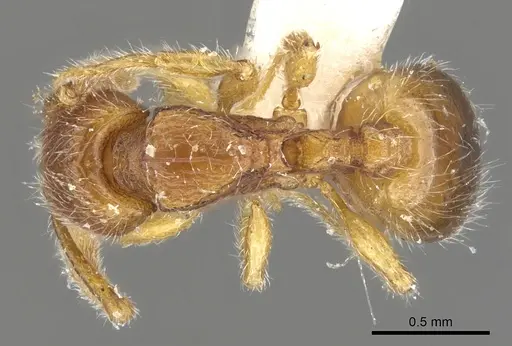
Literature
Loading...Loading products...